
Key Takeaways
- EAS Batteries has commercialized its UHP-601300-LFP-22, a 22 Ah large-format cylindrical LFP cell.
- The new cell integrates Asahi Kasei’s Acetolyte electrolyte, an acetonitrile-based formulation.
- This innovative **EV battery technology** significantly boosts continuous discharge power by 60%, reaching 2,550 W/kg at 880 A (40 C).
- Acetolyte improves performance by enhancing ionic conductivity and reducing internal resistance, especially under demanding temperatures.
- The collaboration includes plans to sublicense the combined technology to global OEMs and is developing 46xxx cylindrical cells for low-voltage EVs.
- Serial production began swiftly in March 2026, following a licensing agreement signed in November 2025.
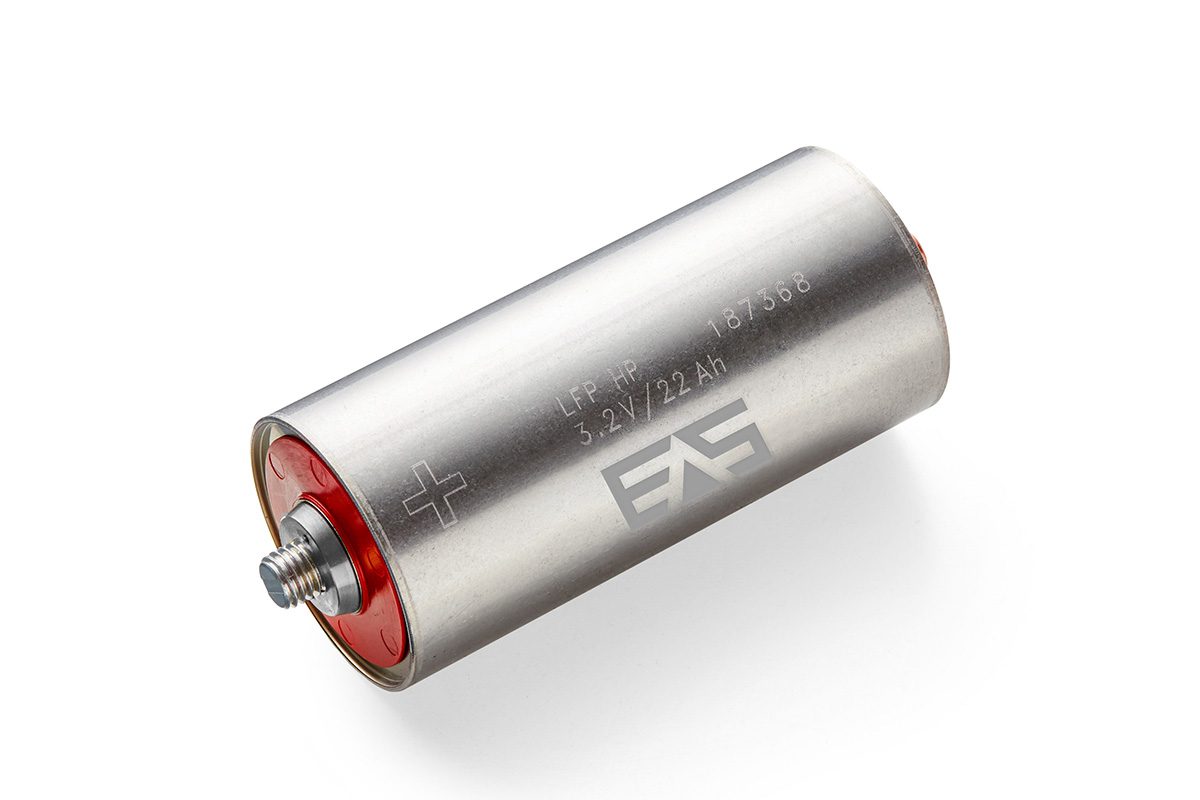
NEW DELHI: In a significant leap for electric vehicle (EV) battery technology, German manufacturer EAS Batteries has officially commenced commercial sales of its UHP-601300-LFP-22. This advanced 22 Ah large-format cylindrical lithium iron phosphate (LFP) cell incorporates Asahi Kasei’s pioneering Acetolyte electrolyte, an acetonitrile-based formulation.
The integration of Acetolyte marks a substantial enhancement in battery performance, particularly concerning power output and efficiency. This development is set to redefine expectations for energy delivery in high-demand applications, underpinning the ongoing evolution of **EV battery technology**.

Revolutionising Power Density with Acetolyte
The core of this innovation lies in Acetolyte, Asahi Kasei’s proprietary acetonitrile-based electrolyte. This advanced formulation directly addresses one of the critical challenges in high-performance batteries: achieving high sustained power without incurring thermal penalties.
With Acetolyte, the UHP-601300-LFP-22 cell exhibits an impressive continuous discharge power of 2,550 W/kg at 880 A (40 C). This represents a remarkable 60% improvement compared to the same cell operating with conventional electrolytes, which delivers 1,550 W/kg at 550 A (25 C).
Enhanced Ionic Conductivity for Superior Performance
The notable increase in power output is primarily attributed to Acetolyte’s superior ionic conductivity. This characteristic facilitates a more efficient movement of ions within the battery, substantially reducing the cell’s internal resistance.
Lower internal resistance is crucial for applications requiring high current delivery. It allows the cell to sustain higher currents over extended periods without generating excessive heat, a common limitation with conventional carbonate electrolytes. This translates directly into more efficient and robust **EV battery technology**.
Performance Under Extreme Conditions
The advantages of Acetolyte become even more pronounced under challenging thermal conditions. Traditional carbonate electrolytes tend to lose conductivity more rapidly as temperatures fluctuate or rise, leading to a drop in performance.
In contrast, Acetolyte maintains its high ionic conductivity across a broader temperature range, ensuring consistent power delivery even in demanding operational environments. This robustness is critical for reliable performance in diverse automotive and industrial applications where temperature stability is paramount for **EV battery technology** longevity and safety.
Unlocking Peak Power: Pulse Discharge Capabilities
Beyond continuous power, the new LFP cell also excels in delivering significant bursts of energy. During a 2-second pulse discharge, the UHP-601300-LFP-22 achieves a specific power of 3,760 W/kg at 1,320 A (60 C).
This capability is approximately 10% higher than the conventional-electrolyte version, which can reach the same current ceiling but at a lower specific power. Such high pulse power is vital for applications requiring rapid acceleration or sudden power demands, further solidifying its standing in advanced **EV battery technology**.
Durability and Longevity: A Core Feature
Cycle life is a critical metric for any battery, particularly for applications like electric vehicles where long-term reliability is expected. EAS Batteries reports that the new LFP cell demonstrates an impressive cycle life of 2,400 cycles.
This performance is achieved under demanding conditions: 5 C charge and 5 C discharge rates, 100% depth of discharge, and at room temperature, while retaining 80% of its initial capacity. This exceptional durability underscores the potential for extended operational life and reduced total cost of ownership for systems employing this advanced **EV battery technology**.
Strategic Collaboration and Future Outlook for Mobility
The commercialization of this innovative cell is the fruit of a strategic partnership between EAS Batteries and Asahi Kasei. The two companies have formalized an agreement to sublicense their combined technology globally to original equipment manufacturers (OEMs) and other battery manufacturers, specifically targeting mobility applications.
This collaboration is a testament to the shared vision of advancing **EV battery technology** through synergistic expertise. It paves the way for wider adoption of these high-performance LFP cells across various sectors of the electric mobility landscape.
Developing Next-Generation Form Factors
Looking ahead, the partnership is actively developing a new 46xxx cylindrical cell format, which will also leverage the benefits of Acetolyte. Prototypes of these next-generation cells are currently available for testing.
These larger format cells are primarily aimed at low-voltage EV batteries, indicating a clear strategy to address diverse segments of the electric vehicle market with cutting-edge **EV battery technology**.
Swift Transition from Agreement to Serial Production
The speed at which this innovation has moved from concept to commercial reality is noteworthy. A licensing agreement between Asahi Kasei and EAS Batteries was signed in November 2025, and serial production commenced just four months later, in March 2026.
Osamu Matsuzaki, Senior Executive Officer at Asahi Kasei, highlighted the efficiency of this collaboration, stating, “The short time from signing our license agreement in November 2025 to the start of serial production in March 2026 reflects the focused and highly collaborative efforts between EAS Batteries and Asahi Kasei.”
Currently, samples of the UHP-601300-LFP-22 are undergoing evaluation by customers across various industries, signaling strong market interest and potential for widespread integration of this advanced **EV battery technology**.
EAS Batteries: A Legacy of Innovation
Based in Nordhausen, Germany, EAS Batteries brings over three decades of experience to the field of battery manufacturing. The company has a distinguished history of producing high-quality cylindrical cells for a wide range of demanding applications, including aerospace, automotive, and various industrial sectors.
This rich heritage in battery development and production provides a strong foundation for the successful commercialization and deployment of this new generation of LFP cells, further cementing its role in the evolving landscape of **EV battery technology**.
Frequently Asked Questions (FAQs)
What is the key innovation in EAS Batteries’ new LFP cell?
The key innovation is the integration of Asahi Kasei’s Acetolyte electrolyte, an acetonitrile-based formulation. This electrolyte significantly boosts the cell’s power output and efficiency compared to conventional alternatives, marking a substantial advancement in **EV battery technology**.
How much does Acetolyte improve the battery’s continuous discharge power?
Acetolyte improves the continuous discharge power by 60%, raising it to 2,550 W/kg at 880 A (40 C). This is a substantial increase over the 1,550 W/kg at 550 A (25 C) achieved with traditional electrolytes.
What makes Acetolyte superior to conventional electrolytes?
Acetolyte’s superiority stems from its higher ionic conductivity, which reduces internal resistance. This allows for higher sustained currents without excessive heat generation, performing particularly well under demanding temperature conditions where conventional electrolytes tend to falter.
What is the expected cycle life of the new LFP cell?
The UHP-601300-LFP-22 cell boasts a cycle life of 2,400 cycles at 5 C charge/5 C discharge and 100% depth of discharge. It retains 80% of its initial capacity under these conditions, highlighting its durability and long-term reliability for **EV battery technology**.
Which markets and applications are targeted by this new battery technology?
The technology is primarily aimed at mobility applications, including electric vehicles (EVs). The companies plan to sublicense the combined technology to global OEMs and battery manufacturers, with specific development of 46xxx cylindrical cells targeting low-voltage EV batteries.
When did serial production of the new LFP cell begin?
Serial production of the UHP-601300-LFP-22 cell began in March 2026. This rapid timeline followed the signing of a licensing agreement between Asahi Kasei and EAS Batteries in November 2025, demonstrating swift and effective collaboration in developing this **EV battery technology**.