
KEY TAKEAWAYS:
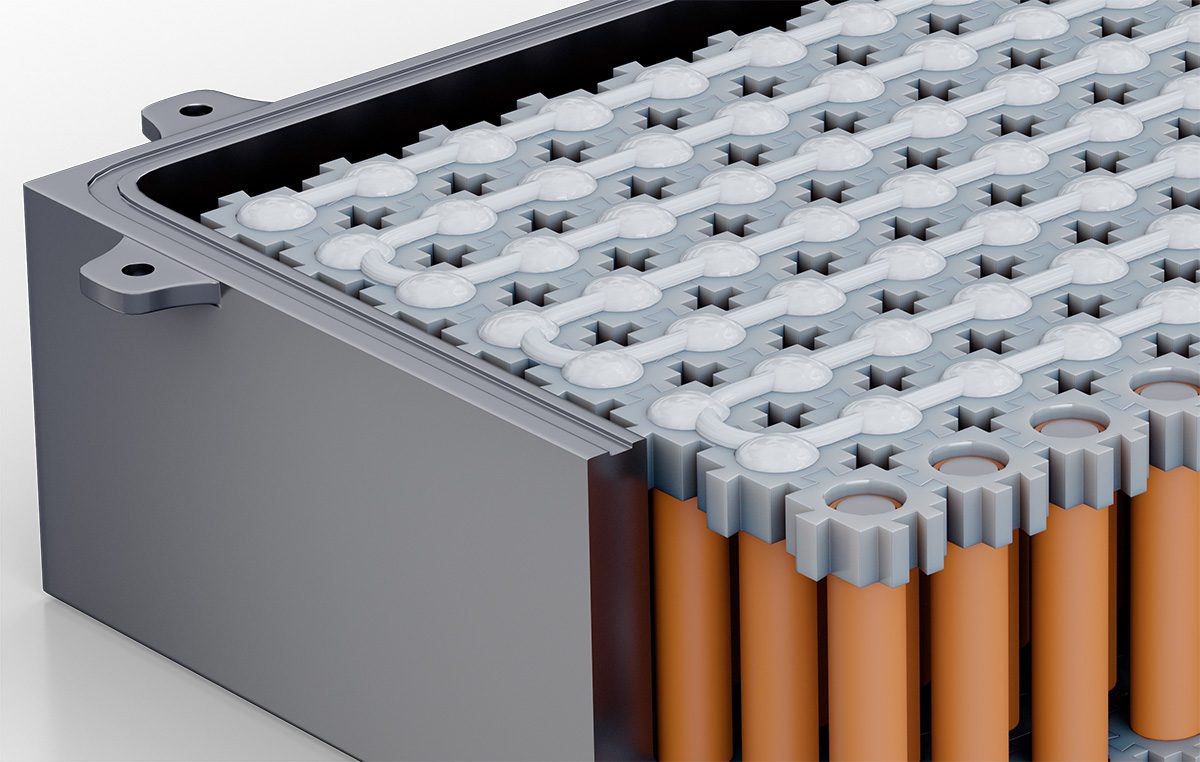
- Parker Hannifin has launched CoolTherm SF-1000 Silicone Foam, a liquid-dispensed thermal barrier designed to significantly enhance EV battery safety.
- The non-expanding foam acts as a ‘fire blanket’ within cylindrical cell battery packs, effectively mitigating thermal runaway propagation.
- This new solution offers improved manufacturability and design flexibility, addressing a critical need for battery engineers.
- CoolTherm SF-1000 can replace labor-intensive, rigid materials like die-cut mica sheets, offering comparable safety performance at a lower overall cost.
- Extensive testing by Parker and UL has validated its efficacy in preventing thermal propagation, strengthening confidence in electric vehicle battery systems.
Parker Hannifin, a global leader in motion and control technologies, has introduced an innovative solution aimed at bolstering EV battery safety. The company’s new CoolTherm SF-1000 Silicone Foam is a liquid-dispensed thermal barrier specifically engineered to address the complex challenges of battery pack safety in cylindrical cell applications.

This advanced silicone foam is formulated to function as a crucial ‘fire blanket’ within battery packs. Its primary role is to help manufacturers effectively mitigate thermal runaway propagation, a critical safety concern in lithium-ion battery systems, while simultaneously enhancing manufacturability and offering greater design flexibility for engineers.
The Critical Challenge of EV Battery Safety
As electric vehicle (EV) technology rapidly advances, the demand for safer and more reliable battery systems intensifies. Lithium-ion batteries, while offering high energy density crucial for EV performance, inherently carry risks if not properly managed, particularly regarding thermal stability.
Engineers across the automotive sector are under constant pressure to develop battery packs that not only deliver exceptional performance and range but also meet stringent safety standards. This challenge is compounded by the need to avoid adding unnecessary process complexity or escalating manufacturing costs.
Understanding Thermal Runaway in Lithium-Ion Batteries
Thermal runaway is a phenomenon in which a battery cell experiences an uncontrolled self-heating process. This can lead to a cascade of events, including fire or explosion, if the heat is not contained and prevented from spreading to adjacent cells—a process known as thermal propagation. Mitigating this risk is paramount for the safety of vehicle occupants and the broader adoption of EVs.
The design of thermal management systems and the integration of effective thermal barriers are therefore critical components of modern battery pack engineering. These systems must be robust enough to withstand extreme conditions, providing essential protection without compromising the pack’s overall efficiency or cost-effectiveness.
Engineering Dilemmas: Balancing Safety and Efficiency
Current approaches to enhancing EV battery safety often involve a range of materials and techniques. These can include potting materials, intracellular foams, mica sheets, and aerogel-based solutions. While effective to varying degrees, many of these methods present their own set of engineering challenges.
For instance, some expanding foams, used for thermal insulation and structural integrity, require complex mixing equipment during application. This complexity can make precise control difficult in continuous mass production environments, potentially impacting consistency and throughput.
Furthermore, battery designers constantly seek materials that can strike an optimal balance between safety performance, processing efficiency, and total system cost. There is a clear and persistent demand for alternatives to rigid, labor-intensive barrier materials that can significantly complicate the assembly process of battery packs, adding both time and expense to production lines.
Parker Hannifin’s Innovation: CoolTherm SF-1000 Silicone Foam
Parker Hannifin’s CoolTherm SF-1000 Silicone Foam represents a significant stride in addressing these persistent engineering challenges. Developed through extensive research and material science expertise, this new product aims to simplify the manufacturing process while delivering robust EV battery safety.
Unlike many existing solutions, CoolTherm SF-1000 is a non-expanding foam. This characteristic is crucial, as it simplifies the dispensing process considerably. It allows for easy and precise placement of the protective material exactly where it is most needed within the battery pack, ensuring targeted protection without the mess or control issues associated with expanding foams.
A New Approach to Thermal Barrier Technology
The liquid-applied nature of CoolTherm SF-1000 offers substantial advantages for battery manufacturers. It is designed to replace traditional, often rigid, and labor-intensive barrier materials, such as die-cut mica sheets, particularly in cylindrical-cell battery packs. This direct replacement capability is a key benefit, allowing for seamless integration into existing production workflows.
By providing the same critical level of thermal protection and EV battery safety as conventional solutions, CoolTherm SF-1000 simultaneously promises a lower overall system cost. This dual advantage of enhanced safety and reduced expenditure makes it an attractive option for manufacturers striving for both performance and economic efficiency.
Streamlining Manufacturing and Design Flexibility
The application method of CoolTherm SF-1000 contributes significantly to improved manufacturability. Its ease of dispensation means less equipment complexity and potentially faster assembly times. This directly translates to higher production efficiency and reduced operational costs for battery pack manufacturers.
Moreover, the flexible nature of a liquid-dispensed foam allows for greater design freedom. Engineers can integrate this thermal barrier into intricate battery pack designs more readily than with pre-formed, rigid materials. This flexibility supports the ongoing evolution of battery architectures, enabling more compact and innovative layouts while upholding rigorous safety standards.
Performance and Validation
The effectiveness of any new material in critical applications like EV battery safety hinges on rigorous testing and validation. Parker Hannifin has ensured that CoolTherm SF-1000 meets the highest industry standards for performance and reliability.
The company emphasizes that the material has undergone extensive testing, not only internally by Parker but also by UL, a globally recognized independent safety science company. This third-party validation provides an extra layer of credibility and assurance regarding the foam’s ability to perform its intended function.
Addressing Cylindrical Cell Specifics
Cylindrical battery cells are a popular choice in various EV applications due to their robust structure and good thermal performance. However, like all lithium-ion cells, they are susceptible to thermal runaway. The design of thermal barriers for these specific cell formats requires tailored solutions that can effectively isolate individual cells or groups of cells to prevent propagation.
CoolTherm SF-1000 is specifically engineered to integrate seamlessly into cylindrical cell battery pack designs, providing a targeted and efficient thermal barrier. Its ability to conform to complex geometries within the pack ensures comprehensive coverage and maximum protection.
Rigorous Testing Confirms Mitigation Capabilities
The extensive testing conducted by Parker and UL has definitively demonstrated CoolTherm SF-1000’s robust ability to help mitigate thermal propagation. These tests simulate real-world scenarios, pushing the material to its limits to ensure it can contain thermal events and prevent them from spreading throughout the battery pack.
Such validation is crucial for establishing trust and confidence in new safety solutions within the automotive industry. It assures manufacturers that incorporating CoolTherm SF-1000 will significantly contribute to the overall safety profile of their electric vehicles, meeting critical safety benchmarks.
Industry Impact and Future Outlook
Innovations like CoolTherm SF-1000 are pivotal for the continued growth and consumer acceptance of electric vehicles. By addressing core safety concerns with smarter, more efficient material solutions, Parker Hannifin is contributing to the evolution of the entire EV ecosystem.
The drive for safer, more cost-effective, and easier-to-manufacture battery components is a central theme in EV development. Solutions that can deliver on all these fronts are highly valued and poised to make a substantial impact on mass production and market penetration.
Driving Cost-Efficiency and Enhanced Safety
The economic benefits of CoolTherm SF-1000 are as significant as its safety advantages. By offering a liquid-applied solution that can outperform or match the safety of more expensive and labor-intensive alternatives, Parker Hannifin is providing manufacturers with a pathway to optimize their production costs. This cost-efficiency, combined with enhanced EV battery safety, creates a compelling value proposition for the automotive industry.
Such advancements enable EV manufacturers to produce vehicles that are not only safer for consumers but also more competitive in the global market, thereby accelerating the transition to sustainable transportation.
Expert Perspective on Electrification Needs
Highlighting the strategic importance of this development, Eric Dean, Business Development Manager of Parker Hannifin’s Assembly and Protection Solutions Division, stated, “The team is excited to bring a material designed for electrification needs across markets using lithium-ion batteries that not only drives safety but also lowers costs and complexity for our customers.” This statement underscores the company’s commitment to delivering holistic solutions that address multiple facets of modern battery engineering.
The sentiment reflects a deep understanding of the market’s demands for materials that are both high-performing in safety and practical for large-scale manufacturing. This forward-thinking approach is crucial for supporting the diverse and rapidly expanding applications of lithium-ion batteries beyond just passenger EVs, including commercial vehicles, energy storage, and other industrial electrification projects.
Source: Parker Hannifin
Frequently Asked Questions About EV Battery Safety and Thermal Management
What is thermal runaway in EV batteries?
Thermal runaway is an uncontrolled exothermic reaction within a battery cell, causing rapid temperature and pressure increases. If unchecked, this self-heating can propagate to adjacent cells, leading to severe events like smoke, fire, or explosion, posing significant risks to vehicle safety and occupants.
Why is thermal management crucial for EV battery safety?
Thermal management is vital for EV battery safety because lithium-ion batteries operate optimally within a narrow temperature range. Effective systems prevent overheating during operation or rapid charging, contain heat during malfunctions, and mitigate thermal runaway, ensuring consistent performance and prolonging battery lifespan while safeguarding users.
How does CoolTherm SF-1000 Silicone Foam improve battery pack safety?
CoolTherm SF-1000 Silicone Foam enhances battery pack safety by acting as an internal fire blanket. It isolates individual cylindrical cells, creating a thermal barrier that prevents the spread of heat from a failing cell to its neighbours, thereby stopping thermal runaway propagation and containing potential thermal events.
What are the advantages of a non-expanding foam for battery manufacturing?
A non-expanding foam like CoolTherm SF-1000 offers significant manufacturing advantages. Its liquid-dispensed nature allows for precise, controlled application without complex mixing equipment. This simplifies the assembly process, reduces production time, and enhances consistency, leading to improved manufacturability and lower overall costs.
Can CoolTherm SF-1000 replace traditional thermal barrier materials?
Yes, CoolTherm SF-1000 is designed to directly replace traditional, labor-intensive thermal barrier materials, such as die-cut mica sheets, in cylindrical-cell battery packs. It provides comparable, if not superior, levels of safety and thermal mitigation at a potentially lower total system cost due to simplified application and material properties.
Has CoolTherm SF-1000 been independently tested for its efficacy?
Yes, CoolTherm SF-1000 has undergone extensive testing not only by Parker Hannifin but also by UL, a reputable independent safety science company. These rigorous tests have validated the material’s ability to effectively mitigate thermal propagation, reinforcing its credibility and reliability for EV battery safety applications.
What types of batteries benefit from this new silicone foam?
The CoolTherm SF-1000 Silicone Foam is primarily designed to enhance safety in battery packs utilizing cylindrical cells. These cell types are common in various electric vehicle models and other applications that rely on lithium-ion battery technology, offering a targeted solution for a significant segment of the electrification market.