
Key Takeaways:
- Recent reports indicate a significant disparity between Tesla’s public statements on Full Self-Driving (FSD) and the internal perspectives of former employees involved in its development.
- A Reuters investigation revealed that several former Tesla data labelers expressed deep mistrust in the FSD software’s ability to drive autonomously, with some refusing to use it.
- Allegations suggest Tesla may have selectively presented data to portray FSD as safer than internal assessments indicated.
- Despite the challenges facing autonomous driving technology, the broader electric vehicle (EV) industry is making steady, often unacknowledged, progress in critical areas like fast-charging infrastructure.
- Networks like Rivian Adventure Network, Electrify America, and Walmart are expanding, and increased access to Tesla Superchargers is enhancing reliability for many EV owners.
Tesla’s ambitious Full Self-Driving (FSD) system has long been a subject of intense debate, with CEO Elon Musk consistently forecasting its imminent arrival as a fully autonomous solution for nearly a decade. However, this protracted development period has been marked by fatal accidents, substantial legal settlements amounting to hundreds of millions of dollars, and numerous vehicle leases expiring without the promised level of autonomy ever being delivered.
Amidst this backdrop, a recent investigation by Reuters has cast a new light on the internal sentiment regarding Tesla Full Self-Driving capabilities. The report provides a candid look at the perspectives of former employees directly involved in training the AI for Tesla’s autonomous efforts, revealing a stark contrast between public perception and developer confidence.
Employee Revelations on Tesla Full Self-Driving Capability
The Reuters exposé, which delves into the intricacies of Tesla’s autonomy program, presents compelling testimony from former employees who worked on labeling training data. These individuals, crucial to refining the FSD system’s understanding of real-world driving scenarios, voiced significant apprehension about the software’s readiness for true autonomous operation.
Inside the Data Labeling Process
Seven former Tesla employees, intimately familiar with the data feeding the FSD algorithms, reportedly stated they would not trust the software to pilot their vehicles. One former employee conveyed their profound distrust, unequivocally stating they “wouldn’t get in a car piloted by FSD ‘if you fucking paid me’.” Such strong sentiments from those directly involved in the system’s development underscore the deep-seated concerns within the ranks.
The work of data labelers is fundamental to machine learning for autonomous vehicles. They meticulously tag and categorize vast amounts of real-world driving data, teaching the AI to recognize objects, predict behaviors, and understand complex traffic situations. The skepticism from these key personnel highlights potential discrepancies in how the data is interpreted and how the FSD system ultimately performs.
The Narrative vs. Reality
The report further alleges that Tesla has, at times, carefully managed the public narrative surrounding Tesla Full Self-Driving. This reportedly involved presenting FSD as a safe and advanced system by utilizing incomplete or incomparable data, even when more comprehensive, albeit less favorable, data was readily available. This alleged “massaging the narrative” raises questions about transparency and the accuracy of public assurances regarding FSD’s capabilities.
While Tesla’s current FSD (Supervised) system is undeniably impressive in its ability to navigate complex environments, the former employees’ accounts suggest it remains a considerable distance from achieving full autonomy. This distinction between an advanced driver-assist system and a truly self-driving vehicle is a critical one, particularly in the context of safety and regulatory oversight.
Beyond FSD: Industry Developments
While the focus on Tesla Full Self-Driving often dominates headlines, the electric vehicle landscape is dynamic, with other significant developments shaping its future. Beyond the complexities of autonomous driving, the industry is witnessing progress in diverse areas, from unique vehicle designs to the vital expansion of charging infrastructure.
Ferrari Luce: A Designer’s Perspective
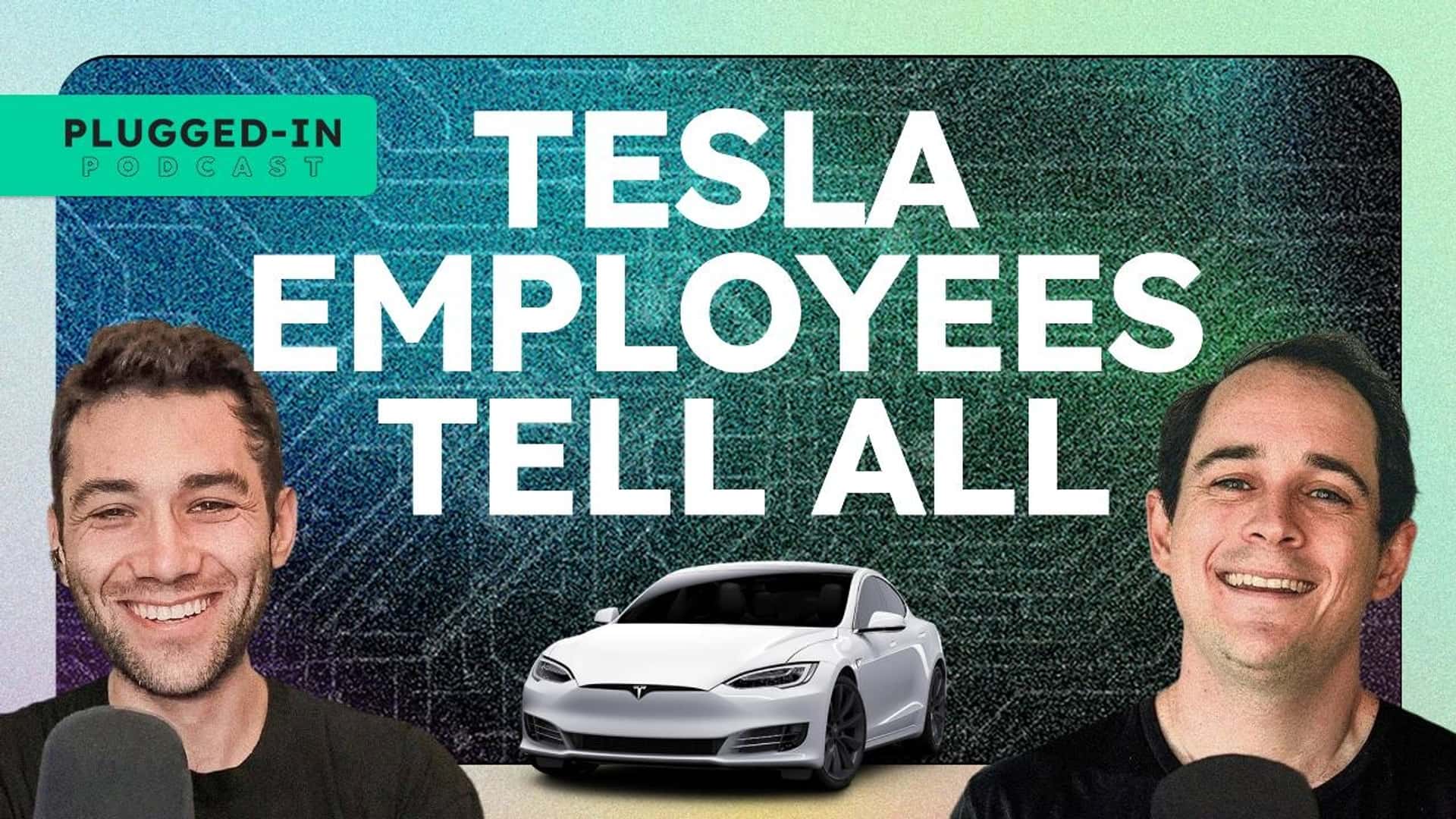
In a separate but notable discussion, the podcast touched upon the in-person experience with the Ferrari Luce. This conversation offered a valuable perspective, especially given the extensive online discourse and varying opinions surrounding the vehicle. The firsthand account helped to ground the discussion, clarifying that those who liken the Luce to a “simulacra of a Nissan Leaf” might find their expectations challenged upon seeing it in person. Such insights provide a crucial counterpoint to purely theoretical or image-based critiques.
Advancements in EV Charging Infrastructure
In more positive news for the average electric vehicle owner, significant improvements are being observed across America’s fast-charging network. Collaborative efforts from major players like Rivian, Electrify America, and retail giants such as Walmart are driving a consistent push to enhance the charging experience for all EV users. This concerted investment signifies a growing commitment to addressing one of the primary concerns for potential EV adopters: charging accessibility and reliability.
Rivian, for instance, recently announced a substantial milestone for its Adventure Network. The company now boasts over 1,000 DC fast chargers strategically deployed across 148 dedicated Rivian Adventure Network charging stations. This expansion demonstrates a robust commitment to building out proprietary, reliable charging solutions for its customer base and, by extension, contributing to the overall strength of the national charging grid.
Real-World Charging Experience: Dispelling Myths
The public perception of EV charging infrastructure often lags behind the reality on the ground. Despite ongoing improvements, many friends and occasional EV reviewers frequently express concerns about the unreliability of fast-charging networks. This sentiment often baffles seasoned EV owners who regularly rely on public charging solutions.
Reliability on the Ground
As an EV owner with only Level 1 charging at home and an often-inconsistent street parking situation, frequent reliance on fast chargers has provided a clear picture of the network’s evolution. Over the past two years, instances of encountering multiple broken stalls at a charging station have become exceedingly rare. This consistent improvement means that concerns about reliability are significantly diminished when utilizing reputable charging networks.
Even when traveling outside traditionally EV-friendly regions, such as darting around the Midwest to visit family, the experience at various charging stations has largely been headache-free. This suggests that while localized issues may arise, the widespread unreliability often perceived by those new to EVs is becoming less common.
The Role of Tesla Superchargers
The landscape of EV charging has been further revolutionized by the increasing accessibility of Tesla Superchargers to non-Tesla electric vehicles. This strategic move has profoundly enhanced the reliability of the overall fast-charging network, providing a highly dependable option for a broader range of EV drivers. If an absolute guarantee of an operational and available charging station is needed, a Tesla Supercharger often serves as the go-to solution.
One notable large-scale charging disruption occurred over a 24-hour period due to a nationwide CrowdStrike outage, which temporarily prevented an Ioniq 5 XRT tester from charging at a Supercharger. Such isolated incidents, however, are comparable to occasional inconveniences experienced at traditional gasoline stations, like a single pump being out of order or a payment system glitch.
Home Charging: The Unseen Majority
It is crucial to contextualize the demand for public charging by recognizing that a significant majority—approximately 86%—of all EV charging occurs at home. This contrasts sharply with gasoline fill-ups, where virtually 0% happens at home. This fundamental difference means that the sheer number of public charging stations does not need to equal the density of gasoline stations to adequately serve the EV population.
As payment systems continue to be refined and the physical build-out of charging infrastructure progresses, the reliability of EV charging stations is rapidly approaching parity with that of traditional gas stations. This quiet but steady progress often goes unnoticed amidst broader discussions about the EV industry’s perceived challenges.
The Path Forward for Electric Vehicles
While the journey towards truly autonomous driving, particularly with systems like Tesla Full Self-Driving, presents complex technical and ethical hurdles, the broader electric vehicle industry demonstrates remarkable resilience and continuous progress. Even in periods where public sentiment might suggest a slowdown or a step backward for the EV market, vital advancements are consistently being made in quieter, less visible ways.
The ongoing expansion and improvement of charging infrastructure, coupled with increasing vehicle choices and technological refinements, indicate a robust long-term trajectory for electric mobility. These steady, incremental enhancements collectively contribute to a more viable and user-friendly ecosystem for electric vehicles, reinforcing their pivotal role in future transportation.
Frequently Asked Questions (FAQ)
What are the recent concerns surrounding Tesla Full Self-Driving (FSD)?
Recent reports, particularly by Reuters, highlight significant employee skepticism regarding FSD’s autonomy. Former Tesla data labelers expressed mistrust in the software, with some refusing to use it, and allegations suggest Tesla may have presented data to favor FSD’s safety narrative.
How reliable is the current EV fast-charging network in the US?
The reliability of the US fast-charging network has significantly improved. Major players like Rivian, Electrify America, and Walmart are expanding their infrastructure, and increasing access to Tesla Superchargers for non-Tesla EVs has further boosted overall network dependability.
What is the Rivian Adventure Network?
The Rivian Adventure Network is Rivian’s proprietary DC fast-charging network. It has expanded to over 1,000 DC fast chargers across 148 charging stations, providing reliable charging solutions primarily for Rivian owners and contributing to broader EV infrastructure.
Do most EV owners charge their vehicles at home or at public stations?
A significant majority, approximately 86%, of all electric vehicle charging occurs at home. This contrasts sharply with gasoline vehicles, where nearly all fueling happens at public stations, influencing the required density of public EV chargers.
What is the difference between an advanced driver-assist system and full autonomy?
An advanced driver-assist system (ADAS), like current FSD (Supervised), aids the driver but requires constant human supervision. Full autonomy means the vehicle can operate entirely without human intervention under all conditions, a level of technology that remains a complex engineering challenge.