
Key Takeaways
- A recent report by Reuters highlights significant internal skepticism among former Tesla employees regarding the safety and readiness of Tesla’s Full Self-Driving (FSD) technology.
- Seven former data labeling employees expressed distrust, with one emphatically stating they would not use FSD even if compensated.
- The report alleges Tesla has manipulated FSD’s safety narrative by selectively using data, contrasting with a decade of unfulfilled promises from CEO Elon Musk.
- Despite challenges in autonomous driving, significant progress is noted in the US electric vehicle (EV) fast-charging network, with expansions by Rivian, Electrify America, and Walmart.
- Tesla Superchargers are becoming more accessible to various EV models, contributing to increased charging reliability nationwide.
Mumbai: Tesla’s ambitious journey towards fully autonomous vehicles, spearheaded by its Full Self-Driving (FSD) technology, has long been a subject of intense debate and scrutiny. Despite years of development and significant investment, the system continues to navigate a complex landscape of unfulfilled promises, regulatory challenges, and safety concerns. This week, a revealing report by Reuters has brought to light a deeper level of skepticism, originating from within the very teams tasked with refining the technology.
For nearly a decade, Tesla CEO Elon Musk has consistently projected the imminent arrival of truly autonomous capabilities for FSD. However, this vision has been shadowed by a series of fatal crashes, the payout of hundreds of millions of dollars in lawsuit judgments, and countless vehicle leases concluding without the promise of full autonomy ever being realised. These persistent issues underscore the substantial gap between aspiration and current reality in the domain of advanced driver-assistance systems.
Internal Distrust Surfaces Over Tesla Full Self-Driving Capabilities
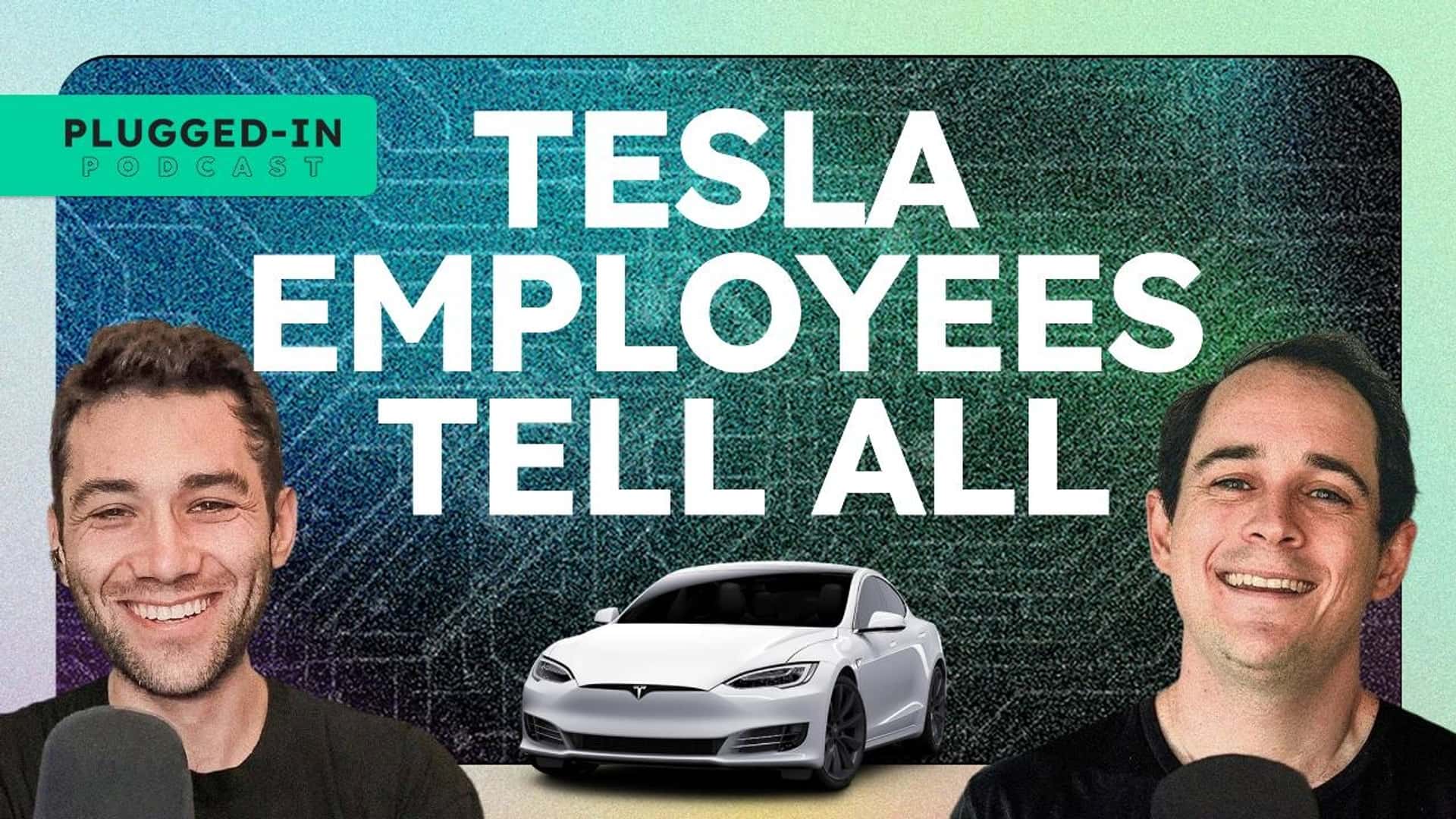
The Reuters investigation provides a critical look at the internal perceptions surrounding Tesla’s Full Self-Driving (FSD) system. It features candid testimonies from a cohort of former Tesla employees who were intimately involved in labeling training data for the company’s autonomous driving efforts. Their insights offer a rare glimpse into the practical realities and challenges faced during the development process.
A notable finding from the report is that a significant number, specifically seven, of these former employees expressed a profound lack of trust in the software’s ability to operate vehicles safely without human intervention. The depth of this apprehension was starkly captured by one former worker, who unequivocally stated they would not get into a car piloted by FSD “if you fucking paid me.” Such strong sentiments from individuals who directly contributed to the system’s foundational data raise serious questions about the perceived reliability and safety of the technology, even among its former developers.
This damning report delves into the intricate methods by which Tesla has allegedly shaped the narrative around its Full Self-Driving technology. It suggests that the company has presented FSD as a safe and capable system, often by leveraging incomplete or incomparable data, even when more comprehensive, albeit less favourable, data was accessible. This alleged massaging of information contributes to a broader concern about transparency and the accuracy of public perception regarding advanced autonomous driving systems.
The Current State of Tesla’s FSD (Supervised) System
As it stands, Tesla’s current FSD (Supervised) system represents a highly advanced driver-assistance feature. It incorporates a sophisticated suite of functionalities designed to assist drivers in various scenarios, including navigating highways, making turns, and stopping at traffic signals. While impressive in its technological scope and capabilities, the crucial qualifier ‘Supervised’ inherently indicates that it is not, by any definition, a fully autonomous system.
The designation means that the driver is required to remain attentive, with hands on the wheel, and prepared to take control at a moment’s notice. This requirement firmly places FSD (Supervised) within the realm of Level 2 automation, necessitating constant human oversight. The distinction is critical, particularly given the ongoing regulatory scrutiny and public discourse surrounding the safety implications of such sophisticated automotive technology.
Ferrari’s Foray into Electric Vehicles: The Luce and Public Discourse
Beyond the ongoing saga of Tesla’s autonomous ambitions, the electric vehicle (EV) market continues to see new entrants and designs that spark considerable debate. One such example is the Ferrari Luce, an electric vehicle that has garnered significant attention and polarized opinions within automotive circles. Reports indicate that there has been “plenty of dunking and discourse” surrounding its design and conceptualisation.
However, an important perspective emerged from an in-person viewing. Those who have physically experienced the Ferrari Luce challenge prevailing perceptions, particularly the notion that it could be likened to a mere “simulacra of a Nissan Leaf.” This direct experience suggests that the vehicle offers a distinct identity that online commentary might not fully capture, highlighting the importance of firsthand interaction in evaluating innovative designs.
Significant Advancements in America’s Fast-Charging Infrastructure
While the complexities of autonomous driving technology continue to unfold, more optimistic news emerges for the average electric vehicle owner. There is a consistent and concerted push to substantially improve America’s fast-charging network, making the experience of owning and operating an EV increasingly convenient and reliable. This effort involves key industry players who are rapidly expanding their infrastructure.
Rivian, for instance, recently announced a significant milestone: its Rivian Adventure Network now boasts over 1,000 DC fast chargers, distributed across 148 charging stations. This expansion is a testament to the growing commitment of EV manufacturers to support their vehicles with robust charging solutions. Parallel efforts from established networks like Electrify America and major retailers such as Walmart are also contributing to this nationwide build-out, collectively enhancing the accessibility and efficiency of public charging options.
This ongoing improvement in the charging network underscores a common phenomenon where public sentiment often lags behind the actual progress on the ground. Many individuals, especially those who only occasionally review EVs or follow the automotive market without direct personal experience, frequently express concerns about the unreliability of fast-charging networks. Such perceptions, however, often do not align with the lived experiences of regular EV owners.
For owners who rely on public charging, even those with limited home charging options, the reality has steadily improved. Over the past two years, instances of encountering multiple broken stalls at a charging station have become increasingly rare. This consistent progress means that the anxiety once associated with public charging—specifically concerning reliability—is diminishing. Many EV owners now find themselves confidently heading to stations from reputable networks without needing to pre-check reviews or worry excessively about operational status.
The accessibility of Tesla Superchargers has also marked a pivotal moment in improving the overall charging experience across the country. With most electric vehicles now able to access these highly reliable charging points, the network effectively functions as a dependable backup for many drivers. Although an isolated incident occurred over a 24-hour period due to a nationwide CrowdStrike outage, temporarily affecting charging at Superchargers, such occurrences are exceptions rather than the norm, akin to sporadic issues one might encounter at traditional petrol stations.
The evolution of payment systems and the continuous expansion of charging infrastructure are steadily bringing the reliability of EV charging closer to that of conventional fuel stations. Furthermore, it is important to consider that approximately 86% of all EV charging occurs at home, a stark contrast to the near-zero percentage of petrol fill-ups. This high rate of home charging significantly reduces the per-vehicle demand on public infrastructure, meaning that the sheer number of charging points does not need to equal the extensive network of petrol stations.
In conclusion, while the journey toward truly autonomous driving, particularly with Tesla Full Self-Driving, remains fraught with challenges and internal doubts, the broader electric vehicle ecosystem is witnessing quiet yet profound progress. The continuous improvements in fast-charging networks across the United States are steadily addressing a major pain point for EV adoption, highlighting that even in times of perceived industry headwinds, foundational advancements are consistently being made.
FAQ Section
Q1: What are the main concerns highlighted in the Reuters report about Tesla Full Self-Driving?
The Reuters report reveals significant skepticism among former Tesla employees, particularly those involved in data labeling for FSD. Many expressed a lack of trust in the system’s safety and autonomy, with one former worker stating they wouldn’t use it even if paid, raising questions about the technology’s readiness.
Q2: How has Tesla allegedly managed the narrative around FSD, according to the report?
The report suggests that Tesla has presented its FSD system as safe and capable by allegedly utilising incomplete or incomparable data. This approach is claimed to have created a more favorable public perception, even when potentially less flattering, more comprehensive data was available internally.
Q3: What is the current status of Tesla’s FSD (Supervised) system?
Tesla’s FSD (Supervised) system is an advanced driver-assistance feature requiring active human supervision. It falls under Level 2 automation, meaning the driver must remain attentive and ready to take control. It is not considered a fully autonomous system despite its sophisticated capabilities.
Q4: What improvements have been made to America’s EV fast-charging network?
Significant improvements include Rivian’s expansion to over 1,000 DC fast chargers across 148 stations. Other major players like Electrify America and Walmart are also contributing to this network growth, enhancing reliability and accessibility for electric vehicle owners nationwide.
Q5: How has the accessibility of Tesla Superchargers impacted the overall EV charging experience?
The increasing accessibility of Tesla Superchargers to most electric vehicles has significantly improved the overall charging experience. This network offers a highly reliable option for many EV drivers, acting as a dependable fallback and contributing to reduced range anxiety.
Q6: Why is public perception of EV charging reliability often different from the reality for EV owners?
Public perception often lags behind the rapid advancements in charging infrastructure. While non-EV owners or occasional users might perceive unreliability, regular EV owners, especially in the last two years, report consistent improvements, fewer broken stalls, and a generally stress-free charging experience at reputable stations.
Q7: What percentage of EV charging typically occurs at home?
Approximately 86% of all electric vehicle charging happens at home. This high rate of home charging means that the demand on public fast-charging infrastructure is considerably lower compared to the reliance on public petrol stations for internal combustion engine vehicles.