
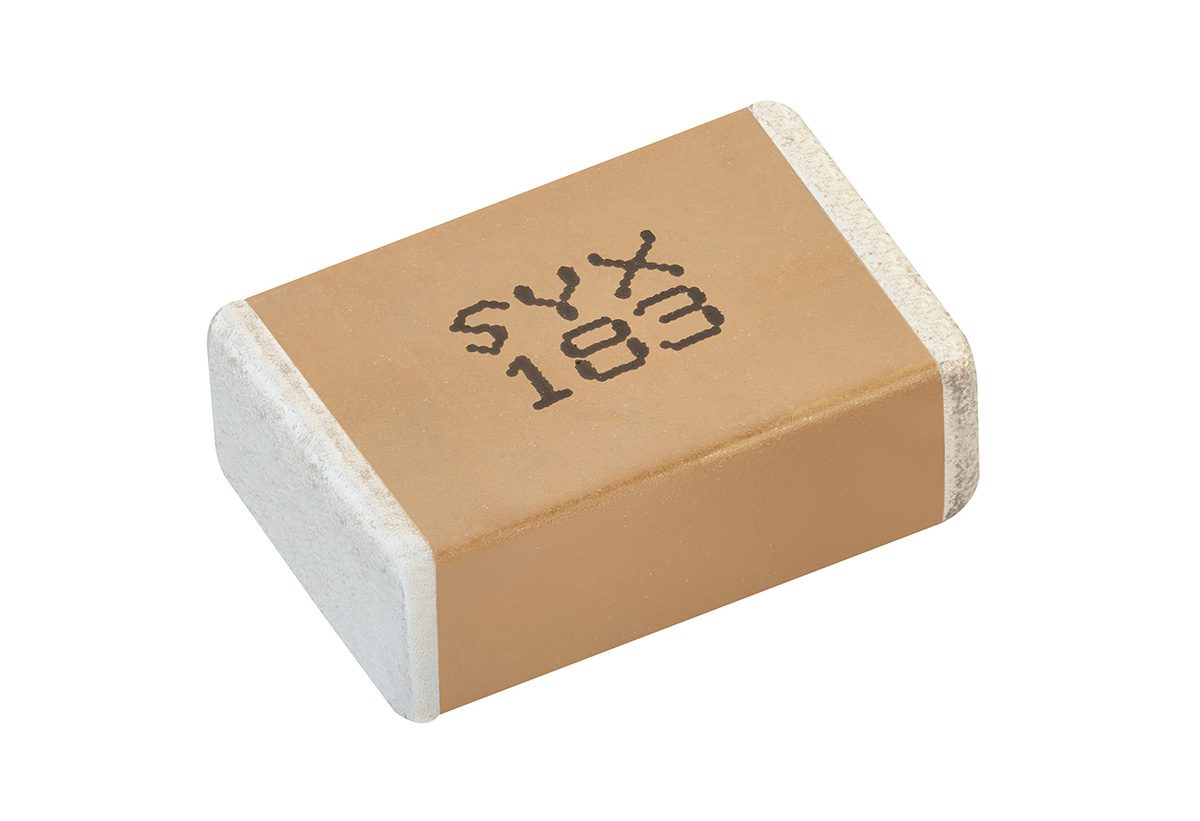
Key Takeaways (TL;DR):
- Product Expansion: Knowles has significantly expanded its portfolio of X1/Y2 safety-certified Multilayer Ceramic Capacitors (MLCCs) with a new 3825 case size.
- Enhanced Performance: These new components offer capacitance values ranging from 1 nF to 18 nF, with voltage ratings from 310 VAC to 660 VAC, depending on the specific part.
- Critical Safety Feature: A minimum 7 mm creepage distance is integrated, ensuring robust high-voltage isolation, crucial for compact Printed Circuit Board (PCB) layouts in electric vehicles (EVs).
- Extreme Durability: The MLCCs are rated for 1500 Vdc and meet Humidity Grade IIIB standards, withstanding 85°C and 85% relative humidity for 1,000 hours—ideal for harsh underhood and industrial environments.
- Automotive Compliance: AEC-Q200 qualification, combined with flexible terminations, ensures resilience against mechanical flexure and thermal shock across a wide temperature range of -55 °C to +125 °C.
- Application Impact: These components are engineered to significantly improve `EV power filtering` in onboard chargers and DC/DC converters, facilitating greater miniaturization and simplified board design by reducing the need for larger, through-hole safety capacitors.
In a significant development for the electric vehicle (EV) industry, Knowles, a leading manufacturer of advanced electronic components, has announced the expansion of its X1/Y2 safety-certified Multilayer Ceramic Capacitors (MLCCs) line. The introduction of a new 3825 case size marks a pivotal step towards enhancing `EV power filtering` capabilities, addressing critical needs for compact design, enhanced safety, and robust performance in modern automotive electronics.

This latest offering is poised to empower engineers and designers in the evolving landscape of EV power electronics and industrial energy systems. It delivers a superior combination of high capacitance, stringent safety certifications, and robust environmental resilience, all within a space-saving surface-mount package.
Advancing EV Power Filtering with New MLCCs
The newly introduced 3825 case size MLCCs are engineered to meet the demanding requirements of high-voltage applications, particularly within the automotive sector. These components boast capacitance values spanning from 1 nanofarad (nF) to 18 nF, providing essential filtering capabilities across a range of power conversion circuits.
Furthermore, the voltage ratings for these parts range from 310 VAC to 660 VAC, depending on the specific component selected. This broad voltage handling capacity ensures versatility and reliability across diverse power architectures found in electric vehicles and associated charging infrastructure. The integration of such robust specifications underscores Knowles’ commitment to driving innovation in high-performance passive components.

Key Design Enhancements for Compact Layouts
A standout feature of these new MLCCs is their minimum 7 mm creepage distance. Creepage distance refers to the shortest path between two conductive parts along the surface of the insulating material. In high-voltage applications, this parameter is critical for preventing electrical arcing and ensuring reliable insulation, thereby enhancing system safety and preventing potential short circuits.
For designers working on compact PCB layouts, especially in constrained spaces like EV onboard chargers and DC/DC converters, this certified creepage distance is invaluable. It allows for high-voltage isolation to be maintained even within tightly packed component arrangements, directly contributing to smaller, more efficient electronic modules without compromising safety standards.
Unparalleled Robustness and Reliability for Demanding Environments
The operational integrity of electronic components in EVs is paramount, especially given the harsh environmental conditions they often encounter. Knowles’ new MLCCs are designed to excel in such challenging settings, offering exceptional durability and reliability.
Each part is rated for 1500 Vdc, signifying a high direct current voltage withstand capability. This rating is crucial for applications that experience significant DC voltage spikes or operate under continuous high DC bias, ensuring stable performance and longevity.
Built to Withstand Extreme Conditions
A critical qualification for automotive components is their ability to endure exposure to moisture and temperature fluctuations. These MLCCs are qualified to Humidity Grade IIIB, which means they can withstand conditions of 85°C and 85% relative humidity for a rigorous 1,000 hours. This extensive testing ensures the components maintain their electrical properties and structural integrity even when subjected to the high moisture and thermal stress typical of underhood and industrial enclosure environments.
Such resilience is vital for maintaining the long-term reliability of `EV power filtering` systems, preventing performance degradation or failure due to environmental factors. The ability to perform reliably under these conditions directly impacts the overall lifespan and safety of electric vehicles.
AEC-Q200 Qualification: A Hallmark of Automotive Reliability
Further solidifying their suitability for automotive applications, the new 3825 case size MLCCs carry AEC-Q200 qualification. This is a globally recognized standard for passive electronic components used in automotive electronics, signifying that the components have undergone extensive stress testing and meet strict quality and reliability criteria defined by the Automotive Electronics Council.
Beyond the core component, these MLCCs feature flexible terminations. These specialized terminations are designed to handle mechanical flexure and thermal shock across a wide operating temperature range of -55 °C to +125 °C. In automotive applications, components are frequently subjected to vibrations, rapid temperature changes, and mechanical stresses. Flexible terminations mitigate the risk of cracking or damage to the ceramic body of the capacitor, ensuring sustained performance and reliability throughout the vehicle’s operational life.
The Critical Role of X1/Y2 Safety-Certified Capacitors in Power Conversion
X1/Y2-rated capacitors are indispensable components in modern power conversion circuits, positioned strategically across the AC mains line. Their primary function is to filter conducted electromagnetic interference (EMI), which can otherwise disrupt the operation of sensitive electronic systems or be radiated into the environment. Effective EMI suppression is crucial for regulatory compliance and ensuring the seamless operation of complex electronics within an EV.
Crucially, these capacitors are designed with a defined failure mode: open rather than short. This inherent safety feature is paramount for protecting against shock hazards. In the unlikely event of a component failure, an open circuit prevents potentially dangerous current paths, thereby safeguarding users and preventing catastrophic system damage. This ‘fail-safe’ design is a cornerstone of robust electrical safety standards.
Driving Miniaturization in EV Onboard Chargers and DC/DC Converters
The combination of high capacitance, AEC-Q200 qualification, and certified creepage distance, all packaged within a surface-mount form factor, presents significant advantages for the design of EV onboard chargers and DC/DC converters. Traditionally, safety capacitors with similar ratings might require larger, through-hole packages, which consume valuable board space and complicate automated assembly processes.
By offering these capabilities in a compact surface-mount package, Knowles enables designers to reduce the overall size and weight of power electronics modules. This not only simplifies board layout but also facilitates the ongoing trend towards miniaturization in EV components, which is critical for maximizing space efficiency and reducing vehicle weight—factors directly impacting range and performance.
Industry Endorsement and Future Outlook
The strategic importance of these advancements is echoed by industry leaders. “These new X1/Y2 surface-mount MLCCs enable designers to meet stringent insulation and surge testing requirements while supporting miniaturization trends across EV power electronics and industrial energy systems,” said Nan Zhang, Director and Product Line Manager for Ceramic Capacitors at Knowles.
This statement underscores the dual impact of Knowles’ latest innovation: addressing rigorous safety and performance standards while simultaneously facilitating the industry’s drive towards smaller, more integrated electronic solutions. As the EV market continues its rapid expansion, the demand for high-performance, compact, and highly reliable passive components like these MLCCs will only intensify.
Knowles’ expanded X1/Y2 safety-certified MLCC line represents a significant leap forward for `EV power filtering` technology. By offering a robust, compact, and highly reliable solution, these components are set to play a crucial role in the development of safer, more efficient, and increasingly compact electric vehicles and industrial energy systems worldwide. This innovation not only addresses current engineering challenges but also paves the way for future advancements in sustainable transportation and power management.
Frequently Asked Questions (FAQ)
What is an MLCC?
An MLCC, or Multilayer Ceramic Capacitor, is a fixed capacitor that uses a ceramic material as the dielectric. It consists of multiple layers of ceramic and metallic electrodes alternately stacked, then sintered together. MLCCs are widely used in electronic circuits for filtering, decoupling, and energy storage due to their small size, high capacitance, and good frequency response.
What does X1/Y2 safety certification mean?
X1/Y2 safety certification refers to specific classifications for capacitors used in mains power applications. X-capacitors are connected between live lines (line-to-line), while Y-capacitors are connected between a live line and ground (line-to-ground). The X1/Y2 rating indicates a high level of fault tolerance and safety, ensuring that even in failure, they do not pose a shock or fire hazard.
Why is ‘creepage distance’ important in EV components?
Creepage distance is the shortest path between two conductive parts along the surface of an insulating material. In EV components, especially those handling high voltages, a sufficient creepage distance is critical to prevent electrical arcing and insulation breakdown. This ensures the safety and reliability of the electronic system, particularly in compact PCB layouts where components are closely spaced.
What is AEC-Q200 qualification, and why is it relevant for these MLCCs?
AEC-Q200 is a standard from the Automotive Electronics Council that defines specific stress tests for passive electronic components used in automotive applications. Achieving this qualification means the MLCCs have met rigorous reliability and quality standards required for the harsh environments found in vehicles, including temperature extremes, vibrations, and humidity.
How do these new MLCCs aid in EV miniaturization?
By combining high capacitance, robust voltage ratings, safety certifications, and flexible terminations within a compact surface-mount (3825 case) package, these MLCCs reduce the need for larger, through-hole safety capacitors. This allows for more densely packed PCB designs, leading to smaller, lighter, and more efficient electronic modules in EV onboard chargers and DC/DC converters.
What are ‘flexible terminations’ and their benefits?
Flexible terminations are a design feature of capacitors that incorporate a compliant layer between the ceramic body and the solder pad. This layer helps absorb mechanical stresses, such as those caused by PCB flexure or differences in thermal expansion during temperature cycling. They prevent micro-cracks in the ceramic, enhancing the component’s reliability and lifespan in demanding automotive environments.