
Hyundai’s Motional Robotaxi Service Gears Up for Las Vegas Launch
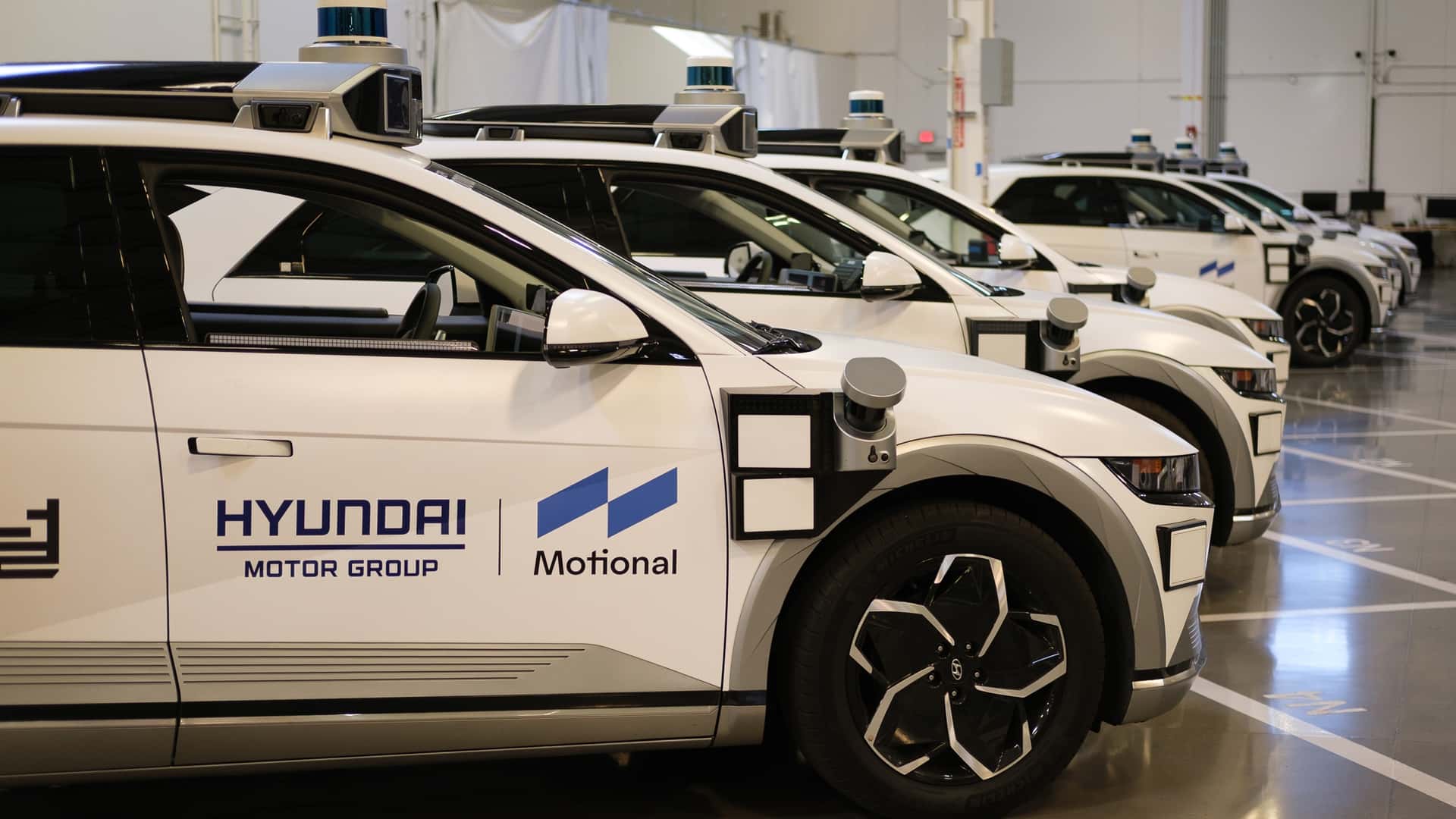
Hyundai’s dedicated autonomous vehicle division, Motional, is poised to enter the competitive robotaxi market, with plans to launch its commercial service in Las Vegas by the end of this year. Leveraging the versatile Hyundai Ioniq 5 electric vehicle, Motional aims to carve out a significant niche in the burgeoning autonomous transportation sector, a field where many have previously faltered.

A Bold Move into a Challenging Landscape
The announcement, made at CES 2026, marks a significant step for Motional, which has roots tracing back to early autonomous driving startups from the 2010s. While the division has been testing autonomous vehicles since 2021, this marks its most ambitious commercial push yet. The Ioniq 5, already a familiar sight in autonomous testing fleets and soon to support Waymo’s operations, will be the backbone of Motional’s service. These vehicles are being equipped with Hyundai’s integrated sensor suites, advanced AI, and proprietary software, underscoring a commitment to an in-house developed autonomous system.
Hyundai’s venture into operating its own robotaxi service comes at a time when the industry has witnessed significant setbacks. General Motors reportedly incurred losses of $10 billion with its Cruise division, and Ford and Volkswagen ceased operations of Argo AI just as its robotaxi service was nearing launch. These high-profile failures highlight the immense financial and technological hurdles in establishing a viable autonomous taxi business.

Hyundai’s Long-Term Vision: Robotics and Autonomy
Motional CEO Laura Major emphasized Hyundai’s strategic, long-term commitment to robotics and AI, viewing autonomy as a key component of its future. This vision extends beyond robotaxis, encompassing ambitious projects like deploying humanoid robots in factories, spearheaded by Hyundai’s subsidiary Boston Dynamics. “I think Hyundai is committed to robotics and autonomy and AI. They see it having a profound impact on the world,” Major stated, adding that “autonomy is coming to the world first through robotaxis.”
Despite this strong backing, Motional faces a steep climb. Competitors like Waymo are rapidly expanding, aiming for presence in over two dozen cities by 2026, the same year Motional plans to begin its operations in a single city. The success of Motional’s venture will hinge on its ability to not only navigate technological challenges but also to establish a strong foothold against established players.
Motional’s Evolution: From Startups to Hyundai’s Flagship
Motional’s journey is a testament to the evolution of autonomous vehicle technology. Its origins lie in nuTonomy and Ottomatika, pioneers in the AV space that emerged from MIT and Carnegie Mellon in the early 2010s. After acquisitions and rebranding, culminating in a $4 billion joint venture with Hyundai under the Aptiv umbrella, the Motional name emerged, alongside extensive public pilot programs with ride-sharing giants Uber and Lyft. An initial commercial launch was anticipated for 2022.
However, the path wasn’t smooth. Testing continued with safety operators, but mounting losses led Aptiv to reduce its stake, resulting in job cuts and a halt to commercial operations in 2024. Major, who previously served as CTO, took the helm as CEO, acknowledging the challenges: “We really realized that while we could get to a safe driverless system, the technology at that point was not cost-efficient enough to create a profitable business.” The initial expectation that a driverless system could be easily deployed globally proved unrealistic.
The AI Advantage and Hyundai’s Integration
The industry has since weathered an “autonomous winter,” but the recent surge in artificial intelligence, particularly neural networks, has revitalized the field. Major highlighted this shift as a pivotal moment for Motional, enabling the development of safe, generalizable driverless systems that can adapt more readily to new environments. “This was an a-ha moment for us, that this is what can get us to a safe, driverless system that also is generalizable,” Major explained. Motional’s approach integrates traditional robotics with end-to-end AI models to tackle complex driving scenarios.
A key differentiator for Motional is its deep integration with Hyundai. The Ioniq 5 robotaxis are outfitted with over 30 sensors, including cameras and lidar, and feature in-car screens for passenger interaction. Unlike some competitors, these vehicles retain traditional controls for potential human intervention. Crucially, the AI-powered technology stack and the vehicle itself are developed and integrated in-house by Hyundai. “It comes off a Hyundai production line, fully integrated,” Major noted. “It gets sent to us ready to go.”
Bridging the Autonomy Gap for Hyundai
This initiative is vital for Hyundai’s ambition to advance its capabilities in advanced driver assistance systems (ADAS) and full autonomy. The Korean automaker currently lacks hands-free driving systems comparable to GM’s Super Cruise or Ford’s BlueCruise. Hyundai’s recent leadership changes in its Advanced Vehicle Platform division underscore the urgency to match advancements seen from competitors like Tesla and emerging players from China.
Major believes Motional’s work is instrumental in driving Hyundai’s progress. “I think there’s real value to some of the internalization and the vertical integration,” she said, emphasizing the benefits of co-designing solutions with a closer partnership between software, autonomy, and fleet operations. This integrated approach could unlock new opportunities, potentially leading to technology licensing for other manufacturers.
The Road Ahead: Investment, Innovation, and Passenger Experience
Hyundai’s commitment involves significant, long-term investment in autonomy, with returns that may not be immediate. However, as a well-capitalized conglomerate, Hyundai is potentially better positioned than some publicly traded companies to weather the extended development cycles. Major envisions a future where autonomous technology is integrated into personal vehicles, offering passengers the flexibility to relax or work during their commute.
For now, the focus remains on successfully launching and operating a commercial robotaxi service that resonates with customers. Motional aims to provide a “safe, comfortable and smooth” passenger experience, laying the groundwork for broader adoption and future innovations in the autonomous mobility space.
Gallery: Hyundai Motional Robotaxi CES 2026
Photos by: Patrick George