
Key Takeaways
- Modern battery design prioritizes increased energy density without compromising safety or cost efficiency.
- Accurate monitoring of cell health, including temperature and voltage, is crucial for optimal battery performance and safety.
- Traditional discrete wiring in battery packs is being phased out due to its inefficiency and quality limitations.
- Flexible Printed Circuit Boards (FPCs) represent the latest generation of cell contacting systems, offering superior reliability and cost-effectiveness.
- Integrated FPC-based cell contact solutions enhance manufacturing processes, improve data quality for Battery Management Systems (BMS), and are key to achieving safe, high-density battery packs.
The Imperative for Advanced Battery Technology
In the rapidly evolving landscape of electric vehicles (EVs) and renewable energy storage, the pursuit of increased battery density remains a paramount objective for engineers and manufacturers worldwide. This drive for greater energy storage capacity is ceaseless, yet it is inextricably linked with non-negotiable considerations: safety and cost-efficiency. Any advancement in battery technology must inherently enhance these crucial parameters, not compromise them.
The core challenge lies in pushing the boundaries of energy density in a manner that is both secure and economically viable. Central to this intricate balance is the meticulous monitoring of individual cell health within a battery pack. Understanding the state-of-health (SOH) of each cell is not merely a desirable feature but a critical necessity for ensuring longevity, preventing catastrophic failures, and optimising overall performance.

Monitoring Cell Health: A Critical Necessity
Accurate and real-time data on ambient factors such as temperature and voltage is indispensable for effective battery management. These data points feed into the Battery Management System (BMS), the ‘brain’ of any modern battery pack, enabling it to make informed decisions regarding charging, discharging, and thermal regulation. Inaccurate or unreliable data can lead to suboptimal performance, reduced lifespan, and, in extreme cases, significant safety hazards.
For many years, the requisite data acquisition for BMS was achieved through conventional discrete wiring. This method involved individually routing wires to each cell for voltage and temperature sensing. While functional, this approach was riddled with inherent inefficiencies and limitations that are increasingly untenable in today’s high-performance battery applications.
Transitioning from Discrete Wiring to FPC-Based Solutions
The shortcomings of discrete wiring became increasingly apparent as battery packs grew in complexity and density. The labour-intensive nature of routing, crimping, and connecting numerous individual wires not only added significantly to manufacturing time and cost but also introduced potential points of failure. The bulk and weight of traditional wiring harnesses also countered the industry’s push for lighter, more compact battery designs.

Furthermore, the quality of data harnessed through discrete wiring could often be inconsistent. Signal integrity issues, susceptibility to electromagnetic interference, and the inherent variability introduced by manual assembly processes hampered the precision required for advanced BMS algorithms. This made it challenging to safely maximise the energy density and extend the operational lifespan of battery packs.
The Rise of Flexible Printed Circuit Boards (FPCs)
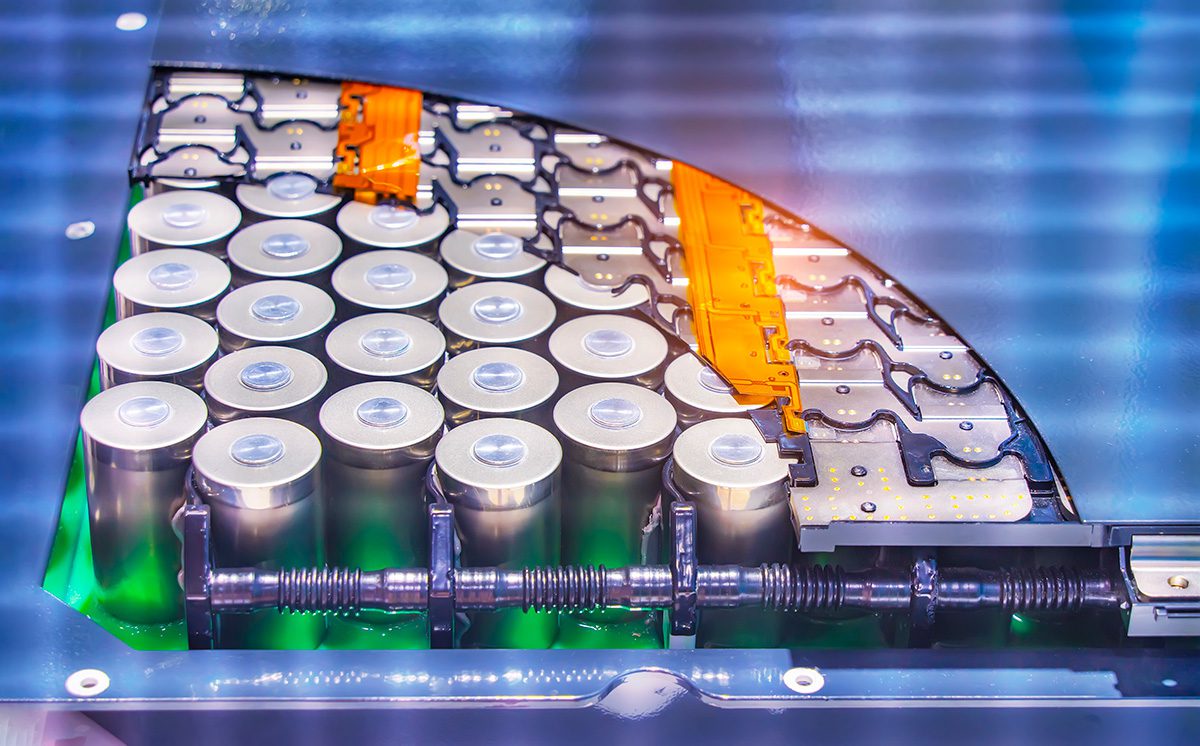
In response to these challenges, the battery manufacturing industry has progressively adopted flexible printed circuit boards (FPCs). These innovative components are rapidly supplanting traditional discrete wiring solutions in modern battery designs. FPC-based systems represent the newest generation of cell contacting systems, offering a paradigm shift in how battery cells are monitored and managed.
An FPC integrates multiple electrical connections onto a thin, flexible substrate, effectively replacing a tangled web of individual wires with a single, streamlined component. This technological evolution brings immediate and significant benefits, addressing many of the limitations associated with older methodologies. The shift towards integrated FPC-based cell contact solutions is not merely an incremental improvement but a fundamental change in battery pack architecture.
Advantages of Integrated FPC-Based Cell Contact Solutions
The adoption of FPC-based cell contact solutions is driven by a compelling array of advantages that directly impact the manufacturing process, overall battery reliability, and the quality of critical data fed to the BMS. These benefits collectively contribute to the overarching goals of increasing battery density safely and cost-effectively.
Optimising Manufacturing Efficiency and Cost
One of the most immediate and tangible benefits of FPCs is their profound impact on battery pack manufacturing costs. By replacing numerous individual wires and their associated connectors with a single, pre-fabricated FPC, manufacturers can significantly reduce assembly time and labour requirements. Automation integration becomes far more feasible with FPCs, further streamlining production and lowering per-unit costs.
The reduced number of components and simplified assembly process also leads to fewer manufacturing errors and less rework, contributing to higher yield rates. This efficiency gain is critical in an industry driven by economies of scale and the constant pressure to reduce the final product price for consumers, especially in the competitive EV market.
Enhancing Reliability and Data Integrity
Reliability is paramount in battery systems, particularly given the high energy content and safety implications. FPC-based systems inherently offer superior reliability compared to discrete wiring. The integrated design eliminates multiple solder joints, crimps, and connectors, which are common points of failure in traditional wiring harnesses.
The robust and consistent nature of an FPC ensures more stable electrical connections and improved signal integrity. This translates directly into higher quality data for the BMS, providing accurate temperature and voltage readings that are less susceptible to noise or measurement errors. Reliable data is the cornerstone of a safe and efficient battery pack, allowing the BMS to precisely manage cell performance and detect anomalies proactively.
Facilitating Higher Energy Density
The drive for higher energy density necessitates compact and lightweight battery pack designs. FPCs, with their thin profile and flexible nature, are ideal for achieving this. They take up significantly less space than conventional wiring, allowing for more cells to be packed into the same volume or enabling smaller, lighter battery packs for a given energy capacity.
This space efficiency is critical for modern applications like EVs, where every cubic centimetre and gram counts towards vehicle performance, range, and overall efficiency. The ability to integrate these flexible solutions seamlessly into complex battery module geometries further enhances design flexibility and innovation.
The Role of FPCs in Modern Battery Pack Efficiency
The integrated FPC-based cell contact solutions are not just an alternative but a fundamental enabler for modern battery pack efficiency. Their contribution extends beyond mere cost and reliability, touching upon the very essence of how high-performance batteries function and are managed. The ability to harness precise and consistent data is directly proportional to the safety and lifespan of a battery.
Leading innovators in this space, such as Churod Electronics, underscore the significance of this technology. A detailed white paper from Churod Electronics comprehensively outlines the operational mechanisms and strategic advantages of FPC-based Cell Contacting Systems. It articulates how this cost-effective yet supremely reliable tool is increasingly recognised as a pivotal component in achieving contemporary battery pack efficiency and safety standards.
The insights presented by industry specialists consistently highlight that investing in superior cell contacting technology, like FPCs, is not an expenditure but a strategic imperative. It underpins the ability to fully realise the potential of advanced battery chemistries and designs, ensuring that increased energy density is achieved without compromising the safety and operational integrity that modern applications demand.
Looking Ahead: The Future of Battery Integration
As the demand for energy storage continues to surge across various sectors, from automotive to consumer electronics and grid infrastructure, the importance of robust, scalable, and efficient battery manufacturing processes will only intensify. Integrated FPC-based cell contact solutions are poised to play an even more critical role in this future.
Their inherent advantages in automation, miniaturisation, and data quality align perfectly with the trajectory of battery technology development. The continued evolution of these flexible solutions will undoubtedly contribute to safer, more powerful, and ultimately more affordable battery systems, driving innovation and sustainability in energy storage for years to come.
Frequently Asked Questions (FAQs)
What are FPC-based cell contact solutions?
FPC-based cell contact solutions utilise Flexible Printed Circuit Boards to connect and monitor individual battery cells. They replace traditional discrete wiring by integrating multiple electrical pathways onto a single, thin, flexible substrate, streamlining the design and assembly of battery packs while enhancing reliability and data precision.
Why are FPCs considered superior to discrete wiring for battery packs?
FPCs offer several advantages, including reduced manufacturing costs and time due to simplified assembly, improved reliability by eliminating numerous individual connections, enhanced data quality for the Battery Management System (BMS), and significant space and weight savings within the battery pack design.
How do FPCs contribute to battery safety?
By providing more accurate and reliable temperature and voltage data to the BMS, FPCs enable precise monitoring of cell health. This enhanced data quality allows the BMS to detect potential issues earlier, manage thermal conditions more effectively, and prevent conditions that could lead to safety hazards or catastrophic failures.
Do FPCs help in increasing battery energy density?
Yes, FPCs contribute to increasing battery energy density. Their thin and flexible nature allows for more compact battery pack designs, enabling manufacturers to integrate more cells into the same volume or to create lighter and smaller packs for a given energy capacity, thereby maximising spatial efficiency.
Are FPC-based solutions cost-effective for battery manufacturing?
Absolutely. While the initial component cost might vary, the overall manufacturing cost is reduced significantly. This is due to streamlined assembly processes, reduced labour, fewer manufacturing errors, and improved yield rates. The ability to automate assembly with FPCs further enhances cost-effectiveness on a larger scale.
What role does a white paper from Churod Electronics play in this context?
The white paper from Churod Electronics serves as a detailed resource explaining the ‘hows and whys’ of FPC-based Cell Contacting Systems. It provides technical insights into how these solutions function, detailing their cost-effectiveness and reliability, and their essential role in achieving modern battery pack efficiency and safety standards.