
Key Takeaways (TL;DR):
- The Slate Truck, priced at $24,950, is poised to become America’s most affordable electric vehicle (EV) pickup.
- Slate, a new automotive startup, is challenging industry norms by focusing on a basic, highly customizable design with a practical range of just over 200 miles.
- The company faces significant hurdles inherent to launching a new auto manufacturer, including high costs, stringent regulations, and complex manufacturing processes.
- With preorders now open, the Slate Truck’s entry signifies a critical moment for the affordable EV segment and the broader automotive industry.
- The vehicle’s viability and market reception were key topics of discussion during a recent media event and a dedicated podcast episode, providing insights into Slate’s strategic vision for batteries, accessories, and market penetration.
The landscape of the electric vehicle market is witnessing a significant development with the imminent arrival of the Slate Truck. Priced at an ambitious $24,950, this new electric pickup aims to carve out a unique niche, challenging established industry trends and consumer expectations for battery-powered vehicles. Its introduction marks a pivotal moment, especially as the demand for more affordable and functional EVs continues to grow across the United States.

Developing an automotive manufacturing enterprise from its nascent stages presents formidable challenges. The path is fraught with immense financial outlays, a labyrinth of regulatory compliances, and the inherent complexities of establishing a robust manufacturing infrastructure. Furthermore, convincing consumers to invest substantial capital in a vehicle from a brand without a long-standing track record is inherently difficult.
Slate’s Strategic Approach to Market Entry
Against this backdrop of industry-wide hurdles, Slate Auto is strategically positioning its Slate Truck by placing several calculated bets on the evolving preferences of electric vehicle buyers. The company is banking on the existence of a robust market for a no-frills, highly functional $24,950 pickup that prioritises utility and affordability.
This strategy directly addresses the prevalent trend towards increasingly higher battery range ratings in the EV sector. The Slate Truck is designed with a practical range of just over 200 miles, a choice that could appeal to a segment of buyers prioritising cost-effectiveness and sufficient daily usability over extended long-distance capabilities.

Another core element of Slate’s market strategy is its emphasis on unparalleled customisation. The company believes it can attract buyers who are seeking a vehicle that can be extensively tailored to their specific needs and preferences, a departure from the more standardised configurations often seen in the mass-market automotive industry.
Overcoming the Challenges of Automotive Manufacturing
Establishing a new automotive brand, particularly one focused on electric vehicles, is a capital-intensive undertaking. Research and development, factory construction, tooling, and establishing supply chains all require monumental investments. Startups must navigate a complex web of federal and state regulations pertaining to safety, emissions, and manufacturing standards, adding layers of cost and time to the development process.
The manufacturing process itself is intricate, requiring precision engineering, advanced robotics, and skilled labour to produce vehicles at scale. Quality control, durability, and reliability are paramount for consumer confidence, and building these attributes from scratch without a legacy of engineering expertise is a significant hurdle for any newcomer.
Moreover, gaining consumer trust is crucial. Buyers typically rely on established brand reputations, dealer networks, and long-term service support when making a vehicle purchase. A new entrant like Slate must actively build this trust through transparent communication, reliable product performance, and accessible customer service infrastructure.
The Slate Truck Moves Closer to Production Reality
With the official price now revealed and preorders actively being accepted, the Slate Truck is transitioning from concept to a tangible market offering. This phase is critical for any automotive startup, indicating concrete progress towards production and delivery.
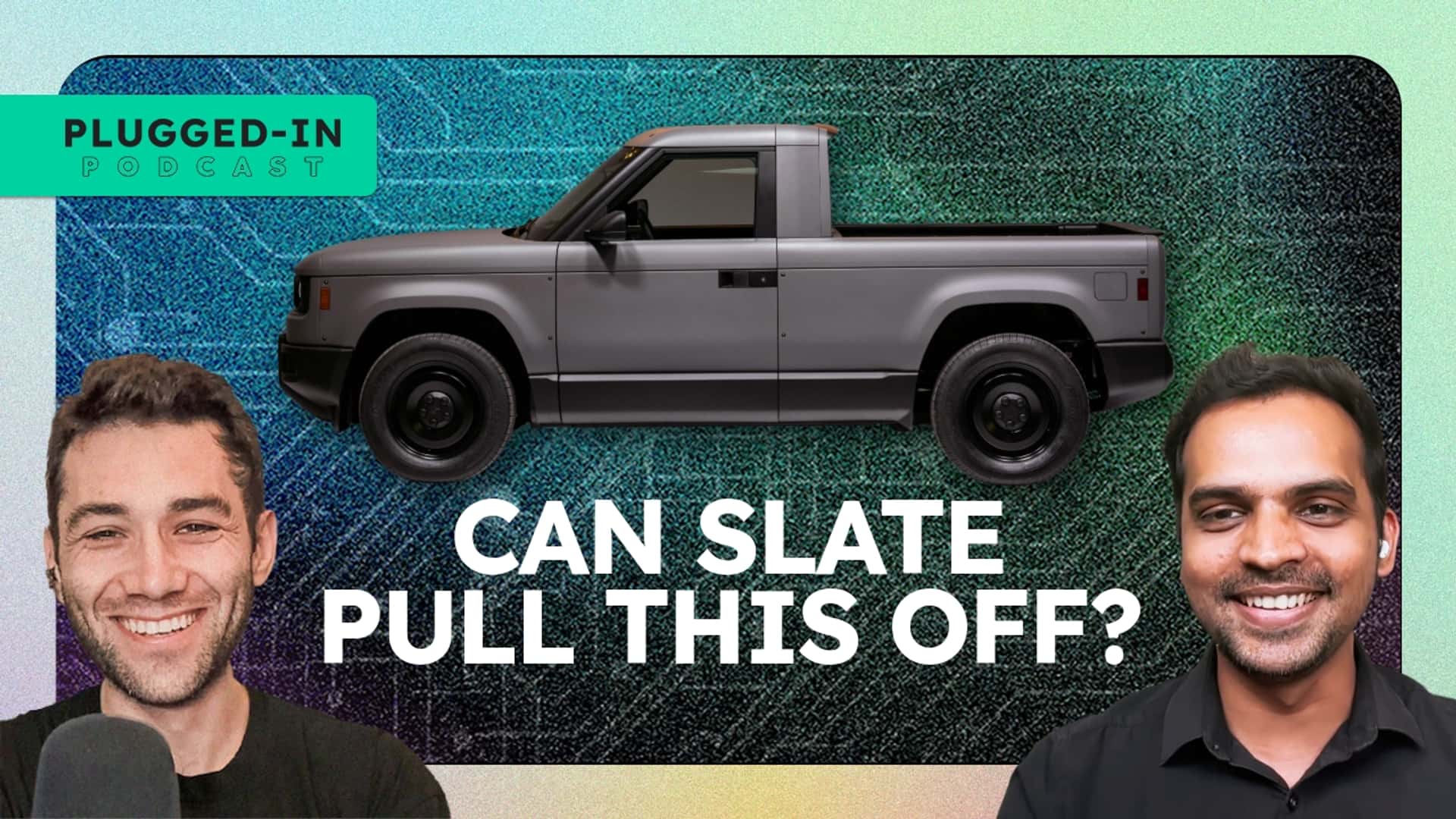
The recent developments surrounding the Slate Truck were a central theme of a comprehensive discussion on this week’s Plugged-In Podcast. The episode delved into the viability of Slate’s business model and the potential for its success in a competitive EV market. A media event hosted by Slate provided further insights into the company’s progress and strategic direction.
During the event, a reporter had the opportunity to physically interact with several Slate Truck vehicles, including a test ride, and engaged directly with company executives. Discussions focused on key operational aspects such as battery technology, the development of accessories, and the broader expansion plans. Such direct engagement is vital for assessing a startup’s readiness and for conveying credible information to the public.
Battery Strategy and Customisation Options
The decision to offer a range of just over 200 miles for the Slate Truck is a strategic one, likely aimed at optimising cost and appealing to a segment of the market where extreme range is not the primary determinant of purchase. This approach allows Slate to potentially use smaller, lighter battery packs, which can reduce the overall vehicle cost and manufacturing complexity. This choice contrasts with the prevailing trend of automakers vying for ever-longer ranges, often at higher price points.
The promise of “endless customisation” suggests a modular design philosophy for the Slate Truck. This could involve easily interchangeable body panels, accessory mounts, and interior configurations, allowing owners to adapt their vehicle for various uses, from work to recreation. This level of personalisation could be a strong differentiator, catering to buyers who seek versatility and individuality in their electric pickup.
Implications for the Affordable EV Segment
The launch of the Slate Truck at a sub-$25,000 price point holds significant implications for the broader electric vehicle market. It directly addresses the long-standing critique that EVs are largely inaccessible due to high purchase costs. By offering an affordable electric pickup, Slate could accelerate EV adoption among budget-conscious consumers and commercial fleets.
Should the Slate Truck prove successful, it could catalyse other manufacturers to focus more intensely on developing and introducing lower-cost EV options, thus diversifying the market and making electric mobility more widespread. Its performance will be closely watched as a bellwether for the demand for basic, functional, and affordable electric vehicles in the American market.
The journey of Slate Auto, and specifically the Slate Truck, represents a fascinating case study in automotive innovation and market disruption. Its ability to navigate the complex challenges of vehicle manufacturing while delivering on its unique value proposition will determine its long-term success. The industry and consumers alike await to see if Slate can not only survive but also thrive in the increasingly competitive electric vehicle arena.
Frequently Asked Questions About the Slate Truck
What is the announced price of the Slate Truck?
The Slate Truck is set to enter the market with an announced starting price of $24,950, positioning it as one of the most affordable electric pickup trucks available in the United States.
What is the estimated driving range of the Slate Truck?
The Slate Truck offers an estimated driving range of a little over 200 miles on a single charge. This range is designed to cater to daily commuting and light-duty use, rather than extended long-haul trips.
What makes the Slate Truck unique in the EV market?
Its uniqueness stems from its ultra-affordable price point, its focus on a basic yet functional design, and its promise of extensive customisation options, allowing buyers to tailor the vehicle to their specific needs.
Has the Slate Truck entered the preorder phase?
Yes, preorders for the Slate Truck are currently underway. This marks a significant step for the company, moving from conceptual development to securing initial market interest and commitments from consumers.
What are the primary challenges faced by Slate Auto as a new manufacturer?
As a new entrant, Slate Auto faces substantial challenges including the immense capital required for automotive manufacturing, navigating a complex web of regulatory requirements, establishing efficient production processes, and building consumer trust in a new brand.
Where can more detailed information about the Slate Truck be found?
Further details regarding the Slate Truck, including insights into its development, battery technology, and market strategy, were recently discussed in a dedicated episode of the Plugged-In Podcast and at a media event. These platforms offer comprehensive perspectives on the vehicle’s progress.
How does Slate’s range strategy compare to other EVs?
While many new EVs aim for ranges exceeding 300 miles, Slate’s strategy of offering just over 200 miles aims to balance performance with affordability, potentially targeting a segment of buyers for whom lower cost is a primary decision factor.
What kind of customisation can buyers expect from the Slate Truck?
The company has indicated that the Slate Truck will be “endlessly customizable,” suggesting a modular design that could allow for interchangeable components, various accessory integrations, and adaptable configurations to suit diverse user requirements.