
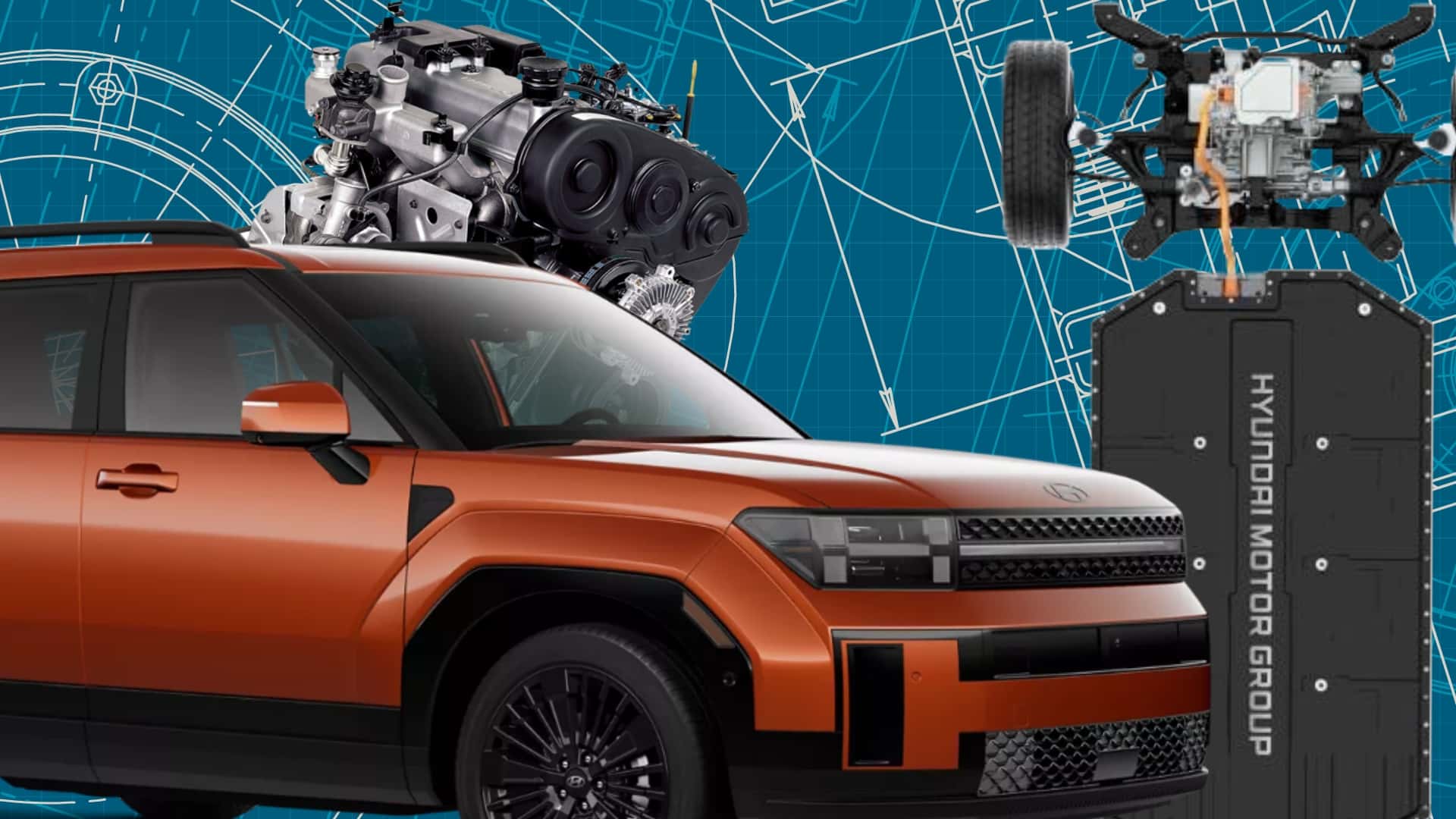
Hyundai’s $800 Million Battery Lab For EVs And Hybrids Signals What’s Next
The automaker is bringing more battery operations in-house, but the big question is what comes out of it.
SEO Meta Description: Hyundai is building a massive $800 million battery research and development center in South Korea, set to open by late 2026. This strategic investment underscores the company’s commitment to in-house battery innovation for future EVs and hybrids, aiming for enhanced control over cost, performance, and integration.
By Suvrat Kothari | Published: December 1, 2025
Hyundai Motor Group, the automotive giant behind Hyundai, Kia, and Genesis, has officially broken ground on a state-of-the-art battery research and development facility in South Korea. This significant investment, amounting to approximately $817 million (1.2 trillion won), is poised to accelerate the development of cutting-edge battery technology for the company’s expanding lineup of electric vehicles (EVs) and hybrid models.

Dubbed the ‘Future Mobility Battery Campus,’ this sprawling 200,000-square-meter (2.15 million square feet) facility is designed to revolutionize Hyundai’s battery development process. It will serve as a crucial hub for continuous process validation, allowing for rigorous real-world quality and durability testing of battery packs before they are integrated into mass-produced vehicles. This comprehensive testing aims to identify and rectify any potential issues early in the development cycle, ensuring optimal performance and reliability.
While Hyundai has previously conducted cell material and design experiments at its Namyang and Uiwang R&D centers, the new campus represents a significant escalation in its in-house capabilities. The facility will focus on developing next-generation, high-performance lithium-ion batteries across various cell formats, specifically catering to EVs and extended-range hybrids. It will also meticulously simulate actual manufacturing conditions, covering electrode production, cell assembly, and crucial safety testing.

Hyundai’s strategic move to bring more battery operations under its direct control aligns with a broader industry trend. Automakers worldwide are increasingly recognizing the benefits of vertical integration in battery development. By managing their own battery packs and chemistries, companies gain greater command over costs, performance metrics, safety standards, and the seamless integration of battery software with vehicle systems. This approach is seen as vital for staying competitive in the rapidly evolving EV market.
The limitations of relying solely on external suppliers can include diverging innovation cycles and reduced control over the critical integration process. This can prove to be a significant disadvantage in the intense race to develop superior EVs. Competitors like Tesla, General Motors, and BYD are already heavily invested in their own battery operations, though many still maintain partnerships with suppliers as their in-house capabilities mature. Toyota, too, is making substantial investments in battery R&D and manufacturing, including a massive $14 billion battery campus planned for North Carolina.
Other automakers are also establishing similar facilities. General Motors is developing a battery validation center in Warren, Michigan, to test its upcoming lithium-manganese-rich cells, slated for deployment in large SUVs and trucks by 2028. Hyundai’s new campus is expected to influence the development of extended-range EVs, a segment seeing growing interest from brands like Ram, Ford, Volvo, and several Chinese manufacturers. Furthermore, Hyundai is actively exploring solid-state battery technology, though details on this front remain closely guarded.
Ultimately, the success of future Hyundai EVs hinges significantly on the advancements made in battery technology. This substantial investment in the Future Mobility Battery Campus signals Hyundai’s clear intention to lead the charge in battery innovation, positioning itself for a competitive edge in the electric era.
Have a tip? Contact the author: suvrat.kothari@insideevs.com
Related Stories
- Hyundai EVs Are Already Great. These New Batteries Will Make Them Better
- 2025 Hyundai Ioniq 5 Six-Month Owner Review: Efficiency, Likes And Dislikes
- Hyundai Quietly Starts Work On Its Own EV Batteries: Report
- Hyundai, Kia Pump The Brakes On Solid State Batteries Until 2030