
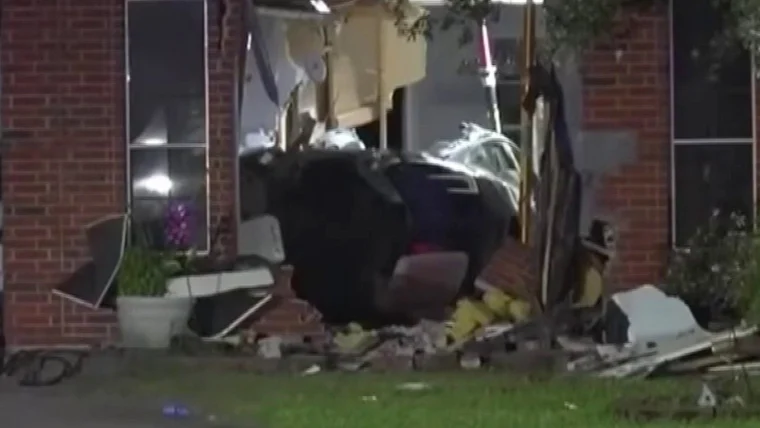
HOUSTON, TEXAS – A Texas man has been formally charged with manslaughter after his Tesla, allegedly operating in Full Self-Driving (FSD) mode, crashed into a home last month, resulting in the death of a woman inside. The incident, which has drawn significant attention to the complexities of advanced driver-assistance systems, saw the driver, Michael Butler, initially attribute the fatal collision to the vehicle’s autonomous capabilities. However, data compiled by Tesla and presented in charging documents indicates a critical override by Butler, shifting the focus of the investigation.
Butler was arrested on Wednesday, July 1, 2026, and subsequently booked into the Harris County, Texas, jail. He remained in custody through Thursday and Friday, awaiting his next court hearing scheduled for Monday, July 6, 2026. He has not yet entered a plea regarding the serious charges against him.
Key Takeaways
- Michael Butler has been charged with manslaughter following a fatal Tesla crash in Harris County, Texas.
- Butler initially claimed the Tesla was in Full Self-Driving (FSD) mode, but Tesla’s data shows he manually overrode the system.
- Charging documents reveal Butler pressed the accelerator to 100% and did not apply brakes before impacting a home, killing a woman.
- Forensic analysis of Butler’s phone uncovered prior Google searches expressing frustration with FSD being ‘too timid’ or ‘not aggressive enough.’
- The victim’s family has filed a wrongful death lawsuit against both Butler and Tesla, seeking at least $1 million in damages.
Investigation Unveils Driver Override in Fatal Collision
The tragic accident occurred last month when Butler’s Tesla veered off course and struck the residence of the Avila family, killing a woman inside. The immediate aftermath saw Butler’s claim that the vehicle was in “self-driving mode,” a statement that initiated a broader conversation about the responsibilities associated with advanced automotive technology.
However, information directly from Tesla’s internal systems, now corroborated by detailed charging documents from the Harris County prosecutor, paints a different picture. These findings suggest that Butler actively intervened, overriding the vehicle’s automated controls and contributing directly to the high-speed impact.
Legal Proceedings Intensify: Manslaughter Charges Filed
The arrest of Michael Butler on Wednesday marks a significant escalation in the legal proceedings surrounding the Tesla Full Self-Driving crash. Charged with manslaughter, a felony offense, Butler faces severe legal repercussions. His ongoing detention underscores the gravity of the charges and the evidence presented by investigators.

Further complicating the legal landscape, the family of the deceased woman, identified as the Avilas, has initiated a wrongful death lawsuit. This civil action targets both Michael Butler and Tesla, seeking damages exceeding $1 million. The lawsuit alleges negligence and seeks to hold both the driver and the automaker accountable for the tragic loss of life.
Critical Data from Charging Documents
Detailed charging documents submitted by the Harris County prosecutor have provided crucial insights into the moments leading up to the devastating crash. These documents outline the sequence of events, directly contradicting Butler’s initial assertions about the vehicle’s autonomous control.
According to the prosecution, Butler was reportedly working for DoorDash on the evening of the accident, utilizing Full Self-Driving mode for several deliveries without any reported issues. The normal operation of the FSD system during these prior trips adds context to the subsequent override.
Accelerator Override and Lack of Braking Confirmed
In the critical moments preceding the collision, as the Tesla approached a left turn while still under FSD control, investigators found that Butler pressed the accelerator pedal. This action, described as an override of FSD’s speed control, saw the pedal depressed to its maximum, reaching 100 percent. This initiated a rapid acceleration of the vehicle.
Crucially, the charging documents explicitly state:
“I noted that the brake pedal was never pressed in the final minute before the crash. I also did not see any data to indicate that the driver attempted to turn away from the curb that he eventually struck. Further, I observed that no mechanical error was detected or recorded by the vehicle before BUTLER and the Tesla struck the curb.”
This forensic analysis highlights that not only was the brake pedal untouched, but there was also no data suggesting any evasive steering action by Butler. Furthermore, the absence of any mechanical errors recorded by the vehicle before the impact strongly suggests driver input as the primary factor in the Tesla Full Self-Driving crash.
Driver’s Prior Frustrations with FSD Mode Revealed
A significant piece of evidence uncovered during the investigation is a forensic analysis of Michael Butler’s mobile phone. This analysis revealed a series of Google searches made by Butler around the time of the crash, expressing apparent dissatisfaction with Tesla’s FSD system’s perceived conservatism.
The documents outlined this:
“Investigator Veal also informed me that he had received BUTLER’s cell phone from Deputy Amad and that HDAO digital forensics team had completed a data extraction and download of the phone. Multiple Google searches related to Tesla had been made from BUTLER’s phone in the months leading up the crash. I noted multiple searches in May of 2026 indicating an apparent frustration with Tesla’s FSD mode, including the following searches: “Tesla fsd not aggressive enough 2026 model,” “Tesla fsd not [sic) aggressive enough 2026,” “FSD is not aggressive enough for city driving,” and “tesla fsd too timid.”‘
These searches, dating back to May 2026, suggest a pattern of frustration with FSD’s “timid” or “not aggressive enough” behavior, particularly in city driving scenarios. This revelation adds a new layer to the understanding of Butler’s state of mind and potential motivation for overriding the system’s speed controls, leading to the catastrophic Tesla Full Self-Driving crash.
Tesla’s Consistent Stance on Driver Override
Immediately following the crash, Tesla had issued statements indicating that its internal data showed Butler had overridden the FSD system’s speed control. The company’s initial findings highlighted that the accelerator was pressed completely, causing the vehicle to travel at an excessive rate of speed before it slammed into the Avila residence, causing the fatality.
The formal charges and the detailed evidence from the Harris County prosecutor’s office now align with and further substantiate Tesla’s earlier claims regarding the driver’s actions. This consistency reinforces the narrative that the autonomous system was overridden, thereby placing the onus of control and responsibility on the human driver at the time of the accident.
The Broader Implications for Autonomous Vehicle Responsibility
This incident, culminating in a manslaughter charge and a wrongful death lawsuit, underscores the critical and evolving debate surrounding accountability in accidents involving advanced driver-assistance systems. While systems like Tesla’s Full Self-Driving offer enhanced capabilities, manufacturers consistently emphasize that the driver remains ultimately responsible for vehicle operation, a principle highlighted by the facts of this particular Tesla Full Self-Driving crash.
The ongoing legal proceedings will likely scrutinize the interplay between human intervention and autonomous technology, potentially setting precedents for how such incidents are legally interpreted moving forward. The case serves as a stark reminder of the complexities inherent in the transition towards increasingly automated driving experiences and the paramount importance of driver vigilance.
Frequently Asked Questions (FAQ)
What is Michael Butler accused of?
Michael Butler has been formally charged with manslaughter, a felony, following a fatal Tesla crash into a home in Harris County, Texas. He is accused of causing the death of a woman by overriding the vehicle’s Full Self-Driving system and accelerating excessively, leading to the collision.
What did Butler claim about the crash?
Initially, Michael Butler claimed that his Tesla vehicle was operating in “self-driving mode” at the time of the fatal accident. This claim suggested the autonomous system was responsible for the collision, a narrative now contradicted by evidence from Tesla and charging documents.
What did Tesla’s data reveal about the incident?
Tesla’s internal data, supported by charging documents, indicates that Michael Butler manually overrode the Full Self-Driving system. He reportedly pressed the accelerator pedal to 100 percent, thereby disengaging FSD’s speed control, and did not apply the brakes before the impact.
Were there any mechanical failures with the Tesla?
No, the charging documents explicitly state that no mechanical error was detected or recorded by the Tesla vehicle prior to the crash. This finding further strengthens the conclusion that driver input, rather than a vehicle malfunction, was the primary cause of the accident.
What did Butler’s phone searches indicate?
A forensic analysis of Michael Butler’s phone revealed several Google searches from May 2026 expressing frustration with Tesla’s Full Self-Driving mode. Queries included phrases like “Tesla fsd not aggressive enough” and “FSD is not aggressive enough for city driving,” suggesting a desire for more assertive vehicle behavior.
What is the status of the legal case?
Michael Butler was arrested and charged with manslaughter. He remained in custody through Thursday and Friday following his arrest and is scheduled for a court hearing on Monday, July 6, 2026. He has not yet entered a plea, and the investigation remains active.
Has a civil lawsuit been filed?
Yes, the family of the woman killed in the crash, identified as the Avilas, has filed a wrongful death lawsuit. This civil action seeks at least $1 million in damages from both Michael Butler and Tesla, holding them accountable for the tragic loss.