
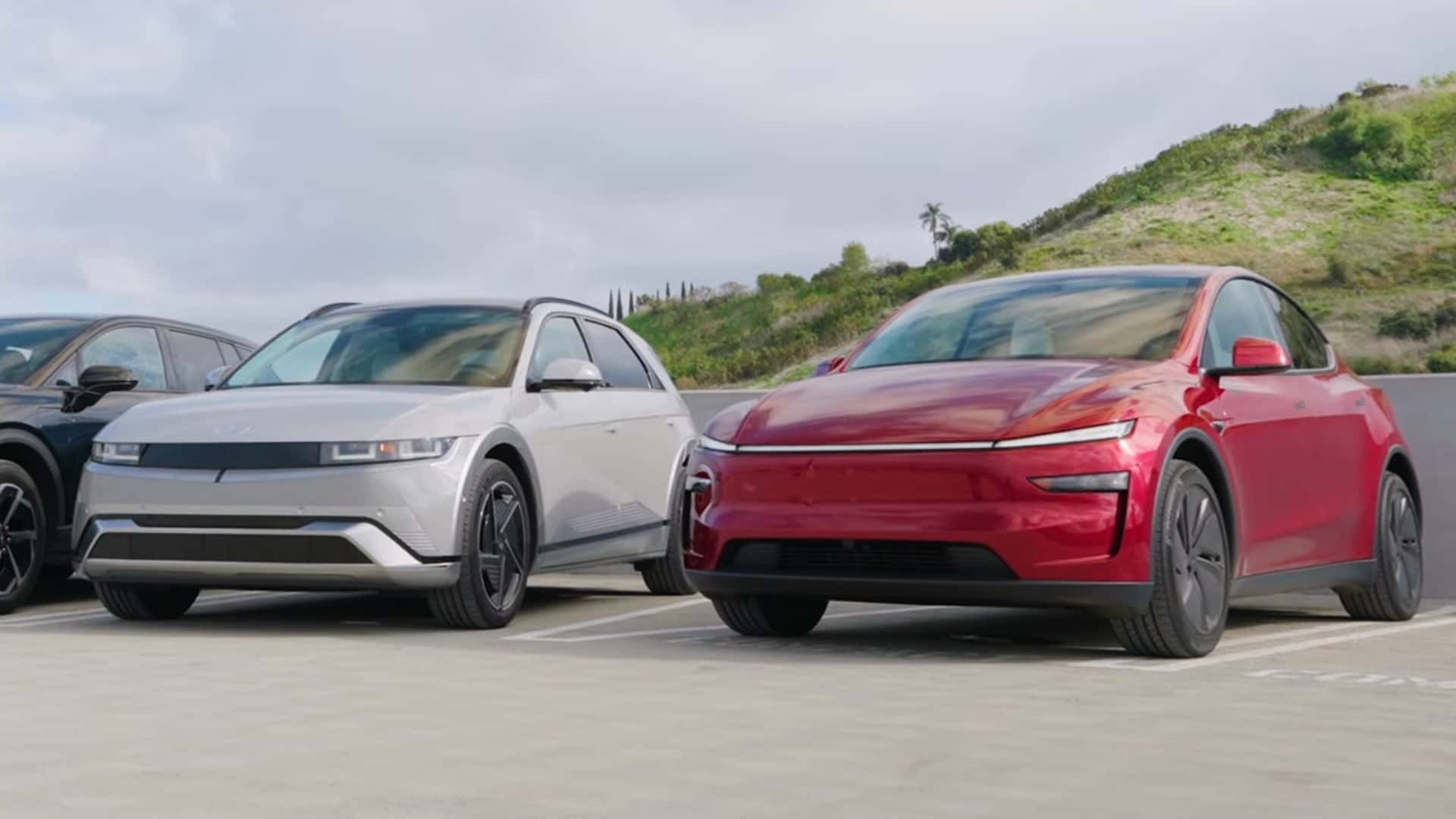
For years, the Tesla Model Y has stood as an undisputed titan in the electric vehicle (EV) market. Often dubbed the ‘iPhone of cars’ for its seamless blend of range, power, advanced technology, competitive pricing, and sheer practicality, it achieved the remarkable feat of becoming the world’s best-selling EV and, notably, the best-selling single model of car overall.
However, the automotive landscape is rapidly evolving. As an updated Tesla Model Y, codenamed ‘Juniper,’ makes its debut, a formidable new crop of electric family crossovers is challenging its long-held dominance. These vehicles, once considered a class below Tesla, are now catching up and, in some key areas, even surpassing the benchmark set by the American EV pioneer.
Key Takeaways
- The updated Tesla Model Y ‘Juniper’ faced a comprehensive comparison against leading electric family crossovers by automotive experts at Edmunds.
- While significantly improved, the Model Y’s long-standing dominance was challenged, culminating in a dead heat with the updated Hyundai Ioniq 5.
- The Chevrolet Equinox EV impressed with its value proposition, securing third place, closely followed by the Honda Prologue in fourth.
- This comparison highlights a pivotal shift in the EV market, offering consumers more diverse and highly competitive choices beyond Tesla.
- The Ioniq 5’s integration of the North American Charging Standard (NACS) and Supercharger access, combined with its user-friendly cabin, positions it as a significant Tesla Model Y competitor.
The Shifting Tides of the EV Crossover Segment
The electric vehicle sector is experiencing unprecedented growth and diversification. With more established automakers committing significant resources to EV development, consumers are now presented with a broader array of choices that directly challenge the pioneers of the segment. This intensified competition is leading to higher standards across the board, pushing innovation in design, technology, range, and affordability.
Automotive authority Edmunds recently conducted a rigorous comparison test, pitting the new Model Y ‘Juniper’ against three highly-rated electric family crossovers: the Honda Prologue, the Chevrolet Equinox EV, and the updated Hyundai Ioniq 5. This head-to-head evaluation aimed to determine how these contenders stack up against the established leader in a rapidly maturing market.
Contenders and Their Performance: A Detailed Look
The Edmunds test provided a crucial snapshot of the current state of the electric family crossover segment. Each vehicle brought its unique strengths to the comparison, ultimately shaping a competitive field where a clear Tesla Model Y competitor emerged.
Fourth Place: Honda Prologue’s Promising Debut
Securing the fourth position, the 2024 Honda Prologue emerged as a notable entry in the EV landscape. This vehicle represents Honda’s strategic collaboration with General Motors, utilizing GM’s underlying EV platform while integrating distinct Honda characteristics.
Despite its GM foundations, the Prologue successfully injects recognizable Honda ‘vibes’ into its design and functionality. Crucially, it retains Apple CarPlay integration, a feature notably absent in some of GM’s own recent EV offerings, appealing to a broad segment of tech-savvy drivers.
Edmunds highlighted the Prologue’s generous interior space, particularly its ample room for luggage and unusually large cupholders, a nod to Honda’s long-standing understanding of American consumer preferences for practicality. The tested Prologue Elite variant, priced at $59,295, boasts a respectable range of up to 283 miles, establishing it as a solid, if not class-leading, Tesla Model Y competitor in terms of practicality and basic functionality.
Third Place: Chevrolet Equinox EV’s Value Proposition
The Chevrolet Equinox EV claimed the third spot, recognized as a 2024 Breakthrough Award winner. This model stands out as one of America’s most compelling electric bargains, offering significant value for its price point. The Edmunds test vehicle, impressively, was priced at $34,995, making it a highly accessible option for many prospective EV buyers.
Beyond its affordability, the Equinox EV demonstrated remarkable efficiency in range tests. Edmunds recorded a stunning 356-mile result, a figure that the tester acknowledged might be influenced by Southern California’s favorable weather conditions. However, this still points to the vehicle’s inherent efficiency.
It is important to note that the Equinox EV is smaller than its comparison counterparts and is the sole single-motor, front-wheel-drive contender in the test. This configuration often contributes to its enhanced range capabilities compared to all-wheel-drive alternatives. Tester Brian Wong succinctly summarized its performance, stating it “almost gets to the top spot on its value proposition,” underscoring its strength as a budget-friendly Tesla Model Y competitor.
The Head-to-Head: Tesla Model Y vs. Hyundai Ioniq 5
The true highlight of the Edmunds comparison centered on the showdown between the updated Tesla Model Y ‘Juniper’ and the refreshed Hyundai Ioniq 5. For years, the Model Y was the benchmark, but this test revealed a significant shift: the two vehicles ended in a dead heat, signaling a new era of genuine competition at the top.
The Updated Tesla Model Y ‘Juniper’ Improvements
The Tesla Model Y ‘Juniper’ Launch Series, which was priced at $61,635 and offered an impressive 327 miles of range, introduced several key enhancements. Noteworthy improvements include a more refined and quieter cabin, along with significantly better ride quality compared to its predecessor. These changes prompted Wong to describe it as one of the most comfortable EVs currently available, a stark contrast to previous iterations.
While Tesla’s technology suite remains a core strength, the review noted that its Full Self-Driving system “makes some questionable decisions.” Despite this, Wong affirmed the Juniper as a “big improvement” for the Model Y. He further elaborated, stating that the previous generation “would have only gotten third place in this test. But now, it is on equal footing with the Ioniq 5.” This observation highlights the extent of the Model Y’s internal advancements and the heightened competitive landscape it now navigates.
Hyundai Ioniq 5’s Ascent as a Formidable Rival
The updated Hyundai Ioniq 5 proved itself a formidable Tesla Model Y competitor, matching the Model Y’s performance in the overall assessment. This iteration comes loaded at $60,285 and offers a respectable range of 282 miles. A significant upgrade for the Ioniq 5 is the inclusion of a standard Tesla-style North American Charging Standard (NACS) plug, granting native access to the extensive Tesla Supercharger network without requiring an adapter. This development alone dramatically improves the Ioniq 5’s charging convenience and infrastructure compatibility.
Beyond charging, the Ioniq 5 distinguishes itself with a more user-friendly interior philosophy. Its cabin features traditional buttons, knobs, and physical air vents, which offer a tactile and intuitive operational experience, contrasting sharply with Tesla’s minimalist, all-screen approach. The Ioniq 5 also provides wireless Apple CarPlay and Android Auto, a versatile sliding center console, and a comfortable cabin complemented by punchy performance.
This blend of practicality, advanced features, and a more conventional interface positions the Ioniq 5 as a powerful contender. Wong ultimately framed the choice between the two as a preference for the Tesla’s “uncompromising minimalism” or the Ioniq 5’s “futuristic familiarity,” underscoring that both now offer compelling, distinct propositions.
Implications for the EV Market and Consumers
The outcome of the Edmunds comparison is highly significant. A tie verdict between the Tesla Model Y and the Hyundai Ioniq 5 unequivocally demonstrates that the Model Y is no longer the default, unchallenged top choice in the electric crossover segment. This represents a monumental advancement for the entire field of electric vehicles, signifying increased maturity and diversification within the market.
For consumers, this competitive landscape translates into greater choice, driving innovation and pushing manufacturers to deliver superior products across various price points and feature sets. The emergence of strong rivals like the Ioniq 5, Equinox EV, and Prologue ensures that the future of electric family crossovers will be dynamic, offering compelling alternatives to suit diverse preferences and needs, with the Tesla Model Y competitor segment growing stronger than ever.
FAQ Section
Q: What was the main outcome of the Edmunds EV comparison?
A: The Edmunds comparison test concluded with a dead heat between the updated Tesla Model Y ‘Juniper’ and the updated Hyundai Ioniq 5. This result signifies a major shift, indicating that the Model Y is no longer the undisputed leader in the electric family crossover segment.
Q: Which EVs were included in the comparison with the Tesla Model Y?
A: The comparison test by Edmunds included the updated Tesla Model Y ‘Juniper,’ the Honda Prologue, the Chevrolet Equinox EV, and the updated Hyundai Ioniq 5. These models represent some of the most prominent electric family crossovers in the market.
Q: What improvements did the updated Tesla Model Y ‘Juniper’ feature?
A: The Model Y ‘Juniper’ showed significant improvements, including a quieter and more refined cabin, enhanced ride quality, and generally better comfort. These updates aim to address previous criticisms and bolster its position against growing competition, making it a stronger Tesla Model Y competitor.
Q: What makes the Hyundai Ioniq 5 a strong Tesla Model Y competitor?
A: The updated Hyundai Ioniq 5 now features a standard NACS plug for direct Supercharger access, improving charging convenience. It also offers a more user-friendly cabin with physical controls, wireless Apple CarPlay/Android Auto, and a comfortable, well-performing package, offering a distinct alternative to Tesla’s minimalism.
Q: How did the Chevrolet Equinox EV perform in the test?
A: The Chevrolet Equinox EV secured third place, praised for its exceptional value proposition and impressive range (356 miles in ideal conditions) at a competitive price of $34,995. Its single-motor, front-wheel-drive configuration contributed to its efficiency, making it an attractive budget-friendly option.
Q: Why is the Honda Prologue considered an important new EV?
A: The Honda Prologue, built on a GM EV platform, is significant as Honda’s entry into the electric family crossover market. It offers a spacious interior, practical features, and retains Apple CarPlay, appealing to consumers looking for a blend of established brand familiarity with new EV technology.
Q: What does this comparison mean for consumers buying EVs?
A: The results indicate a maturing EV market with more high-quality choices. Consumers now have excellent alternatives to the Tesla Model Y, allowing them to choose vehicles that better match their preferences for features, design philosophy (minimalist vs. traditional), charging access, and overall value.