
KEY TAKEAWAYS
- A significant £2-million UK government-backed initiative, part of the DRIVE35 program, is actively underway to bolster the safety of EV batteries.
- The collaborative effort involves electric powertrain consultancy CamMotive, aerogel developer Thermulon, and a prominent, unnamed UK original equipment manufacturer (OEM).
- The project’s core objective is the development and rigorous evaluation of AEROMOTIVE, an innovative aerogel-based barrier system.
- AEROMOTIVE is specifically engineered to mitigate the severe risks associated with thermal runaway events in EV batteries by effectively restricting heat transfer between individual cells.
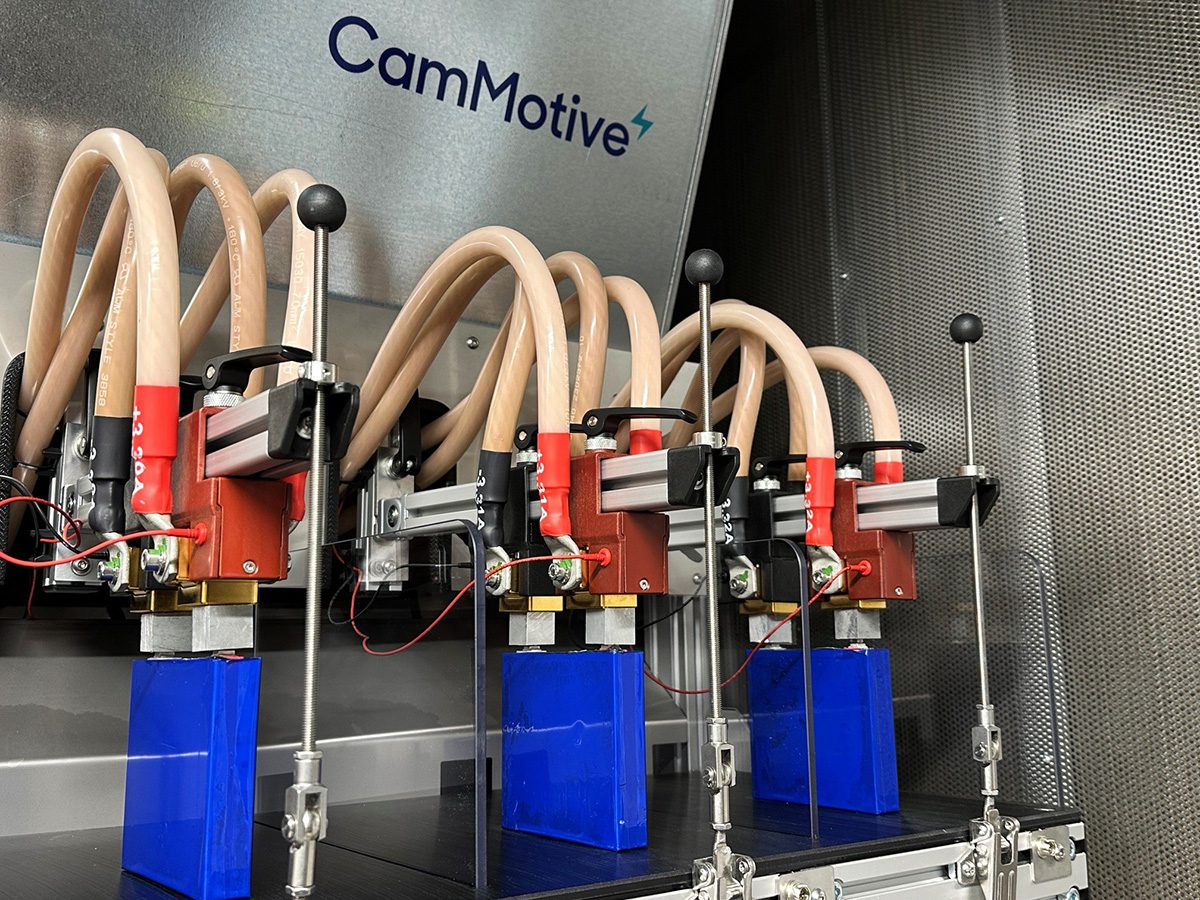
- CamMotive is taking the lead in designing a comprehensive testing and validation program, which includes crucial prismatic cell swelling and compression assessments to refine the Anti Thermal Propagation (ATP) pads.
- Slated for completion over a 12-month period, this groundbreaking project represents a vital step towards enhancing overall electric vehicle safety and consumer confidence.
A significant collaborative project, backed by £2-million in UK government funding, is set to revolutionise the safety landscape for electric vehicle (EV) batteries. Leading electric powertrain consultancy CamMotive and advanced aerogel developer Thermulon have been formally designated as key technology partners in this ambitious undertaking.

The consortium, which also includes an unnamed but major UK OEM, aims to address one of the most critical safety challenges in modern electric vehicles: thermal runaway in battery systems. This initiative falls under the government’s strategic DRIVE35 program, underscoring its national importance.
Unveiling AEROMOTIVE: A New Era in Battery Safety
Central to this 12-month collaboration is the development and evaluation of AEROMOTIVE, an innovative aerogel-based barrier system designed and manufactured in the UK. This cutting-edge material is engineered to contain thermal runaway events within EV batteries, offering a robust layer of protection.
AEROMOTIVE functions by utilising ultra-thin, lightweight layers of Anti Thermal Propagation (ATP) material. These specialized layers are strategically placed to limit the transfer of heat between individual battery cells, thereby significantly slowing down the spread of a thermal runaway event.
Understanding Thermal Runaway and Its Risks
Thermal runaway represents a formidable safety concern inherent in lithium-ion batteries, which power the vast majority of electric vehicles today. Under specific fault conditions, an individual battery cell can experience an uncontrollable rise in temperature.
This uncontrolled heating can initiate a dangerous chain reaction, where excessive heat propagates rapidly from one cell to adjacent cells within a module or an entire battery pack. Such an uncontrolled event carries the severe risk of leading to fire or even explosion, posing a significant threat to vehicle occupants and surrounding environments.
The fundamental principle behind an inter-cell barrier, such as AEROMOTIVE, is to interrupt this dangerous chain reaction. By strategically placing such a barrier between cells, the objective is to dramatically slow cell-to-cell heat transfer, providing crucial time for intervention and preventing catastrophic failure of the entire EV battery system.
CamMotive’s Pivotal Role in Testing and Validation
CamMotive, renowned for its expertise in electric powertrain systems, is tasked with designing and overseeing the comprehensive testing and validation program for AEROMOTIVE. This critical phase will rigorously evaluate the barrier’s performance under a diverse range of operational conditions and potential fault scenarios.
A key aspect of CamMotive’s work involves extensive prismatic cell swelling and compression testing. These specialised tests are vital for understanding how various mechanical forces affect the long-term longevity and safety characteristics of battery cells.
The data gathered from these intricate assessments will be instrumental in optimising the design and placement of the ATP pads within the EV battery architecture. This meticulous approach ensures that the AEROMOTIVE barrier not only performs effectively but also contributes to the overall structural integrity and safety of the battery pack.
Luke Barron, a Senior Engineer at CamMotive, underscored the profound impact of this initiative, stating, “This project will deliver critical research and testing methodologies that make EV batteries safer.” This highlights the project’s foundational role in advancing electric vehicle safety standards.
The Strategic Importance of the DRIVE35 Program
The £2-million investment from the UK government, channeled through the DRIVE35 program, underscores a national commitment to fostering innovation in the electric vehicle sector. This program is designed to accelerate the development of critical technologies that enhance the performance, safety, and commercial viability of electric mobility solutions.
By backing projects like AEROMOTIVE, the government aims to position the UK at the forefront of advanced materials science and battery technology research. Such initiatives are crucial for building a resilient domestic EV supply chain and supporting the broader transition towards a sustainable transport future.
The collaboration with an unnamed UK OEM further signals the project’s direct relevance to real-world automotive applications. This ensures that the developed technology is not just theoretically sound but also practically implementable within existing and future electric vehicle designs.
Aerogels: The Material Science Behind AEROMOTIVE
Thermulon’s expertise as an aerogel developer is central to the AEROMOTIVE project. Aerogels are revolutionary synthetic porous materials derived from a gel, in which the liquid component has been replaced with gas. The result is a solid with extremely low density and exceptionally low thermal conductivity.
Often referred to as “frozen smoke,” aerogels are among the lightest solid materials known, yet possess remarkable insulation properties. Their intricate porous structure traps air within countless nanoscale pockets, making them extraordinarily effective at resisting heat flow. This characteristic makes them an ideal candidate for thermal barrier applications in high-performance systems like EV batteries.
The integration of aerogel technology in AEROMOTIVE is a testament to the pursuit of advanced material solutions for pressing engineering challenges. Its thin, lightweight nature ensures that the safety barrier adds minimal weight to the battery pack, a crucial factor for electric vehicle efficiency and range.
Future Outlook for EV Battery Safety and Technology
The advancements achieved through projects like AEROMOTIVE are vital for boosting consumer confidence in electric vehicles. As the global adoption of EVs continues to accelerate, ensuring the highest levels of safety in EV batteries becomes paramount.
This project contributes significantly to the ongoing evolution of battery cell design, manufacturing practices, and thermal management strategies across the automotive industry. It highlights a proactive approach to addressing potential risks, moving beyond reactive measures to preventive engineering.
The insights gained from CamMotive’s rigorous testing and Thermulon’s material innovation will not only impact future iterations of AEROMOTIVE but could also influence broader industry standards for battery pack construction and safety protocols. Such collaborative research and development efforts are essential for the continued growth and success of the electric mobility sector.
Frequently Asked Questions (FAQs)
What is thermal runaway in EV batteries?
Thermal runaway in EV batteries refers to a critical condition where an individual battery cell overheats uncontrollably, triggering a chain reaction of excessive heat to adjacent cells. This uncontrolled propagation can lead to widespread battery failure, fire, or even explosion, posing severe safety risks.
How does AEROMOTIVE technology work?
AEROMOTIVE is an aerogel-based thermal barrier designed to enhance EV battery safety. It uses thin, lightweight layers of Anti Thermal Propagation (ATP) material strategically placed between cells. Its primary function is to significantly limit the transfer of heat from a failing cell, thereby slowing the spread of a thermal runaway event.
What is the DRIVE35 program?
The DRIVE35 program is a UK government-backed initiative aimed at supporting and funding innovative projects within the electric vehicle sector. Its goal is to accelerate the development of crucial technologies, such as advanced battery safety solutions, contributing to the UK’s leadership in sustainable automotive innovation.
What are aerogels and why are they used in this project?
Aerogels are exceptionally lightweight, porous materials known for their superior insulating properties. Often called ‘frozen smoke,’ they possess extremely low thermal conductivity, making them ideal for heat containment. In this project, their ability to resist heat transfer is leveraged to create an effective barrier against thermal runaway in EV batteries.
What is CamMotive’s role in the AEROMOTIVE project?
CamMotive, an electric powertrain consultancy, is responsible for designing and executing the rigorous testing and validation program for the AEROMOTIVE barrier. Their work includes critical assessments like prismatic cell swelling and compression testing, which are essential for optimising the ATP pads and ensuring the overall safety and longevity of EV batteries.
What is the significance of prismatic cell testing?
Prismatic cell testing, including swelling and compression assessments, is crucial for understanding how mechanical forces impact battery cell performance and safety over time. These tests help identify potential vulnerabilities and inform the design of robust thermal management solutions, ensuring the integrity and reliability of EV batteries under various conditions.
How will this project impact EV safety?
This project is expected to significantly enhance EV battery safety by developing a more effective barrier against thermal runaway. By containing heat propagation, AEROMOTIVE aims to reduce the risk of catastrophic battery failures, thereby increasing consumer confidence, potentially influencing future industry standards, and accelerating electric vehicle adoption globally.
Which companies are involved in this project?
The project involves a collaboration between electric powertrain consultancy CamMotive and aerogel developer Thermulon, working alongside an unnamed major UK Original Equipment Manufacturer (OEM). This consortium is supported by a £2-million grant from the UK government under its DRIVE35 program, focusing on advanced EV battery safety.