
Key Takeaways
- Faraday Future’s new sub-brand, Faraday X, announced plans for affordable electric and plug-in hybrid vehicles, targeting the $20,000-$50,000 market.
- The company showcased a “Luxury AI MPV” prototype, the Super One, with production slated for late 2025 in California, aiming to bring Asian-style luxury minivans to the U.S. market.
- Despite compelling visions, a cloud of skepticism remains due to Faraday Future’s decade-long history of financial troubles, geopolitical intrigue, and unfulfilled promises, particularly regarding its flagship FF 91 model.
- Only 16 FF 91 units have been produced since its 2017 unveiling, far short of the 2018 production target and an initially planned Nevada factory that never materialized.
- The company’s heavy emphasis on “AI integration” at CES 2025 appeared questionable, with prototypes showing limited unique features and even incorrect data in a production model demo.
- Founder Yueting “YT” Jia, despite being removed as CEO in 2022, remains Chief Product Officer, with ongoing personal financial and legal challenges in China adding to the company’s reputational issues.
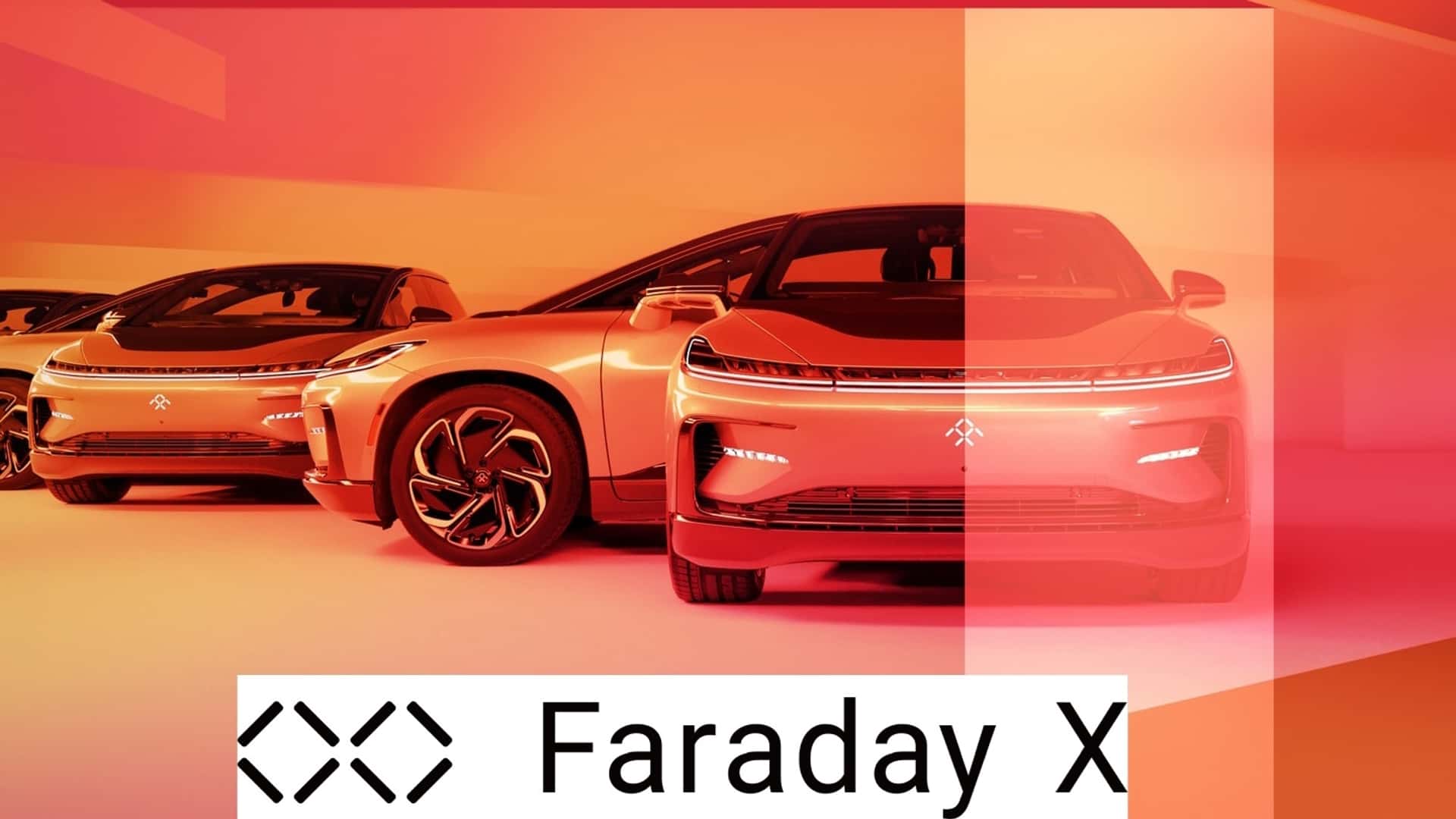
LAS VEGAS, NV — At CES 2025, Faraday Future, a name often associated with high ambition and equally significant challenges, presented a renewed vision for its future. The company introduced a new sub-brand, Faraday X, signaling a strategic pivot towards higher-volume and more accessible market segments. This move comes as the electric vehicle (EV) maker attempts to overcome a tumultuous decade marked by financial instability and significant production delays.
Max Ma, CEO of the newly formed Faraday X, articulated a compelling narrative of resilience and forward momentum. He spoke of a company that has navigated a labyrinth of obstacles, culminating in the production of its initial product, the ultra-luxury FF 91. The focus now, he stated, is on expanding into more mainstream markets with a lineup of affordable electric vehicles and plug-in hybrids.

Faraday X: A New Direction for Electric Vehicles
The Faraday X sub-brand is designed to target a significantly different price point than Faraday Future’s current offering. While the premium FF 91 commands a price tag exceeding $300,000, Faraday X aims for the $20,000 to $50,000 range. This strategic shift underscores a broader industry trend towards making electric mobility accessible to a wider consumer base.
Under this new umbrella, Ma detailed plans for the FX 5, an entry-level model projected to cost between $20,000 and $30,000. Following this would be the FX 6, positioned in the $30,000 to $50,000 bracket. The most prominent reveal, however, was the “Super One” minivan, a Luxury AI MPV for which a prototype was showcased, though its exact price remains undisclosed.
The Super One, slated for production by the end of 2025 at Faraday Future’s California manufacturing facility, represents a bold attempt to introduce the popular “luxury MPV” concept from Asian markets to American consumers. Ma described it as bringing “Cadillac Escalade luxury in a Toyota Sienna package,” featuring opulent reclining seats and advanced technological integration, emphasizing a gap in the current U.S. automotive market.

A Troubled Legacy and Lingering Skepticism
Despite Ma’s optimistic outlook and the promising new ventures, the history of Faraday Future casts a long shadow. The company’s journey has been a complex tapestry of corporate maneuverings, international financial challenges, and a string of unfulfilled promises that have eroded investor and public trust.
The name Yueting “YT” Jia remains central to this saga. Once lauded as a pioneering internet entrepreneur in China, Jia founded several ambitious companies, including Leshi (a streaming service) and LeEco (a conglomerate spanning TVs, smartphones, and automotive ventures). However, his extensive business empire eventually led to massive personal debts, which were reportedly secured using Faraday Future stock.
Jia’s financial woes led to his being largely unwelcome in his home country and undergoing a personal bankruptcy restructuring in the U.S. While he was removed as Faraday Future’s CEO in 2022 following an internal investigation, he continues to serve as the company’s chief product officer, a role that keeps him intricately linked to its future direction.
The Unfulfilled Promise of the FF 91
The flagship FF 91 serves as a potent reminder of Faraday Future’s past struggles. Unveiled with great fanfare at CES 2017, the luxury EV promised groundbreaking specifications: over 1,000 horsepower, a 378-mile electric range, and advanced Level 4 autonomous driving capabilities. Production was ambitiously slated for 2018 at a planned, ground-up factory in Nevada, a vision intended to rival early Tesla and Rivian operations.
However, that factory never materialized. Work on the facility ceased even before the FF 91’s grand reveal, prompting the then-treasurer of Nevada to publicly declare the venture a “Ponzi scheme,” according to *Fortune*. Eight years after the production halt and seven years post-introduction, Faraday Future has reportedly produced a mere 16 units of the FF 91. Most, if not all, of these vehicles have been distributed to employees, paid spokespeople, and other advocates, including musician Chris Brown.
The AI-EV Vision: Reality Versus Rhetoric
Faraday Future’s presentation at CES 2025 heavily leaned into the promise of artificial intelligence (AI) integration. The company’s lexicon now features terms like “AI-EV” for the FF 91, “Luxury AI MPV” for the Super One, and even “RE-AIEV” (Range Extended Artificial Intelligence Electric Vehicle) for the plug-in hybrid version of the Super One. This emphasis on AI positioned Faraday Future as a forward-thinking tech company, aligning with contemporary industry trends.
During a guided tour of the Super One prototype, however, the practical application of this AI vision appeared less concrete. Journalists were informed that the prototype was essentially a rebadged Chinese plug-in hybrid MPV, developed with a Chinese partner and utilizing a mature design. The interior, though featuring comfortable, power-reclining massage seats, lacked visible FX-specific equipment, with the dashboard deliberately obscured by black cloth due to an unfinished tech stack.
When pressed on the promised AI functionalities, a product representative offered a somewhat vague explanation: “Well, it’s a general term.” He elaborated that the vehicle would support voice controls and offer semi-autonomous driving features. This explanation raised questions, as these features are standard across many modern minivans and fall short of the transformative AI integration suggested by Ma’s earlier claims that no other MPV product offers AI onboard.
Demonstrating AI: Glitches in the System
Further demonstrations intended to showcase Faraday Future’s AI prowess revealed inconsistencies. An FF 91 was presented, featuring impressive voice commands. The system effectively processed complex requests such as, “Find me an Italian restaurant with outdoor seating and at least four stars, exclude pizzerias,” and subsequently understood contextual commands like “Navigate to the third one.”
However, the “large language model” AI companion displayed on the rear screen of the FF 91 proved less capable. A spokesperson attempted to demonstrate its ability to automatically pull up relevant stock tickers during a video playback. After several failed attempts, a CNBC YouTube video eventually played, and the AI companion indeed displayed a stock ticker. Critically, this stock information was either months out of date or entirely fabricated, bearing no resemblance to current market prices.
This discrepancy highlighted a potential disconnect between Faraday Future’s ambitious AI marketing and the current state of its implemented technology, even in its production vehicle. The incident served as a potent metaphor for the challenges of integrating advanced AI in a meaningful and reliable way within the automotive sector.
The Founder’s Shadow: YT Jia’s Enduring Influence
The ongoing presence and financial challenges of founder YT Jia continue to be a significant point of scrutiny for Faraday Future. While he has navigated personal restructuring under U.S. law, Ma confirmed that “within [Chinese] law, there have been certain small amounts of funding that need to be further cleared.” This implies that Jia remains actively engaged in efforts “to try to earn money and pay the debt back to the debt creditors.”
Jia’s history also includes Faraday Future being rescued by Evergrande, a Chinese property giant that itself subsequently faced a major financial crisis. This complex web of interconnected financial difficulties underscores the precarious position in which Jia’s personal issues place the company’s reputation and perceived stability.
Faraday Future’s global CEO, Matthias Aydt, acknowledged Jia’s crucial role, stating, “His role is pretty important. He’s the founder of the company.” Aydt emphasized Jia’s contributions to product ideas and the user ecosystem, noting his direct reporting lines to both Aydt and the board. Aydt dismissed concerns regarding Jia’s personal financial issues, describing them as separate from the company’s liabilities and expressing trust in Jia’s character.
Charting a Path Forward: A Call for Trust
Max Ma made an unusual direct appeal for positive media coverage, framing Faraday Future’s journey as one of unwavering resilience. He reflected on the company’s turbulent past, including an attempted corporate takeover and the failure of the Nevada plant, and articulated a desire for a fresh start. “We have been trained, with big hearts, with resilience, with hard [work.] We also want to have this big opportunity to prove that we can do it again, right?” Ma stated.
He acknowledged the difficulty in rebuilding public trust, especially given the company’s history of unfulfilled promises. “There’s also activities about a reputational issue. But today we have cleared up all those issues. It’s all behind us. We want to have a fresh start,” Ma concluded, signaling Faraday Future’s determination to redefine its public image and deliver on its latest set of ambitious commitments at CES 2025.
FAQ Section
What is Faraday Future’s new sub-brand, Faraday X?
Faraday X is Faraday Future’s new sub-brand aimed at the mass market, intending to produce electric and plug-in hybrid vehicles priced between $20,000 and $50,000. This marks a significant shift from Faraday Future’s current ultra-luxury FF 91 model, which costs over $300,000, signaling a move towards more accessible electric mobility.
What products has Faraday X announced?
Faraday X plans to introduce the FX 5, priced from $20,000 to $30,000, and the FX 6, targeting the $30,000 to $50,000 range. The sub-brand also unveiled a prototype for the “Super One” minivan, described as a Luxury AI MPV, with production anticipated to begin by the end of 2025.
What is the status of the FF 91’s production?
Despite being unveiled at CES 2017 with a promised 2018 production start, only 16 units of the FF 91 have been produced to date. These vehicles have primarily been allocated to company employees, paid spokespeople, and advocates, significantly falling short of initial projections and market expectations for the luxury EV.
How has Faraday Future addressed its past financial and production issues?
Faraday Future has navigated a complex history including a failed Nevada factory, significant financial debt, and a rescue by Evergrande. The company asserts it has now “cleared up all those issues” and seeks a “fresh start” with its new Faraday X sub-brand and a renewed focus on delivering on its production timelines for new models like the Super One.
What role does AI play in Faraday Future’s new vehicles?
Faraday Future heavily promotes “AI integration” in its vehicles, labeling them “AI-EVs” and “Luxury AI MPVs.” While demos showcased impressive voice commands in the FF 91, the Super One prototype’s AI features were described as standard voice controls and semi-autonomous functions, and a separate FF 91 demo revealed an AI companion providing incorrect, outdated stock information, raising questions about the depth of true AI innovation.
What is the current status of Faraday Future founder Yueting “YT” Jia?
Yueting “YT” Jia, the founder of Faraday Future, was removed as CEO in 2022 due to internal investigations but remains the Chief Product Officer. He has undergone personal bankruptcy restructuring in the U.S., but continues to face certain outstanding financial and legal issues in China, which leadership describes as personal matters separate from company liabilities.