
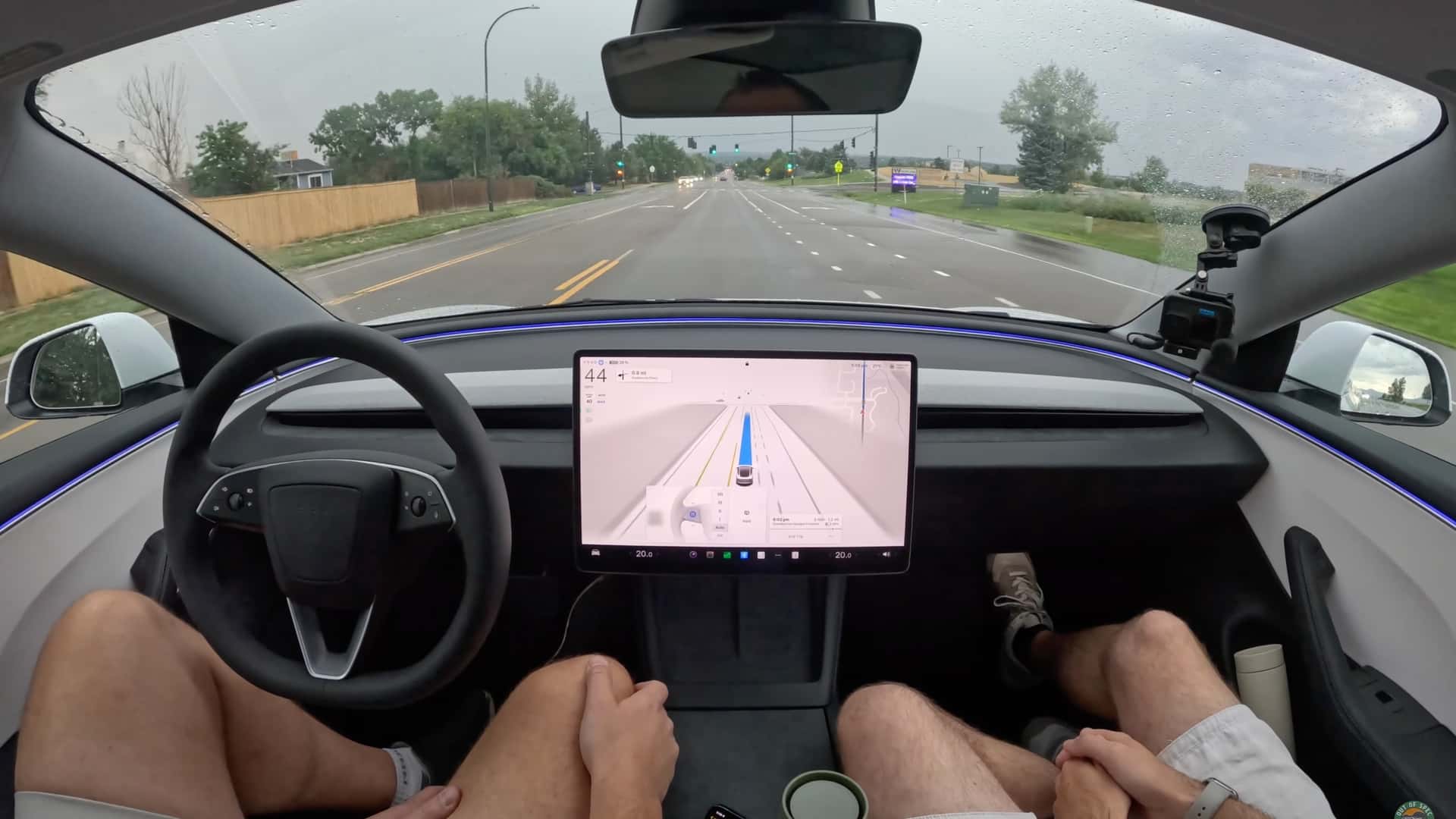
In a significant strategic move, Tesla has initiated a new incentive program, offering insurance discounts to owners who extensively use its ‘Full Self-Driving’ (FSD) software suite. This programme, currently operational in Texas and Arizona, aims to bolster the adoption and usage rates of the company’s advanced driver-assistance system, which remains central to its long-term vision.
Key Takeaways
- Tesla Insurance is now offering up to a 10% discount on premiums for eligible FSD users in Texas and Arizona.
- To qualify for the maximum discount, drivers must operate their vehicles with FSD engaged for at least 50% of their total mileage.
- The initiative highlights Tesla’s push to gather more data and increase engagement with its FSD technology.
- Despite the discounts, prospective customers are advised to compare rates with other insurers, as Tesla Insurance may not always be the most cost-effective option.
Tesla’s Strategic Drive for FSD Adoption
Tesla’s future trajectory is intricately linked to the success and widespread acceptance of its Full Self-Driving software. While the nomenclature suggests full autonomy, the system currently functions as an advanced driver-assistance system, requiring constant human supervision.
Company CEO Elon Musk has consistently positioned Tesla as an artificial intelligence (AI) firm, rather than solely an automotive manufacturer. This narrative hinges heavily on the eventual full capabilities and commercial viability of FSD, particularly through subscription models.
The Discount Programme: Eligibility and Mechanics
The recently announced discount programme, unveiled on Tesla’s official website and subsequently highlighted by Tesla-focused influencers, targets customers utilising Tesla Insurance. This insurance arm is wholly owned and operated by the electric vehicle manufacturer.
Initially, the programme is geographically limited to customers residing in Texas and Arizona. Eligible Tesla owners who subscribe to or have purchased the Full Self-Driving option can avail themselves of a reduction in their insurance premiums.

The maximum discount offered is 10%, contingent upon the driver engaging FSD for a substantial portion of their vehicle’s operational miles. Specifically, to achieve the full 10% reduction, drivers must record 50% or more of their driving miles with the FSD system actively engaged.
It is important to note that accessing the FSD feature itself requires a significant investment, either an upfront payment of $8,000 or a monthly subscription fee of $99. Prospective buyers considering FSD purely for the insurance discount should carefully weigh these costs against potential savings, as recovering the initial outlay through discounts alone may prove challenging.
Navigating FSD Usage and System Limitations
The requirement for high FSD usage—50% or more of total mileage—presents a considerable expectation for users. While Tesla advocates for the system’s capabilities, FSD has encountered documented difficulties in interpreting various common driving scenarios.
These challenges can include navigating complex roundabouts or accurately discerning one-way roads. Such instances underscore the system’s current limitations and the ongoing need for vigilant driver oversight, as mandated by regulatory guidelines and fundamental safety principles.
FSD Safety Claims Amidst Data Scrutiny
Tesla and its CEO have frequently asserted that FSD technology, when engaged, is inherently safer than human driving. This claim has been a cornerstone of the company’s marketing and developmental narrative for its driver-assistance systems.
However, these assertions have been met with scepticism from independent experts and regulators. Concerns have been raised regarding Tesla’s methodology for presenting safety data, with critics suggesting that the company has selectively disclosed information without providing comprehensive datasets necessary for independent validation.
Historically, Musk has highlighted FSD’s per-mile safety statistics during periods when the system was predominantly used on freeways. Freeways typically present fewer variables and lower accident rates per mile compared to complex urban driving environments, potentially skewing comparative safety metrics.
The introduction of insurance discounts, directly linked to FSD usage, could be interpreted as Tesla Insurance’s endorsement of the system’s safety benefits. Nevertheless, given the insurance provider is a subsidiary of Tesla, alternative motivations, such as marketing and data collection, cannot be entirely dismissed.
Assessing Tesla Insurance and Broader Market Context
While the new discount offers an enticement, it does not automatically position Tesla Insurance as the most economical option for all customers. Anecdotal evidence from various online forums and individual reports indicates that Tesla Insurance premiums can, in certain instances, be higher than those offered by traditional insurance firms.
Furthermore, Tesla’s insurance model is known to incorporate real-time driving data, which can include metrics on aggressive driving behaviour. This granular monitoring has reportedly led to significant premium increases for some policyholders. Reports from Reuters, alongside customer complaints, have also highlighted challenges associated with Tesla Insurance’s customer service operations.
Prospective policyholders are therefore strongly advised to undertake thorough research and compare quotations from multiple insurance providers. An informed decision, based on individual driving profiles and competitive market offerings, remains paramount.
Tesla’s Imperative: Facing Evolving Market Dynamics
The introduction of these FSD insurance discounts comes at a pivotal juncture for Tesla. The company has recently navigated a period characterised by declining global sales and a contracting share within the competitive electric vehicle market.
Financial reports have also indicated a downturn in Tesla’s profits. Concurrently, the initial enthusiasm surrounding products like the Cybertruck appears to be moderating, and highly anticipated affordable models have yet to materialise. These factors collectively underscore a heightened urgency for Tesla to innovate and solidify its technological leadership.
For shareholders, often considered Tesla’s primary constituency, the company’s reliance on FSD to drive future revenue and valuation growth is significant. Elon Musk’s projection of an ‘unsupervised’ FSD ride-sharing service launching in June further exemplifies the strategic importance placed on this technology.
Ultimately, this discount programme serves multiple objectives for Tesla: to stimulate the active use of its FSD system, to gather invaluable real-world driving data for further development, and to maintain consumer and investor confidence in its advanced AI capabilities. The ability of a 10% discount to substantially alter user behaviour and accelerate FSD’s journey towards true autonomy remains a key area of observation.
FAQ Section
Q1: Which states are eligible for the Tesla FSD insurance discount?
A1: Currently, the Tesla Full Self-Driving insurance discount programme is available to eligible Tesla owners who reside and operate their vehicles in Texas and Arizona. The company may expand this initiative to other regions in the future, subject to regulatory approvals and operational considerations.
Q2: What is the maximum discount available through this programme?
A2: Tesla Insurance offers a maximum discount of 10% on premiums for customers who actively use the Full Self-Driving feature. This discount is applied based on the proportion of miles driven with FSD engaged, encouraging consistent utilisation of the system.
Q3: What are the requirements to qualify for the full 10% discount?
A3: To receive the maximum 10% insurance discount, Tesla owners must ensure that 50% or more of their total driving miles are completed with the Full Self-Driving system actively engaged. This metric is tracked by Tesla’s onboard telematics.
Q4: Is it cost-effective to purchase FSD solely for the insurance discount?
A4: Acquiring Full Self-Driving involves a significant investment, either an $8,000 upfront cost or a $99 monthly subscription. It is unlikely that the potential insurance savings, even the maximum 10%, would quickly offset these substantial expenses, making it generally not cost-effective solely for the discount.
Q5: Does using FSD automatically make Tesla Insurance the cheapest option?
A5: Not necessarily. While the discount is an incentive, reports suggest that Tesla Insurance premiums can sometimes be higher than those from other providers. Drivers are advised to compare rates across multiple insurers and consider factors like real-time driving data reporting.
Q6: Does the FSD name imply full autonomous driving?
A6: Despite its name, Tesla’s Full Self-Driving (FSD) system is not a fully autonomous driving system. It is an advanced driver-assistance system that requires constant human supervision. The driver remains responsible for the vehicle’s operation at all times when FSD is active.
Q7: Why is Tesla offering these FSD insurance discounts?
A7: Tesla is offering these discounts to incentivise greater adoption and usage of its FSD software. This strategy aims to gather more real-world driving data, accelerate the system’s development, and reinforce Tesla’s long-term vision as a leader in AI and autonomous technology, especially amid evolving market challenges.