
Key Takeaways
- From January 2024, the US electric car tax credit transitions from a post-purchase tax refund to an immediate point-of-sale discount, making EVs more accessible.
- Buyers can receive up to $7,500 for new and $4,000 for used clean vehicles directly at the dealership, eliminating the wait for a tax season rebate.
- The Internal Revenue Service (IRS) will repay registered dealerships within 72 hours of a qualifying transaction.
- Existing eligibility criteria, including North American final assembly, critical mineral and battery component sourcing, vehicle MSRP caps, and income limits, remain in effect.
- A specific leasing strategy could allow buyers to potentially combine credits, offering significant savings.
America’s landscape for electric vehicle adoption is set to undergo a significant transformation. Starting January 2024, the federal electric car tax credit program will shift dramatically, moving from a deferred tax refund system to an immediate point-of-sale discount. This pivotal change is designed to make clean energy vehicles, including electric and plug-in hybrid cars, more accessible and affordable for a broader range of consumers across the United States.
This initiative, originally outlined in the Inflation Reduction Act of 2022, aims to streamline the process for EV buyers. Instead of waiting months to claim a credit on their annual tax return, consumers will now be able to apply the federal incentive directly to the purchase or lease price of a qualifying vehicle at the dealership. This means driving off the lot with an EV for a substantially lower upfront cost, a development anticipated to boost the nascent electric vehicle market.

U.S. Treasury officials have engaged in discussions, providing clarity on the mechanics of these updated rules. The Internal Revenue Service (IRS) has recently made public the comprehensive information regarding how this point-of-sale feature will function, ensuring transparency for both consumers and automotive retailers.
Evolution of Electric Car Tax Credits in the US
Federal tax credits for clean vehicles are not a novel concept for American consumers. For over a decade, buyers of new plug-in hybrids, fuel cell electric vehicles (FCEVs), and battery electric vehicles (BEVs) have been eligible for tax credits of up to $7,500. This incentive structure remained largely consistent until January 1, 2023, when key provisions of the Inflation Reduction Act (IRA) came into force.
The IRA introduced a modernised framework that significantly altered the eligibility landscape. Its primary goal was to bolster domestic manufacturing and supply chains for electric vehicles. Consequently, the revised tax credit criteria heavily favoured North American-built EVs and those with batteries sourced from specific regions, leading to a considerable number of previously eligible models losing their qualification status.

For example, vehicles such as the Chinese-made Polestar 2, the British-built Mini Cooper SE, and the German-produced BMW i4 were among those that no longer qualified for the federal electric car tax credit, solely due to their final assembly locations. This marked a clear shift towards supporting a localised EV ecosystem.
Key Restrictions Introduced by the IRA
Beyond manufacturing origin, the Inflation Reduction Act also implemented stringent vehicle Manufacturer’s Suggested Retail Price (MSRP) caps. These limits were set at $55,000 for sedans and $80,000 for trucks and SUVs. This addition meant that several premium or higher-priced electric vehicle options, such as certain models from Lucid, became ineligible for the credit, impacting buyers who might have otherwise benefited.
Furthermore, the IRA introduced income limitations for prospective buyers. For new electric car purchases, these limits were set at $300,000 for joint filers, $225,000 for heads of household, and $150,000 for single filers. Used EV buyers faced even stricter thresholds: $150,000 for joint, $112,500 for head-of-household, and $75,000 for single filers.
Despite these additions, the fundamental mechanism of the tax credit remained unchanged throughout 2023. It functioned as a non-refundable credit, meaning that a buyer could only reduce their tax liability by the amount of the credit, up to the total tax owed. For instance, if a buyer was eligible for a $7,500 credit but only owed $5,000 in taxes, they could only claim $5,000. The remaining $2,500 would not be refunded.
This non-refundable aspect was a point of contention among critics, as it effectively limited the full benefits of the electric car tax credit for individuals with lower tax burdens or those with significant tax write-offs. The upcoming changes aim to rectify this, ensuring that the full value of the credit directly contributes to making EVs more affordable upfront for a wider range of consumers.
The 2024 Transformation: Point-of-Sale Electric Car Tax Credit
The most significant update arriving in 2024 is the direct application of the electric car tax credit at the point of sale. This means consumers will receive the reduced price immediately when purchasing or leasing a qualifying vehicle, effectively acting as an instant discount rather than a future tax refund.
To facilitate this, dealerships interested in offering the transferrable credit must first register with a new IRS online platform called “IRS Energy Credits Online.” Once registered and approved, a dealership can process the transaction by applying the credit amount directly to the vehicle’s price. The IRS is committed to reimbursing the dealership for the credit amount within 72 hours of a successfully completed and validated transaction.
This new system addresses the limitations of the previous non-refundable credit. For the hypothetical taxpayer who previously had a $5,000 tax burden but was eligible for a $7,500 credit, they can now benefit from the full $7,500 reduction in the purchase price of their new EV. Crucially, consumers who receive a credit exceeding their eventual tax liability will not be required to repay the difference to the IRS come tax season.
Navigating Income Caps and Potential Repayment
While the point-of-sale system offers immediate benefits, consumers must remain mindful of the income limits. If a buyer exceeds the applicable income cap by the end of the tax year in which they received the upfront credit, they will be obligated to repay the entire credit amount to the IRS. For example, a single filer who receives a $7,500 credit at the point of sale but subsequently earns $150,001 in that year would be required to return the full $7,500.
This scenario underscores the importance of buyers carefully assessing their projected annual income before utilising the point-of-sale option. For individuals whose income is close to the thresholds, the option to claim the credit normally (as a traditional tax credit) remains available. This alternative allows for a precise calculation of eligibility during tax filing season, potentially avoiding unforeseen repayment obligations.
Eligibility Criteria for the 2024 Electric Car Tax Credit
The updated rules continue to enforce the stringent qualification criteria established by the Inflation Reduction Act, particularly concerning vehicle origin and battery components. To qualify for the new electric car tax credit, new electrified vehicles must meet several conditions:
- Possess a battery capacity of at least 7 kilowatt-hours.
- Undergo final assembly in North America.
- Adhere to critical mineral and battery component sourcing requirements, largely favouring materials and manufacturing processes outside of “foreign entities of concern.” These stipulations aim to enhance supply chain resilience and reduce dependence on specific geopolitical regions.
Qualifying New Vehicles and Credit Values
Below is a list of vehicles currently meeting the eligibility criteria and their respective federal electric car tax credit values, subject to the applicable MSRP caps:
Vehicles with a $55,000 MSRP Cap:
- Chevrolet Bolt EV: $7,500 credit
- Chevrolet Bolt EUV: $7,500 credit
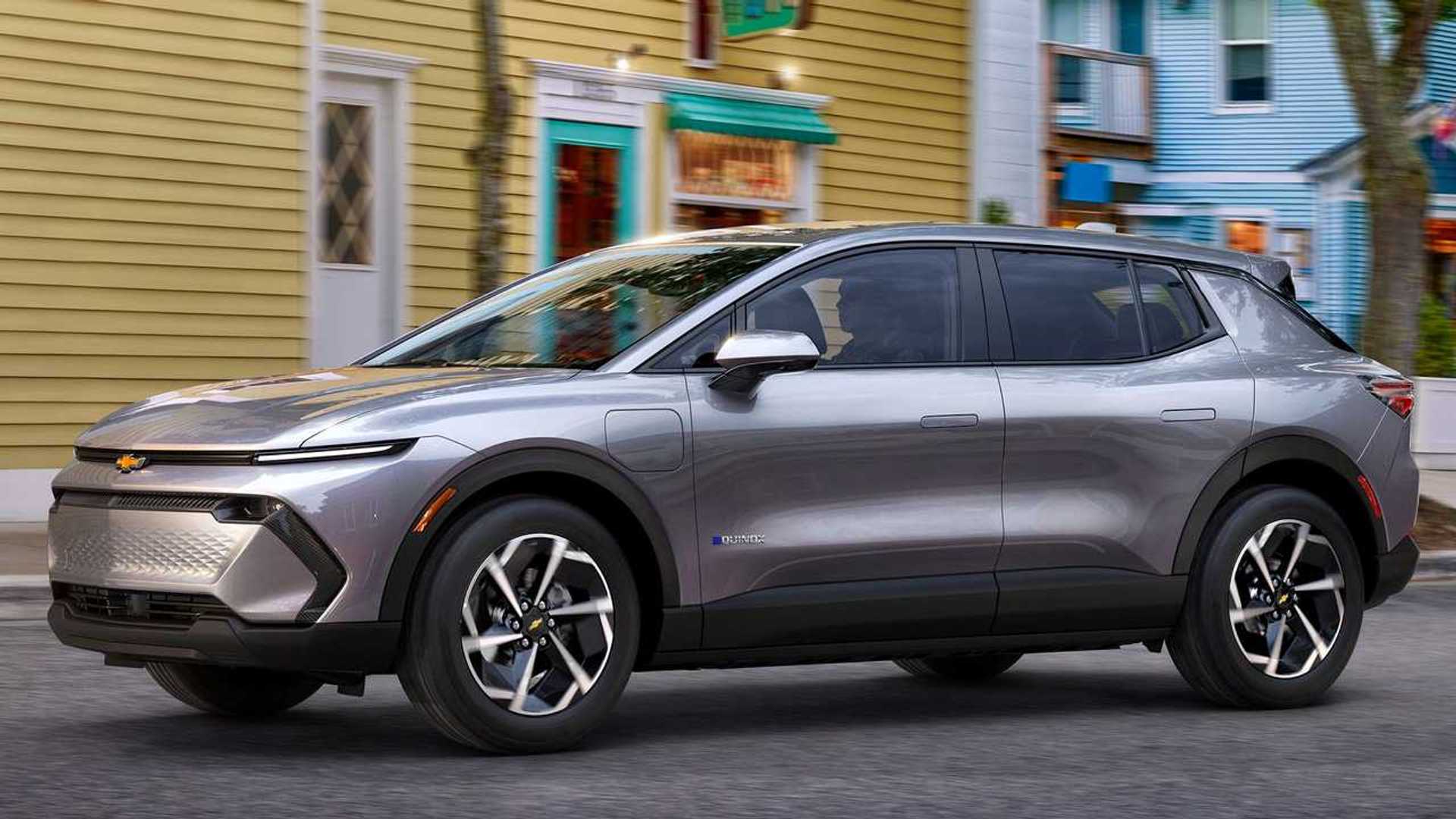
- Chevrolet Equinox EV: $7,500 credit
- Tesla Model 3: $7,500 credit
Vehicles with an $80,000 MSRP Cap:
- Cadillac Lyriq: $7,500 credit
- Chevrolet Blazer EV: $7,500 credit
- Chevrolet Silverado EV: $7,500 credit
- Chrysler Pacifica: $7,500 credit
- Corsair Grand Touring: $3,750 credit
- Ford E-Transit: $3,750 credit
- Ford Escape: $3,750 credit
- Ford F-150 Lightning: $7,500 credit
- Ford Mustang Mach-E: $3,750 credit
- Jeep Grand Cherokee 4xe: $3,750 credit
- Lincoln Aviator Grand Touring: $7,500 credit
- Rivian R1S: $3,750 credit
- Rivian R1T: $3,750 credit
- Tesla Model X Long Range: $7,500 credit
- Tesla Model Y: $7,500 credit
- Volkswagen ID.4: $7,500 credit
- X5 xDrive50e 2024: $3,750 credit
Used Electric Car Tax Credit Qualifications
The eligibility for used clean vehicles also includes specific parameters:
- They can be fuel cell EVs, plug-in hybrids, or pure EVs.
- A battery size of at least 7 kilowatt-hours is mandatory.
- The vehicle must be at least two model years old.
- The sale price must be under $25,000.
- Crucially, the vehicle must not have been transferred to a qualified buyer after August 16, 2022. This last point signifies that a used electric vehicle that has already been purchased second-hand (regardless of price) after August 16, 2022, will not qualify for the $4,000 used EV credit.
Prospective buyers interested in determining a used vehicle’s eligibility can utilise tools such as Recurrent’s EV Qualification Tool for assistance in assessing whether their desired vehicle meets the federal criteria.
Strategic Approaches to Maximise Electric Car Tax Credit Benefits
For discerning consumers, there are strategic avenues to potentially maximise the total federal incentives received for electric vehicle acquisition. One such approach involves leveraging leasing options.
When an individual leases an EV, the manufacturer or leasing company may incorporate the applicable electric car tax credit into the lease payments. This particular benefit is noteworthy because, under current rules, the credit for leased vehicles is not subject to the same strict domestic manufacturing requirements as direct purchases. This means even EVs assembled outside North America could effectively pass on a credit through a lease.
Following a lease term, if the individual decides to purchase the vehicle at its residual value, and that buyout price is under the $25,000 threshold for used EVs, they could then qualify for the $4,000 used electric car tax credit on that subsequent purchase. This combined strategy could potentially result in total incentives reaching up to $11,500 for a single vehicle, offering substantial savings.
The revised electric car tax credit represents a monumental shift for both new and used EV consumers. By introducing a point-of-sale feature, these updated rules provide unparalleled purchasing stimuli, drastically reducing the upfront cost of electric cars. This enhanced accessibility is poised to further accelerate the clean energy transition, significantly altering the automotive retail landscape and encouraging wider adoption of electric vehicles across the nation.
Frequently Asked Questions About the EV Tax Credits
Will I have to repay the IRS if my tax burden is less than the credit amount received at the point of sale?
No, under the new point-of-sale system, you will receive the full benefit of the electric car tax credit upfront, regardless of your final tax burden. You will not owe the IRS any difference if your tax liability is less than the credit amount.
What happens if my income exceeds the limit after I receive a point-of-sale tax credit that year?
If your Modified Adjusted Gross Income (MAGI) exceeds the applicable income thresholds by even one dollar at the end of the year you claimed the point-of-sale credit, you will be required to repay the entire incentive amount to the IRS.
If an EV’s starting MSRP is below the cap but exceeds it with options, does it still qualify for the credit?
No. To secure the electric car tax credit, the final Manufacturer’s Suggested Retail Price (MSRP) of the vehicle, including all options and accessories, must remain under the specified cap ($55,000 for sedans or $80,000 for trucks/SUVs).
Why are North American assembly and battery component requirements so important for new EV tax credits?
These requirements, mandated by the Inflation Reduction Act, aim to strengthen domestic manufacturing, create jobs within the United States, and reduce reliance on foreign supply chains for critical minerals and battery components, fostering a more secure and resilient clean energy economy.
Can I still claim the electric car tax credit on my tax return instead of at the point of sale?
Yes, buyers retain the option to claim the credit as a traditional tax credit on their annual tax return. This might be a prudent choice for individuals whose income is close to the eligibility thresholds, allowing them to confirm their final income before receiving the incentive.
Are there any restrictions on the type of used vehicles that qualify for the credit?
Yes, qualified used clean vehicles must be at least two model years old, have a battery capacity of at least 7 kWh, be sold for under $25,000, and must not have been previously transferred to a qualified buyer after August 16, 2022.
How quickly do dealerships get reimbursed by the IRS for the point-of-sale credit?
The IRS has stated its commitment to repaying registered dealerships for the transferred credit amount within 72 hours of a completed and validated transaction. This prompt reimbursement is crucial for dealer cash flow.