
Key Takeaways
- Starting January 2024, the electric car tax credit transforms from an annual tax refund claim into an immediate point-of-sale discount.
- Buyers of new and used qualifying electric and plug-in hybrid vehicles can receive up to $7,500 and $4,000 respectively, directly off the purchase price at dealerships.
- This significant change aims to enhance accessibility for a broader range of consumers, including those with lower tax burdens.
- Dealerships must register with the IRS through a new online portal to facilitate these immediate transfers, with the IRS repaying dealers within 72 hours.
- Existing income limits and vehicle price caps from the Inflation Reduction Act remain in effect, with penalties for exceeding income thresholds post-purchase.
America’s landscape for electric vehicle adoption is poised for a significant shift as the federal electric car tax credit undergoes a transformative overhaul, effective January 2024. This change marks a pivotal moment for prospective EV buyers, making the incentives more accessible and potentially accelerating the transition to clean vehicles across the United States.
The updated provisions will allow consumers to benefit from the tax credit at the point of sale, effectively turning a future tax refund into an immediate discount on the purchase or lease of an eligible electric or plug-in hybrid vehicle. This move is expected to remove a major financial barrier for many, streamlining the acquisition process for environmentally conscious drivers.

Insights from U.S. Treasury officials indicate that these modifications, while formally detailed by the IRS, align with the original intent of the Inflation Reduction Act (IRA), passed in August 2022. The legislation had initially foreshadowed the implementation of a point-of-sale feature for the electric car tax credit in 2024, though specific operational guidelines remained largely unarticulated until recently.
Under the new structure, buyers will no longer need to wait until the annual tax filing season to claim their credit. Instead, the incentive can be applied directly to the vehicle’s price at the time of transaction. Dealerships will facilitate this reduction, and the Internal Revenue Service (IRS) is committed to reimbursing the dealerships for the credit amount within 72 hours of a completed sale.
This development is substantial for the electric vehicle market, promising to significantly reduce the upfront cost of EVs. It addresses a key criticism of the previous system, where the non-refundable nature of the credit meant that individuals with lower tax liabilities could not always fully utilize the incentive, diminishing its overall impact.

The Evolution of Federal EV Incentives
The concept of tax credits for clean vehicles is not a recent innovation in the U.S. For over a decade, American consumers purchasing new plug-in hybrids, fuel cell electric vehicles (FCEVs), and battery electric vehicles (BEVs) have been eligible for federal tax credits, often up to $7,500. This foundational incentive aimed to encourage the adoption of greener transportation alternatives.
However, the eligibility criteria and the impact of these incentives saw a substantial revision with the enactment of the Inflation Reduction Act on January 1, 2023. The IRA introduced stricter requirements, primarily favoring electric vehicles and batteries manufactured and assembled in North America. This legislative shift sought to bolster domestic manufacturing and supply chains for electric vehicle components.
The immediate consequence of these new rules was a reduction in the number of electrified vehicles qualifying for the electric car tax credit. Models like the Chinese-made Polestar 2, the British-built Mini Cooper SE, and the German-manufactured BMW i4, among others, lost their eligibility due to their overseas manufacturing locations, regardless of their environmental performance.
Beyond geographical origins, the IRA also introduced specific MSRP (Manufacturer’s Suggested Retail Price) caps for eligible vehicles. Sedans were limited to $55,000, while trucks and SUVs faced an $80,000 ceiling. A more stringent $25,000 cap was imposed on used electric vehicles. These price limits meant that luxury EVs, such as certain Lucid models, no longer qualified for the incentive, restricting the credit to a more defined segment of the market.
Furthermore, the IRA established income limitations for buyers to ensure the electric car tax credit benefited a targeted demographic. New EV buyers were subject to income caps of $300,000 for joint filers, $225,000 for heads of household, and $150,000 for single filers. For used EV purchases, these limits were even tighter: $150,000 for joint, $112,500 for head-of-household, and $75,000 for single filers.
Despite these additions, the fundamental mechanism of the electric car tax credit remained largely unchanged throughout 2023. It continued to function as a non-refundable credit, reclaimable only during the tax season following the purchase. For example, a buyer of a qualifying Tesla Model Y in 2023 could claim the $7,500 credit in the subsequent tax year. However, if their total tax liability was only $5,000, they could only reduce their taxes by that amount, forfeiting the remaining $2,500 of the credit.
This aspect drew criticism, as it disproportionately disadvantaged individuals with lower tax burdens or those who already had numerous tax write-offs, preventing them from realizing the full financial benefit of the incentive. The forthcoming changes in 2024 are specifically designed to rectify this issue, making electric vehicles more financially accessible upfront.
The Point-of-Sale Revolution: Immediate Savings for Buyers
Commencing next year, the electric car tax credit is fundamentally transformed into an immediate discount at the point of sale. This significant procedural change aims to democratize access to clean vehicles by providing instant financial relief to consumers, rather than requiring them to wait for a tax refund.
For a vehicle purchase to qualify for this direct transfer of the electric car tax credit, dealerships must first register with the IRS through a newly established online portal, designated as IRS Energy Credits Online. This registration is a prerequisite for any dealer wishing to offer the immediate credit to their customers.
Once registered, the dealership can apply the credit directly to the purchase price. This means a buyer, even one with a modest annual tax burden, can now immediately benefit from the full $7,500 or $4,000 reduction. For instance, the hypothetical taxpayer with a $5,000 tax liability, who previously could only utilize $5,000 of a $7,500 credit, can now receive the full $7,500 reduction directly from the vehicle’s purchase price. Crucially, such consumers will not incur any obligation to repay the IRS for the difference come tax season.
While the immediate benefit to consumers is clear, dealerships face operational adjustments. As noted by publications like Motor Trend, some dealers express concerns about the federal government’s efficiency in reimbursing them within the promised 72-hour window, highlighting potential cash flow implications for their businesses.
It is important to note that the existing income caps from the Inflation Reduction Act remain a critical determinant of eligibility. Buyers who exceed these income thresholds by the end of the tax year in which they claimed the point-of-sale credit will be required to repay the entire incentive amount to the IRS. For example, a single filer who receives a $7,500 credit but earns $150,001 in that year will owe the IRS the full $7,500.
Consumers who are close to these income limits still retain the option to claim the electric car tax credit in the traditional manner during tax filing season, allowing them to assess their final income for the year before applying the credit. This flexibility offers a safeguard against potential repayment obligations.
Qualifying Criteria for New and Used EVs
The eligibility requirements for new electrified vehicles to qualify for the electric car tax credit remain stringent under the updated rules. To be eligible, vehicles must possess a battery capacity of at least 7-kilowatt hours, undergo final assembly in North America, and adhere to specific critical mineral and battery component sourcing requirements, largely discouraging components from China.
As of the latest guidelines, here is a breakdown of some qualifying new vehicles and their respective credit values, subject to the aforementioned MSRP caps:
Vehicles With a $55,000 MSRP Cap:
- Chevrolet Bolt EV: $7,500 credit
- Chevrolet Bolt EUV: $7,500 credit
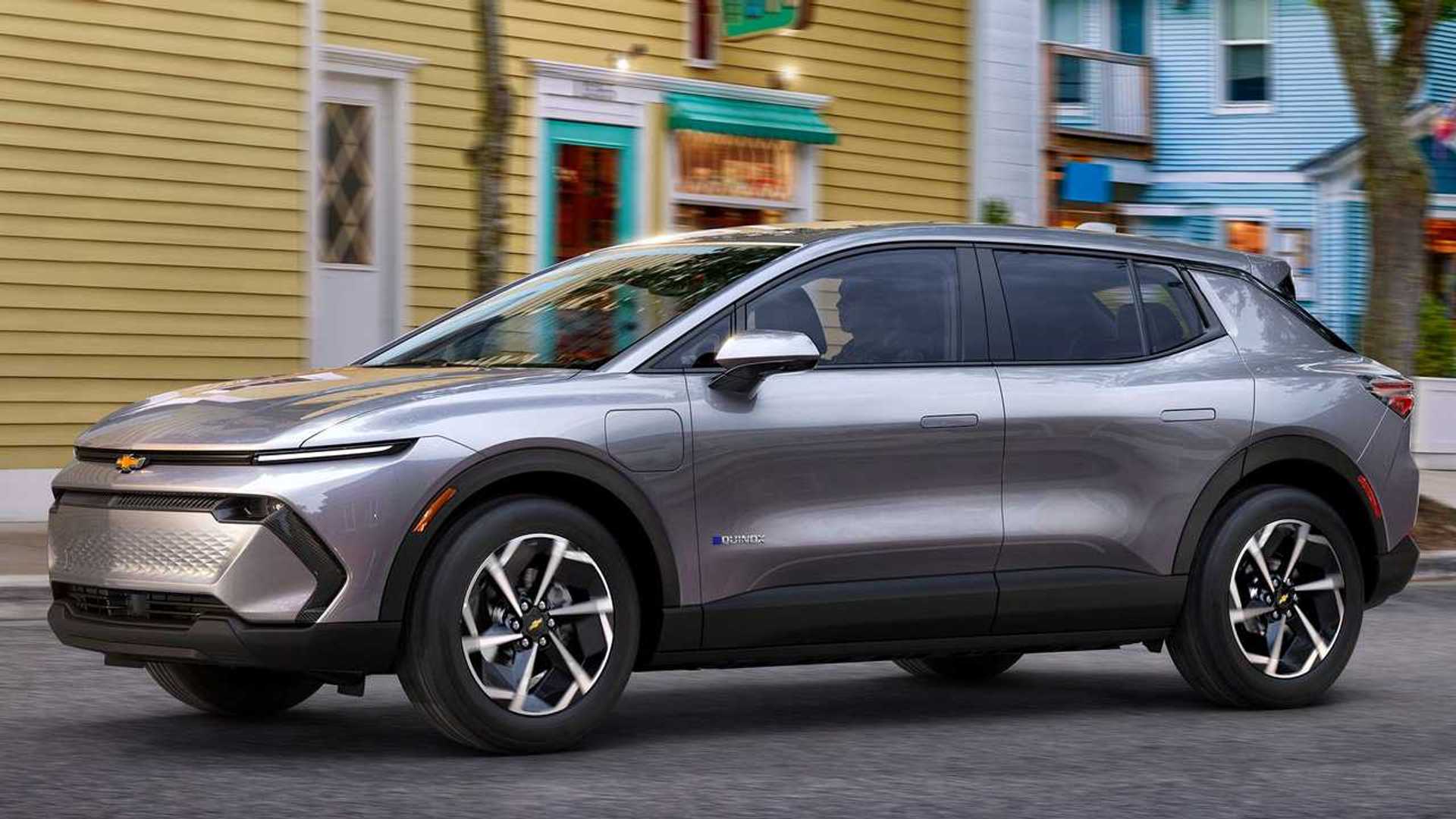
- Chevrolet Equinox EV: $7,500 credit
- Tesla Model 3: $7,500 credit
Vehicles With an $80,000 MSRP Cap:
- Cadillac Lyriq: $7,500 credit
- Chevrolet Blazer EV: $7,500 credit
- Chevrolet Silverado EV: $7,500 credit
- Chrysler Pacifica: $7,500 credit
- Corsair Grand Touring: $3,750 credit
- Ford E-Transit: $3,750 credit
- Ford Escape: $3,750 credit
- Ford F-150 Lightning: $7,500 credit
- Ford Mustang Mach-E: $3,750 credit
- Jeep Grand Cherokee 4xe: $3,750 credit
- Lincoln Aviator Grand Touring: $7,500 credit
- Rivian R1S: $3,750 credit
- Rivian R1T: $3,750 credit
- Tesla Model X Long Range: $7,500 credit
- Tesla Model Y: $7,500 credit
- Volkswagen ID.4: $7,500 credit
- X5 xDrive50e 2024: $3,750 credit
For used clean vehicles, including fuel cell EVs, plug-in hybrids, or pure EVs, specific conditions must also be met to qualify for the $4,000 electric car tax credit. These vehicles must have a battery size of at least 7 kilowatt-hours and be at least two model years old. Additionally, the sale price must not exceed $25,000.
A crucial detail for used vehicle eligibility is that the vehicle must not have been transferred to a qualified buyer after August 16, 2022. This stipulation means that a used electric vehicle that has already been purchased second-hand after this date, regardless of its price, will not be eligible for the $4,000 credit.
Prospective buyers seeking to verify the eligibility of a used electric vehicle can utilize resources such as Recurrent’s EV Qualification Tool, which assists owners in determining if their desired vehicle meets the necessary criteria.
Understanding Potential Loopholes
For astute consumers, an interesting strategy exists within the current electric car tax credit framework that could potentially maximize incentives. This involves leveraging the lease mechanism for electric vehicles.
When an individual chooses to lease an EV, the electric car tax credit can often be factored into the lease payments, reducing the overall cost of the lease. This particular advantage applies to all EVs, irrespective of their manufacturing location, circumventing the strict North American assembly requirements for new purchases under the IRA.
Subsequently, if the individual opts to purchase the vehicle at the end of the lease term, and the buyout price is under $25,000, they could then qualify for the $4,000 used EV credit. This scenario effectively allows a buyer to potentially accumulate both the new vehicle lease credit (passed on through lower payments) and the used vehicle credit, potentially totaling up to $11,500 in combined incentives for a single vehicle.
The revised electric car tax credit represents the most substantial change for consumers in the EV market since its inception last year. By introducing a point-of-sale feature, these updated regulations offer unparalleled purchasing stimuli, potentially leading to a drastic reduction in the upfront cost of electric cars. With the ability to make clean vehicles more accessible to a wider demographic, these new rules are set to significantly reshape the automotive landscape, further accelerating the adoption of sustainable transportation.
Frequently Asked Questions (FAQs)
Can I receive the full electric car tax credit even if my tax burden is less than the credit amount?
Yes. Unlike the previous rules, the new point-of-sale system allows you to receive the full benefit of the electric car tax credit as an upfront discount, irrespective of your annual tax liability.
What happens if my income exceeds the limit after I’ve received a point-of-sale tax credit?
If your modified adjusted gross income for the year you received the credit exceeds the applicable income thresholds, you will be required to repay the entire incentive amount to the IRS.
If an EV’s starting MSRP is below the cap but optional features push it over, does it still qualify for the electric car tax credit?
No. To secure the electric car tax credit, the final MSRP of the vehicle, including all options and accessories, must remain strictly under the specified cap for its category.
Are all electric vehicles eligible for the point-of-sale credit in 2024?
No, not all electric vehicles qualify. New EVs must meet criteria regarding battery capacity, North American final assembly, and critical mineral and battery component sourcing.
Can I still claim the electric car tax credit on my tax return instead of at the point of sale?
Yes, buyers still have the option to forgo the point-of-sale discount and claim the electric car tax credit normally when filing their annual tax returns. This can be beneficial for those uncertain about their income for the year.
How quickly does the dealership get reimbursed by the IRS?
The IRS has stated its commitment to repaying registered dealerships for the transferred credit amount within 72 hours of a completed and qualified transaction.