
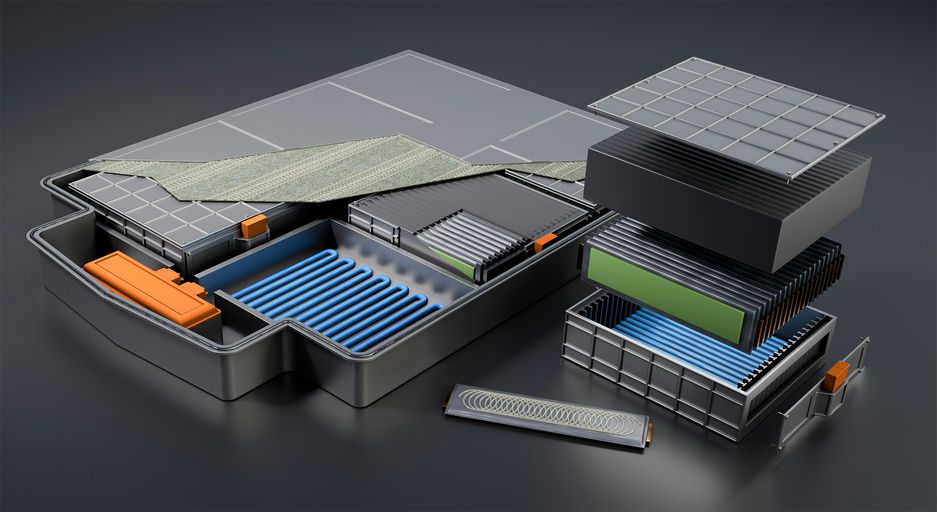
In the rapidly evolving landscape of electric vehicles (EVs), the performance, safety, and longevity of battery systems are paramount. At the core of achieving these critical attributes lies a meticulously engineered strategy for battery thermal management. Far from being an afterthought, effective thermal control is a foundational element that dictates the success of any high-performing battery.
As the industry pushes for greater energy density, faster charging, and extended range, the demands on thermal management solutions intensify. This crucial aspect of EV battery design is set to be a focal point in an upcoming webinar, where experts will delve into how innovative material science, particularly advanced adhesives, gap fillers, and protective coatings, are revolutionizing battery design by inherently aiding heat control, elevating performance metrics, and bolstering overall safety.

Key Takeaways
- Effective battery thermal management is indispensable for enhancing EV battery safety, performance, and operational lifespan.
- Innovative materials like advanced adhesives, gap fillers, and protective coatings offer integral solutions for heat control and component protection within battery systems.
- Addressing common engineering hurdles through material science ensures optimal thermal regulation and system reliability.
- Industry leaders like H.B. Fuller are at the forefront, developing custom-formulated adhesive solutions tailored to specific battery design and manufacturing requirements.
- Integrating smart design decisions regarding thermal management early in the development cycle is vital for future-proofing battery technologies.
The Imperative of Effective Battery Thermal Management in EVs
The operational efficiency and long-term viability of electric vehicle batteries are directly tied to their thermal environment. Batteries generate heat during charge and discharge cycles, and if this heat is not properly managed, it can lead to a cascade of detrimental effects. Elevated temperatures can accelerate battery degradation, reducing its lifespan and capacity over time. More critically, uncontrolled heat can trigger thermal runaway, a potentially dangerous condition where a battery cell overheats, leading to fire or explosion, posing significant safety risks.
Conversely, excessively low temperatures can also hinder performance, reducing power output and charging efficiency. Therefore, maintaining an optimal temperature window for battery operation is not merely a matter of efficiency but a fundamental requirement for both user safety and the economic viability of electric vehicle technology. This intricate balance underscores why battery thermal management by design is a non-negotiable aspect of modern EV engineering.
Advanced Materials: Revolutionizing Heat Control and Component Protection
Historically, thermal management systems often involved complex, bulky, and energy-intensive cooling solutions. However, a new paradigm is emerging, where the very materials used in constructing the battery pack contribute actively to its thermal regulation. Experts Mekiyah Bailey and Jeremy Chang from H.B. Fuller are at the forefront of this innovation, demonstrating how advanced adhesives, gap fillers, and protective coatings are transforming conventional approaches.

These specialized materials play multiple roles. Thermal gap fillers, for instance, ensure efficient heat transfer between battery cells and cooling plates, minimizing air pockets that could impede heat dissipation. Adhesives provide structural integrity while also possessing thermal conductive or insulative properties, allowing engineers to strategically direct or contain heat. Protective coatings, meanwhile, shield critical components from environmental stressors and potential thermal events, enhancing the overall resilience of the battery module. Integrating these materials from the outset simplifies design, reduces weight, and improves manufacturability.
Addressing Engineering Challenges Through Innovative Material Science
Battery engineers frequently encounter a spectrum of challenges, from achieving uniform temperature distribution across hundreds or thousands of cells to ensuring long-term reliability under varying operating conditions. The drive for higher energy density often means tighter packaging, which exacerbates heat dissipation issues. Furthermore, cost considerations, manufacturing scalability, and durability against vibration and shock add layers of complexity to battery design.
Innovative material solutions offer a powerful arsenal against these formidable hurdles. For example, highly conductive thermal interface materials (TIMs) can bridge microscopic gaps, maximizing heat transfer efficiency. Electrically insulating but thermally conductive adhesives can secure components while preventing short circuits. These bespoke material solutions empower engineers to overcome critical design limitations, leading to safer, more powerful, and more reliable electric vehicle batteries.
H.B. Fuller’s Partnership in Custom Adhesive Solutions
The diverse requirements of different battery chemistries, pack architectures, and vehicle types necessitate highly specialized solutions. Recognizing this, H.B. Fuller has positioned itself as a key partner for manufacturers. The company collaborates closely with its customers to develop custom-formulated adhesive solutions that are precisely tailored to unique battery design and manufacturing needs.
This partnership approach goes beyond off-the-shelf products, involving deep dives into specific application challenges, performance criteria, and production processes. By leveraging their extensive material science expertise, H.B. Fuller helps engineers navigate the complexities of thermal management, ensuring that the chosen materials not only meet performance objectives but also integrate seamlessly into existing manufacturing workflows, optimizing both product efficacy and production efficiency.
The Criticality of Early Design Decisions for Battery Technologies
One of the most profound insights in battery engineering is the importance of making smart design decisions early in the development process. Integrating battery thermal management considerations from the conceptual phase, rather than attempting to retrofit solutions later, yields significant advantages. Early consideration allows for holistic system optimization, where cell chemistry, pack architecture, cooling mechanisms, and material selection are all harmonized.
This integrated approach minimizes costly redesigns, shortens development cycles, and ensures that the final product meets stringent safety and performance standards. It enables engineers to proactively address potential thermal hot spots, optimize heat flow paths, and select materials that offer multi-functional benefits, thereby driving the future for safer, more reliable battery technologies from the ground up.
Virtual Conference on EV Engineering: A Broader Look at Innovation
The aforementioned webinar featuring Mekiyah Bailey and Jeremy Chang from H.B. Fuller is a key component of the larger Virtual Conference on EV Engineering. Scheduled to broadcast live from September 14 to 17, 2026, this comprehensive conference encompasses the entire EV engineering supply chain and ecosystem. It serves as a vital platform for industry professionals to explore the latest advancements and challenges across various domains.
The conference content spans a wide array of critical topics, including motor and power electronics design and manufacturing, advanced cell development, sophisticated battery systems, rigorous testing methodologies, efficient powertrains, innovative thermal management strategies, robust circuit protection, specialized wire and cable solutions, and critical EMI/EMC considerations. This broad scope ensures that attendees gain a holistic understanding of the technological advancements driving the electric vehicle revolution.
Session Details: Battery Thermal Management by Design
Professionals keen on deepening their understanding of advanced material solutions in thermal management are encouraged to attend the dedicated webinar session. Titled ‘Battery thermal management by design,’ this free event is scheduled for September 17, 2026, at 10:30 am EDT. Participants will gain foundational knowledge and real-world examples illustrating the significant impact of judicious material choices on battery performance and safety.
This session is an invaluable opportunity for both those new to battery engineering and seasoned professionals looking to expand their expertise. Registration for this complimentary session, along with access to the complete session list for the Virtual Conference on EV Engineering, is available now, providing an accessible gateway to cutting-edge industry insights.
FAQ Section
Q: Why is thermal management crucial for EV batteries?
A: Thermal management is crucial because uncontrolled heat can lead to accelerated battery degradation, reduced lifespan, decreased performance, and critically, the risk of thermal runaway, which poses significant safety hazards like fire or explosion. Maintaining an optimal temperature range ensures safety, longevity, and efficient operation.
Q: How do adhesives and gap fillers contribute to battery thermal management?
A: Adhesives and thermal gap fillers play a vital role by either facilitating efficient heat transfer between cells and cooling components (conductive materials) or providing thermal insulation to prevent heat spread. They also offer structural integrity, dampen vibrations, and protect critical components, enhancing overall battery resilience and design efficiency.
Q: What are common challenges battery engineers face in thermal design?
A: Engineers often grapple with achieving uniform temperature distribution across large battery packs, ensuring long-term reliability under diverse operating conditions, managing heat in increasingly dense designs, and balancing performance with manufacturing costs and scalability. Innovative materials offer targeted solutions to these complex challenges.
Q: What is the significance of making early design decisions in battery development?
A: Integrating thermal management considerations early in the battery design process is critical for holistic system optimization. It minimizes costly redesigns, shortens development cycles, ensures regulatory compliance, and allows for the selection of multi-functional materials, leading to more efficient, safer, and reliable battery technologies from the outset.
Q: Who are the speakers for the ‘Battery thermal management by design’ webinar?
A: The webinar will feature insights from Mekiyah Bailey and Jeremy Chang, both experts from H.B. Fuller. They will provide an engaging introduction to the world of battery thermal management, specifically focusing on how advanced materials are transforming battery design and performance.
Q: Is the ‘Battery thermal management by design’ webinar part of a larger event?
A: Yes, the webinar is a featured session within the Virtual Conference on EV Engineering, which is broadcast live from September 14 to 17, 2026. The conference covers the entire EV engineering supply chain, offering a comprehensive look at advancements in the electric vehicle ecosystem.