
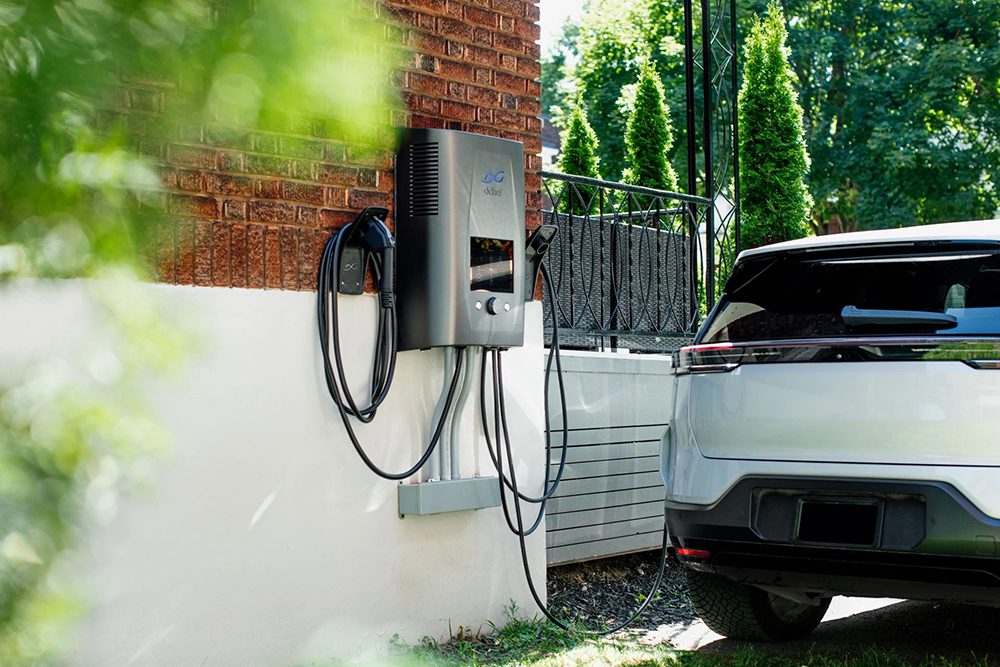
Massachusetts is embarking on a significant clean energy initiative, offering eligible electric vehicle (EV) owners an opportunity to receive a complimentary ‘smart energy station’ through a pioneering Vehicle-to-Everything (V2X) pilot program. This innovative scheme empowers homeowners to integrate solar power, enhance home energy management, and utilize their EVs as a critical backup power source during grid outages, marking a pivotal step towards greater energy independence and grid resilience.
The program is spearheaded by dcbel, in collaboration with strategic partners TMH, Resource Innovation, and B2Q. Together, they are participating in the Massachusetts Clean Energy Center’s (MassCEC) V2X Pilot Program, which provides substantial subsidies covering the cost of a dcbel Ara Home Energy Station, including its professional installation, for qualifying Massachusetts residents.

Key Takeaways
- Massachusetts EV owners can receive a free dcbel Ara Home Energy Station, including installation, through the V2X Pilot Program.
- The program enables bidirectional charging, allowing EVs to power homes, utilize solar energy, and provide backup during outages.
- Eligibility requires owning or leasing specific 2018-2025 Nissan Leaf, 2025 Polestar 3, or 2025 Volvo EX90 models, without existing solar or battery storage.
- Applications are open until September 30, 2026, or until funds are fully allocated.
- MassCEC aims to gather crucial data on V2X system performance, environmental impact, financial benefits, and user behavior to shape future state energy policies.
Understanding the Massachusetts V2X Pilot Program
The Massachusetts V2X Pilot Program represents a strategic effort to explore and demonstrate the transformative potential of electric vehicles beyond mere transportation. By leveraging V2X technology, the initiative aims to position EVs as dynamic grid resources, contributing to the state’s broader clean energy objectives.
At its core, V2X encompasses various functionalities, including Vehicle-to-Home (V2H), which allows an EV to supply power directly to a residence. This capability is particularly vital in a state like Massachusetts, where extreme weather events can lead to power disruptions. The program’s focus on integrating solar energy further amplifies its environmental and economic benefits for participating homeowners.
The dcbel Ara Home Energy Station: A Central Hub
Central to this groundbreaking initiative is the dcbel Ara Home Energy Station. This sophisticated solar and home battery solution is designed to work seamlessly with bidirectional-capable electric vehicles. It acts as an intelligent energy management system, enabling homeowners to optimize their energy consumption and production.

The Ara station facilitates smart charging, allowing EVs to draw power from the grid during off-peak hours when electricity rates are typically lower. Crucially, it also transforms the EV into a formidable backup power source. In the event of a power outage, the stored energy in the EV’s battery can be directed back into the home, ensuring essential appliances and systems remain operational.
Furthermore, the system is engineered to integrate renewable energy sources, specifically solar power. Homeowners with solar panel installations can channel excess solar energy into their EVs or home battery, maximizing self-sufficiency and reducing reliance on the conventional grid. This integration not only promotes cleaner energy use but also contributes to long-term cost savings.
Eligibility for Massachusetts Homeowners
Participation in the Massachusetts V2X Pilot Program is open to homeowners across the state who meet specific criteria. The program targets individuals committed to embracing sustainable energy solutions and advanced EV technology.
Applicants must currently own or lease one of the following bidirectional-capable EV models: a 2018-2025 Nissan Leaf, a 2025 Polestar 3, or a 2025 Volvo EX90. It is important to note that the program is designed for new adopters of integrated home energy solutions; therefore, homeowners who already have solar power systems or standalone battery storage installed are not eligible.
The application window for this unique opportunity is currently open and will conclude on September 30, 2026, or earlier if the allocated program funds are fully utilized. Prospective participants are encouraged to apply promptly to secure their chance to receive a free dcbel Ara Home Energy Station and contribute to Massachusetts’s clean energy future.
MassCEC’s Vision for Grid Resilience and Data Collection
The V2X Demonstration Program is more than just a consumer incentive; it is a critical research and development initiative driven by the Massachusetts Clean Energy Center. MassCEC’s primary objective is to collect real-world data from participating households. This data will provide invaluable insights into various aspects of V2X system performance.
Key areas of data collection include the environmental impact of integrated V2X systems, the financial benefits accrued by homeowners through optimized energy use and reduced electricity bills, and critical user behavior patterns. Understanding how homeowners interact with these advanced systems will be instrumental in shaping future V2X initiatives and policies within the state.
By thoroughly evaluating the practical applications of V2X technology, MassCEC aims to guide the strategic deployment of these systems on a larger scale. This data-driven approach ensures that future investments in clean energy infrastructure are effective, efficient, and aligned with the state’s long-term sustainability goals, fostering a more resilient and decentralized energy grid.
Empowering Homeowners: A Shift Towards Energy Independence
The core philosophy behind V2X technology, particularly Vehicle-to-Home (V2H), is to empower individual homeowners with greater control over their energy consumption and security. Duc Duy Tran, Sales Lead at dcbel, succinctly articulated this vision, stating, “V2X is often discussed as a grid technology, but for homeowners, its real power begins at home. Ara helps transform a bidirectional EV into a central part of the home’s energy mix, giving families a smarter way to manage power, prepare for outages, and increase their energy independence.”
This perspective underscores the profound shift V2X enables. Beyond merely supporting the grid, it positions the EV as an essential component of a household’s energy ecosystem. This integration provides families with unparalleled flexibility in managing their power, offering peace of mind during unexpected power disruptions, and fostering a tangible sense of energy self-reliance.
The ability to use an EV to power a home during an outage transforms a common asset into a vital infrastructure component. This not only enhances household resilience but also represents a significant step towards decoupling individual homes from total reliance on the centralized grid, paving the way for a more distributed and robust energy landscape.
Collaborative Efforts Driving Innovation
The success of the Massachusetts V2X Pilot Program is a testament to the power of collaboration between innovative technology providers and public energy agencies. dcbel’s expertise in home energy solutions, coupled with the strategic support from partners TMH, Resource Innovation, and B2Q, forms a robust foundation for this ambitious pilot.
Each partner brings unique capabilities to the program, from technical implementation to resource management and quality assurance. This multi-organizational effort ensures that the pilot is executed efficiently, data is collected meticulously, and the participating homeowners receive comprehensive support throughout their involvement.
Such collaborative models are essential for advancing complex technologies like V2X. They facilitate the sharing of knowledge, resources, and expertise, accelerating the deployment of sustainable solutions and informing future regulatory frameworks necessary for widespread adoption. The Massachusetts V2X Pilot Program serves as a beacon for how public-private partnerships can drive meaningful progress in the clean energy sector.
The Future of Home Energy in Massachusetts
The insights gathered from the Massachusetts V2X Pilot Program are expected to play a crucial role in shaping the state’s future energy policies and infrastructure development. As Massachusetts continues its journey towards decarbonization and enhancing grid resilience, understanding the real-world performance and user acceptance of V2X technologies will be paramount.
Successful outcomes from this pilot could lead to expanded V2X programs, broader incentives for bidirectional charging infrastructure, and a more integrated approach to home energy management statewide. This would not only benefit individual homeowners but also contribute significantly to reducing peak demand on the grid, integrating more renewable energy, and establishing a more robust and sustainable energy ecosystem for all residents.
Frequently Asked Questions (FAQs)
What is the Massachusetts V2X Pilot Program?
It’s a state-backed initiative offering eligible EV owners a free dcbel Ara Home Energy Station, including installation. The program aims to demonstrate how electric vehicles can provide power to homes, integrate solar energy, and serve as backup during outages, enhancing energy independence.
What are the benefits of participating in this pilot?
Participants receive a free home energy station, enabling them to power their homes with solar energy, use their EV for backup power during outages, and optimize charging during off-peak hours, leading to potential energy savings and increased resilience.
Who is eligible to apply for the program?
Massachusetts homeowners owning or leasing a 2018-2025 Nissan Leaf, a 2025 Polestar 3, or a 2025 Volvo EX90 are eligible. Applicants must not have existing solar or battery storage systems installed at their homes.
How does the dcbel Ara Home Energy Station work?
The Ara station connects to a bidirectional-capable EV and a home’s electrical system. It manages energy flow, allowing the EV to charge from solar or the grid, and also discharge power back to the home, especially useful for backup during power outages.
What is the application deadline for the program?
Applications for the Massachusetts V2X Pilot Program are open until September 30, 2026. However, interested homeowners are advised to apply early, as the program will close if funds are exhausted before the specified deadline.
What is the role of the Massachusetts Clean Energy Center (MassCEC)?
MassCEC is subsidizing the program to gather crucial data on V2X system performance, environmental impact, financial benefits, and user behavior. This information will be vital in guiding future V2X initiatives and energy policies for the state.
What is ‘Vehicle-to-Everything’ (V2X) technology?
V2X is a broad term describing how vehicles can communicate and share energy with various entities. In this context, it primarily refers to Vehicle-to-Home (V2H), where an electric vehicle can supply power to a residence, enhancing home energy management and providing backup power.