
Key Takeaways
- Siemens Government Technologies (SGT) has been awarded an $80 million contract by the Army Contracting Command.
- The award is for establishing U.S. Army-controlled production lines for electric motor stator assemblies, critical components for unmanned aircraft systems (UAS).
- These state-of-the-art production lines will be integrated into the Anniston Army Depot in Alabama, transforming a World War II-era facility.
- The project emphasizes an integrated digital and physical advanced manufacturing environment, heavily leveraging digital twin technology.
- This initiative aims to bolster the Army’s organic expertise, innovation, and supply chain resilience for next-generation UAS development.
In a significant move to bolster domestic defense manufacturing capabilities, Siemens Government Technologies (SGT) has been awarded an $80 million contract by the U.S. Army Contracting Command. The pivotal agreement focuses on establishing advanced production lines for electric motor stator assemblies, a critical component for unmanned aircraft systems (UAS).
This 12-month contract underscores the Army’s commitment to enhancing its industrial base and securing the supply chain for vital military technologies. The initiative is set to create a U.S. Army-controlled manufacturing environment, integrating both digital and physical advanced production techniques.

Strategic Investment in Domestic Manufacturing
The $80 million award represents a strategic investment in the nation’s defense industrial resilience. By establishing Army-controlled production of these specialized components, the military aims to reduce reliance on external supply chains, which can often be vulnerable to global disruptions.
This localized control ensures a steady and secure supply of essential parts for unmanned aircraft, which are increasingly integral to modern military operations. The project is designed to foster greater self-sufficiency and operational continuity for critical defense assets.
Transforming Anniston Army Depot for Future Readiness
The new drone motor stator production lines will be installed at the Anniston Army Depot in Alabama. This historical facility, originally established during World War II, is slated for a major modernization under the Siemens contract.

The transformation will convert a significant portion of the World War II-era infrastructure into a cutting-edge manufacturing hub. This modernization effort signifies a blend of heritage and innovation, repositioning the depot as a cornerstone of advanced defense production.
Anniston Army Depot currently serves as the designated Center of Industrial and Technical Excellence for a range of vital commodities. Its expertise spans tracked and wheeled ground combat vehicles, artillery, and small-caliber weapons, making it an ideal location for this new venture in high-tech component manufacturing.
Leveraging Digital Twins for Precision Manufacturing
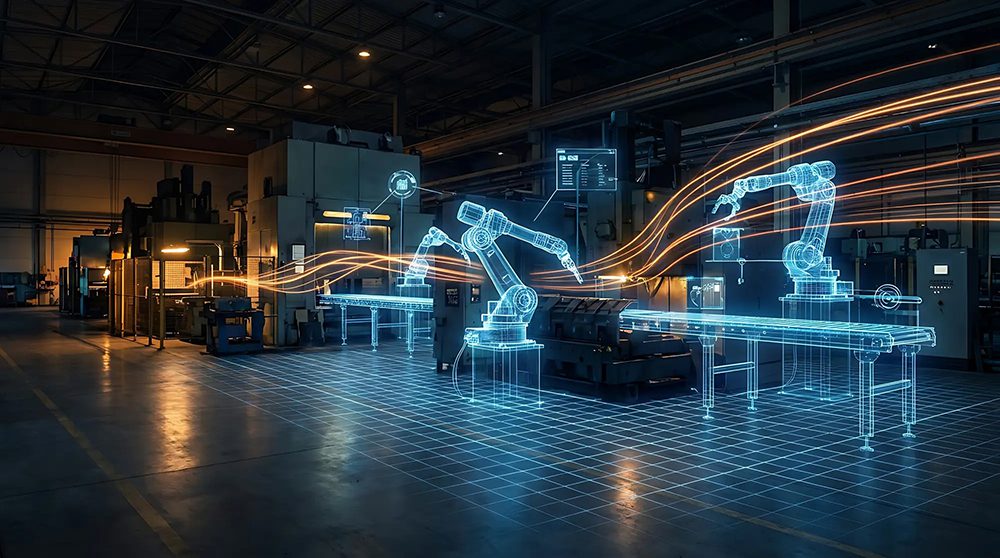
A cornerstone of this advanced manufacturing initiative is the extensive use of digital twin technology. Siemens Government Technologies will deploy an integrated digital production environment where virtual models, or digital twins, will meticulously inform and validate the commissioning of the stator assembly production lines.
This digital-first approach allows for comprehensive simulation and optimization of the manufacturing process before any physical work commences. By creating precise virtual replicas of the entire production ecosystem, potential issues can be identified and resolved, ensuring efficiency, accuracy, and reduced risk during actual implementation.
The deployment of digital twins facilitates a streamlined setup, reducing time-to-production and enhancing overall operational effectiveness. It underscores a commitment to smart manufacturing principles, leveraging data and simulation to achieve superior outcomes in defense production.
Understanding Electric Motor Stator Assemblies in Drones
At the heart of any electric motor, including those powering unmanned aircraft, is the stator. This stationary component plays a crucial role in converting electrical energy into mechanical motion, which is essential for drone propulsion.
The stator’s windings carry electrical current, generating a powerful magnetic field. This field then interacts with the rotor, the motor’s rotating part, to produce the necessary torque. Surrounding these windings is a laminated core, designed to efficiently carry magnetic flux while minimizing energy losses from eddy currents, which can degrade motor performance and efficiency.
Precise manufacturing of these drone motor stator production lines is paramount for the optimal performance, reliability, and longevity of unmanned aircraft systems. Ensuring domestic control over this intricate component manufacturing strengthens the Army’s ability to innovate and scale its UAS fleet effectively.
Accelerating Innovation for Next-Generation UAS
John Ustica, President and CEO of Siemens Government Technologies, articulated the profound impact of this award. “The ability for the Army to control its own production and manufacturing environment, leveraging digital twins and a digital-first mindset, will accelerate their organic expertise and innovation for next-generation unmanned aircraft system development,” he stated.
This statement highlights the broader strategic vision behind the contract: empowering the Army with enhanced capabilities not just for current UAS needs, but also for rapid development and deployment of future unmanned aerial vehicles. The establishment of these drone motor stator production lines is expected to be a catalyst for further technological advancements.
Strengthening the Defense Industrial Base
This significant award to Siemens Government Technologies reinforces the ongoing efforts to modernize and secure the United States’ defense industrial base. By investing in advanced manufacturing within domestic facilities like Anniston Army Depot, the Army is building a more resilient and self-reliant ecosystem for its critical defense technologies.
The project’s emphasis on an integrated digital and physical advanced manufacturing environment sets a precedent for future defense contracts. It showcases how cutting-edge industrial technologies can be harnessed to meet complex military requirements, ensuring national security and technological superiority in an evolving global landscape.
FAQs on Siemens’ Army Contract for Drone Motor Stator Production Lines
What is the total value and duration of the Siemens contract with the Army?
The contract awarded to Siemens Government Technologies (SGT) by the Army Contracting Command is valued at $80 million. It carries a performance period of 12 months. This substantial investment aims to establish crucial domestic manufacturing capabilities for military unmanned aircraft systems.
What specific components will be produced under this new initiative?
Under this contract, SGT will be setting up U.S. Army-controlled production lines for electric motor stator assemblies. These stators are the stationary parts of electric motors, critical for generating the magnetic fields necessary to power unmanned aircraft systems (UAS).
Where will these new production lines be located?
The advanced drone motor stator production lines will be installed at the Anniston Army Depot in Alabama. This historical facility, which dates back to World War II, will undergo significant modernization to accommodate the new, state-of-the-art manufacturing environment.
How will digital twin technology be utilized in this project?
Digital twins will play a central role by creating virtual models of the production lines. This allows for detailed simulation, informing and validating the entire manufacturing process before any physical construction begins. It ensures optimal efficiency, accuracy, and reduces potential errors in establishing the drone motor stator production lines.
What is the strategic importance of this contract for the U.S. Army?
This contract is strategically vital for the Army to control its own production and manufacturing environment for critical UAS components. It aims to accelerate organic expertise, enhance innovation, strengthen supply chain resilience, and ensure the availability of essential parts for next-generation unmanned aircraft system development.
What is a stator, and why is it important for drones?
A stator is the fixed part of an electric motor. Its windings carry current to create a magnetic field that interacts with the rotor, driving the motor. In drones, a precisely manufactured stator is essential for efficient, reliable, and powerful electric propulsion, directly impacting the aircraft’s performance and mission capabilities.
How does this project contribute to the defense industrial base?
By bringing the production of critical drone motor stator production lines to U.S. soil, the project significantly strengthens the domestic defense industrial base. It reduces reliance on external suppliers, boosts national manufacturing capabilities, and fosters self-sufficiency in key military technologies, enhancing overall national security.