
Key Takeaways (TL;DR)
- Siemens Government Technologies (SGT) has been awarded an $80 million contract by the Army Contracting Command.
- The contract focuses on establishing US Army-controlled production lines for electric motor stator assemblies critical for unmanned aircraft systems (UAS).
- Located at Alabama’s Anniston Army Depot, this initiative will transform a World War II-era facility into a cutting-edge, digitally integrated manufacturing hub.
- The project leverages advanced digital twin technology to inform and validate production lines, significantly enhancing the efficiency and reliability of
US Army drone manufacturing.
- This strategic investment underscores the Army’s commitment to bolstering domestic defense capabilities, ensuring supply chain resilience, and accelerating innovation in next-generation drone development.

Washington D.C. – Siemens Government Technologies (SGT) has been awarded a significant $80-million contract by the Army Contracting Command, marking a pivotal step toward enhancing domestic defense manufacturing capabilities. The award, announced on August 18, 2026, is dedicated to establishing US Army-controlled production lines for electric motor stator assemblies, a critical component for unmanned aircraft systems (UAS).
This strategic investment by the U.S. Army aims to secure a robust and resilient supply chain for essential drone components, directly impacting the operational readiness and technological advancement of its next-generation aerial platforms. The initiative carries a 12-month performance period, during which SGT will implement what it describes as an integrated digital and physical advanced manufacturing environment.
Strategic Investment in Domestic Defense Capabilities
The decision by the Army Contracting Command to invest substantially in domestic

electric motor stator production
reflects a growing emphasis on national security and supply chain independence. By bringing the manufacturing of these vital components under direct Army control, the United States aims to mitigate risks associated with geopolitical instabilities, external dependencies, and potential disruptions in global supply chains.
This proactive measure ensures that the U.S. military maintains a high degree of control over the quality, quantity, and intellectual property associated with its unmanned aerial vehicle technology. Such autonomy is increasingly crucial in an era where advanced drone capabilities are central to modern warfare and defense strategies.
Powering Next-Generation Unmanned Aircraft Systems
Unmanned Aircraft Systems, commonly known as drones, have become indispensable assets in military operations, ranging from reconnaissance and surveillance to targeted strikes and logistical support. The performance and reliability of these systems heavily depend on the efficiency and robustness of their electric propulsion motors.
Stator assemblies are at the heart of these electric motors, directly influencing the power, thrust, and endurance of military drones. Establishing a dedicated, Army-controlled production capability for these components is therefore not just about manufacturing, but about ensuring the technological superiority and operational effectiveness of future UAS fleets.
Revitalizing Anniston Army Depot
The new production lines will be strategically installed at the Anniston Army Depot in Alabama. This facility, steeped in history, is poised for a significant transformation under the Siemens Government Technologies contract. SGT’s work will convert a World War II-era facility into a modern manufacturing hub, symbolizing a powerful blend of heritage and cutting-edge innovation.
The Anniston Army Depot is already recognized as the designated Center of Industrial and Technical Excellence for commodities that include tracked and wheeled ground combat vehicles, artillery, and small-caliber weapons. Its long-standing expertise in defense manufacturing makes it an ideal location for this new venture, leveraging existing infrastructure and a skilled workforce.
From Historic Hub to Modern Manufacturing Powerhouse
The modernization project at Anniston Army Depot is more than just an upgrade; it represents a strategic pivot towards adapting traditional military industrial bases for future defense needs. By integrating advanced manufacturing processes and digital technologies, the depot will extend its legacy of supporting U.S. forces into the realm of advanced robotics and unmanned systems.
This transformation not only secures the production of vital components but also contributes to regional economic development, creating high-tech jobs and fostering a new generation of manufacturing expertise within the United States. It underscores a holistic approach to strengthening national defense capabilities by investing in foundational infrastructure.
The Core of Electric Propulsion: Understanding Stator Assemblies
To fully grasp the significance of this award, it is essential to understand the fundamental role of the stator within an electric motor. A stator is defined as the stationary part of an electric motor. It is a critical component responsible for generating the magnetic field that interacts with the rotor, the motor’s rotating part, to produce motion.
The stator’s windings carry electrical current, which, when energized, creates a powerful magnetic field. The laminated core around these windings is meticulously designed to carry this magnetic flux while simultaneously limiting eddy-current losses. These losses can otherwise reduce the motor’s efficiency and generate unwanted heat, both critical factors in drone performance.
Precision Engineering for Drone Performance
In high-performance applications such as military drones, the design and manufacturing precision of the stator assembly are paramount. Any inefficiencies or defects can lead to reduced flight time, decreased power output, or even complete system failure, which are unacceptable for critical missions.
Therefore, ensuring a high-quality, domestically controlled
electric motor stator production
line guarantees that the U.S. Army’s unmanned aircraft systems will be equipped with motors that meet the most stringent performance and reliability standards. This level of control over manufacturing processes is a cornerstone of national defense strategy.
Pioneering Production with Digital Twin Technology
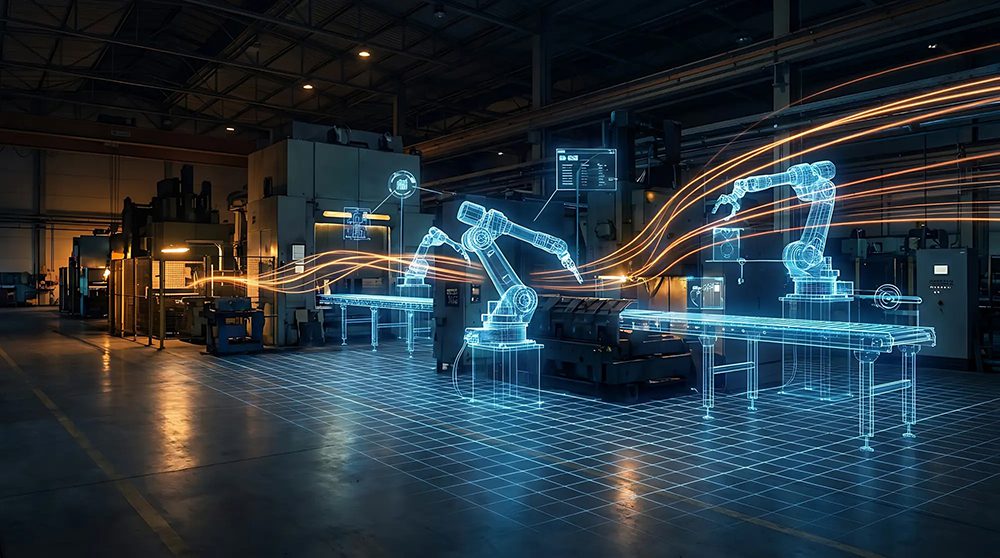
A cornerstone of Siemens Government Technologies’ approach to this project is the extensive use of digital twin technology. Digital twins will be central to driving an integrated digital production environment, offering a virtual replica of the physical manufacturing process. This innovative technology allows for comprehensive testing and validation in a virtual space before any physical production begins.
Through sophisticated modeling and simulation, digital twins will inform and validate the commissioning of the stator assembly production lines. This means potential issues can be identified and resolved, processes can be optimized, and efficiencies can be maximized in a risk-free digital environment, saving significant time and resources in the physical world.
Virtual Validation for Real-World Manufacturing Excellence
The implementation of digital twin technology represents a paradigm shift in advanced manufacturing. It enables predictive maintenance, real-time monitoring, and continuous optimization, ensuring that the production lines are operating at peak efficiency and quality from day one.
For the U.S. Army, this translates into faster deployment of critical drone components, reduced manufacturing costs, and an accelerated path to integrate next-generation innovations. The ability to simulate and refine complex manufacturing processes virtually will set a new standard for defense industrial operations and bolster
US Army drone manufacturing
capabilities.
A Vision for Accelerated Innovation
The strategic importance of this award was articulated by John Ustica, President and CEO of Siemens Government Technologies. His comments highlight the long-term vision behind the Army’s investment in advanced domestic manufacturing capabilities.
According to Ustica, The ability for the Army to control its own production and manufacturing environment, leveraging digital twins and a digital-first mindset, will accelerate their organic expertise and innovation for next-generation unmanned aircraft system development.
This statement encapsulates the core objectives of the contract: control, innovation, and self-sufficiency.
Strengthening US Army’s Organic Expertise
By bringing production under its direct purview, the Army is fostering a deeper institutional knowledge base and expertise in the critical area of electric motor manufacturing for drones. This organic growth in capability is vital for rapid prototyping, continuous improvement, and adapting to evolving technological landscapes and threats.
The digital-first mindset, coupled with hands-on control over the manufacturing environment, ensures that the Army is not just a consumer but also an active participant and innovator in the development lifecycle of its unmanned systems. This approach is fundamental to maintaining a technological edge over potential adversaries.
Broader Implications for National Security and Manufacturing
The $80-million award to Siemens Government Technologies for establishing
electric motor stator production
lines is a testament to the U.S. Army’s proactive strategy in securing its future defense capabilities. It signifies a broader commitment to reshoring critical manufacturing, investing in advanced industrial technologies, and ensuring national security through technological sovereignty.
This initiative will not only fortify the supply chain for unmanned aircraft systems but also serve as a blueprint for future defense procurements, emphasizing digital integration, domestic control, and accelerated innovation across the military-industrial complex. The transformation at Anniston Army Depot stands as a symbol of this forward-looking approach to defense readiness and
US Army drone manufacturing
.
Frequently Asked Questions (FAQs)
What is the primary purpose of the $80-million Army award to Siemens Government Technologies?
The award aims to establish U.S. Army-controlled production lines for electric motor stator assemblies, which are vital components for unmanned aircraft systems (UAS), ensuring domestic manufacturing and supply chain resilience for critical defense technology.
Where will these new production lines be located?
The new production lines will be installed at the Anniston Army Depot in Alabama. This project will convert a World War II-era facility into a modern manufacturing hub, integrating advanced digital and physical production capabilities.
What is a stator, and why is it important for drones?
A stator is the stationary part of an electric motor. Its windings generate a magnetic field that drives the motor’s rotor. For drones, a high-quality stator is crucial for efficient power delivery, thrust, endurance, and overall flight performance.
How will digital twin technology be utilized in this project?
Digital twins will create a virtual replica of the production environment, allowing for the simulation, testing, and validation of the stator assembly production lines before any physical work commences. This minimizes risks, optimizes processes, and accelerates commissioning.
What is the duration of the contract performance period?
The contract awarded to Siemens Government Technologies carries a 12-month performance period, during which the integrated digital and physical advanced manufacturing environment for stator production will be established.
What are the broader implications of this award for the U.S. Army?
This award significantly enhances the U.S. Army’s control over its defense manufacturing, strengthens its supply chain for critical drone components, fosters organic expertise, and accelerates innovation in next-generation unmanned aircraft system development, bolstering national security.