
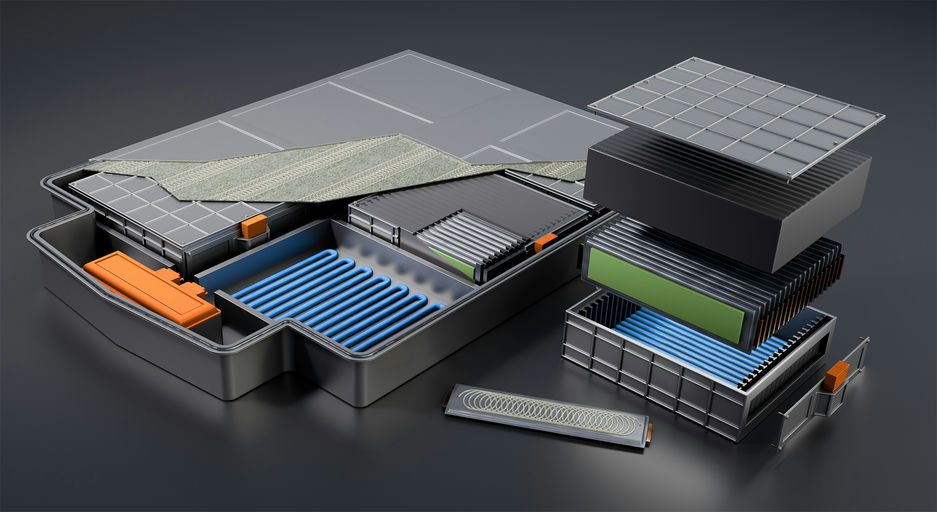
Key Takeaways:
- Effective battery thermal management is paramount for electric vehicle (EV) battery safety, longevity, and optimal performance, preventing risks like thermal runaway.
- Advanced materials such as adhesives, gap fillers, and protective coatings are critical in next-generation battery design, offering solutions for heat control and component protection.
- Engineers leverage these innovative materials to address complex challenges, improving heat dissipation, enhancing structural integrity, and safeguarding critical components.
- Making informed material selections early in the battery development process is crucial for achieving safer, more reliable, and higher-performing battery systems.
- Industry leaders like H.B. Fuller are actively partnering with manufacturers to develop custom-formulated adhesive solutions tailored to specific battery design and manufacturing requirements.
- A forthcoming webinar featuring experts Mekiyah Bailey and Jeremy Chang will provide foundational insights into these advanced material strategies for battery thermal management.
The burgeoning electric vehicle (EV) market is fundamentally dependent on the performance, safety, and longevity of its battery systems. At the core of every high-performing EV battery lies a sophisticated and meticulously engineered thermal management strategy. This critical aspect dictates not only how efficiently a battery operates but also its ability to maintain safety under various conditions and prolong its operational lifespan.

Recent advancements are increasingly focusing on how the very materials comprising a battery pack can actively contribute to thermal control. Beyond merely holding components together, these materials are now pivotal in dissipating heat, offering protection, and ensuring overall system safety. This integrated approach marks a significant evolution in battery design, moving towards solutions where materials themselves become integral to thermal regulation.
The Crucial Role of Battery Thermal Management in EVs
Battery thermal management is not merely an auxiliary function; it is a foundational pillar of modern EV technology. The electrochemical processes within lithium-ion batteries generate heat, particularly during charge, discharge, and rapid acceleration. If this heat is not effectively managed, it can lead to a cascade of detrimental effects, compromising both performance and safety.
Optimal operating temperatures are narrow for most EV battery chemistries. Operating outside this range—either too hot or too cold—can drastically reduce efficiency, accelerate degradation, and even pose severe safety risks. Therefore, a robust thermal management system is essential for maintaining the delicate balance required for sustained, high-performance operation.

Mitigating Thermal Runaway Risks
One of the most significant concerns in battery technology is thermal runaway, a self-propagating chain reaction where increasing temperature leads to further temperature increases, potentially resulting in fire or explosion. Effective battery thermal management systems are designed to prevent such catastrophic events by swiftly and efficiently dissipating heat from individual cells and the entire battery pack.
Advanced materials play a crucial role here by providing pathways for heat to escape or by acting as thermal barriers when needed. This proactive approach to heat control is indispensable for ensuring the safety of occupants and the integrity of the vehicle, underscoring why thermal management remains a top priority for engineers and manufacturers.
Enhancing Performance and Lifespan
Beyond safety, precise thermal control directly impacts a battery’s performance characteristics. Keeping batteries within their optimal temperature range allows for more consistent power delivery, improved energy efficiency, and faster charging capabilities. Extreme temperatures, conversely, can lead to power limitations, reduced range, and slower charging times.
Furthermore, consistent temperature management significantly extends the battery’s cycle life and calendar life. Each degree outside the optimal window can contribute to irreversible chemical degradation, diminishing the battery’s capacity over time. By maintaining stable temperatures, battery thermal management strategies preserve the investment in expensive battery packs and contribute to the overall sustainability of electric mobility.
Advanced Materials: A New Paradigm in Battery Design
The quest for enhanced battery performance and safety has propelled material science to the forefront of EV engineering. Modern battery designs are increasingly integrating advanced adhesives, gap fillers, and protective coatings not just for structural integrity but specifically for their thermal properties. These materials are transforming how heat is managed within complex battery architectures.
These specialized materials are engineered to perform dual roles: providing mechanical strength and component integration while simultaneously facilitating or hindering heat transfer as required. Their application represents a sophisticated shift from traditional, often bulky, thermal management systems to integrated, material-based solutions that are lighter, more compact, and highly efficient.
The Science Behind Thermal Adhesives and Gap Fillers
Thermal adhesives and gap fillers are central to this material-centric approach. These compounds are designed with high thermal conductivity, allowing them to efficiently transfer heat away from critical components like individual battery cells to a cooling plate or heat sink. By ensuring intimate contact and filling air gaps, which are poor thermal conductors, they create an unbroken pathway for heat dissipation.
Typically formulated with thermally conductive particles embedded in a polymer matrix, these materials exhibit excellent adhesion, mechanical stability, and durability. They effectively bond components while simultaneously acting as thermal bridges, significantly improving the overall thermal efficiency of the battery pack. This dual functionality streamlines manufacturing and enhances the reliability of the thermal interface.
Protective Coatings: A Shield for Critical Components
Beyond direct heat transfer, protective coatings offer another layer of thermal management and safety. These coatings can insulate sensitive electronic components from extreme temperatures, preventing overheating or cold-induced damage. They also provide electrical insulation, protecting against short circuits and enhancing the overall safety of the battery module.
In certain applications, these coatings can be designed to resist flame propagation, adding a crucial safety buffer in the event of a thermal incident. By encasing critical components, they create a robust barrier against environmental stressors, contributing to the long-term reliability and robustness of the EV battery system.
Tackling Engineering Challenges with Innovative Solutions
Battery engineers continuously face a myriad of challenges in designing efficient, safe, and cost-effective battery systems. These include managing increasing energy densities, reducing weight, optimizing volumetric efficiency, ensuring long-term durability, and facilitating efficient manufacturing processes. Innovative materials offer promising avenues to overcome many of these hurdles.
The ability of advanced adhesives and thermal materials to integrate multiple functionalities into a single solution provides significant advantages. This integration can simplify assembly processes, reduce the number of discrete components, and ultimately lower manufacturing costs while improving performance metrics. Engineers are increasingly looking to material science for these multi-faceted solutions.
Custom Formulations for Diverse Needs
No two battery designs are exactly alike, with variations in cell chemistry, form factor, energy density, and application requirements. This diversity necessitates highly customized material solutions. Companies specializing in advanced materials often partner with battery manufacturers to develop bespoke adhesive solutions, precisely tailored to unique design and manufacturing needs.
This collaborative approach ensures that the chosen materials not only meet thermal performance targets but also integrate seamlessly with specific manufacturing processes, such as automated assembly lines. Custom formulations allow for fine-tuning properties like viscosity, cure time, adhesion strength, and thermal conductivity to achieve optimal results for each distinct battery system.
Early Design Decisions for Future-Proof Batteries
The impact of material choices is most profound when these decisions are made early in the battery development process. Integrating thermal management considerations from the initial design phase allows engineers to leverage the full potential of advanced materials, optimizing the battery pack’s layout, structural components, and thermal pathways from the ground up.
Early integration prevents costly redesigns later in the development cycle and ensures that the final product is inherently safer, more efficient, and more reliable. This foresight in design thinking, coupled with a deep understanding of material capabilities, is key to powering the next generation of safer, more reliable battery technologies for the electric future.
H.B. Fuller’s Contribution to E-Mobility Safety
In the evolving landscape of EV battery technology, material suppliers play a pivotal role in enabling innovation. H.B. Fuller, a company engaged in advanced adhesive solutions, is actively contributing to these advancements. The firm’s experts, including Mekiyah Bailey and Jeremy Chang, are recognized for their work in battery thermal management.
H.B. Fuller focuses on developing custom-formulated adhesive solutions that address the specific thermal and structural requirements of modern battery designs. Their approach involves collaborating with customers to create materials that manage heat, protect critical components, and enhance overall battery safety and performance, thereby supporting the broader e-mobility industry.
The Broader Landscape: Virtual Conference on EV Engineering
The importance of battery thermal management is further highlighted within the context of comprehensive industry events. The upcoming Virtual Conference on EV Engineering, scheduled to broadcast live from September 14 to 17, 2026, serves as a significant platform for knowledge exchange and showcasing innovations across the entire EV supply chain.
This conference provides a unique opportunity for professionals, engineers, and researchers to delve into various facets of EV technology, ranging from fundamental component design to advanced manufacturing techniques. The inclusion of dedicated sessions on thermal management underscores its critical role in the future development of electric vehicles.
Comprehensive Coverage of the EV Ecosystem
The Virtual Conference on EV Engineering is designed to cover the complete spectrum of the EV engineering supply chain and ecosystem. This includes detailed discussions on motor and power electronics design and manufacturing, advancements in cell development, sophisticated battery systems, and rigorous testing methodologies.
Further topics encompass powertrain innovations, advanced thermal management solutions, critical circuit protection, developments in wire and cable technology, and crucial aspects of EMI/EMC compliance. Such a broad scope ensures that attendees gain a holistic understanding of the challenges and opportunities within the rapidly advancing EV sector.
A Hub for Industry Insights
The conference acts as a central hub for industry professionals seeking to deepen their understanding and stay abreast of the latest trends and solutions. The specific webinar, “Battery thermal management by design,” featuring Mekiyah Bailey and Jeremy Chang from H.B. Fuller, is slated for September 17, 2026, at 10:30 am EDT. This session offers an introduction to how advanced materials are transforming battery design for enhanced heat management, performance, and safety. Registration for this and other sessions at the Virtual Conference on EV Engineering is free.
Frequently Asked Questions (FAQs)
What is battery thermal management?
Battery thermal management refers to the systems and strategies employed to maintain optimal operating temperatures for electric vehicle (EV) batteries. This is crucial for preventing overheating or overcooling, which can degrade performance, reduce lifespan, and pose safety risks like thermal runaway.
Why is thermal management essential for EV batteries?
It’s essential for several reasons: it ensures safety by preventing thermal runaway, enhances battery performance by maintaining optimal operating temperatures, extends the battery’s lifespan by mitigating degradation, and enables efficient charging and discharging rates necessary for EVs.
How do advanced adhesives and gap fillers aid in thermal management?
Advanced adhesives and gap fillers are formulated with high thermal conductivity. They create efficient pathways for heat to transfer away from battery cells to cooling systems, fill air gaps that impede heat flow, and provide structural integrity, thereby improving the overall thermal efficiency of the battery pack.
What challenges do battery engineers face in thermal management?
Engineers contend with balancing energy density, weight, volume, cost, and manufacturing complexity. They must develop systems that effectively dissipate heat during various operating conditions while ensuring long-term durability and safety across diverse battery chemistries and pack designs.
What role do protective coatings play in battery safety?
Protective coatings insulate sensitive electronic components from extreme temperatures, prevent electrical shorts, and can offer flame resistance. They create a robust barrier that safeguards critical parts against environmental stressors and potential thermal incidents, enhancing the overall safety and reliability of the battery module.
Why is making design decisions early important for battery thermal management?
Integrating thermal management considerations early in the design phase allows engineers to optimize the battery pack’s layout and material choices from the outset. This proactive approach ensures inherent safety, efficiency, and reliability, preventing costly redesigns and enabling the development of future-proof battery technologies.