
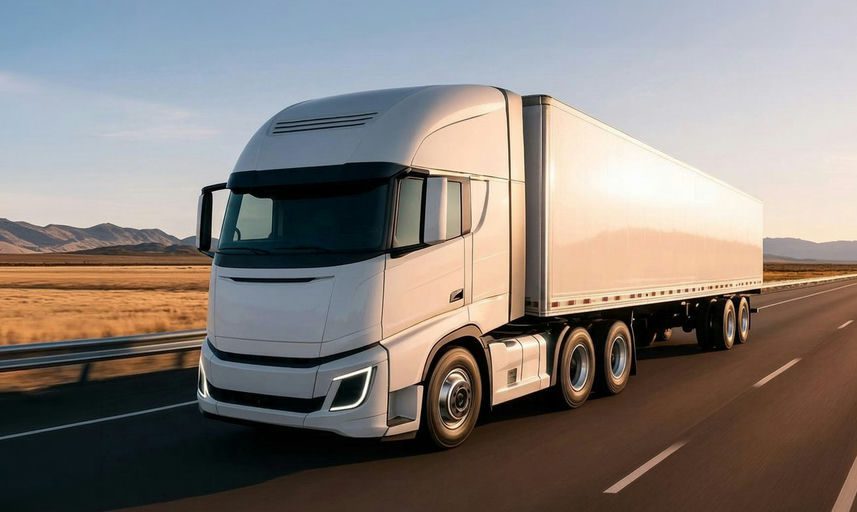
As the global automotive landscape rapidly shifts towards electrification, battery-electric commercial vehicles are emerging as a pivotal segment. This transformation, while promising significant environmental and operational benefits, presents a unique set of engineering challenges, particularly in designing robust, scalable, and efficient power distribution architectures. Engineers are increasingly seeking innovative approaches to streamline the complex systems required for commercial EV fleets.
Traditional vehicle architectures, often characterised by a multitude of discrete components for critical functions such as switching, protection, monitoring, communications, and control, inherently increase system complexity. This multi-component approach invariably extends validation efforts and significantly lengthens development timelines, posing substantial hurdles for manufacturers aiming to accelerate the deployment of advanced commercial electric vehicles.

Key Takeaways: Simplifying Commercial EV Power Distribution
- Accelerated Validation & Procurement: Standardized, off-the-shelf solutions significantly reduce development cycles and simplify purchasing processes for commercial EV programs.
- Addressing Core Challenges: The shift to battery-electric commercial vehicles introduces complexities in power distribution and charging architectures that traditional methods struggle to manage.
- Simplified System Integration: Modular high-voltage distribution units consolidate multiple functions, drastically lowering engineering complexity and enhancing reliability.
- Unified Platform Strategy: Integrated solutions combine essential functions like switching, protection, sensing, diagnostics, communications, and control into a single, cohesive unit.
- Scalable Electrification: These advanced approaches are crucial for the efficient and flexible electrification of Class 5+ commercial vehicles, supporting diverse applications.
The Intricacies of Commercial EV Power Distribution
The electrification of commercial vehicles, ranging from delivery vans to heavy-duty trucks (Class 5+), introduces rigorous demands on power distribution systems. These vehicles require robust high-voltage architectures capable of managing substantial power flows for traction, auxiliary systems, and rapid charging. Traditional design methodologies, which involve sourcing, integrating, and validating numerous individual components from various suppliers, often lead to intricate wiring harnesses, increased vehicle weight, and potential points of failure.
The sheer number of components complicates not only the physical layout but also the software integration and diagnostic capabilities. Each component requires its own interface, communication protocol, and fault management strategy, thereby escalating the engineering effort. Furthermore, the rigorous safety standards associated with high-voltage systems in commercial applications necessitate extensive testing and validation, which can be prohibitively time-consuming and costly when dealing with fragmented systems.
Integrated Solutions: A Paradigm Shift in EV Engineering
In response to these growing complexities, the industry is witnessing a significant shift towards modular, integrated solutions. These innovative approaches consolidate multiple functionalities into a single, cohesive unit, fundamentally simplifying the power distribution architecture of commercial electric vehicles. Companies like Sensata Technologies are at the forefront of developing such solutions.

Off-the-shelf high-voltage distribution units exemplify this paradigm shift. These advanced platforms adeptly combine critical functions that were traditionally handled by separate components. This includes high-voltage switching for power management, comprehensive circuit protection to safeguard components, advanced sensing for real-time performance monitoring, and sophisticated diagnostics for predictive maintenance and fault identification.
Unifying Core Functions for Enhanced Efficiency
Beyond these, integrated units often incorporate communication interfaces, enabling seamless interaction with the vehicle’s central control unit and other subsystems. Crucially, they also integrate charging functionality, streamlining the entire power flow process from grid to battery and then to the various vehicle loads. This unification minimises the need for custom design work for each component, allowing engineers to focus on higher-level system optimisation.
The benefits of such an integrated platform are multifaceted. By reducing the number of individual parts, manufacturers can significantly decrease bill of material (BOM) costs, simplify inventory management, and lower assembly labour. Moreover, the standardised nature of off-the-shelf components means they arrive pre-validated for many common operational scenarios, accelerating the overall vehicle development lifecycle.
Streamlining Vehicle Architecture and Reducing Engineering Complexity
The primary advantage of integrated power distribution solutions lies in their ability to streamline the entire vehicle architecture. Instead of managing a complex network of discrete components and their respective wiring, engineers can implement a unified platform that handles multiple tasks concurrently. This simplification directly translates to a reduction in engineering complexity, freeing up valuable resources to innovate in other areas of EV design, such as battery chemistry or motor efficiency.
Furthermore, these modular units are designed with scalability in mind. As commercial vehicle manufacturers develop a diverse range of models with varying power requirements and battery configurations, integrated solutions offer the flexibility to adapt without a complete redesign of the power distribution system. This modularity supports agile development cycles and allows for quicker iterations on future battery-electric vehicle programs.
Accelerating Validation and Procurement Processes
One of the most significant bottlenecks in EV development is the extensive validation required for high-voltage systems. Each discrete component, and its interaction within the broader system, must be rigorously tested for safety, performance, and durability. Integrated, off-the-shelf units substantially mitigate this challenge.
Since these solutions are typically pre-certified or designed to meet stringent industry standards, a substantial portion of the component-level validation is already complete. This dramatically reduces the burden on vehicle manufacturers, allowing them to focus on system-level integration and vehicle-specific testing. Similarly, procurement is simplified. Instead of managing multiple vendors for various components, manufacturers can source a comprehensive solution from a single supplier, leading to more efficient supply chain management and potentially better economies of scale.
The Path to Scalable Commercial Electrification
For Class 5+ commercial vehicles, where demands for power, reliability, and uptime are exceptionally high, scalable electrification strategies are paramount. Integrated power distribution units provide a foundational element for achieving this scalability. Their inherent flexibility allows manufacturers to tailor power distribution capabilities to specific vehicle types and operational profiles without necessitating ground-up engineering for each variant.
This approach not only supports the current wave of commercial EV adoption but also positions manufacturers to rapidly respond to future advancements in battery technology, charging infrastructure, and vehicle autonomy. By adopting such flexible platforms, the industry can more effectively navigate the evolving landscape of commercial electrification, ensuring that new models can be brought to market quickly and efficiently.
Deepening Expertise at the Virtual Conference on EV Engineering
The pressing need for advanced power distribution solutions will be a central theme at the upcoming Virtual Conference on EV Engineering. An exclusive webinar, scheduled for September 14, 2026, at 10:30 am EDT, will delve deeper into how these integrated off-the-shelf solutions are simplifying commercial EV power distribution.
This session is specifically designed to provide engineers with practical insights into overcoming the challenges associated with complex power architectures. Attendees will gain a comprehensive understanding of how modular high-voltage distribution units facilitate system integration, reduce engineering complexity, and support scalable electrification strategies for commercial vehicle applications. The discussion will also cover strategies for integrating crucial functions like switching, protection, sensing, diagnostics, communications, and control into a unified platform, offering a clear roadmap for future EV programs.
The webinar is part of a broader Virtual Conference on EV Engineering, which will broadcast live from September 14 to 17, 2026. This comprehensive event will cover the entire EV engineering supply chain and ecosystem. Topics will include motor and power electronics design and manufacturing, advanced cell development, sophisticated battery systems, rigorous testing methodologies, efficient powertrains, innovative thermal management solutions, critical circuit protection, durable wire and cable, and essential EMI/EMC considerations.
The event offers a unique opportunity for professionals to engage with leading experts, discover cutting-edge technologies, and explore the latest trends shaping the future of electric mobility. Registration for the individual webinar sessions, including the one on integrated power distribution, is free of charge.
Register now—it’s free!
See the complete session list for the Virtual Conference on EV Engineering here.
Frequently Asked Questions (FAQ)
What are the main challenges in commercial EV power distribution?
Engineers face hurdles like complex architectures requiring multiple discrete components for switching, protection, and control. This leads to increased validation effort, longer development times, and higher system complexity, especially for high-voltage commercial applications.
How do integrated power distribution units simplify vehicle design?
Integrated units consolidate multiple functions (switching, protection, sensing, communications) into a single platform. This reduces the number of components, streamlines wiring, simplifies software integration, and lessens overall engineering complexity, accelerating vehicle development.
What functions do off-the-shelf high-voltage distribution units combine?
These units typically combine essential functions such as high-voltage switching, robust circuit protection, advanced sensing capabilities, sophisticated diagnostics, communication interfaces, and integrated charging functionality within a single, pre-validated module.
How do these solutions accelerate validation and procurement?
Being off-the-shelf, these units are often pre-certified or designed to meet industry standards, reducing manufacturer-specific validation efforts. Procurement is also simplified by sourcing a comprehensive, pre-integrated solution from a single vendor, improving supply chain efficiency.
Are these solutions applicable to all types of commercial EVs?
Yes, the modular and scalable nature of integrated power distribution solutions makes them suitable for a wide range of commercial EV applications, particularly Class 5+ vehicles, accommodating varying power requirements and vehicle configurations efficiently.
What is the significance of “Class 5+ commercial vehicles” in this context?
Class 5+ commercial vehicles represent medium to heavy-duty trucks and buses, which have significantly higher power demands, larger battery capacities, and more complex auxiliary systems compared to lighter electric vehicles, making integrated power solutions particularly critical for their electrification.
Where can engineers learn more about these integrated solutions?
Engineers can learn more by attending dedicated industry webinars and conferences. The Virtual Conference on EV Engineering, for example, offers a specific session on simplifying commercial EV power distribution with integrated off-the-shelf solutions.
What is the “Virtual Conference on EV Engineering”?
The Virtual Conference on EV Engineering is an online event broadcast live from September 14 to 17, 2026. It covers the entire EV engineering ecosystem, including motor design, battery systems, thermal management, testing, and power electronics, providing comprehensive insights into electric mobility advancements.