
Key Takeaways
- Wevo has introduced WEVOPUR 60210 FL T, a specialized polyurethane compound for protecting printed circuit boards (PCBs) in automotive battery management systems (BMS).
- This innovative material is crucial for EV battery protection, shielding high-voltage (up to 800V) BMS components from mechanical stress, extreme temperatures, and moisture.
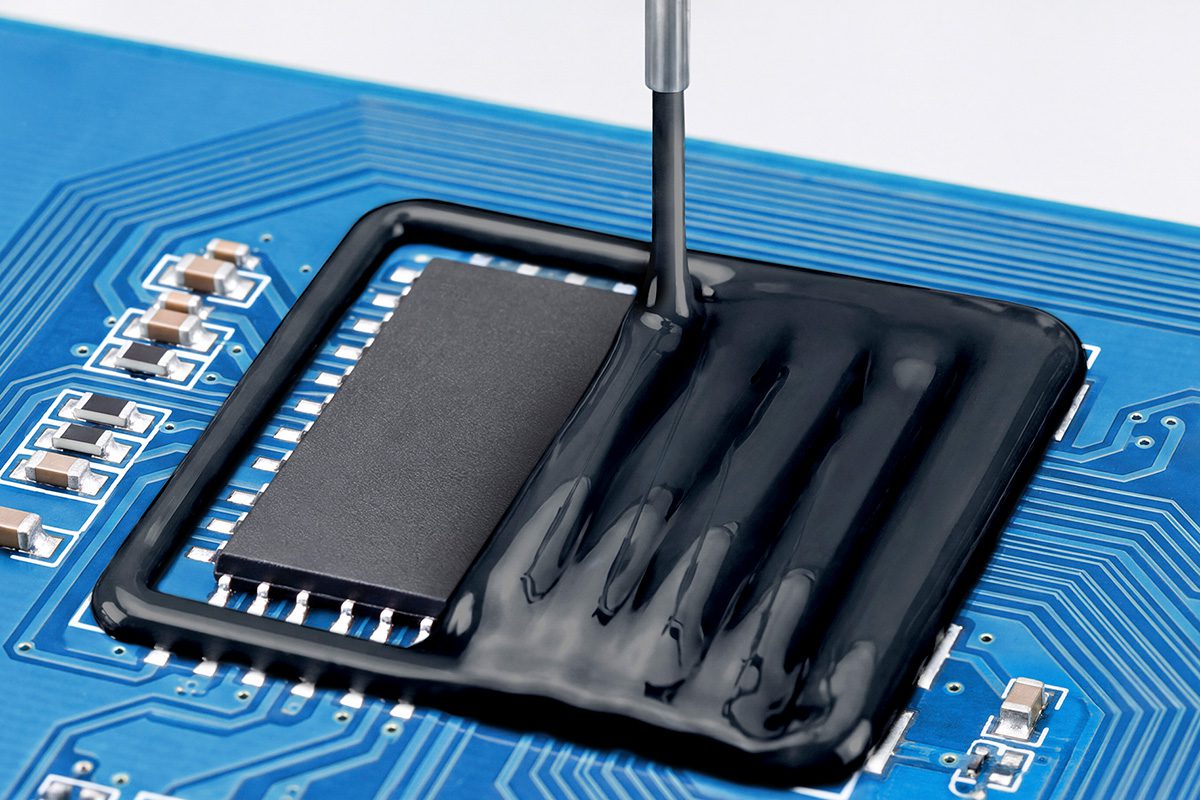
- Applied via the precise dam-and-fill method, it ensures optimal protection while maintaining accessibility to connectors and test points.
- Key properties include a Shore hardness of D 40-50, thermal conductivity of 0.8 W/m·K, and dielectric strength exceeding 20 kV/mm, ensuring superior vibration dampening, thermal management, and electrical insulation.
- The compound is designed for efficient integration into existing manufacturing processes, reducing material qualification and production management complexities for EV manufacturers.
In a significant stride towards bolstering the reliability and longevity of electric vehicles (EVs), Wevo, a leading innovator in specialty chemicals, has announced the development of WEVOPUR 60210 FL T. This advanced polyurethane compound is specifically engineered for the selective potting of multilayer printed circuit boards (PCBs) within automotive battery management systems (BMS), offering robust EV battery protection solutions for the demanding environment of modern electric powertrains.
The new compound is designed to safeguard critical electronic components that monitor and control voltages up to 800 V, a standard for high-performance EVs. Its introduction marks a crucial advancement in ensuring the operational integrity and safety of electric vehicle battery protection systems, directly addressing some of the most pressing challenges faced by the automotive industry today.

The Critical Role of Battery Management Systems in EVs
Battery Management Systems (BMS) are the brain of an electric vehicle’s battery pack. They constantly monitor crucial parameters such as cell voltage, temperature, and current, ensuring optimal performance, preventing damage, and guaranteeing the safety of the entire battery assembly. With the increasing power demands and complexity of EV technology, BMS PCBs are evolving rapidly, integrating more diagnostic, communication, and safety functions onto smaller, denser boards.
This heightened integration density, coupled with the harsh operating conditions in an EV, exposes these sophisticated PCBs to significant stresses. They must withstand constant mechanical vibrations, rapid and extreme temperature fluctuations, and potential exposure to moisture and corrosive elements. Without adequate protection, these factors can lead to component failure, reduced battery lifespan, or even safety hazards, making comprehensive EV battery protection solutions indispensable.
Addressing Extreme Conditions: The Need for Robust PCB Protection
The operational environment for automotive electronics, especially those in the powertrain, is notoriously challenging. PCBs in EV battery management systems are subjected to a relentless barrage of stressors. Mechanical stress from road vibrations and sudden accelerations can compromise solder joints and component integrity.
Thermal cycling, caused by charging, discharging, and ambient temperature changes, can lead to material fatigue and stress cracks. Moreover, the presence of moisture or contaminants can trigger electrochemical corrosion, silently degrading performance and reliability. Traditional protection methods often fall short in providing comprehensive, long-term resilience against these combined threats, highlighting the urgent need for specialized EV battery protection technologies.
Introducing WEVOPUR 60210 FL T: A Tailored Solution
Wevo’s WEVOPUR 60210 FL T polyurethane compound is engineered to directly counter these challenges. It employs a selective potting technique, a sophisticated method where the protective compound is applied only to specific areas of the PCB. This approach contrasts with full encapsulation, allowing critical connectors, test points, and heat-dissipating surfaces to remain exposed and accessible, which is vital for maintenance and manufacturing processes.
By encasing the vulnerable components in a cured compound, WEVOPUR 60210 FL T creates a robust shield. This precisely targeted application ensures that high-voltage areas are adequately isolated and protected, contributing significantly to the overall safety and reliability of the EV’s power electronics. The solution effectively extends the lifespan of the BMS by mitigating the environmental and operational hazards it faces daily.
Engineering for Resilience: Key Material Properties for EV Battery Protection
The effectiveness of WEVOPUR 60210 FL T stems from its meticulously engineered material properties, which are critical for robust EV battery protection. The compound exhibits a Shore hardness ranging from D 40 to 50. This specific hardness level provides optimal mechanical stability, allowing the material to absorb and dampen shocks and vibrations without becoming brittle or excessively pliable under various operating conditions.
Furthermore, its thermal conductivity of 0.8 W/m·K is a crucial feature for effective thermal management. By efficiently conducting heat away from sensitive components and distributing it evenly throughout the potted assembly, the compound significantly reduces temperature differences. This uniform heat dissipation is vital in preventing hot spots, which are common causes of stress cracks and the premature detachment of solder joints on high-power PCBs.
In terms of electrical insulation, the material boasts a dielectric strength exceeding 20 kV/mm. This exceptional insulating capability is paramount for applications involving high voltages, such as those found in 800V EV battery systems. It ensures that electrical pathways are safely isolated, preventing short circuits and enhancing the overall electrical integrity and safety of the battery management system. These combined properties make WEVOPUR 60210 FL T an integral component for advanced EV battery protection.
Advanced Protection Mechanisms in Detail
Beyond its fundamental properties, WEVOPUR 60210 FL T provides a multi-faceted defense mechanism for EV battery protection. The cured compound’s inherent elasticity allows it to absorb the stresses induced by fluctuating temperatures, preventing mechanical strain from accumulating within the PCB and its components. This capability significantly reduces the risk of long-term fatigue failure in solder joints and traces.
Crucially, the compound is specifically formulated to prevent electrochemical corrosion, a common issue in electronics exposed to moisture and electrical fields. By sealing off components from environmental ingress, it blocks the pathways for corrosive reactions, thereby extending the operational life of the sensitive electronics. Wevo also emphasizes the optimized adhesion properties of WEVOPUR 60210 FL T. This strong, durable bond with the substrate is designed to prevent delamination, ensuring that the protective layer remains firmly attached to the PCB even under severe mechanical and thermal stresses. This integrated protection strategy underlines its role as a comprehensive EV battery protection solution.
The Dam-and-Fill Advantage in Production
The application method for WEVOPUR 60210 FL T, known as the dam-and-fill process, is a testament to its design for precision and efficiency in manufacturing. In this two-stage technique, the compound first acts as a barrier, forming a perimeter around the area to be protected. The specialized flow behavior and thixotropy of the material ensure that this barrier holds its shape precisely, preventing the compound from spreading beyond designated areas.
Once the barrier is established, the compound then serves as a filler, wetting the enclosed area to provide complete protection. Its carefully tuned rheology allows it to flow smoothly, fully encapsulating components without trapping air pockets. Air pockets can compromise dielectric strength and thermal dissipation, so their prevention is critical for optimal EV battery protection.
The adaptability of this process is another key benefit. Manufacturers can adjust the layer thickness and the amount of material applied based on varying PCB geometries and component heights. This flexibility is achieved by modifying process parameters such as application speed and dispensing patterns, enabling highly customized and efficient production for diverse battery management system designs.
Streamlining Production and Qualification for Manufacturers
Wevo has formulated WEVOPUR 60210 FL T with an eye towards streamlining manufacturing processes for its clients. The compound is designed to be fully compatible with standard two-component mixing and dosing equipment already prevalent in the automotive electronics industry. This compatibility significantly reduces the barriers to adoption for manufacturers.
By leveraging existing infrastructure, companies can minimize the time and resources typically associated with material qualification. There’s less need for investing in new equipment, training personnel, or redesigning production lines. Furthermore, simplified material storage and process management lead to reduced operational complexities and lower overall production costs. This focus on ease of integration underscores Wevo’s commitment to providing practical and economically viable EV battery protection solutions that meet the rigorous demands of large-scale automotive manufacturing.
Industry Context and Future Outlook for EV Battery Protection
The continuous innovation in materials science, exemplified by products like WEVOPUR 60210 FL T, is pivotal for the sustained growth and reliability of the electric vehicle market. As EVs become more ubiquitous and their performance expectations rise, the demand for robust and efficient EV battery protection solutions will only intensify.
Developments in potting compounds directly contribute to enhancing the safety, extending the range, and improving the overall durability of electric vehicles. They play a silent but crucial role in mitigating risks associated with high-voltage systems and ensuring that critical electronic components can withstand the test of time and tough operating conditions. Wevo’s latest offering reinforces the ongoing commitment by material specialists to support the automotive industry’s transition towards a more electrified and sustainable future.
FAQ Section
What is WEVOPUR 60210 FL T used for?
WEVOPUR 60210 FL T is a specialized polyurethane compound developed by Wevo. It is used for the selective potting of multilayer printed circuit boards (PCBs) in automotive battery management systems (BMS), specifically those monitoring and controlling voltages up to 800V in electric vehicles, providing essential EV battery protection.
How does this compound protect EV battery management PCBs?
The compound protects PCBs by encasing critical components in a cured material, shielding them from mechanical stress, shocks, vibrations, moisture, and extreme temperature fluctuations. Its properties facilitate heat dissipation, prevent electrochemical corrosion, and ensure components remain fixed, enhancing overall EV battery protection.
What is selective potting, and why is it beneficial for BMS?
Selective potting involves applying the protective compound only to specific areas of a PCB, rather than full encapsulation. This method is beneficial for BMS as it protects sensitive components while leaving connectors, test points, and heat-dissipating areas accessible for maintenance, testing, and optimal thermal performance, crucial for effective EV battery protection.
What are the key material properties of WEVOPUR 60210 FL T?
Key properties include a Shore hardness of D 40 to 50, providing mechanical stability and vibration dampening. It has a thermal conductivity of 0.8 W/m·K for efficient heat management, and a dielectric strength exceeding 20 kV/mm, ensuring superior electrical insulation in high-voltage EV battery systems.
How is WEVOPUR 60210 FL T applied in manufacturing?
The compound is applied using the dam-and-fill method. This process first creates a barrier to contain the material, then fills the designated area. Its thixotropic properties prevent air pockets and allow for adjustable layer thickness and material amounts, making it compatible with standard two-component mixing and dosing equipment for efficient production.