
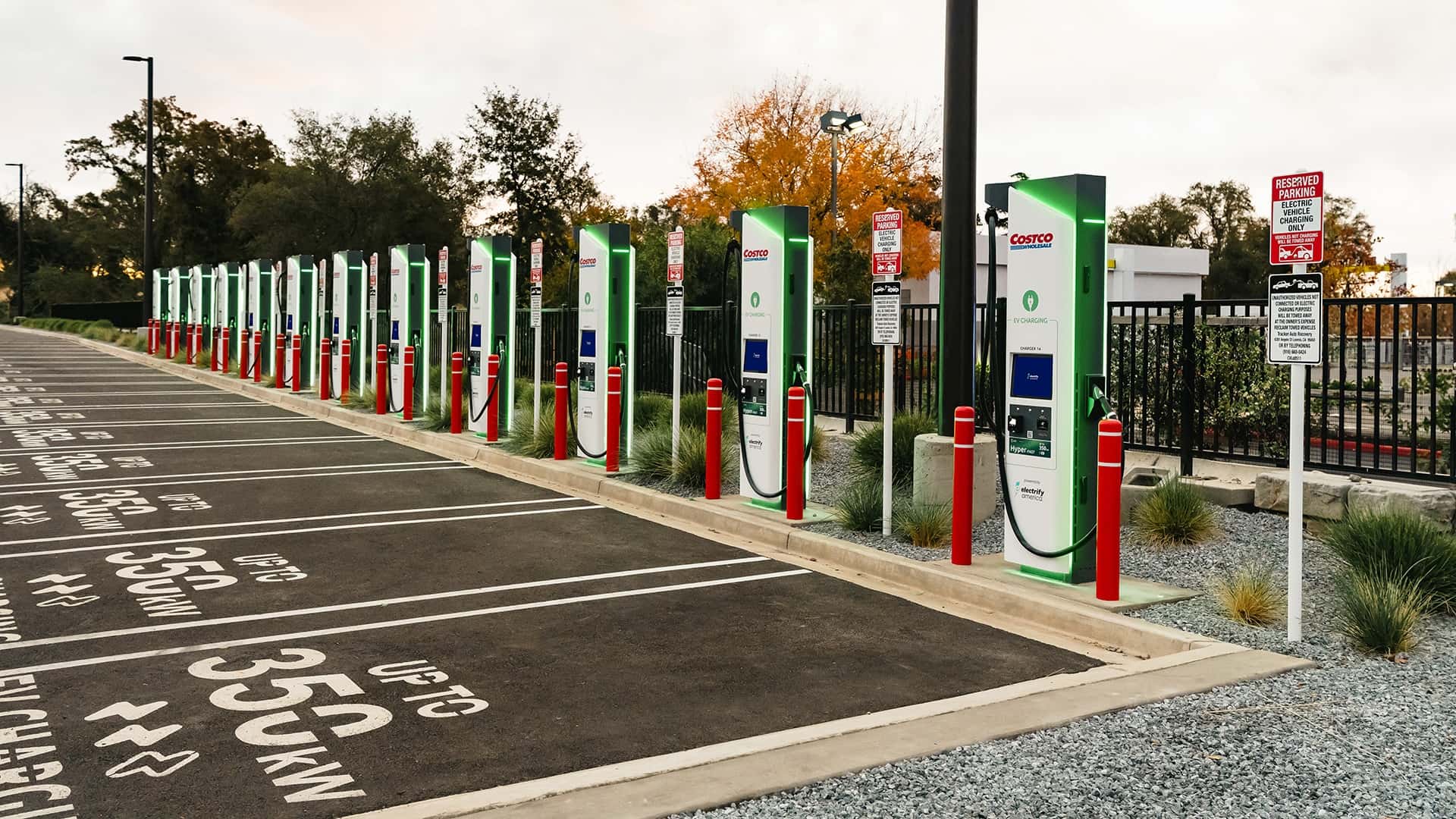
Key Takeaways:
- A recent white paper by Kempower challenges the conventional wisdom that ultra-fast chargers are the sole key to successful EV charging networks.
- The study, based on extensive North American data, indicates that a higher number of charging plugs at a station significantly boosts utilization and revenue more effectively than increasing the peak power of individual stalls.
- Charging sites with eight plugs can achieve utilization rates three times higher than smaller, high-powered stations, leading to a quicker return on investment for operators.
- Most electric vehicles rarely sustain their advertised peak charging rates, making an average output of around 100 kW per connector ideal for maximizing station efficiency and driver throughput.
- Implementing distributed power and dynamic power management systems allows EV charging network operators to scale infrastructure more efficiently and respond to evolving demand.
In the rapidly expanding ecosystem of electric vehicles (EVs), the quest for faster charging has often dominated headlines. Manufacturers frequently tout megawatt charging capabilities and sub-10-minute top-ups that promise hundreds of miles of range in record time. However, a new white paper from Kempower, a prominent Finnish provider of EV charging hardware and management software, presents a compelling, data-driven argument that challenges this single-minded focus on raw power.

The findings suggest that the economic viability and long-term sustainability of an EV charging network hinge less on delivering maximum power and more on providing ample choice and availability through a greater number of charging plugs. For companies investing heavily in charging infrastructure, understanding this nuanced relationship between power, plugs, and profitability is paramount.
Rethinking EV Charging Network Strategy
The white paper, leveraging extensive North American charging data extracted from Kempower’s proprietary ChargEye analytics platform, posits a critical insight: for charging network operators to ensure profitability and sustained operations, the strategic focus should shift towards deploying more charging points at each location, even if these individual stalls offer less peak power than competing, high-output sites.
Kempower’s analysis reveals a strong correlation between the number of plugs at a charging site and its utilization rate. This factor, the company indicates, is a far more significant driver of usage than the total installed power capacity of the station itself. The research emphatically states, “Installed power barely moves the needle,” when it comes to site utilization. Instead, the paper highlights that “Charging site utilization climbs steadily as sites add charging points.”
The Utilization Metric: Plugs Over Peak Power
The data underscores a clear trend: a station equipped with more plugs consistently achieves a higher utilization rate, directly translating into increased revenue and a faster return on investment for the EV charging network operator. Specifically, Kempower’s figures illustrate that a station featuring eight plugs can deliver a utilization rate three times higher than smaller stations that might boast higher-powered but fewer stalls.
A granular look at the data further solidifies this observation. One of the included graphs in the white paper depicts a utilization rate incrementally rising from approximately 3% for stations with 100-kilowatt (kW) capabilities to just over 5% for those rated at 400 kW. This modest increase contrasts sharply with the impact of plug count.
Conversely, the same data shows a dramatic leap in utilization when moving from a two-plug station to an eight-plug station, with rates soaring from roughly 2% to almost 10%. This difference is not just about frequency of use; it also translates into significantly more energy dispensed. Sites with eight plugs, on average, delivered more than double the energy at 128,342 kilowatt-hours (kWh), compared to four-plug sites which averaged 61,453 kWh.
A key factor underpinning these findings is the actual charging behavior of electric vehicles. Kempower’s research points out that the ideal power output for maximizing the utilization rate of a charging station, particularly when all connectors are in use, hovers around 100 kW. This is largely because most, if not all, EVs seldom fully exploit their advertised peak charging power throughout an entire charging session.
For instance, an EV might be marketed with a peak charging rate of 300 kW, but a typical 10% to 80% charging session will often see an average input power ranging between 100 kW and 150 kW. This variance means that ultra-high-power chargers are often underutilized in terms of their maximum potential, making the sheer number of available connectors a more practical determinant of operational efficiency.
Economic Viability and Return on Investment for EV Charging Network Operators
The financial health of an EV charging network is directly tied to its utilization rates. Unprofitable charging stations risk closure or neglect, which can severely hinder the broader adoption of electric vehicles. Kempower’s white paper, therefore, provides crucial insights for operators aiming to build sustainable and profitable businesses within the competitive EV charging landscape.
By prioritizing the deployment of more plugs, even at a slightly lower individual power rating, operators can enhance customer satisfaction by reducing wait times and ensuring availability. This improved customer experience, coupled with higher energy throughput, directly contributes to a healthier revenue stream and a more attractive return on investment (ROI). It moves the industry towards a model where accessibility and reliability are paramount, rather than just raw speed.
Kempower itself specializes in the development of EV charging stations that incorporate distributed power and dynamic power management systems. This technological approach, akin to the strategy employed by Tesla with its Superchargers, allows for intelligent power distribution among multiple charging stalls based on the real-time needs of connected vehicles. Founded in Finland in 2017, the company champions the distributed power model.
The company argues that adopting a distributed power architecture offers greater flexibility and ease when it comes to scaling an EV charging network in the future. Instead of requiring massive, upfront investments for initial high-powered installations, this approach permits operators to incrementally expand charging capacity without needing extensive re-engineering or significant additional capital expenditure after the first set of stalls has been energized. This adaptability is critical in a rapidly evolving market with unpredictable demand growth.
Optimizing the Driver Experience and Infrastructure Scalability
The implications of Kempower’s findings extend beyond mere profitability. For EV drivers, an EV charging network designed with more plugs translates directly into a better user experience. Fewer instances of arriving at a fully occupied station or experiencing lengthy queues contribute to reduced range anxiety and greater confidence in long-distance EV travel. This improved accessibility is a significant factor in encouraging wider EV adoption.
From an infrastructure perspective, the ability to scale charging stations incrementally with distributed power management offers significant advantages. It allows operators to respond more nimbly to rising EV penetration rates and shifting geographical demand patterns. This flexibility can help prevent over-investment in underutilized ultra-high-power hardware in certain locations while ensuring sufficient capacity in high-demand areas.
The Future of EV Charging Network Development
The insights from Kempower’s white paper call for a strategic re-evaluation within the EV charging network industry. While the allure of ultra-fast charging remains, the practical realities of EV charging behavior and the imperative for economic sustainability suggest that a balanced approach is necessary.
Future infrastructure development may increasingly focus on smart charging solutions that prioritize the efficient distribution of power across multiple connectors. This strategy ensures that while individual EVs receive adequate power for rapid charging, the overall station maximizes its utilization, energy throughput, and ultimately, its financial viability.
The data points towards a future where the success of an EV charging network is measured not just by the peak power of its individual stalls, but by the efficiency, availability, and overall user satisfaction derived from its comprehensive plug count and intelligent power management systems. This pragmatic approach will be crucial in building a robust and reliable charging infrastructure that can truly support the global transition to electric mobility.
Frequently Asked Questions (FAQ)
What is the key takeaway from Kempower’s white paper on EV charging?
The primary finding is that for an EV charging network, increasing the number of available plugs at a station drives higher utilization and revenue more effectively than merely increasing the peak power capacity of individual chargers. This challenges the common assumption that ultra-fast charging is the sole pathway to profitability.
How does the number of charging plugs impact station utilization?
Kempower’s data indicates a strong positive correlation: stations with more plugs experience significantly higher utilization rates. For example, an eight-plug station can see utilization rates up to three times higher than smaller stations with fewer, albeit higher-powered, stalls, leading to greater energy throughput and improved ROI.
Why is average charging power more relevant than peak power for EV charging network profitability?
EVs rarely sustain their maximum advertised charging rates throughout an entire session. The average power delivered during a 10-80% charge is often around 100-150 kW. Therefore, an EV charging network optimized for this average demand across more plugs proves more efficient and profitable than over-investing in peak power that is rarely fully utilized.
What is distributed power management in EV charging?
Distributed power management is a system where a central power unit intelligently allocates available power among multiple charging connectors based on real-time demand. This approach, used by companies like Kempower, allows for flexible scalability and efficient power distribution, optimizing the performance of the entire EV charging network.
How does optimized EV charging network design benefit consumers?
For consumers, an optimized EV charging network, focusing on more plugs, means reduced waiting times and increased availability of charging points. This mitigates range anxiety and contributes to a smoother, more reliable charging experience, fostering greater confidence in electric vehicle ownership.
What is the recommended average power output per connector for maximizing station utilization?
According to Kempower’s research, an average power output of approximately 100 kW per connector is considered ideal for maximizing the utilization rate of a charging station when all plugs are in use. This figure aligns well with the typical sustained charging speeds of most EVs.
Why is ensuring profitability for EV charging networks crucial for broader EV adoption?
Profitable EV charging networks are sustainable networks. If operators can achieve a healthy return on investment, it incentivizes further expansion and maintenance of infrastructure. This growth in reliable, accessible charging options is fundamental to supporting and accelerating the widespread adoption of electric vehicles globally.
Which geographic region did Kempower’s data primarily cover?
Kempower’s white paper is based on extensive charging data extracted from their ChargEye analytics platform, specifically focusing on the North American EV charging market. This regional focus provides valuable insights into the dynamics of one of the world’s major electric vehicle markets.