
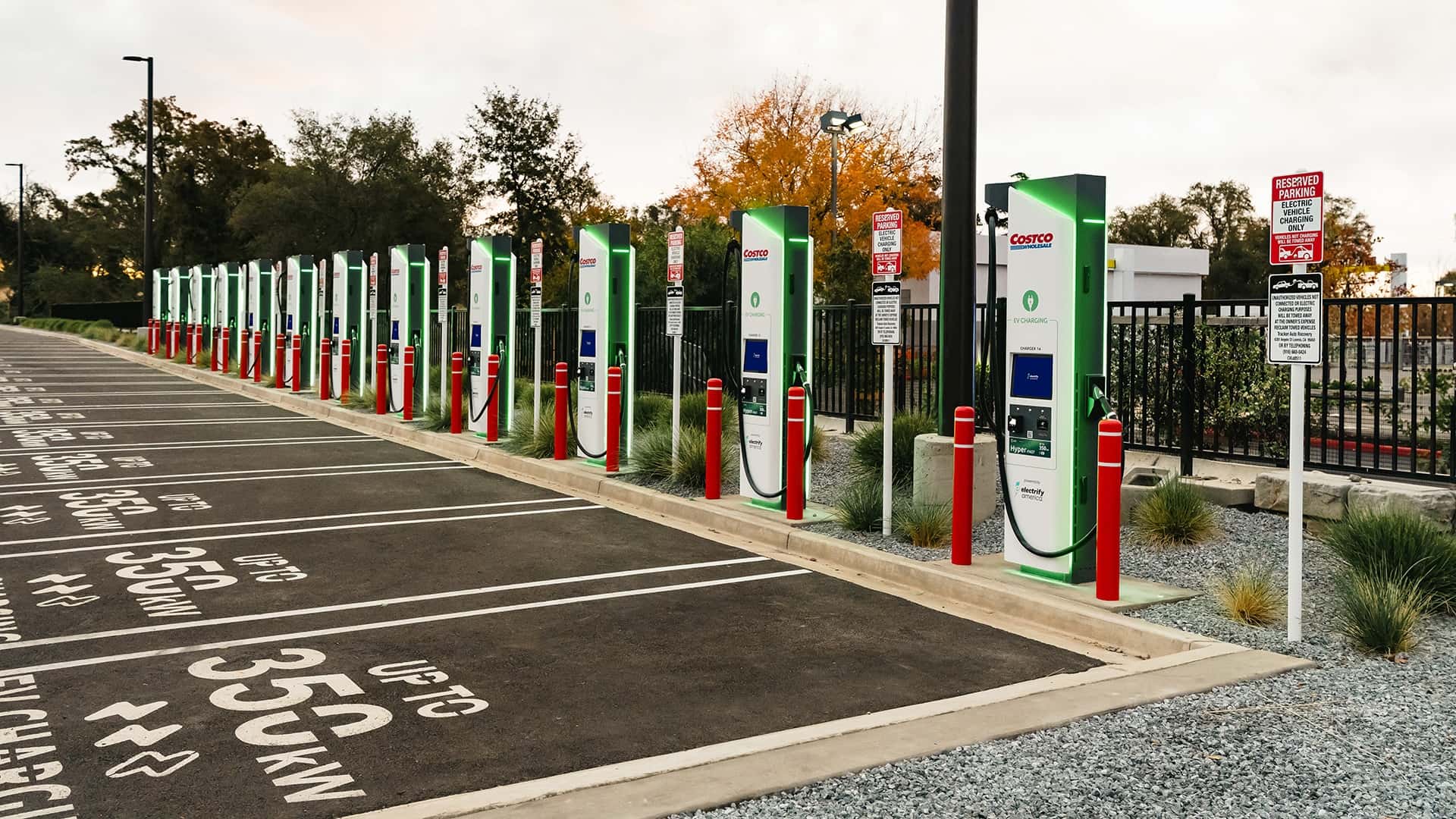
Key Takeaways: Optimising EV Charging Network Profitability
- The pursuit of ultra-fast Electric Vehicle (EV) chargers, while technically impressive, often does not translate into higher utilization or sustainable revenue for charging network operators.
- A recent white paper by Kempower, a leading provider of charging hardware and management software, indicates that installing more charging plugs at a station significantly boosts utilization rates and revenue, even if individual plugs offer less power.
- Data suggests that an ideal power output of around 100 kW per connector, combined with a higher number of plugs, maximizes efficiency and return on investment due to typical EV charging behaviors.
- Adopting a distributed power and dynamic power management approach, similar to Tesla’s Supercharger model, allows for greater scalability and operational flexibility for EV charging infrastructure.
- Charging networks must shift their focus from peak power boasts to strategic deployment of numerous, adequately powered charging points to ensure long-term viability and enhance the driver experience.
The global race to build out robust Electric Vehicle (EV) charging infrastructure has largely fixated on the promise of ultra-fast chargers, capable of delivering hundreds of miles of range in mere minutes. These high-powered installations often dominate headlines, yet a deeper analysis suggests that their economic viability for network operators may be less straightforward than commonly perceived. Sustainability in the burgeoning EV charging sector hinges not solely on brute power, but on a nuanced understanding of driver behavior and operational economics.
A new white paper, published by Kempower – a Finnish company specialising in EV chargers and charging management software – challenges this conventional wisdom. The comprehensive study, drawing on real-world North American charging data, posits a counter-intuitive yet critical insight: focusing on a greater number of charging plugs at a station, rather than merely escalating the total installed power, is key to enhancing utilization rates and, crucially, driving profitability for charging networks.

The Core Argument: More Plugs, Higher Utilization
The Kempower report, leveraging data extracted from its proprietary ChargEye analytics platform, directly addresses the financial challenges faced by operators investing in high-capacity charging sites. It contends that the widespread installation of high-powered EV chargers does not automatically guarantee their frequent use by drivers, which is paramount for generating revenue and ensuring a quick return on investment (ROI).
According to the company’s findings, a strong correlation exists between the number of plugs available at a charging site and its utilization rate. This relationship is significantly more impactful than the station’s aggregate power output. Put simply, the paper concludes, “Installed power barely moves the needle. Charging site utilization climbs steadily as sites add charging points.” This suggests a fundamental recalibration of investment strategies is necessary for sustainable EV charging network profitability.
Data Reveals the Economic Imperative
The empirical evidence presented by Kempower underscores this paradigm shift. Data indicates a substantial increase in utilization as the number of available plugs grows. For instance, a charging station equipped with eight plugs can achieve a utilization rate up to three times higher than a smaller station featuring fewer, albeit higher-powered, stalls.
To illustrate, one key graph within the white paper highlights that utilization rates improve only marginally when moving from 100-kilowatt (kW) stations (approximately 3%) to 400-kW stations (just over 5%). In stark contrast, increasing the number of plugs from two to eight at a station can dramatically boost the utilization rate from roughly 2% to nearly 10%. This difference is not trivial; it directly impacts the energy delivered and, consequently, the revenue generated.
Further reinforcing this point, sites with eight plugs demonstrated a remarkable energy delivery of 128,342 kilowatt-hours (kWh) on average, more than double the 61,453 kWh delivered by four-plug sites. These figures provide a compelling economic argument for prioritising the quantity of connectors in EV charging infrastructure development.
The Optimal Power Output: Understanding EV Charging Dynamics
Kempower’s analysis further refines the understanding of optimal **EV charging network profitability** by identifying an ideal power output per connector. The paper suggests that approximately 100 kW represents an optimal balance for maximizing utilization rates when all connectors at a station are actively in use. This figure is rooted in the practical reality of EV battery charging.
Most electric vehicles rarely sustain their advertised peak charging power throughout an entire charging session. Factors such as battery state of charge (SoC), temperature, and vehicle battery management systems dictate that the actual average power input during a typical 10% to 80% charging cycle often falls within the 100 kW to 150 kW range, even for vehicles capable of peak rates exceeding 300 kW.
This means that investing in chargers offering significantly higher peak power than 100-150 kW might lead to diminishing returns in terms of actual energy delivered to vehicles over time. A balanced approach focusing on widely accessible, moderately powerful chargers appears more economically prudent for widespread EV charging infrastructure.
The Advantage of Distributed Power and Scalability
Kempower’s insights are particularly relevant given its specialisation in building EV charging stations that employ distributed power and dynamic power management — a model akin to Tesla’s highly successful Supercharger network. Founded in Finland in 2017, the company champions this approach for its inherent scalability and efficiency.
A distributed power architecture allows charging stations to allocate available power flexibly across multiple stalls based on demand and vehicle needs. This ensures that power is used efficiently and prevents bottlenecks. Crucially, this design simplifies future expansion; operators can easily add more charging points without needing to undertake massive, costly infrastructure overhauls after the initial energization of a site.
This method not only optimises power delivery but also contributes significantly to the long-term **EV charging network profitability** by reducing initial capital expenditure and future upgrade costs, making it an attractive model for sustainable growth in the charging sector.
Implications for EV Charging Infrastructure Investment
The findings from Kempower have profound implications for future investment and strategic planning within the EV charging industry. For too long, the narrative has been dominated by the ‘bigger is better’ mantra regarding charging speed. This report suggests a shift towards ‘more is better’ when it comes to the number of available plugs.
Network operators and policymakers considering where to allocate resources for EV charging infrastructure development would do well to consider this data. Prioritizing sites with numerous plugs at a moderate power level (around 100 kW) could yield higher utilization, greater overall energy dispensed, and ultimately, stronger financial performance compared to fewer, ultra-high-power installations.
This strategy also stands to improve the EV driver experience by reducing wait times and increasing the likelihood of finding an available charger, thereby fostering greater confidence in electric vehicle adoption. The focus shifts from merely offering the fastest charge to providing the most reliable and accessible charging experience.
Towards a More Sustainable EV Charging Ecosystem
As the EV market continues its rapid expansion, the viability of the supporting charging ecosystem becomes increasingly critical. Ensuring **EV charging network profitability** is not just about operator survival; it underpins the entire transition to electric mobility. If charging companies cannot sustain their operations, the growth of EV adoption will inevitably falter.
Kempower’s white paper offers a crucial roadmap for achieving this sustainability. By advocating for a strategy centered on an ample supply of moderately powered plugs, the industry can move towards a more robust, user-friendly, and economically sound future. This balanced approach promises to benefit all stakeholders, from charging providers to EV owners, by making charging infrastructure more efficient, accessible, and financially resilient in the long run.
FAQ Section
Q1: Why is having more charging plugs better than higher power for EV charging networks?
A1: According to Kempower’s data, more charging plugs lead to significantly higher utilization rates and increased energy delivered, directly translating to greater revenue and a quicker return on investment for operators. EVs rarely charge at their peak advertised rates for long, making an abundance of moderately powerful plugs more efficient.
Q2: What is the ‘ideal’ power output for an EV charging connector to maximize utilization?
A2: Kempower’s white paper suggests an ideal power output of approximately 100 kW per connector. This figure aligns with the average power input most EVs receive during a typical 10% to 80% charging session, making it a pragmatic choice for optimizing station efficiency and driver satisfaction.
Q3: How does distributed power management benefit EV charging infrastructure?
A3: Distributed power management, as used by Kempower and Tesla, allows for flexible power allocation across multiple charging stalls. This system enhances efficiency, prevents charging bottlenecks, and simplifies the future expansion of charging stations, contributing to long-term **EV charging network profitability** and scalability.
Q4: Does focusing on more plugs rather than higher power impact the driver’s charging experience?
A4: Yes, positively. A greater number of available plugs reduces wait times for EV drivers and increases the likelihood of finding an open charger. This improved accessibility and reliability contribute to a better overall user experience and can foster greater confidence in electric vehicle ownership.
Q5: What are the economic implications of Kempower’s findings for charging network operators?
A5: The findings suggest that operators can achieve higher utilization and thus greater **EV charging network profitability** by strategically deploying more charging points, even if they offer less peak power. This approach can lead to a more sustainable business model, better ROI, and more efficient use of capital for expanding EV charging infrastructure.