
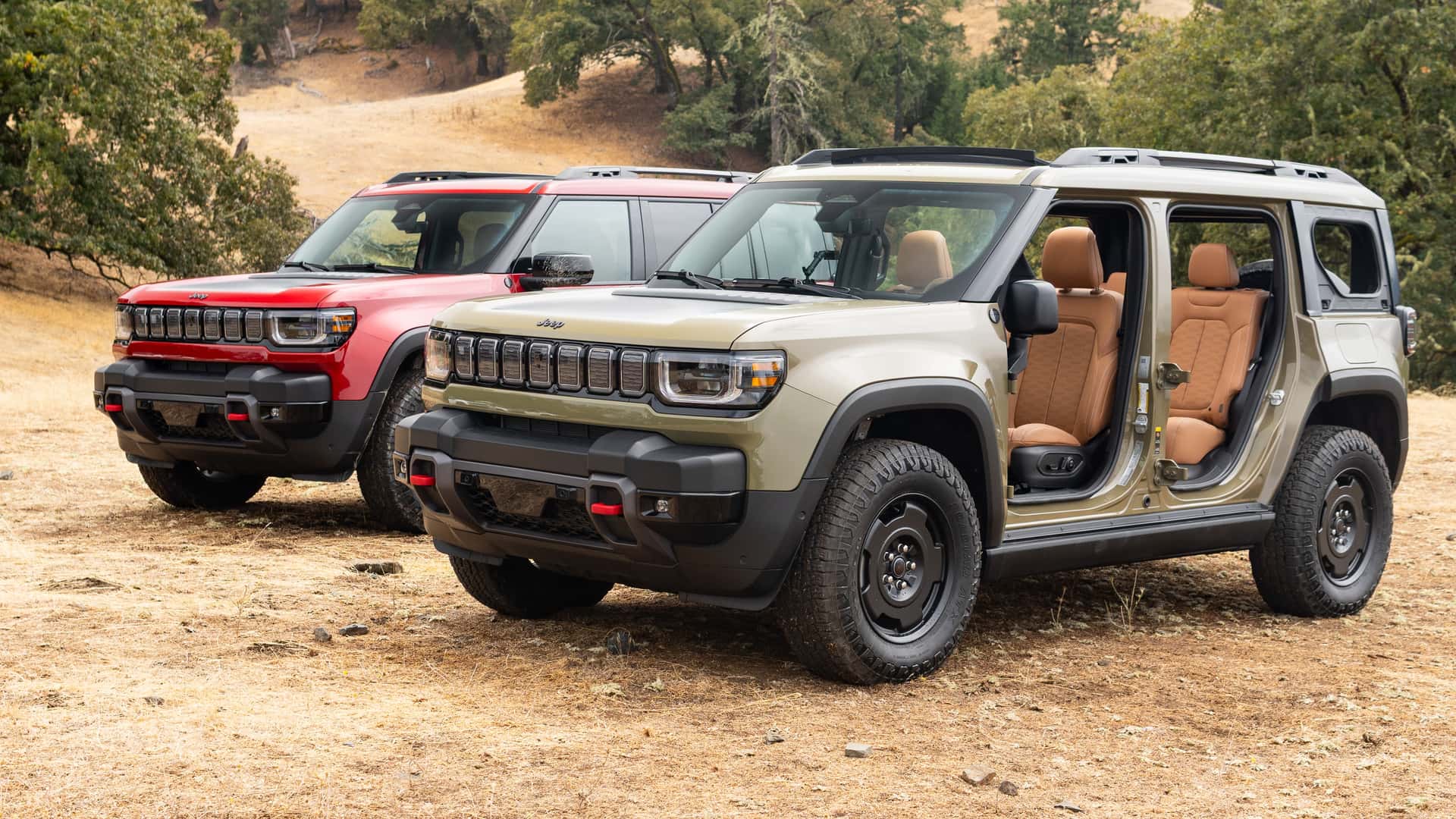
The introduction of the all-electric Jeep Recon Moab has ignited considerable discussion within the automotive community, particularly concerning its projected range of under 230 miles and a starting price of $66,995. Initial reactions from journalists and potential buyers at events like the L.A. Auto Show revealed widespread sentiment that Jeep should have delivered a vehicle with greater range at a more accessible price point.
However, this perspective overlooks the inherent engineering trade-offs fundamental to both the automotive industry and the specialized segment of off-roading. Achieving superior off-road capabilities, an extended electric range, and an affordable price simultaneously presents conflicting design goals, especially in the nascent electric vehicle (EV) off-road market. The Jeep Recon’s specifications underscore a deliberate set of compromises, prioritizing extreme capability over pure on-road efficiency and range.

Key Takeaways
- The Jeep Recon Moab offers an estimated 222-mile range and starts at $66,995, drawing criticism for what some perceive as limited range for the price.
- This range is a direct consequence of its specialized design for off-road performance, involving significant engineering compromises on efficiency.
- Features like high ground clearance, aggressive gearing, large all-terrain tires, and a robust, heavy chassis inherently reduce an EV’s overall range.
- Comparisons with vehicles like the Jeep Wagoneer S, Rivian R1S, and Mercedes G580 highlight varying approaches to balancing capability, range, and cost in the electric off-road segment.
- The current state of EV technology means that highly capable electric off-roaders will typically demand compromises in either range, price, or both, a reality expected to evolve with advancements in battery technology and charging infrastructure.
The Fundamental Trade-Off: Range Versus Off-Road Capability
The core of the debate surrounding the Jeep Recon’s range lies in a fundamental principle of vehicle design: optimization for one attribute often necessitates concessions in another. For internal combustion engine (ICE) vehicles, this is evident in the fuel efficiency of 4×4 trucks equipped with lifted suspensions and aggressive gearing, often yielding less than 20 miles per gallon, sometimes closer to 10 or 15.
This reality is well-understood by off-road enthusiasts. Tall suspension, while crucial for rock crawling and obstacle clearance, significantly increases aerodynamic drag. Large, knobby all-terrain tires, indispensable for traction in mud or over rocks, exhibit high rolling resistance and increased noise at highway speeds, markedly reducing efficiency.
Furthermore, a robust 4×4 system, invaluable in challenging conditions, inherently consumes more energy when engaged. Aggressive gearing, which boosts torque at the wheels for improved climbing and low-speed control, can lead to higher motor RPMs and decreased efficiency during sustained highway cruising.

Analogies from Traditional Off-Roaders
Consider the stark contrast between a Toyota Prius, optimized for fuel efficiency, and a Jeep Wrangler, built for off-road prowess. Modifying a Prius for off-road use—by lifting it, adding larger tires, and altering its aerodynamic profile—would inevitably reduce its impressive 50+ mpg fuel economy. Enhancing off-road capability almost universally diminishes a vehicle’s on-road efficiency, a principle that applies equally to electric vehicles.
In the context of EVs, high ground clearance, dual-motor drivetrains, substantial tires, and inherently boxy designs all contribute to reduced energy efficiency. These aren’t merely optional features for an off-road vehicle; they are foundational requirements. A vehicle cannot authentically claim off-road capability with minimal ground clearance and thin street-oriented tires.
Examining the Jeep Recon’s Engineering Decisions
The Jeep Recon’s design reflects a clear commitment to off-road performance, leading to specific engineering choices that impact its electric range. It boasts 9.1 inches of ground clearance, significantly more than the 6 inches found on its more road-focused counterpart, the Jeep Wagoneer S.
The Recon is also equipped with heavy skid plates and 33-inch all-terrain tires. These components, while vital for rugged terrain, add considerable weight and rolling resistance. Its upright, boxy design, optimized for superior approach and departure angles necessary for traversing obstacles, also presents greater aerodynamic resistance compared to sleeker EVs.
The Role of Gearing in EV Performance
A crucial factor often overlooked by critics is the vehicle’s gearing. While EVs lack traditional multi-speed transmissions, they utilize gear ratios to manage how the electric motor delivers torque to the wheels. Taller gear ratios, characterized by a lower first number (e.g., 9:1 for an EV), are typically more efficient for cruising at higher speeds.
Conversely, shorter gearing ratios increase torque at the wheels from a standstill, providing massive improvements in climbing ability and low-speed control—essential for off-roading. The Jeep Recon features a 15:1 gearing ratio on its rear motor, a deliberate choice to maximize low-end torque. This engineering decision is excellent for overcoming tough off-road obstacles and also contributes to the vehicle’s quick acceleration, allowing it to reach 60 mph in 3.6 seconds.
However, this aggressive gearing inherently compromises highway efficiency. Observations during a drive revealed an efficiency of merely 2.5 miles per kWh for the Recon, illustrating the direct impact of these capability-enhancing choices on energy consumption.
Competitive Landscape: Comparing Electric Off-Roaders
To further contextualize the Jeep Recon’s specifications, examining other electric off-road capable vehicles reveals similar trade-offs across the industry:
Jeep Wagoneer S: The Efficiency Counterpart
The Jeep Wagoneer S, utilizing the same 100.5 kWh battery as the Recon, achieves a significantly higher range of 294 miles. This difference is largely attributable to its design as a more road-oriented SUV with 6 inches of ground clearance and street tires, foregoing the extensive off-road hardware of the Recon. It serves as a clear example of how reduced off-road focus directly translates to increased efficiency and range with the same battery capacity.
Rivian R1S: A Different Set of Compromises
The heavier Rivian R1S often demonstrates better efficiency than the Recon, even when equipped with all-terrain tires. However, Rivian’s strategy involves specific configurations: all-terrain tires are not offered with the base 108-kWh battery pack. Customers must opt for the larger 140 kWh version, which, even then, sees its range drop from 410 miles to 370 miles with ATs. This configuration pushes the price point to around $96,000, and the R1S, with its taller gearing and lack of a locking rear differential, presents a different balance of capabilities compared to the Recon.
Mercedes-Benz G580 w/EQ Technology: Premium Off-Roading at a Price
The Mercedes G580 with EQ Technology exemplifies the premium end of electric off-roaders. Offering even greater off-road capability than the Recon or R1S, it features separate low-range gears for each of its four motors. This advanced system allows for superior climbing ability and then transitions to higher gears for more efficient on-road cruising.
Despite this sophisticated hardware, a hefty $163,000 price tag, and a 116 kWh usable battery capacity, the G580 still achieves an EPA estimated range of only 239 miles. This demonstrates that even with advanced engineering and substantial investment, the fundamental physics of off-road design, particularly at higher speeds where all these factors compound, inevitably constrain electric range.
Implications for the Electric Vehicle Industry
The market’s reaction to the Jeep Recon’s range and price underscores a necessary adjustment in expectations regarding the electrification of highly inefficient vehicle segments. The most demanding applications, such as heavy-duty off-road vehicles, naturally present the greatest challenges for achieving extensive electric range at an affordable cost.
A battery pack of 91 kWh or 100 kWh, as found in the Recon, is by no means small. However, the energy stored within it is consumed more rapidly when powering a large, heavy, and aerodynamically inefficient vehicle, especially one designed with aggressive off-road features like all-terrain tires, elevated ground clearance, and specialized gearing.
As advancements continue in battery technology, charging speeds, and the expansion of charging infrastructure, these present challenges will gradually diminish. However, for the foreseeable future, consumers seeking a truly capable electric off-road vehicle must anticipate a trade-off that balances robust performance with either range or price.
Frequently Asked Questions About the Jeep Recon and EV Off-Roading
Why is the Jeep Recon’s range lower than some other EVs?
The Jeep Recon prioritizes extreme off-road capability. Features like high ground clearance (9.1 inches), heavy skid plates, 33-inch all-terrain tires, a boxy aerodynamic profile, and aggressive 15:1 gearing for low-end torque significantly increase energy consumption. These design choices are crucial for its performance on challenging terrains but inherently reduce its electric range compared to more road-focused EVs.
Is the Jeep Recon’s price justified given its range?
The $66,995 starting price reflects the significant engineering and components required for a highly capable electric off-roader. Building an EV with robust off-road features necessitates a large battery pack (100.5 kWh) and specialized drivetrain components, which are costly. The price point, combined with the range, is a direct consequence of prioritizing capability over maximum efficiency or lower cost.
How does the Recon’s off-road capability impact its on-road efficiency?
Off-road features such as large, knobby tires and aggressive gearing, while excellent for traction and torque at low speeds, create higher rolling resistance and reduced efficiency at highway speeds. This means the energy stored in the battery is used more quickly during regular driving, contributing to the lower observed miles per kWh (2.5 miles per kWh) and a reduced overall range.
What compromises are common in electric off-road vehicle design?
Common compromises include balancing battery size, weight, and cost against desired range and capability. Manufacturers must decide between aerodynamic efficiency (better range) and ground clearance/approach angles (better off-road). Aggressive gearing for torque comes at the expense of highway efficiency. These trade-offs are fundamental to engineering purpose-built electric off-roaders.
How does the Jeep Recon compare to other electric off-roaders like the Rivian R1S or Mercedes G580?
The Recon offers specific capabilities, such as its 15:1 gearing and potentially a locking rear differential. The Rivian R1S offers higher range with larger battery options but has different gearing. The Mercedes G580 provides even greater off-road tech, including individual low-range gears for each motor, but comes with a significantly higher price and a range still comparable to the Recon despite its larger battery.
Will electric off-road vehicle ranges improve in the future?
Yes, as battery technology advances (higher energy density, lower weight), charging infrastructure becomes more widespread and faster, and motor/drivetrain efficiencies improve, the compromises between range, capability, and price for electric off-road vehicles are expected to lessen. However, fundamental physics related to weight and aerodynamics will always present challenges.