
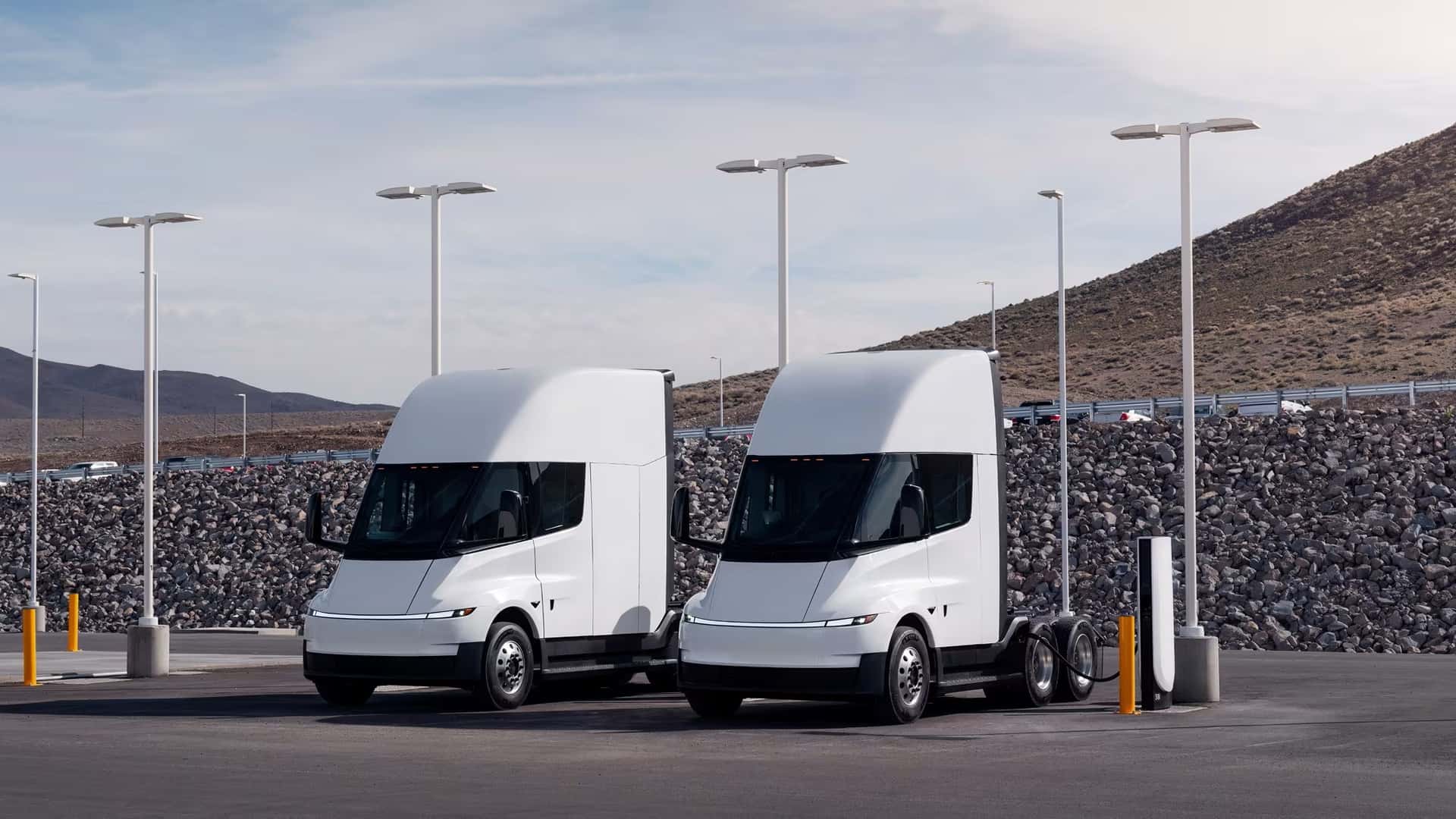
Key Takeaways
- Tesla is initiating a significant
Tesla’s European Megacharger rollout
, planning over 100 megawatt-capable charging stalls across 21 stations to support the imminent launch of its Semi electric truck in Europe.
- The network will span Germany, France, the United Kingdom, Sweden, Belgium, the Netherlands, and Luxembourg, targeting key logistics corridors.
- These Megachargers boast up to 1.2 megawatts of power, capable of recharging the Semi’s battery to 60% in approximately 30 minutes, crucial for efficient heavy-duty transport.
- Tesla will also offer both Megachargers and lower-powered Basechargers for direct purchase by logistics operators, enhancing the ecosystem.
- While using its proprietary MCS 3.2 connector, Tesla will provide CCS adapters for Semi customers, ensuring wider charging compatibility across the continent.
In a strategic move poised to electrify the continent’s heavy-duty transport sector, Tesla has officially commenced its extensive

Tesla’s European Megacharger rollout
. This crucial infrastructure development is designed to support the much-anticipated debut of the Tesla Semi electric truck in the European market, with initial deliveries slated for the coming year. The initiative marks a significant step towards transforming commercial logistics by addressing one of the primary challenges for electric heavy vehicles: high-speed, high-capacity charging.
The success of electric trucks, particularly in long-haul operations, hinges entirely on the availability of a robust and efficient charging infrastructure. Acknowledging this imperative, Tesla has outlined an ambitious plan to deploy over 100 megawatt-capable Megachargers across 21 strategically located stations throughout Europe.

Strategic Deployment Across Key European Markets
The initial phase of
Tesla’s European Megacharger rollout
will concentrate on several pivotal European nations. According to Dan Priestley, the head of Semi development at Tesla, who unveiled these plans during a presentation at this year’s IAA Transportation fair in Hanover, the first stations will be established in Germany, France, the United Kingdom, Sweden, Belgium, the Netherlands, and Luxembourg. These countries represent significant economic powerhouses and vital logistics hubs within the European Union, making them ideal starting points for an electric trucking revolution.
The exact timeline for the completion of this initial network of over 100 stalls remains undisclosed. However, the commitment signals Tesla’s proactive approach to ensuring that commercial operators adopting the Semi will have access to the necessary infrastructure from day one. This foresight is critical for fostering confidence in electric heavy-duty vehicles and accelerating their adoption.
Unpacking the Megacharger Technology
At the heart of
Tesla’s European Megacharger rollout
lies advanced charging technology designed to meet the demanding energy requirements of electric trucks. Tesla’s Megachargers are engineered to deliver an immense amount of power, up to 1.2 megawatts (MW). This capability is paramount for minimizing downtime, a critical factor for any commercial fleet operation where time directly translates to revenue.
The efficiency of these chargers is highlighted by their ability to replenish the Semi’s substantial battery pack to approximately 60% state of charge in roughly just 30 minutes. This rapid charging capability is comparable to a typical fuel stop for a diesel truck, making electric alternatives a viable and competitive option for long-distance freight. Each European Megacharger unit will feature a 1,000-volt power cabinet and two charging stalls, capable of delivering up to 1,500 amperes of current to an electric vehicle.
Charging Standards and Interoperability
A key technical detail of
Tesla’s European Megacharger rollout
is the adoption of the MCS 3.2 connector standard. Both the Tesla Semi and the dedicated Megacharger units are fitted with this high-power connector. While MCS (Megawatt Charging System) is an emerging standard for heavy-duty electric vehicle charging, its current proprietary implementation means that other electric trucks not equipped with an MCS 3.2 connector will not be able to utilize Tesla’s megawatt chargers directly.
However, Tesla has demonstrated a pragmatic approach to interoperability within the broader EV ecosystem. Recognizing the prevalence of the CCS2 standard across Europe for passenger EVs and some commercial vehicles, Tesla has confirmed it will provide CCS adapters to Semi customers. This thoughtful provision ensures that Semi operators will have the flexibility to recharge at existing CCS2 stalls throughout the continent, mitigating range anxiety and expanding charging options beyond Tesla’s dedicated Megacharger network.
Expanding the Ecosystem: Charger Sales for Logistics Hubs
Beyond establishing a public
Tesla’s European Megacharger rollout
network, Tesla is also adopting a direct sales model for its charging solutions. This strategy aims to empower logistics companies and fleet operators to establish their own private charging infrastructure, further accelerating the transition to electric heavy-duty vehicles. Tesla will offer its sleek Megacharger dispensers, along with a lower-powered alternative known as the Basecharger, for purchase by interested parties. Order books for both units are currently open, with the first European deliveries anticipated by the middle of next year.
Megacharger for Rapid Turnaround
For operations requiring rapid turnaround times, the standalone Megacharger bundle is the premium solution. Priced at €163,000, this bundle includes a power cabinet and two charging stalls. It is ideally suited for busy distribution centers, freight terminals, and depots where electric trucks need to be quickly recharged and redeployed to maintain tight schedules. The ability to achieve 60% charge in half an hour makes it an invaluable asset for intensive logistics operations.
Basecharger for Extended Charging Cycles
Complementing the high-power Megacharger is the 120-kW all-in-one Basecharger, available for €17,000. It is important to note that a mandatory two-unit order is required for the Basecharger. This integrated solution is designed for companies that can accommodate longer charging periods, such as overnight charging at logistics hubs or during scheduled breaks. The Basecharger integrates all necessary components into a single housing, simplifying installation and operation.
With a DC output of 120 kW and an AC output of 125 kW, the Basecharger is capable of increasing the Tesla Semi’s state of charge to 80% in approximately four hours. This makes it an efficient and cost-effective option for fleets that prioritize slower, more controlled charging to optimize battery health and manage energy costs. The dual offerings demonstrate Tesla’s commitment to providing flexible charging solutions tailored to diverse operational needs within the commercial transport sector, supporting the holistic
Tesla’s European Megacharger rollout
.
The Broader Impact on European Logistics
The introduction of the Tesla Semi and the accompanying
Tesla’s European Megacharger rollout
signify a major inflection point for the European logistics industry. As environmental regulations tighten and the demand for sustainable transportation grows, electric heavy-duty trucks are becoming increasingly vital. Tesla’s entry, backed by a dedicated charging network, could spur wider adoption and competition within the segment.
The move also underscores the critical interplay between vehicle innovation and infrastructure development. Without a reliable and expansive charging network, the potential of electric trucks, no matter how advanced, cannot be fully realized. Tesla’s dual strategy of bringing the Semi to market while simultaneously building out its charging backbone is a testament to this understanding, setting a precedent for future electric heavy vehicle deployments across the globe. This comprehensive approach is essential for realizing the full potential of electric commercial transport and for achieving ambitious decarbonization targets across Europe.
Frequently Asked Questions
What is the primary purpose of
Tesla’s European Megacharger rollout
?
The primary purpose is to establish a robust high-power charging infrastructure essential for the launch and successful operation of the Tesla Semi electric truck across Europe, addressing the demanding energy needs of heavy-duty commercial transport.
Which European countries will receive the first Megachargers?
The initial deployment of Megachargers will target Germany, France, the United Kingdom, Sweden, Belgium, the Netherlands, and Luxembourg, strategically chosen for their importance as major economic and logistics centers within Europe.
How quickly can a Tesla Semi charge using a Megacharger?
Tesla Megachargers are capable of delivering up to 1.2 megawatts of power, allowing a Tesla Semi to recharge its battery pack to approximately 60% state of charge in roughly 30 minutes, significantly reducing downtime.
What charging connector standard will Tesla use for the European Megachargers?
Both the Tesla Semi and the European Megachargers will utilize the MCS 3.2 connector. To ensure broader compatibility, Tesla will also provide CCS adapters to Semi customers, enabling them to use existing CCS2 charging stations.
Can logistics companies purchase Tesla’s Megachargers for their own depots?
Yes, Tesla will be selling both its high-power Megachargers and lower-powered Basechargers directly to logistics hubs and companies. This allows operators to build their own dedicated charging infrastructure for their electric truck fleets.
What is the difference between a Megacharger and a Basecharger?
The Megacharger offers up to 1.2 MW for rapid charging (60% in 30 mins). The Basecharger is a 120-kW all-in-one unit designed for longer charging periods, increasing the Semi’s state of charge to 80% in about four hours, suitable for overnight or extended stops.
When are the first Tesla Semi deliveries expected in Europe?
The first deliveries of the Tesla Semi electric truck in Europe are officially scheduled to commence next year, indicating Tesla’s full-scale market entry into the continent’s heavy-duty commercial vehicle segment.