
Key Takeaways (TL;DR):
- Tesla is initiating a significant rollout of over 100 megawatt-capable Megachargers across 21 stations in Europe.
- This extensive charging infrastructure is crucial for the successful launch and widespread adoption of the Tesla Semi electric truck in the region, with first deliveries anticipated next year.
- Initial deployment targets key markets including Germany, France, the United Kingdom, Sweden, Belgium, the Netherlands, and Luxembourg.
- The Megachargers offer ultra-rapid charging, capable of replenishing the Semi’s battery to 60% in approximately 30 minutes with 1.2 megawatts of power.
- Tesla is also offering commercial charging solutions, including the high-powered Megacharger and the more accessible Basecharger, for private fleet operations and logistics hubs.
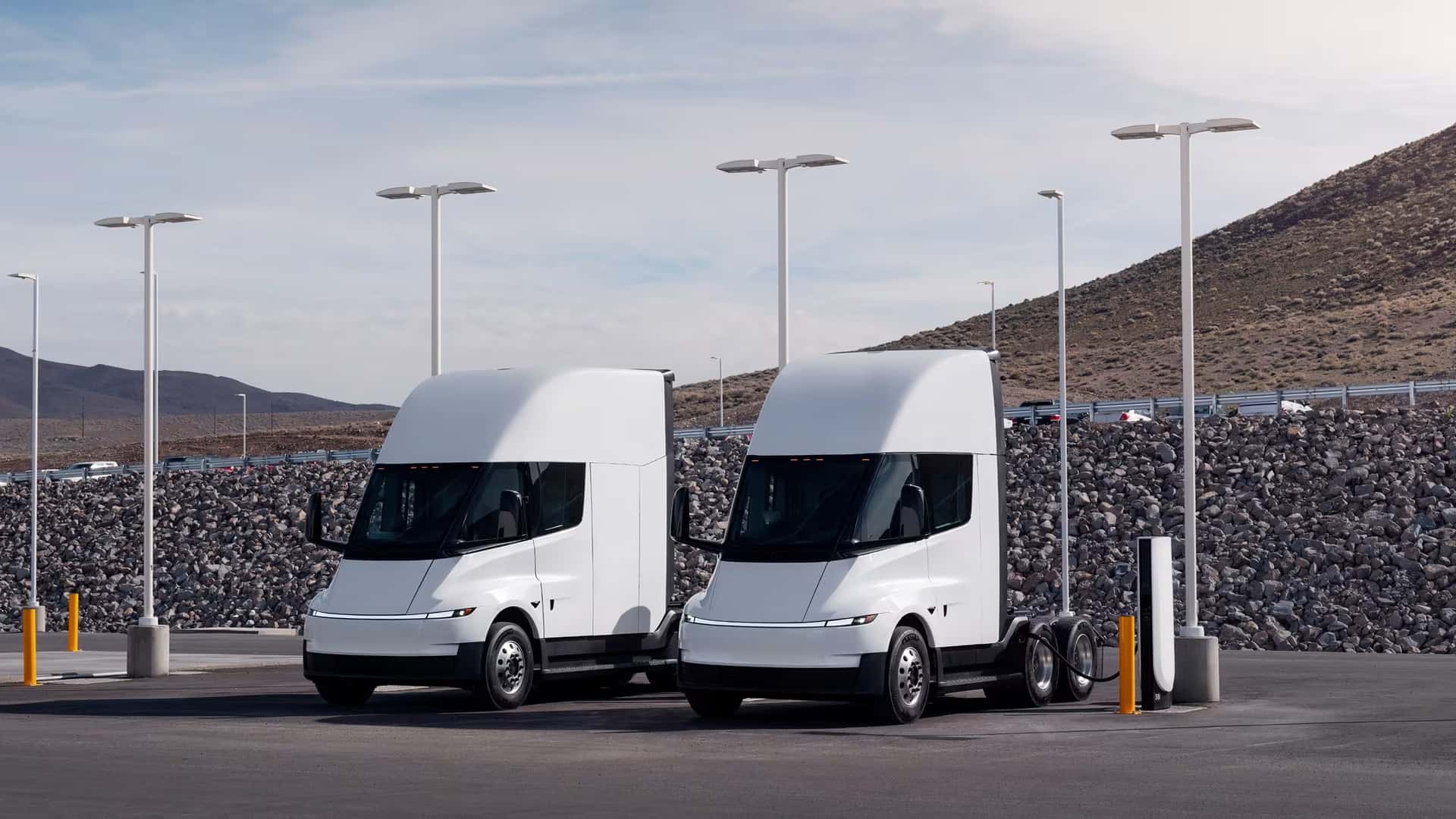
In a pivotal move set to redefine Europe’s heavy-duty transport landscape, Tesla has commenced the strategic rollout of its advanced Megacharger network across the continent. This ambitious initiative, featuring over 100 megawatt-capable charging stalls, is designed to underpin the imminent launch of the Tesla Semi electric truck, marking a significant step towards the electrification of commercial logistics in the region.

The successful integration of battery-electric heavy trucks hinges directly on the availability of robust, high-speed charging infrastructure. Tesla’s proactive investment in this critical area addresses one of the primary challenges for fleet operators considering the transition from traditional diesel vehicles to sustainable electric alternatives.
Paving the Way for the Tesla Semi European Launch
The highly anticipated Tesla Semi is slated for its first European deliveries next year, ushering in a new era for long-haul and regional freight transport. However, the advanced electric tractor demands a charging ecosystem capable of delivering massive amounts of power efficiently to ensure operational viability and minimise downtime.
Dan Priestley, head of development for the Tesla Semi, recently affirmed the company’s commitment to building this essential infrastructure. During his presentation at the IAA Transportation fair in Hanover, Priestley outlined plans for the installation of more than 100 Megachargers. These chargers will be strategically distributed across 21 dedicated stations within key European markets.

Strategic Placement Across Key Markets
The initial phase of the Tesla Megacharger Europe rollout will focus on a selection of economically vital and geographically strategic countries. Germany, France, and the United Kingdom are among the nations earmarked to receive the first Tesla-branded megawatt chargers.
Further strengthening the network, Sweden and the Benelux countries—comprising Belgium, the Netherlands, and Luxembourg—will also see early installations. While a precise timeline for this initial deployment phase was not publicly disclosed, the emphasis on these regions underscores Tesla’s targeted approach to establishing a foundational network where electric truck adoption is expected to gain significant traction.
This geographically diverse rollout reflects a calculated strategy to support freight corridors and major logistics hubs, ensuring that early adopters of the Tesla Semi have access to reliable and efficient charging facilities for their operations.
Unpacking the Megacharger Technology
The core of Tesla’s European charging strategy lies in the formidable capabilities of its Megacharger technology. Designed specifically for the demanding requirements of heavy-duty electric trucks, these chargers represent a leap forward in EV charging infrastructure.
High-Power Charging for Heavy-Duty Operations
Each Tesla Megacharger unit is engineered to deliver an immense power output of up to 1.2 megawatts. This extraordinary capacity is crucial for rapidly recharging the large battery packs characteristic of electric semi-trucks, which are essential for maintaining operational schedules.
Tesla projects that a Megacharger can replenish the Semi’s substantial battery pack to approximately 60% capacity in roughly 30 minutes. This rapid charging capability is a game-changer for commercial logistics, allowing trucks to quickly get back on the road and minimising costly idle times, thus improving fleet efficiency and turnaround times.
Technically, the Megachargers deployed in Europe will feature a 1,000-volt power cabinet. Each station is equipped with two stalls, capable of delivering up to an impressive 1,500 amperes to the connected electric vehicle. This high voltage and amperage combine to enable the swift energy transfer required by heavy-duty electric trucks.
Addressing Interoperability: The MCS and CCS Dynamics
A significant aspect of the Tesla Megacharger system is its connector standard. Both the Tesla Semi and the dedicated Megacharger units are fitted with the MCS 3.2 connector (Megawatt Charging System). This standard is specifically designed to handle the extremely high power levels required by electric heavy-duty vehicles.
Currently, the use of the MCS 3.2 connector means that other power-hungry electric trucks from different manufacturers will not be able to utilise Tesla’s Megacharger network directly. This highlights a potential interoperability challenge within the nascent heavy-duty EV charging landscape, as different manufacturers and charging providers develop their own solutions.
Recognising the need for broader charging flexibility, Tesla has confirmed that it will provide CCS (Combined Charging System) adapters to its Semi customers. This thoughtful provision enables Semi operators to recharge their vehicles at existing CCS2 stalls located across the European continent. Such adaptability is vital for ensuring comprehensive route coverage and reducing range anxiety for fleet managers, providing a bridge until the MCS standard becomes more widespread.
Beyond Public Infrastructure: Private Charging Solutions
Tesla’s strategy for the European market extends beyond merely establishing a public charging network. The company is also making its advanced charging dispensers available for direct purchase by businesses, empowering logistics firms to build their own on-site charging capabilities.
Tailored Solutions for Logistics Hubs
The order books for both the high-powered Megacharger and the lower-powered Basecharger are now open, with the first European deliveries for these private charging solutions scheduled for the middle of next year. This offering caters directly to logistics hubs, distribution centres, and large fleet operators who require dedicated charging infrastructure to support their electric truck fleets.
A Megacharger bundle, which includes a power cabinet and two charging stalls, is priced at €163,000. This significant investment allows companies to install robust, fast-charging capabilities directly at their operational bases, ensuring their Tesla Semis are always ready for dispatch.
For operations with different charging profiles, Tesla also offers the Basecharger. This all-in-one unit integrates all necessary components into a single housing and is priced at €17,000, though a mandatory two-unit order applies. The Basecharger is specifically geared towards companies that can accommodate longer charging periods for their electric trucks.
Economic Implications for Fleet Operators
The Basecharger provides a DC output of 120 kW and an AC output of 125 kW. According to Tesla, this allows it to increase the Semi’s state of charge to 80% in approximately four hours. This makes the Basecharger an ideal solution for overnight charging or during extended downtime, offering a cost-effective alternative to the ultra-fast Megacharger for certain operational models.
By providing both public and private charging solutions, Tesla is empowering businesses with the flexibility to choose infrastructure that best suits their operational demands and budgetary constraints. This dual approach is critical for accelerating the transition to electric heavy-duty transport, as it addresses diverse fleet management needs and helps mitigate initial infrastructure investment hurdles for individual companies.
Impact and Future Outlook for Electric Freight
The rollout of Tesla’s Megacharger network and the impending arrival of the Tesla Semi in Europe mark a critical juncture for the continent’s commercial transport sector. This development has far-reaching implications for environmental sustainability, economic efficiency, and technological innovation within the logistics industry.
Accelerating the Shift to Sustainable Logistics
Europe has ambitious decarbonization targets, and the electrification of heavy-duty transport is a cornerstone of achieving these goals. The Tesla Megacharger Europe rollout provides tangible infrastructure support for this shift, making electric trucks a more viable and attractive option for fleet operators.
The reduction in tailpipe emissions from heavy-duty vehicles operating on electric power will contribute significantly to improved air quality, particularly in urban areas and along major freight routes. This aligns with public health objectives and environmental regulations across the European Union and the United Kingdom.
Beyond environmental benefits, the move to electric trucks, facilitated by robust charging networks, also offers long-term economic advantages. While the upfront cost of electric trucks and charging infrastructure can be higher, operational savings through lower fuel and maintenance costs are expected to provide compelling total cost of ownership benefits over the lifespan of the vehicles.
Navigating the Challenges of EV Adoption
Despite the promise, the transition to electric heavy-duty transport involves navigating several challenges. The development of a comprehensive charging infrastructure, though underway with initiatives like Tesla’s, requires continuous expansion and harmonisation of standards to ensure seamless cross-border operations.
Grid integration and the management of high power demands from megawatt chargers will also be crucial considerations for energy providers and infrastructure planners. Furthermore, the initial capital outlay for electric trucks and proprietary charging equipment represents a substantial investment for many logistics companies.
However, the proactive steps taken by Tesla, combined with broader industry trends and governmental support for green transport, suggest a robust future for electric freight in Europe. The availability of diverse charging solutions, from public Megacharger stations to customisable private options, creates a strong foundation for the widespread adoption of battery-electric commercial vehicles.
Tesla’s commitment to building a formidable charging network in Europe underscores its vision for a fully electrified future in heavy-duty transport. As the Tesla Semi prepares for its maiden journeys across European roads next year, the supporting Megacharger infrastructure will be instrumental in demonstrating the practicality and efficiency of electric logistics at scale.
FAQ Section
What is the Tesla Megacharger Europe rollout?
The Tesla Megacharger Europe rollout involves installing over 100 megawatt-capable charging stalls across 21 stations in key European countries. This infrastructure is designed to support the launch and operation of the Tesla Semi electric truck, providing ultra-rapid charging capabilities for heavy-duty commercial vehicles across the continent.
Which European countries will get the first Megachargers?
The initial phase of the Megacharger rollout targets Germany, France, the United Kingdom, Sweden, Belgium, the Netherlands, and Luxembourg. These strategic locations aim to establish a foundational charging network along major freight routes and within significant logistics hubs to facilitate the Tesla Semi’s deployment.
How fast can a Tesla Megacharger charge the Semi?
A Tesla Megacharger can deliver up to 1.2 megawatts of power, enabling it to replenish the Tesla Semi’s large battery pack to approximately 60% state of charge in roughly 30 minutes. This rapid charging capability is crucial for minimizing downtime and maintaining efficient operational schedules for electric truck fleets.
What kind of connector does the Tesla Megacharger use?
Both the Tesla Semi and the Megacharger units utilise the MCS 3.2 (Megawatt Charging System) connector. While this connector is proprietary for Tesla’s Megachargers, the company will provide CCS adapters to Semi customers, allowing them to charge at widely available CCS2 stalls across Europe for broader compatibility.
Can other electric trucks use Tesla’s Megachargers?
Currently, other power-hungry electric trucks not equipped with the MCS 3.2 connector will not be able to directly use Tesla’s Megachargers. However, the provision of CCS adapters for the Tesla Semi ensures that Tesla customers have broader charging options, including compatibility with standard CCS2 infrastructure in Europe.
Is Tesla selling Megachargers for private use?
Yes, Tesla is making both its Megacharger and Basecharger dispensers available for purchase by businesses. This allows logistics companies and fleet operators to install dedicated, on-site charging infrastructure at their depots or hubs. Order books are open, with the first European deliveries scheduled for mid-next year.
What is the difference between a Megacharger and a Basecharger?
A Megacharger is a high-power solution (up to 1.2 MW) designed for ultra-rapid charging, ideal for quick turnarounds. The Basecharger is a lower-powered, all-in-one unit (120 kW DC / 125 kW AC) suited for longer charging periods, such as overnight, reaching 80% charge in about four hours. The Basecharger is a more cost-effective option for private fleets with flexible charging needs.