
Key Takeaways
- Tesla has offered an unparalleled glimpse into the Roadster’s digital cockpit, showcasing a design ethos heavily influenced by fighter jet ergonomics and advanced pilot-centric interfaces.
- The 34-second video highlights a sophisticated human-machine interface featuring a squared-off yoke, detailed 3D vehicle wireframes for control, and a customizable main touchscreen.
- A standout feature is the dedicated ‘Track Mode’ display, providing real-time telemetry like lap times, brake and motor temperatures, tire pressure, and advanced aerodynamic adjustments.
- Crucially, the interface integrates a ‘Thruster · 5,500 PSI’ gauge and ‘Boost Ready’ indicator, directly linking the software to the Roadster’s groundbreaking cold gas thruster system for unprecedented acceleration capabilities.
- The Roadster’s unique screen layout, which centers the car model rather than a map, signals a distinct departure from existing Tesla models, emphasizing its hypercar status and driver-focused design.
- While production is slated for 2028, and the most extreme ‘Rocket’ version is not road-legal, initial public viewing opportunities and reservation details have been confirmed.
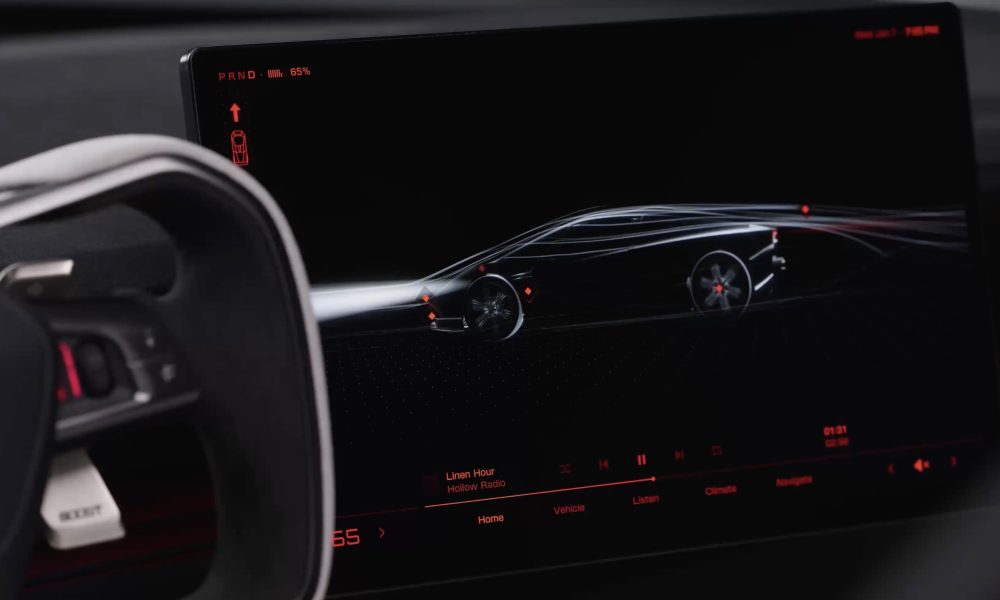
BENGALURU, INDIA – October 23, 2026 – Tesla has provided an exhaustive preview of the highly anticipated Roadster’s cockpit, unveiling a digital interface that redefines the driver experience for high-performance electric vehicles. A recent 34-second video, disseminated via X (formerly Twitter) on Friday afternoon, meticulously walked through the vehicle’s advanced touchscreen, accompanied by the compelling caption: “Inspired by fighter jet cockpits, Roadster’s interface was designed around the pilot.” This revelation offers the clearest insight yet into how drivers will interact with the electric hypercar’s groundbreaking capabilities, particularly its innovative thruster system.
The unveiling underscores Tesla’s commitment to pushing the boundaries of automotive design and engineering, blending extreme performance with an intuitive, information-rich human-machine interface. This pilot-centric design approach is evident throughout the digital environment, promising an immersive and control-oriented experience that mirrors the precision and responsiveness found in advanced aerospace applications.

A Cockpit Designed for the Modern Pilot
The video commences with a striking visual: a black screen adorned with minimalist red graphics, showcasing a detailed 3D wireframe of the Roadster. This digital representation is strategically positioned alongside the car’s distinctive squared-off yoke, immediately signaling a departure from conventional automotive interiors. The intuitive design allows users to interact directly with the 3D model, tapping specific sections to access various vehicle controls and settings.
This interactive graphic serves as a central control hub, enabling swift adjustments to critical components like the rear wing. Drivers can select between ‘low drag’ positions, optimized for straight-line speed, and ‘high downforce’ configurations, crucial for enhanced grip during aggressive cornering. Beyond performance, the interface also provides essential utilities, including a dedicated charging page with a dynamic charge limit bar and an integrated, compact music player for entertainment on the go. Along the bottom of the main display, a streamlined row of tabs ensures quick navigation, featuring ‘Home,’ ‘Vehicle,’ ‘Listen,’ ‘Climate,’ and ‘Navigate’ options, designed for seamless access to core functions.
Unlocking Extreme Performance with Track Mode
A significant portion of the demonstration focuses on the Roadster’s ‘Track Mode,’ a specialized environment tailored for high-performance driving and circuit analysis. This mode transforms the dashboard into a comprehensive data hub, displaying critical information in real time. Drivers gain access to a live circuit map, enabling precise navigation and tactical awareness during track sessions. A detailed list of session lap times allows for immediate performance assessment and optimization.
Further enhancing its utility for serious drivers, Track Mode provides continuous readouts of brake and motor temperatures, vital for monitoring system health under extreme stress. Individual pressure and temperature readouts for each tire offer granular insights into grip levels and tire degradation, allowing for informed adjustments to driving style or vehicle setup. The integrated setup page provides unparalleled control over the vehicle’s dynamics, offering choices between ‘Auto,’ ‘Low Drag,’ ‘High Downforce,’ or ‘Custom’ aerodynamic modes. Drivers can also fine-tune aero balance and brake balance, and, for experienced enthusiasts, fully switch off stability and traction control systems to push the vehicle to its absolute limits.
The Thruster System: Software Meets Unprecedented Hardware
Perhaps the most compelling element of the new Tesla Roadster interface is the explicit integration of the vehicle’s groundbreaking thruster system. A prominent status bar within Track Mode features a ‘Thruster · 5,500 PSI’ gauge, accompanied by a ‘Boost Ready’ indicator. This digital display directly references the advanced hardware unveiled by Tesla near Waco, Texas, on October 15, providing a real-time indication of the propulsion system’s readiness and pressure levels.
The ‘Thrust’ and ‘Rocket’ versions of the Roadster leverage an array of cold gas thrusters, ingeniously fed by carbon overwrapped pressure vessels. This innovative propulsion technology is central to the Roadster’s staggering acceleration figures, with Tesla officially listing 0 to 60 mph times of under 0.9 seconds for the ‘Thrust’ variant and an astonishing under 0.59 seconds for the ‘Rocket’ configuration. These figures place the Roadster in an entirely new category of performance, blurring the lines between automotive and aerospace engineering.
In contrast, the base ‘Performance’ model achieves its exceptional grip through a sophisticated fan and ground sealing system. The dynamic aerodynamic settings displayed on the touchscreen — such as active wings and suction setups — are directly linked to these hardware components, enabling precise control over downforce and handling characteristics. This seamless integration of advanced software with revolutionary hardware underscores Tesla’s holistic approach to high-performance vehicle design.
A New Era for Tesla’s User Experience
The Tesla Roadster interface represents a significant departure from the user experience found in the rest of Tesla’s existing lineup. Unlike other models, where the map typically dominates the central display, the Roadster’s home page proudly places a detailed 3D representation of the car at its center. This emphasis on the vehicle itself reinforces the Roadster’s status as a driver-centric machine, designed for engagement and control rather than just navigation.
Furthermore, Tesla’s official Roadster page confirms the inclusion of two smaller forward displays, complementing the main central touchscreen. This multi-display configuration likely provides drivers with additional critical information at a glance, further enhancing the fighter jet cockpit aesthetic and functionality. While this advanced telemetry and interactive control system is a hallmark of the Roadster, Tesla has not yet indicated whether any of these cutting-edge Track Mode features will eventually make their way to other high-performance models, such as the Model 3 Performance or other vehicles in its fleet.
Production Outlook and Public Access
It is important to note that the revealed interface could undergo further refinements before the commencement of customer deliveries. According to statements made by Elon Musk at a recent event, Roadster production is projected to begin in 2028. Additionally, the flagship ‘Rocket’ version, with its extreme performance capabilities, is not currently approved for public road use, indicating its specialized role as a track-focused or conceptual vehicle.
For eager enthusiasts and prospective buyers, reservations for the Roadster are currently open, requiring a substantial $50,000 payment. The ‘Thrust’ configuration is designated as a limited release, while access to the hyper-exclusive ‘Rocket’ variant is strictly by invitation only. This tiered availability strategy underscores the Roadster’s premium positioning and groundbreaking nature.
For those keen to experience the physical presence of this revolutionary vehicle, the Roadster was scheduled for its first public display from October 24 to 27, 2026. It was set to be exhibited in the lobby of the prestigious Petersen Automotive Museum in Los Angeles, marking the first opportunity for the public to view the electric hypercar up close. This exhibition offered a tangible connection to Tesla’s ambitious vision for the future of extreme automotive performance.
Frequently Asked Questions About the Tesla Roadster Interface
What inspired the design of the Tesla Roadster’s cockpit?
The Tesla Roadster’s cockpit and user interface draw significant inspiration from fighter jet cockpits. This design philosophy emphasizes a pilot-centric experience, providing the driver with comprehensive control and real-time data in a highly intuitive and immersive digital environment.
What unique features does the Roadster’s home screen offer?
Unlike other Tesla models, the Roadster’s home screen prominently features a 3D wireframe of the car at its center. This interactive model allows drivers to tap specific parts to access controls for the rear wing, adjust charging settings, and manage music playback. It’s designed for direct vehicle interaction.
How does ‘Track Mode’ enhance the driving experience?
‘Track Mode’ provides a wealth of real-time telemetry crucial for high-performance driving. This includes a live circuit map, session lap times, brake and motor temperatures, and individual tire pressure/temperature readouts. It also offers extensive customization for aerodynamic and brake balance, and stability/traction control settings.
What is the significance of the ‘Thruster · 5,500 PSI’ gauge?
This gauge on the interface directly connects to the Roadster’s revolutionary cold gas thruster system. Displaying ‘5,500 PSI’ indicates the pressure level within the carbon overwrapped vessels that feed the thrusters, signaling the system’s readiness for activation and its role in delivering the car’s unparalleled acceleration figures.
When is the Tesla Roadster expected to begin production?
According to Elon Musk, production of the Tesla Roadster is anticipated to commence in 2028. However, it’s important to note that the interface itself may still undergo further development and refinements before the official start of customer deliveries and broader market availability.
Are all versions of the Roadster approved for public road use?
No, not all versions. Tesla has stated that the extreme ‘Rocket’ variant of the Roadster, which boasts a 0-60 mph time of under 0.59 seconds, is not approved for public road use. This suggests its primary application may be for track performance or specialized private environments.
How does the Roadster’s interface differ from other Tesla vehicles?
The Roadster’s interface departs from other Teslas by prioritizing the car itself at the center of the home page, rather than a map. It also features two smaller forward displays in addition to the main touchscreen, creating a more complex, driver-focused digital cockpit reminiscent of aerospace designs.
What are the acceleration capabilities of the thruster-equipped Roadsters?
The ‘Thrust’ version of the Roadster is projected to achieve 0 to 60 mph in under 0.9 seconds. The more extreme ‘Rocket’ configuration pushes these limits even further, with an astonishing estimated 0 to 60 mph time of under 0.59 seconds, setting new benchmarks for vehicle acceleration.