
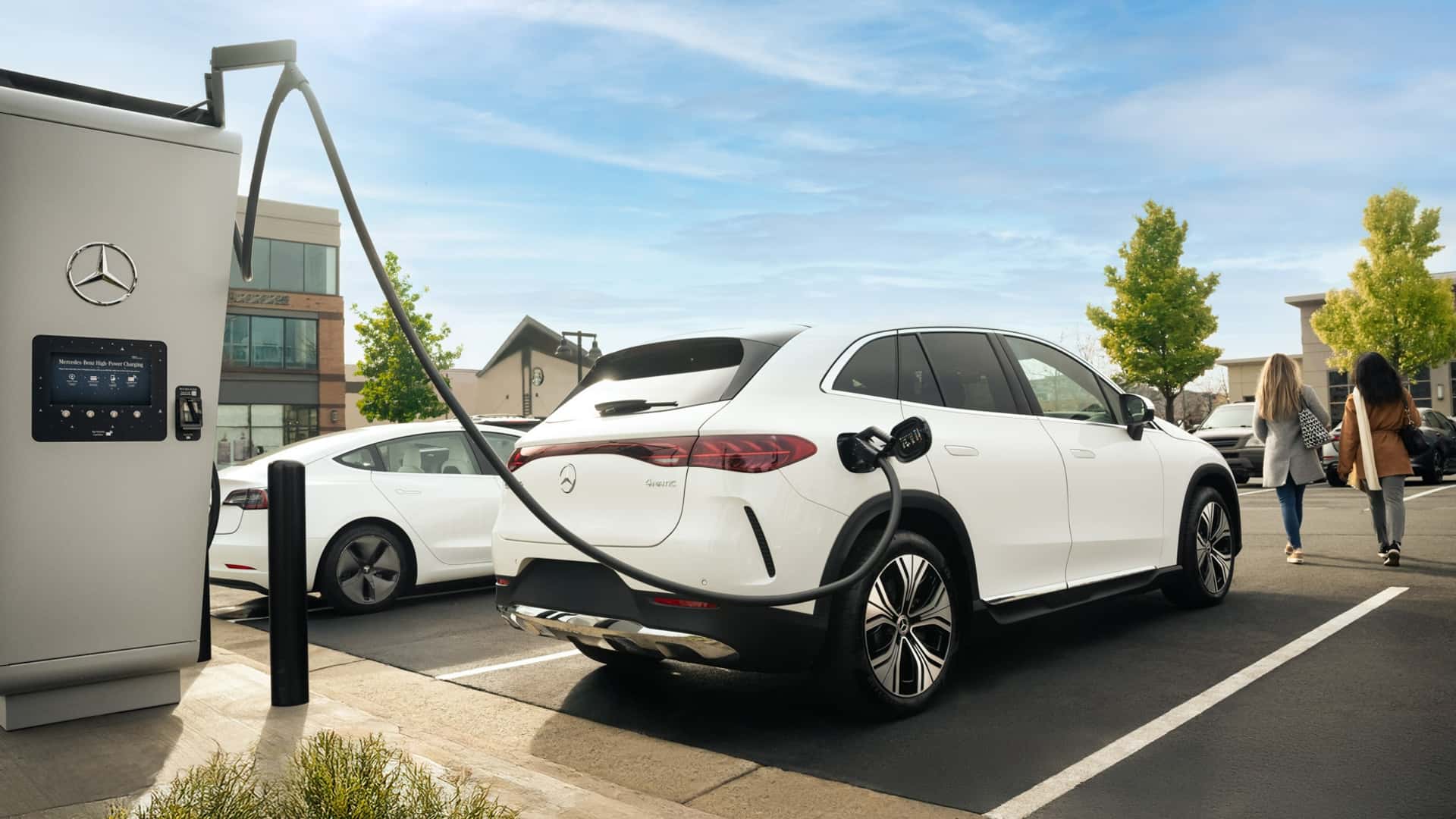
Mercedes-Benz is celebrating a significant milestone for its Electric Vehicle (EV) charging network in the United States, reaching its third anniversary and expanding to 100 locations across North America. Since its inception in November 2023, the Mercedes-Benz High-Powered Charging (MB HPC) network has become a crucial component of the luxury automaker’s electrification strategy.
The network now boasts nearly 1,000 individual charging ports, demonstrating substantial growth and commitment to supporting the burgeoning EV market. This expansion signals Mercedes-Benz’s dedicated efforts to provide robust and reliable charging infrastructure for its growing base of electric vehicle owners.
Key Takeaways
- The Mercedes-Benz EV charging network has achieved 100 operational locations in North America within three years.
- The network features nearly 1,000 high-power charging ports, serving over 245,000 unique customers.
- Chargers deliver up to 400 kilowatts of power, facilitating rapid replenishment of EV batteries.
- The network has recorded over one million charging sessions since 2023, demonstrating high utilization.
- A key focus on reliability has led to a first-time success rate of over 90%, significantly improving from 84% in 2023.
- The network is strategically located across 28 U.S. states and Canada’s British Columbia.
Rapid Expansion and Geographic Reach
Launched in November 2023, the Mercedes-Benz EV charging network has rapidly scaled from a nascent operation with a handful of stations to a substantial infrastructure footprint. Its presence now spans 28 U.S. states and includes a location in British Columbia, Canada.
This impressive expansion underscores Mercedes-Benz’s strategic intent to build out a premium charging ecosystem that mirrors the quality and convenience associated with its vehicles. The growth highlights a concerted effort to mitigate range anxiety among EV drivers and enhance the overall ownership experience.
Advanced Charging Technology and Performance
A hallmark of the Mercedes-Benz EV charging network is its deployment of state-of-the-art technology. All fast chargers within the network are capable of delivering up to 400 kilowatts (kW) of power, ensuring swift and efficient charging sessions for compatible electric vehicles.
This high-power capability is critical for reducing charging times, allowing drivers to quickly top up their batteries and continue their journeys. The consistent implementation of 400 kW dispensers, primarily from Alpitronic, positions the network at the forefront of rapid charging solutions.
Over a Million Sessions and Growing Customer Base
The network’s operational success is evident in its usage statistics. Since 2023, the Mercedes-Benz EV charging network has facilitated over one million charging sessions, serving more than 245,000 unique customers.
These figures reflect a strong uptake and reliance on the network by a substantial number of EV owners. The consistent high volume of sessions demonstrates the network’s critical role in supporting daily commutes and longer-distance travel for Mercedes-Benz and other EV drivers.
Prioritizing Reliability: Uptime and First-Time Success
From its inception, the Mercedes-Benz EV charging network has emphasized reliability, a factor paramount to widespread EV adoption. The company has consistently reported a near-perfect uptime rate across its stations, ensuring chargers are operational when drivers need them most.
Beyond uptime, Mercedes-Benz has focused on a crucial metric: the first-time success rate. This measure tracks how often a charging session initiates successfully on the initial attempt, directly impacting user satisfaction and convenience.
Initially, in 2023, the network achieved an 84% first-time success rate. However, through continuous improvement and optimization, this figure has now climbed to over 90%. This significant improvement highlights the company’s dedication to refining the user experience and making charging as seamless as possible.
Adapting to Industry Standards: CCS and NACS Connectors
In response to evolving industry standards, the Mercedes-Benz EV charging network has proactively integrated various connector types to ensure broad compatibility. The vast majority of stalls are equipped with both CCS (Combined Charging System) and NACS (North American Charging Standard) connectors.
This dual-connector strategy is particularly pertinent given the recent shift among many traditional automakers to adopt the Tesla-style NACS port. While NACS-equipped vehicles can use CCS stations with adapters, and vice-versa, native support simplifies the charging process for drivers.
Only 7% of the network’s locations currently feature only CCS connectors. This forward-thinking approach ensures that Mercedes-Benz’s infrastructure remains accessible to a wide array of electric vehicles, catering to both existing standards and future trends in the North American market.
Strategic Placement and Seamless User Experience
Mercedes-Benz has strategically positioned its charging hubs at or around premium shopping locations. This approach aims to integrate charging into customers’ existing routines, offering convenience and amenities during charging stops.
The network provides multiple flexible payment options to enhance the user experience. EV drivers can utilize traditional credit card readers, various charging applications, or an RFID card issued directly by Mercedes-Benz dealers.
Furthermore, the network supports Plug & Charge functionality, allowing for an even more streamlined experience where authentication and payment occur automatically upon plugging in the vehicle. This focus on user-centric design underscores Mercedes-Benz’s commitment to premium service.
Pricing Structure and Site Variations
Pricing for charging sessions varies depending on the location, typically ranging between $0.35 per kilowatt-hour (kWh) and $0.60 per kWh. A temporary pre-authorization fee of $25 is held to verify available funds, with the actual amount charged based on energy consumed upon session completion.
The size of the Mercedes-Benz EV charging network locations varies to suit different demands. According to DCFC Tracker, the largest site is located in Orlando, Florida, featuring 20 stalls, while smaller operations, such as those in Conyers, Georgia, and Red Bluff, California, each have four stalls.
Leadership and Future Outlook
The recent appointment of Madeline Ebert as the new CEO of Mercedes-Benz High-Power Charging North America signals continued focus and leadership for the network’s future development. This strategic appointment is expected to steer the network through its next phase of growth and technological advancement.
Despite Mercedes-Benz’s decision to sell its EV charging network operations in Europe, the automaker’s robust investment and expansion in North America underscore the continent’s strategic importance. The continued development of the Mercedes-Benz EV charging network in the U.S. and Canada remains a key pillar in the brand’s global electrification strategy.
Frequently Asked Questions (FAQs)
What is the Mercedes-Benz High-Power Charging network?
The Mercedes-Benz High-Power Charging (MB HPC) network is the automaker’s dedicated infrastructure for rapid electric vehicle charging in North America. It provides high-speed charging solutions, primarily at 400 kW, to support the growing number of EVs on the road, emphasizing reliability and user convenience.
How many Mercedes-Benz charging locations are there in North America?
As of its third anniversary, the Mercedes-Benz EV charging network has expanded to 100 locations across North America. These sites collectively offer nearly 1,000 individual charging ports, spanning 28 U.S. states and British Columbia, Canada.
What is the charging power of Mercedes-Benz stations?
All fast chargers within the Mercedes-Benz EV charging network are capable of delivering up to 400 kilowatts (kW) of power. This ultra-fast charging capability allows for significantly reduced charging times, enabling drivers to quickly replenish their electric vehicle batteries.
How reliable is the Mercedes-Benz charging network?
The Mercedes-Benz EV charging network prides itself on near-perfect uptime and a high first-time success rate for charging sessions. This crucial metric has improved from 84% in 2023 to over 90%, reflecting the company’s strong commitment to operational reliability and driver satisfaction.
What types of connectors are available at Mercedes-Benz charging stations?
Most Mercedes-Benz charging stations are equipped with both CCS (Combined Charging System) and NACS (North American Charging Standard) connectors. This ensures compatibility with a broad range of electric vehicles, including those adopting the newer Tesla-style NACS port, with only 7% of locations being CCS-only.
How can EV drivers pay for charging sessions?
Drivers using the Mercedes-Benz EV charging network have multiple payment options. These include traditional credit card readers, various third-party charging applications, and an RFID card available through Mercedes-Benz dealerships. The network also supports convenient Plug & Charge functionality for seamless transactions.