
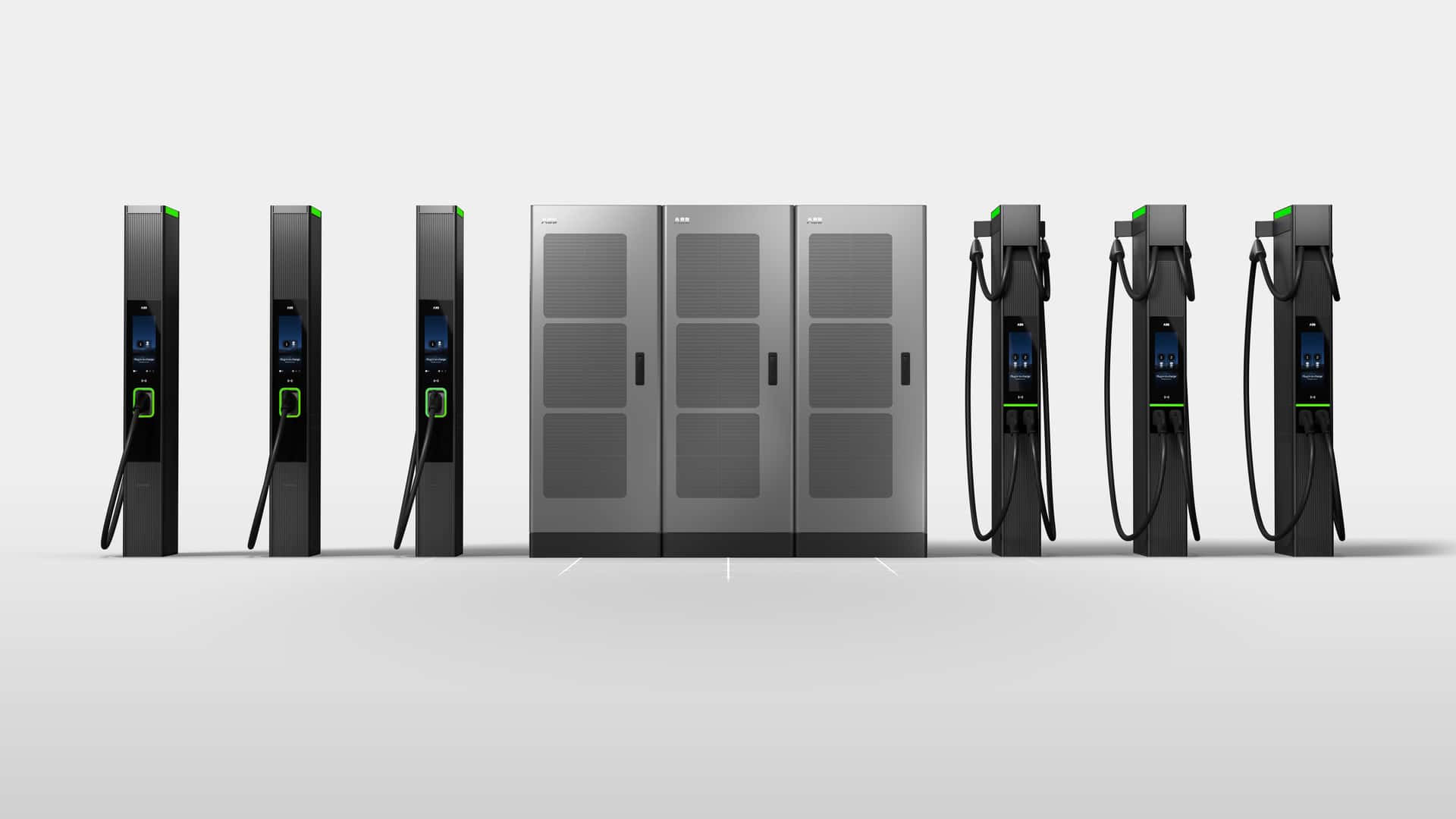
In a significant advancement for the electric vehicle (EV) industry, Swiss technology giant ABB E-Mobility has introduced a new, megawatt-capable DC fast charger system. This innovation promises to redefine the landscape of high-power EV charging, addressing the growing demand for rapid and efficient energy replenishment for a diverse range of electric vehicles, from passenger cars to heavy-duty trucks.
Key Takeaways
- ABB E-Mobility’s new OM M-Series power cabinet offers megawatt-scale DC fast charging.
- It can deliver up to 1.2 megawatts (MW) to a single electric vehicle or dynamically distribute power to as many as 24 EVs simultaneously.
- The system boasts an industry-leading power density of 625 kilowatts per square meter, optimising space at charging sites.
- The modular design allows for scalable infrastructure, catering to evolving charging demands and site constraints.
- This development positions ABB as a key player in the race for ultra-fast charging, alongside competitors like Tesla and BYD.
Introducing the OM M-Series: Power and Precision
The core of ABB E-Mobility’s latest offering is the OM M-Series power cabinet. This sophisticated unit is engineered to deliver substantial power, making it a pivotal solution for the next generation of electric transportation. Its capability to provide over 1 megawatt of power to a single connected EV is a testament to the advancements in charging technology.

A standout feature of the OM M-Series is its impressive power density. At 625 kilowatts per square meter, this specification is touted as industry-leading. This high-density design is crucial for maximizing efficiency in space-constrained charging locations, allowing operators to deploy robust charging infrastructure without requiring extensive footprints.
Modular and Scalable Design for Diverse Needs
Understanding that charging requirements vary significantly, ABB has engineered the OM M-Series with a modular and highly customizable architecture. This flexibility allows the power cabinet to be paired with several of ABB’s dispensers, enabling tailored setups for a multitude of scenarios, from small-scale installations to expansive charging hubs.
For instance, the flagship M1200 configuration integrates three distribution cabinets, culminating in a formidable 1.2 MW output. This immense power can be directed to a single EV through a liquid-cooled Megawatt Charging System (MCS) connector, designed for heavy-duty applications. Alternatively, the system can intelligently allocate power to up to 24 electric cars simultaneously, supporting both CCS (Combined Charging System) and NACS (North American Charging Standard) connectors.

Beyond the top-tier M1200, ABB offers a range of smaller power cabinets to suit varying site capacities and budgets. These include the base M200, delivering 200 kW; the M400, providing 400 kW; and the M800, offering 800 kW. This modularity means a charging site can commence operations with a smaller 200 kW unit and progressively expand its capacity by adding more cabinets as EV utilization rates increase, minimizing initial investment and future upgrade costs.
Advanced Dispenser Options for Every EV
The OM M-Series power cabinet is complemented by a suite of advanced dispensers, each designed to optimize the charging experience for specific vehicle types and user needs.
OM Ultra: Power for Heavy-Duty Transport
When megawatt charging is the primary requirement, particularly for large electric vehicles like trucks and buses, the OM Ultra dispenser is the ideal companion. It is the only dispenser currently compatible with the new power cabinet for megawatt capabilities. The OM Ultra can output a maximum of 1,500 amps at up to 980 volts and features a single MCS cable, purpose-built for big rigs and commercial fleets demanding ultra-fast turnaround times.
OM Solo: Versatility for Passenger Vehicles
For passenger EVs, the OM Solo dispenser offers remarkable adaptability. It can deliver up to 800 kW to a single electric car, facilitated by its 800A peak current. This dispenser comes with a single, liquid-cooled cable, configurable with either a CCS or a NACS connector, catering to the prevalent charging standards. Further options include a phase-cooled CCS cable, which provides up to 600A, and an air-cooled NACS cable, capable of delivering up to 375A, offering flexibility based on vehicle compatibility and charging preferences.
OM Duo: Dual Charging Efficiency
Recognizing the need for multiple charging points at busy locations, ABB also provides the OM Duo dispenser. This unit features two outlets, each capable of delivering up to 800A. The OM Duo is designed to efficiently charge two vehicles simultaneously, making it suitable for high-traffic public charging stations and commercial depots where optimizing throughput is essential.
The Growing Imperative for Megawatt EV Charging
The introduction of ABB’s megawatt EV charging solution arrives at a critical juncture in the electrification movement. Modern electric vehicles are increasingly equipped with larger battery capacities and sophisticated battery management systems, allowing them to accept charging rates exceeding 300 kW. This trend necessitates a corresponding evolution in charging infrastructure to prevent bottlenecks and enhance user convenience.
High-power charging is particularly vital for commercial applications, such as electric trucks and buses, which operate on tight schedules and require rapid recharging to minimize downtime. The ability to deliver 1.2 MW of power means a substantial amount of range can be added in a remarkably short period, making electric heavy-duty transport a more viable and competitive option compared to its fossil fuel counterparts.
Furthermore, as EV adoption accelerates globally, the demand for ultra-fast charging at public corridors, fleet depots, and logistics hubs will only intensify. Solutions like the OM M-Series are instrumental in alleviating range anxiety and supporting the seamless integration of EVs into daily operations and long-distance travel.
A Competitive Landscape in High-Power Charging
ABB E-Mobility is a prominent player in the burgeoning field of megawatt EV charging, but it is not alone. Several other innovators are also pushing the boundaries of charging technology, contributing to a vibrant and competitive market.
Alpitronic, for example, offers a megawatt-capable split DC charging system that can deliver up to 600 kW to a single EV. Tesla, a pioneer in EV infrastructure, has also deployed Supercharger setups capable of outputting up to 1.2 MW, primarily catering to its own vehicle ecosystem. Additionally, China’s BYD is heavily invested in the megawatt charging business, featuring its impressive 1.5 MW Flash chargers, showcasing the global commitment to advancing charging speeds.
This competitive environment is beneficial for the industry, fostering rapid innovation and driving down costs, ultimately benefiting EV owners and operators worldwide. ABB’s OM M-Series distinguishes itself with its modularity, high power density, and versatile dispenser options, offering a comprehensive solution for various market segments.
Impact on Future EV Adoption and Infrastructure
The availability of such advanced megawatt EV charging systems is expected to have a profound impact on the future of electric mobility. By significantly reducing charging times, these technologies diminish one of the primary barriers to EV adoption – the perceived inconvenience of recharging. For consumers, faster charging means less waiting and more driving, making long journeys more feasible.
For fleet operators and logistics companies, megawatt charging translates into higher operational efficiency and reduced total cost of ownership for their electric fleets. The modular nature of systems like ABB’s also ensures that charging infrastructure can evolve with demand, providing a future-proof investment.
However, the widespread deployment of megawatt charging also presents challenges, particularly concerning grid integration and the standardization of charging connectors. Ensuring that local power grids can handle such high loads and promoting universal compatibility will be crucial for the seamless expansion of this advanced infrastructure.
Frequently Asked Questions (FAQ)
What is megawatt EV charging?
Megawatt EV charging refers to electric vehicle charging systems that can deliver power at a rate of 1,000 kilowatts (1 megawatt) or more. This ultra-fast charging capability is designed to quickly replenish large battery packs, particularly in heavy-duty commercial vehicles like trucks and buses, as well as high-performance passenger EVs.
How much power can ABB’s new OM M-Series deliver?
The ABB OM M-Series power cabinet can deliver a peak power of up to 1.2 megawatts (MW) to a single electric vehicle when paired with the appropriate dispenser and setup. It also has the flexibility to dynamically allocate this power across as many as 24 different electric vehicles simultaneously, optimizing charging efficiency.
What is the significance of the OM M-Series’ power density?
The OM M-Series boasts an industry-leading power density of 625 kilowatts per square meter. This high density is crucial for maximizing the charging capacity within limited physical space, making it an ideal solution for urban charging stations or depots where real estate is at a premium and efficient space utilization is paramount.
Which types of EVs can benefit from this technology?
This advanced charging technology caters to a broad spectrum of electric vehicles. The OM Ultra dispenser, with its MCS cable, is primarily for heavy-duty commercial vehicles. The OM Solo and OM Duo dispensers, supporting CCS and NACS connectors, are designed for passenger EVs, offering ultra-fast charging for modern vehicles capable of accepting high power inputs.
How does the modular design benefit charging operators?
The modular design of the OM M-Series allows charging network operators to scale their infrastructure according to demand. They can start with smaller units (e.g., M200) and easily add more cabinets as EV adoption grows. This approach reduces initial capital expenditure and minimizes future upgrade costs, providing a flexible and future-proof investment.
Who are ABB’s main competitors in megawatt EV charging?
In the rapidly evolving megawatt EV charging market, ABB competes with several key players. Notable competitors include Alpitronic, which offers high-power split DC charging systems, Tesla with its advanced Supercharger network, and China’s BYD, known for its 1.5 MW Flash chargers. This competition drives continuous innovation in the sector.