
Key Takeaways:
- Effective battery thermal management is paramount for the safety, longevity, and optimal performance of electric vehicle (EV) batteries.
- Advanced materials, including specialized adhesives, gap fillers, and protective coatings, are increasingly vital in controlling heat within battery packs.
- These innovative material solutions address critical engineering challenges, mitigating risks like thermal runaway and improving overall system reliability.
- H.B. Fuller collaborates closely with manufacturers to develop custom-formulated adhesive solutions tailored to unique battery design and production requirements.
- Making informed material choices early in the battery development process significantly impacts both safety protocols and operational efficiency.
- An upcoming webinar on September 17, 2026, featuring H.B. Fuller experts, will delve into these critical aspects, offering foundational knowledge and real-world applications.
In the rapidly evolving landscape of electric vehicles (EVs), the performance and safety of battery systems stand as cornerstone challenges. While breakthroughs in cell chemistry and energy density often capture headlines, the underlying strategy of battery thermal management remains an unsung hero, crucial for ensuring reliability, extending operational life, and preventing hazardous failures.

Behind every high-performing battery pack lies a meticulously engineered thermal management system. This sophisticated design ensures that components operate within optimal temperature ranges, directly influencing an EV’s range, charging speed, and long-term durability. Experts underscore that the materials chosen to assemble and protect these intricate systems are now playing an increasingly strategic role in achieving these objectives.
The Critical Role of Battery Thermal Management
The operational environment of an EV battery is inherently dynamic, generating significant heat during charge and discharge cycles. Uncontrolled heat can lead to a cascade of detrimental effects, ranging from accelerated degradation of battery cells and reduced performance to, in extreme cases, thermal runaway – a dangerous condition that can result in fire.
Effective battery thermal management is therefore not merely a performance enhancer but a fundamental safety requirement. It ensures that individual cells, modules, and the entire pack maintain temperatures within a safe and efficient operating window, safeguarding both the vehicle and its occupants.

Addressing Core Challenges in EV Battery Design
Battery engineers continuously grapple with a multitude of challenges. These include managing the volumetric expansion and contraction of materials, ensuring robust structural integrity under vibration, and, critically, dissipating heat uniformly across thousands of individual cells. The quest for higher energy density often compounds these issues, pushing batteries to generate more heat in compact spaces.
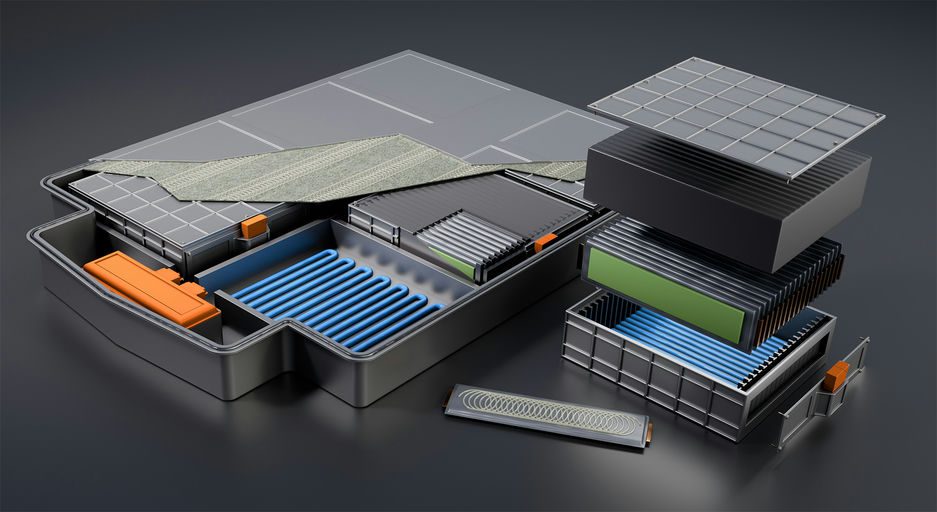
Traditional thermal management approaches often involve complex cooling plates and fluid circulation systems. While effective, these can add weight, complexity, and cost to the overall battery system. The focus is now shifting towards integrating thermal management directly into the materials that constitute the battery pack itself.
Advanced Materials: The New Frontier in Heat Control
A paradigm shift is underway in how manufacturers approach battery thermal management. This involves leveraging advanced adhesives, specialized gap fillers, and robust protective coatings not just for assembly and insulation, but as active components in heat dissipation and protection.
These innovative materials are engineered to possess specific thermal conductivities, allowing them to transfer heat away from critical components efficiently. For instance, thermally conductive gap fillers can bridge air gaps between cells and cooling elements, significantly improving heat transfer pathways. Similarly, advanced adhesives can securely bond components while simultaneously acting as a thermal interface material.
Protective coatings, beyond their primary role of safeguarding against environmental factors and electrical shorts, can be formulated to offer additional thermal benefits, contributing to overall system resilience. These material solutions collectively enable engineers to design lighter, more compact, and inherently safer battery packs, pushing the boundaries of EV performance.
H.B. Fuller’s Approach to Custom Solutions
Leading material science companies like H.B. Fuller are at the forefront of this innovation. They partner with battery manufacturers to develop custom-formulated adhesive solutions that address the unique demands of diverse battery designs and manufacturing processes. This collaborative approach ensures that material choices are optimized for specific cell chemistries, pack architectures, and production efficiencies.
Experts Mekiyah Bailey and Jeremy Chang from H.B. Fuller will elaborate on these advancements in an upcoming webinar titled ‘Battery thermal management by design.’ The session promises an engaging introduction to how these advanced materials are transforming battery design by aiding engineers in heat management, performance enhancement, and safety improvements.
The Imperative of Early Design Decisions
One of the critical insights to be shared by industry specialists emphasizes the importance of making smart design decisions early in the battery development process. Integrating thermal management strategies from the initial design phase, rather than as an afterthought, can yield significant advantages.
Early consideration of material properties and their thermal performance can prevent costly redesigns, accelerate time-to-market, and ultimately lead to more robust and reliable EV battery systems. This proactive approach ensures that materials are chosen not just for their primary function, but for their synergistic contribution to overall battery thermal management.
Attendees of the webinar will gain foundational knowledge and real-world examples illustrating how material choices profoundly impact battery safety and performance. Key learning outcomes will include understanding why thermal management is essential for battery safety and performance, how adhesives and thermal materials control heat and protect critical components, and common challenges battery engineers face, along with innovative material solutions.
A Deep Dive into EV Engineering: The Virtual Conference Context
The webinar featuring H.B. Fuller is a pivotal session within the larger Virtual Conference on EV Engineering, scheduled to be broadcast live from September 14 to 17, 2026. This comprehensive conference delves into the entire EV engineering supply chain and ecosystem, offering a holistic view of the industry’s advancements.
The conference content spans a wide array of crucial topics, including motor and power electronics design and manufacturing, advanced cell development, sophisticated battery systems, rigorous testing methodologies, efficient powertrains, in-depth thermal management, critical circuit protection, advanced wire and cable solutions, and crucial EMI/EMC considerations. The H.B. Fuller session, slated for September 17, 2026, at 10:30 am EDT, is free to register and attend.
This provides an invaluable opportunity for engineers, designers, and industry professionals to deepen their understanding of how the right material choices are essential for powering the future of safer, more reliable battery technologies. The complete session list for the Virtual Conference on EV Engineering is available for those seeking further insights into this dynamic sector.
FAQ Section
Q1: Why is battery thermal management so critical for EVs?
A1: Effective battery thermal management is crucial for EV batteries to prevent overheating, which can lead to premature degradation, reduced performance (range and power), and a significant risk of thermal runaway, a safety hazard. It ensures optimal operating temperatures for longevity and reliability.
Q2: How do advanced materials contribute to thermal management?
A2: Advanced materials like specialized adhesives, gap fillers, and protective coatings are engineered with specific thermal conductivities. They help dissipate heat, transfer it away from critical components, and provide insulation, acting as integral parts of the thermal management system within the battery pack.
Q3: What are gap fillers and how do they help?
A3: Gap fillers are thermally conductive materials used to fill air gaps between battery cells and cooling elements. Air is an insulator, so gap fillers remove these insulating layers, significantly improving the efficiency of heat transfer and ensuring uniform temperature distribution across the battery pack.
Q4: What is thermal runaway in a battery?
A4: Thermal runaway is a dangerous condition where an increase in temperature within a battery cell leads to a further increase in temperature, creating a self-sustaining cycle that can result in fire or explosion. Effective battery thermal management is designed to prevent this catastrophic event.
Q5: How does H.B. Fuller collaborate with EV manufacturers?
A5: H.B. Fuller partners with EV battery manufacturers to develop custom-formulated adhesive and thermal material solutions. This collaboration ensures that the materials are precisely tailored to meet the unique design specifications, manufacturing processes, and performance requirements of specific battery packs.
Q6: Why are early design decisions important for battery thermal management?
A6: Integrating battery thermal management strategies and material selections early in the design process is vital. It allows engineers to optimize the battery architecture from the outset, preventing costly redesigns, accelerating development cycles, and ensuring the inherent safety and efficiency of the final product.