
Key Takeaways
Siemens Government Technologies (SGT) has been awarded an $80 million contract by the U.S. Army Contracting Command.
The award aims to establish Army-controlled production lines for electric motor stator assemblies crucial for unmanned aircraft systems.

Located at the Anniston Army Depot in Alabama, the initiative will transform a World War II-era facility into a cutting-edge manufacturing hub.
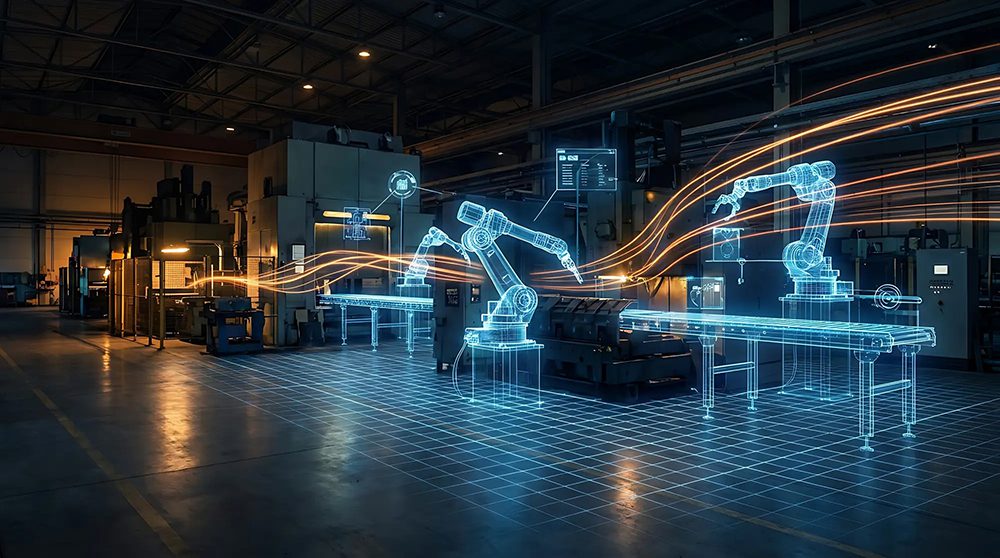
The project will leverage advanced digital twin technology to create an integrated digital and physical manufacturing environment.
This strategic investment is set to bolster the U.S. defense industrial base, enhance supply chain security, and accelerate the development of next-generation unmanned aerial vehicles.

Siemens Government Technologies (SGT) has announced a significant $80 million award from the Army Contracting Command, marking a pivotal step towards bolstering domestic defense manufacturing. The contract mandates SGT to establish U.S. Army-controlled production lines dedicated to manufacturing electric motor stator assemblies, essential components for unmanned aircraft systems.
This substantial initiative, with a performance period spanning 12 months, will introduce an integrated digital and physical advanced manufacturing environment. It signifies a strategic push by the U.S. Army to enhance its organic capabilities and ensure a resilient supply chain for critical drone technology.
A Strategic Investment in Domestic Defense Manufacturing
The award to SGT underscores a growing emphasis on national security and supply chain independence within the defense sector. By bringing the production of electric motor stator assemblies under direct Army control, the United States aims to mitigate risks associated with global supply chain disruptions and technological dependencies.
This move is particularly critical given the escalating role of unmanned aircraft systems (UAS) in modern warfare and reconnaissance. Ensuring a robust, domestically controlled manufacturing capability for vital components like stators is paramount for maintaining military readiness and technological superiority.
Enhancing Supply Chain Resilience for Critical Components
The establishment of these specialized drone motor stator production lines is not merely an investment in manufacturing capacity; it is a strategic maneuver to fortify the defense industrial base. The ability for the U.S. Army to control its own production environment provides unparalleled security and adaptability in the face of evolving geopolitical landscapes.
This approach minimizes reliance on external sources for highly technical and critical components, ensuring consistent quality, availability, and the swift integration of new innovations into defense platforms. It represents a tangible commitment to strengthening American manufacturing prowess in advanced military hardware.
Transforming Anniston Army Depot into a Modern Hub
The new production lines are slated for installation at the Anniston Army Depot in Alabama. This facility, steeped in history, is set for a dramatic transformation, converting its World War II-era infrastructure into a cutting-edge modern manufacturing hub.
The Anniston Army Depot holds significant strategic importance as the designated Center of Industrial and Technical Excellence. Its specialized commodities include tracked and wheeled ground combat vehicles, artillery systems, and small-caliber weapons, making it an ideal location for this high-tech manufacturing upgrade.
From World War II Legacy to Industry 4.0
The planned modernization at Anniston Army Depot represents a fusion of historical industrial strength with future-forward manufacturing principles. This transformation will not only breathe new life into an existing defense facility but also integrate it into the broader framework of Industry 4.0, characterized by automation, data exchange, and advanced digital technologies.
This project will serve as a blueprint for how legacy defense infrastructure can be revitalized to meet the demands of 21st-century warfare. The conversion of a WWII-era facility for state-of-the-art drone motor stator production lines showcases a powerful commitment to leveraging existing assets for advanced military applications.
The Power of Digital Twins in Advanced Manufacturing
At the heart of this advanced manufacturing environment is the implementation of digital twin technology. Siemens Government Technologies highlights that digital twins will be instrumental in driving an integrated digital production environment, revolutionizing how the production lines are conceptualized, validated, and commissioned.
A digital twin is a virtual representation of a physical object or system, updated in real-time with data from its physical counterpart. This technology allows for comprehensive simulations, predictive analytics, and optimized operations before any physical construction begins, ensuring precision and efficiency.
Precision and Efficiency Through Virtual Prototyping
The application of digital twins will inform and validate the commissioning of the stator assembly production lines before any physical work commences. This virtual prototyping approach significantly reduces risks, accelerates the development timeline, and enhances the overall efficiency and quality of the manufacturing process.
By simulating various production scenarios, engineers can identify and resolve potential issues in the digital realm, saving time and resources. This digital-first mindset is a cornerstone of advanced manufacturing, promising a faster, more reliable path to full-scale production for these critical drone components.
Understanding the Core Component: The Electric Motor Stator
A stator is an integral, stationary part of an electric motor. Its design and manufacturing quality are crucial for the motor’s overall performance, efficiency, and reliability, especially in high-performance applications like unmanned aircraft systems.
The stator’s windings carry the electrical current that generates the magnetic field, which then interacts with the rotor to produce rotational motion. The laminated core around these windings is designed to channel the magnetic flux effectively while simultaneously limiting energy losses caused by eddy currents, a phenomenon critical for motor efficiency.
Driving Future Innovation for Unmanned Aircraft Systems
The ability for the Army to control the production of these key components, particularly through advanced manufacturing techniques, will have profound implications for future drone development. It fosters an environment where innovation can flourish, unconstrained by external manufacturing bottlenecks or proprietary limitations.
John Ustica, President and CEO of Siemens Government Technologies, emphasized the strategic importance of this initiative: “The ability for the Army to control its own production and manufacturing environment, leveraging digital twins and a digital-first mindset, will accelerate their organic expertise and innovation for next-generation unmanned aircraft system development.” This statement highlights the long-term vision of establishing a self-reliant and innovative ecosystem for military drone technology.
Economic and National Security Ramifications
Beyond its immediate defense implications, this $80 million investment carries significant economic benefits. The establishment of advanced manufacturing capabilities at Anniston Army Depot is poised to create specialized jobs, foster skilled labor development, and stimulate regional economic growth in Alabama.
From a national security perspective, controlling the entire lifecycle of critical components for unmanned systems—from design to production—ensures unparalleled control over quality, security, and technological advancements. This project positions the U.S. Army at the forefront of advanced defense manufacturing and strengthens the nation’s strategic autonomy in an increasingly complex global environment.
Frequently Asked Questions (FAQ)
What is the total value of the contract Siemens Government Technologies received?
Siemens Government Technologies (SGT) has been awarded an $80 million contract by the Army Contracting Command for establishing production lines for unmanned aircraft system components.
What is the primary purpose of the new production lines?
The new production lines are designed to enable the U.S. Army to control the domestic production of electric motor stator assemblies for its unmanned aircraft systems, ensuring supply chain security.
Where will the new manufacturing facilities be located?
The advanced manufacturing facilities for the drone motor stator production lines will be installed at the Anniston Army Depot in Alabama, converting a historic World War II-era facility.
What advanced technology will be utilized in these production lines?
The project will heavily rely on digital twin technology to create an integrated digital and physical advanced manufacturing environment, optimizing the production process from the outset.
What is an electric motor stator?
A stator is the stationary part of an electric motor. Its windings create a magnetic field that interacts with the rotor, and its laminated core manages magnetic flux while minimizing energy loss.
How will this project benefit the U.S. Army’s drone development?
By controlling its own production, the Army will accelerate its expertise and innovation for next-generation unmanned aircraft systems, enhancing strategic independence and technological advancement.
What is the performance period for this contract?
The contract awarded to Siemens Government Technologies for establishing the production lines has a performance period of 12 months.
What is the significance of the Anniston Army Depot for this project?
Anniston Army Depot is a designated Center of Industrial and Technical Excellence, providing an established and strategic location for integrating advanced manufacturing capabilities for defense components.