
Key Takeaways
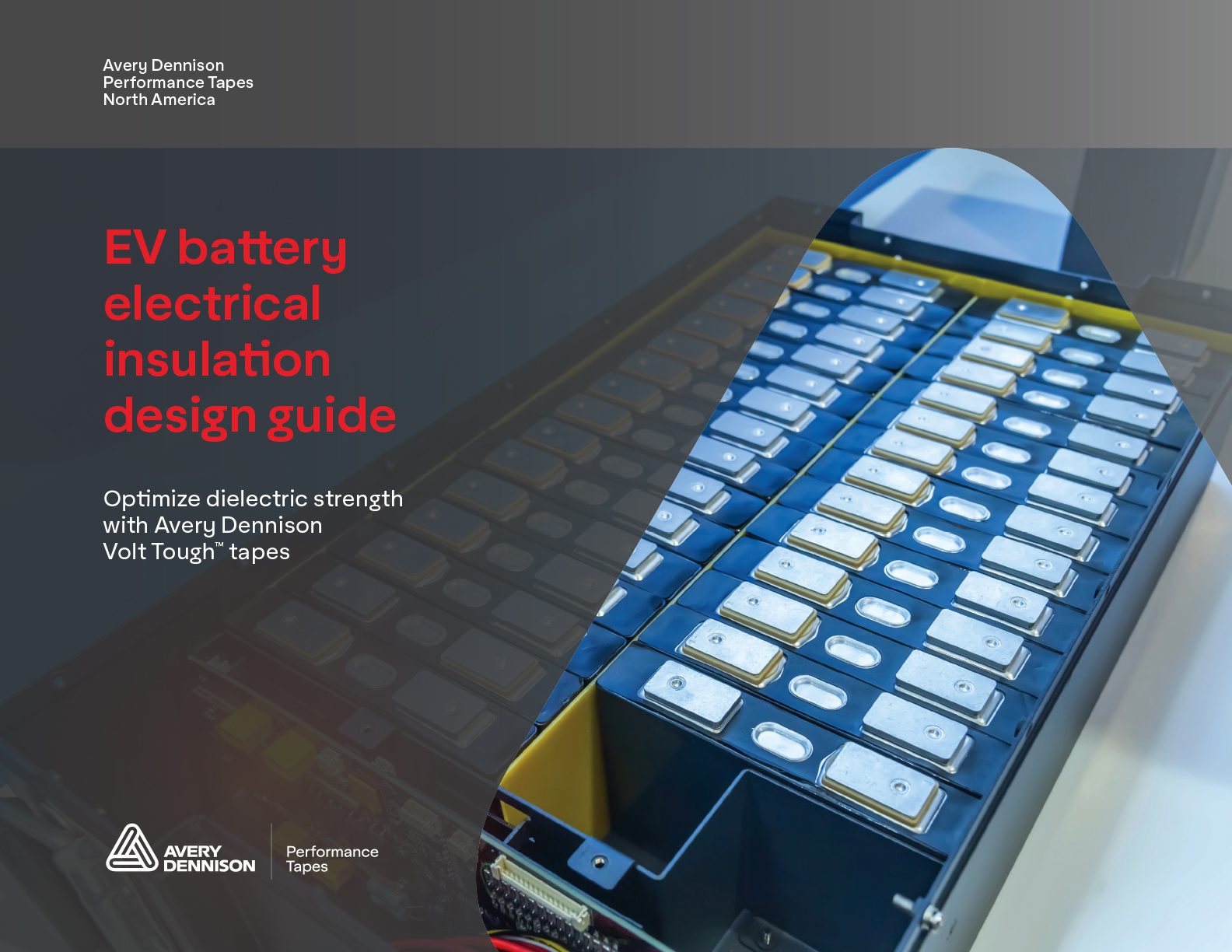
- The EV battery electrical insulation design guide from Avery Dennison Performance Tapes offers critical insights for engineers and decision-makers in electric vehicle battery design and manufacturing.
- The guide focuses on the Volt Tough™ portfolio of dielectric, single-sided filmic pressure-sensitive adhesive (PSA) tapes as a superior electrical insulation solution.
- These advanced tapes provide benefits such as high dielectric strength in thin profiles, instant bonding for faster production, and durable, conformable designs for complex battery geometries.
- A significant feature is their flame-retardant capability, meeting stringent safety standards like UL® 94V-0, crucial for enhancing EV safety and reliability.
- The guide aims to educate users on tape properties, facilitate informed material selection, demonstrate proper integration methods, and highlight opportunities for customized solutions with Avery Dennison.
The Critical Role of Electrical Insulation in Modern EV Batteries
As the electric vehicle (EV) market continues its rapid expansion, the design and manufacturing of high-performance, safe, and reliable battery packs have become paramount. At the core of these sophisticated power units lies the indispensable need for robust electrical insulation. This insulation is not merely a component; it is a fundamental safety barrier, preventing short circuits, managing thermal runaway risks, and ensuring the longevity and efficiency of the entire battery system.
The increasing energy density requirements and compact designs of contemporary EV battery packs present significant engineering challenges. Traditional insulation methods often struggle to meet these demands without compromising space, increasing weight, or complicating manufacturing processes. The quest for materials that offer superior dielectric performance, enhanced safety features, and manufacturing ease is therefore a continuous pursuit within the automotive industry.

Introducing Avery Dennison’s Comprehensive EV Battery Electrical Insulation Design Guide
Addressing these complex challenges head-on, Avery Dennison Performance Tapes has launched its authoritative “EV battery electrical insulation design guide.” This comprehensive resource is specifically tailored for engineers and decision-makers actively involved in the EV battery design, manufacturing, and implementation sectors.
The guide serves as an invaluable tool, designed to enhance understanding and facilitate informed decision-making regarding the application of dielectric tapes as an optimal electrical insulation solution. It navigates through the intricate landscape of battery pack requirements, providing clarity on how advanced adhesive technologies can meet the stringent demands of modern electric vehicles.
Volt Tough™: A New Paradigm in Dielectric Tapes
Central to the insights offered in the guide is Avery Dennison’s innovative Volt Tough™ portfolio. This advanced range comprises electrically insulative, single-sided filmic pressure-sensitive adhesive (PSA) tapes that represent a significant leap forward in battery insulation technology. These tapes are engineered to deliver a synergistic combination of high-performance dielectric films and specialized adhesives, precisely formulated to adhere to the rigorous specifications of modern battery pack designs.

The strategic selection of materials within the Volt Tough™ portfolio allows for superior electrical isolation while addressing a multitude of operational and manufacturing considerations. This focus on integrated performance ensures that the tapes not only meet but exceed the functional requirements for safety and efficiency within high-voltage EV battery environments.
Key Advantages of Dielectric Tapes Over Traditional Solutions
The adoption of dielectric tapes, particularly those within the Volt Tough™ series, offers a spectrum of distinct advantages when compared to conventional coating-based insulation methods. These benefits translate directly into improved battery performance, enhanced safety, and streamlined production processes.
Optimised Energy Density and Space Utilisation
One of the foremost benefits is the ability to achieve high dielectric strength within remarkably thin profiles. This characteristic is crucial for maximizing the energy density of battery packs. Thinner insulation layers allow for more active cell material within the same volume, directly contributing to greater range and performance for electric vehicles without increasing the overall size or weight of the battery.
Accelerated Production and Manufacturing Efficiency
Unlike liquid coatings that often require extensive drying or curing times, Volt Tough™ tapes offer instant bonding capabilities. This feature significantly accelerates production times on the assembly line, contributing to greater manufacturing efficiency and reduced overall cycle times for EV battery pack fabrication. The immediate adhesion ensures that subsequent assembly steps can proceed without delay, optimizing throughput.
Enhanced Durability and Conformability for Complex Geometries
Modern EV battery packs frequently feature intricate designs with complex geometries and sharp corners, demanding insulation materials that can adapt without compromising integrity. Volt Tough™ tapes are designed to be durable, conformable, and tear-resistant. This flexibility ensures reliable insulation even in challenging configurations, protecting against potential electrical breakdown in areas prone to mechanical stress or wear. Their robustness contributes to the long-term reliability of the battery system.
Meeting Stringent Flame Retardancy Standards
Safety is a non-negotiable aspect of EV battery design. The technology described within the guide places a strong emphasis on flame-retardant versions of these tapes. Crucially, these materials are capable of maintaining UL® 94V-0 requirements within the battery pack. Achieving the UL® 94V-0 rating signifies that the material stops burning within 10 seconds on a vertical part and extinguishes without dripping, representing a critical safety benchmark for preventing the spread of fire and enhancing overall vehicle safety.
Core Objectives of the EV Battery Electrical Insulation Design Guide
The “EV battery electrical insulation design guide” has been meticulously crafted with several clear objectives, each aimed at empowering industry professionals with the knowledge and tools necessary for superior EV battery development.
1. Deepening Understanding of Volt Tough™ Dielectric Tapes
The guide initiates by introducing and elaborating on the fundamental properties, distinguishing features, tangible benefits, and diverse applications of Avery Dennison Volt Tough™ dielectric tapes. This foundational knowledge ensures that users grasp the intrinsic value and technical capabilities of these advanced insulation solutions, setting the stage for their effective deployment in real-world scenarios.
2. Facilitating Informed Material Selection
A primary goal of the publication is to assist engineers in making more informed choices when evaluating Volt Tough™ dielectric tapes for their specific electrical insulation requirements within EV battery pack designs. It provides a structured framework for assessing material suitability, considering factors such as dielectric strength, temperature resistance, mechanical robustness, and compatibility with various cell chemistries and pack architectures.
3. Demonstrating Proper Integration and Automation Methods
Beyond material properties, the guide delves into the practical aspects of integrating Volt Tough™ solutions within the battery pack. It illustrates effective methods, including the utilization of automation, to ensure precise and consistent application. This section is vital for manufacturers looking to optimize their assembly lines, reduce manual error, and achieve scalable production while maintaining high quality standards for EV battery electrical insulation.
4. Exploring Collaborative Customisation Opportunities
Finally, the guide outlines avenues through which organizations can collaborate directly with Avery Dennison Performance Tapes to develop customized Volt Tough™ solutions tailored to unique design specifications. This collaborative approach underscores Avery Dennison’s commitment to partnership, offering specialized expertise and bespoke product development to address highly specific or emerging EV battery challenges, thereby fostering innovation in the sector.
Driving Innovation and Safety in Electric Mobility
The proliferation of electric vehicles necessitates continuous innovation in every aspect of their design, particularly in critical safety components like battery insulation. The “EV battery electrical insulation design guide” from Avery Dennison Performance Tapes emerges as a vital resource for the industry. By offering detailed insights into advanced dielectric tape technology, it empowers engineers to overcome existing challenges, enhance battery performance, and—most importantly—reinforce the safety and reliability of electric vehicles for a sustainable future.
Professionals seeking to deepen their understanding of cutting-edge electrical insulation solutions and optimize their EV battery designs are encouraged to access this essential guide.
Frequently Asked Questions About EV Battery Electrical Insulation
What is the primary purpose of electrical insulation in an EV battery pack?
Electrical insulation in an EV battery pack primarily prevents short circuits between cells and components, safeguards against electrical shock, and manages thermal events. It ensures the integrity of the high-voltage system, contributing significantly to both vehicle safety and the overall reliability and longevity of the battery system.
How do dielectric tapes enhance EV battery energy density?
Dielectric tapes, such as those in the Volt Tough™ portfolio, contribute to higher energy density by offering high dielectric strength within exceptionally thin profiles. This allows for more active cell material to be packed into a given volume, leading to a battery with greater capacity and range without increasing its physical footprint.
What makes Volt Tough™ tapes superior to traditional insulation coatings?
Volt Tough™ tapes offer several advantages over traditional coatings, including instant bonding for faster production times, enhanced durability, and conformability for complex geometries. They also often incorporate flame-retardant properties (e.g., UL® 94V-0 compliance), which are difficult to achieve with some conventional liquid coatings.
What is the significance of UL® 94V-0 compliance for EV battery insulation?
UL® 94V-0 compliance is a crucial safety standard indicating that a material self-extinguishes within 10 seconds on a vertical burn test, without dripping flaming particles. For EV battery insulation, this rating is vital as it significantly reduces the risk of fire propagation within the battery pack, enhancing overall vehicle safety during operation or in the event of an incident.
How does the design guide support automated manufacturing processes?
The design guide includes sections that illustrate ways to properly integrate Volt Tough™ solutions using automation. This information helps engineers streamline their manufacturing processes, ensuring consistent and precise application of the insulation tapes, which is critical for scalability, quality control, and reducing labor costs in high-volume EV battery production.
Can Avery Dennison provide customized electrical insulation solutions?
Yes, the design guide highlights that organizations can work directly with Avery Dennison Performance Tapes to develop customized Volt Tough™ solutions. This collaborative approach allows for tailored product development to meet specific, unique design requirements or address novel challenges faced by individual EV manufacturers, leveraging Avery Dennison’s expertise.