
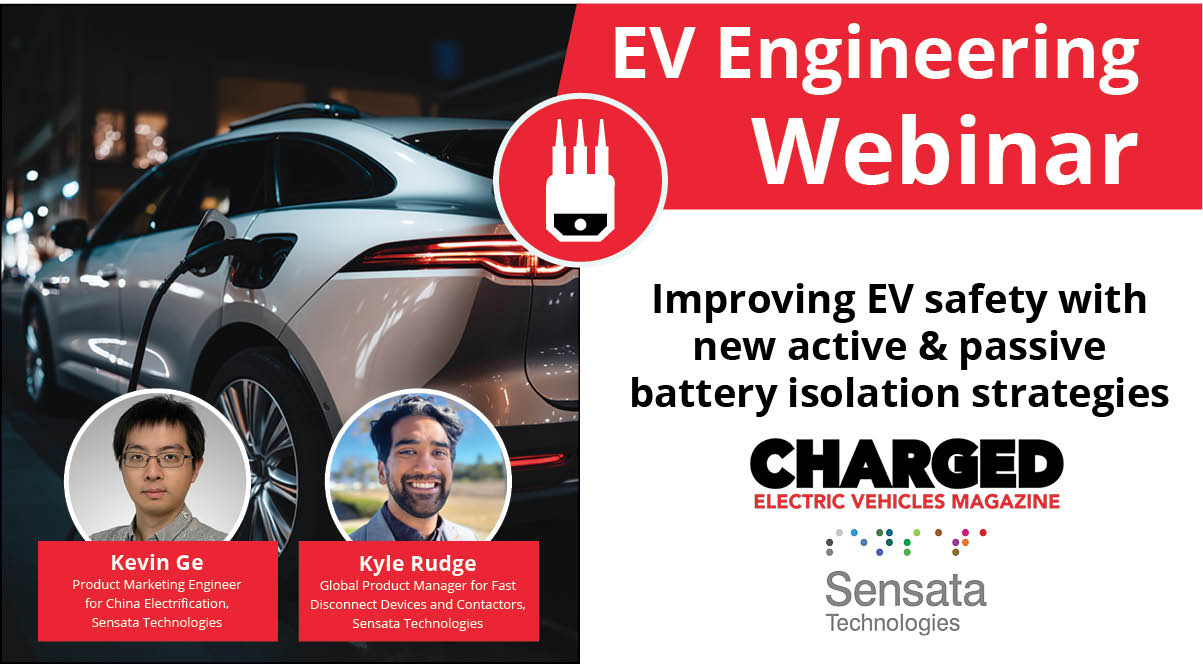
Key Takeaways
- Next-generation electric vehicle (EV) architectures necessitate faster, more autonomous battery isolation to manage escalating risks.
- A comprehensive evaluation reveals the distinct strengths and limitations of active, passive, and hybrid isolation methods, particularly under severe fault conditions.
- Reliance on a single battery isolation technique can create critical safety gaps, underscoring the need for multi-layered protection.
- Emerging design principles focus on enhancing battery safety through improved redundancy, system robustness, and rapid response mechanisms.
- A system-level approach to layered isolation significantly strengthens protection across a wide spectrum of real-world fault scenarios, ensuring comprehensive EV battery safety.
As the electric vehicle (EV) industry rapidly progresses, battery systems are evolving towards higher voltages and greater energy densities. While these advancements promise enhanced performance and range, they simultaneously introduce more demanding safety requirements. Traditional isolation approaches, once sufficient, now face significant challenges in effectively mitigating risks during severe fault events such as short circuits, crashes, or control system failures.
Ensuring robust EV battery safety demands protection systems that can react in milliseconds, preventing minor incidents from escalating into catastrophic scenarios. Industry discussions are increasingly focusing on how active and passive isolation strategies can be judiciously combined to create more resilient battery protection architectures, a critical step for the future of sustainable mobility.

The Evolving Landscape of EV Battery Safety
The core of an EV — its battery system — is a complex ensemble designed to store and deliver substantial electrical energy. Modern EV batteries operate at increasingly high voltages, often exceeding 800V, and pack remarkable energy densities to maximize driving range. This technological push, while beneficial for consumer adoption, inherently magnifies the potential hazards if a system malfunction occurs.
Incidents like internal or external short circuits, vehicular collisions impacting the battery pack, or glitches within the battery management system (BMS) can trigger rapid temperature increases, thermal runaway, or uncontrolled energy release. In such critical moments, the efficacy of the battery isolation system becomes paramount. The margin for error is minimal, and the speed of response can dictate the difference between a contained event and a severe hazard.
Traditional methods, often relying on singular or less sophisticated isolation mechanisms, may prove inadequate against the diverse and dynamic fault conditions present in advanced EV architectures. The challenge lies in developing protection systems that are not only robust but also intelligent and autonomous, capable of making rapid, critical decisions independently of human intervention or primary control systems.

Understanding Active Isolation Strategies
Active isolation strategies involve the dynamic control of electrical paths within the battery system. These systems typically employ components such as contactors, relays, and fuses that can be electrically actuated to interrupt current flow. Their primary advantage lies in their ability to respond quickly and adaptively to detected faults, often driven by the battery management system or other control units.
Mechanism and Advantages
Active isolation components are designed to open circuits under fault conditions, preventing the spread of electrical energy and mitigating risks like overheating or further damage. For instance, high-voltage contactors can disconnect the battery pack from the vehicle’s electrical system almost instantaneously upon sensing an overcurrent or abnormal voltage. Advanced fuses, often pyrotechnic or solid-state, offer precise and rapid interruption capabilities, especially in severe short-circuit events.
The benefits of active isolation include programmable response times, integration with sophisticated diagnostic systems, and the ability to reset or re-engage after a fault has been cleared. This level of dynamic control allows for more nuanced responses to different fault types, potentially enhancing overall system efficiency while maintaining a high degree of safety.
Limitations and Considerations
Despite their advantages, active isolation strategies are not without limitations. Their operation relies heavily on the functionality of control electronics, sensors, and actuators. This introduces potential points of failure; if the control system malfunctions or sensors provide inaccurate data, the active isolation might not engage as intended. Furthermore, contactors and relays are mechanical devices subject to wear and tear, and their reliability over an EV’s lifespan needs careful validation.
The complexity of integrating multiple active components, coupled with their software dependencies, increases the validation effort required to ensure complete system reliability under all foreseeable conditions. A single point of failure in an active isolation path could compromise the entire safety mechanism, highlighting the need for additional layers of protection.
Exploring Passive Isolation Approaches
Passive isolation strategies, in contrast to their active counterparts, rely on inherent physical properties and design features to prevent electrical hazards. These methods are static, requiring no external power or control signals to function, which often makes them intrinsically reliable in certain fault scenarios.
Inherent Safety and Design Principles
Passive isolation primarily focuses on creating robust physical barriers and using materials with high dielectric strength to separate live electrical components. This includes the strategic use of air gaps, solid insulating materials, and specific battery pack designs that inherently limit current propagation. For example, the physical encapsulation of battery cells and modules within non-conductive materials prevents external contact and internal shorting.
Moreover, the design of cell-to-cell barriers and cooling channels can act as passive fire breaks, impeding the spread of thermal runaway. These approaches are foundational to EV battery safety, providing a baseline level of protection that is independent of electronic control or power supply, thus enhancing the overall system robustness. They offer a ‘fail-safe’ characteristic, as their protection mechanisms are always present.
Scope and Constraints
While invaluable for their inherent reliability, passive isolation methods have limitations in addressing dynamic and evolving fault conditions. They are most effective against direct contact, structural failures, or slow-onset thermal issues where physical separation or material properties can contain the threat. However, in rapid, high-energy events like internal short circuits within a cell, passive barriers might only slow, rather than prevent, catastrophic failure.
Furthermore, passive solutions generally cannot be reset or reconfigured after an event, meaning that once a passive isolation mechanism (like a fuse) activates, it often requires replacement. Their static nature also means they cannot adapt to varying operational states or specific fault signatures, posing challenges in systems that demand intelligent, context-aware protection.
The Synergy of Hybrid Isolation Architectures
Recognizing the individual strengths and limitations of both active and passive methods, industry experts are increasingly advocating for hybrid isolation architectures. This approach integrates multiple layers of protection, leveraging the best attributes of each strategy to create a more comprehensive and resilient EV battery safety system.
Combining Strengths for Enhanced Protection
A hybrid system might combine fast-acting active contactors to disconnect the main battery pack in milliseconds, alongside passive features like robust dielectric coatings on busbars and flame-retardant materials in the battery housing. In this layered approach, if an active system component fails, the passive elements still provide a crucial safety net. Conversely, while passive barriers manage inherent risks, active components can detect and react to dynamic threats that passive measures alone cannot immediately address.
This combination ensures a higher degree of redundancy. For example, an overcurrent could first be detected by a BMS triggering an active contactor. If the contactor fails to open, a secondary, perhaps pyrotechnic, fuse (a passive component) would then be designed to blow, ensuring isolation. This multi-layered strategy significantly reduces the probability of a single point of failure leading to a critical safety event.
Addressing Complex Fault Scenarios
Hybrid isolation architectures are particularly adept at handling the multifaceted nature of real-world fault scenarios. From sudden external impacts to complex internal electrical anomalies, these systems can provide graded responses. For instance, in a severe crash, mechanical deformation might trigger passive isolation through cell packaging rupture, while simultaneously, impact sensors activate active contactors to disconnect the high-voltage bus.
This comprehensive approach significantly strengthens protection across a broader range of potential risks, from the simplest short circuit to the most challenging thermal runaway event. The system-level perspective gained from designing hybrid architectures allows for a more holistic understanding of potential failure modes and the implementation of robust countermeasures.
Mitigating Safety Gaps: The Imperative for Layered Protection
Relying on a singular isolation method, whether active or passive, inevitably leaves potential safety gaps. In a high-energy system like an EV battery, even a small gap can have severe consequences, emphasizing the imperative for layered protection strategies.
Risks of Single-Method Reliance
For example, a system solely dependent on active isolation might be vulnerable to software bugs, sensor failures, or power loss to its control circuits. If the central control unit governing the contactors becomes compromised, the entire isolation mechanism could become inert precisely when it is most needed. Similarly, a battery relying only on passive physical barriers might not be able to quickly respond to an internal short circuit that rapidly generates heat, potentially leading to thermal runaway before physical barriers can contain it.
These scenarios highlight that no single technology or design principle offers a panacea for all EV battery safety challenges. A truly robust system must anticipate and account for the failure modes of individual protection mechanisms.
Building Redundancy and Robustness
To mitigate these risks, designers are embracing principles of redundancy and diversity in their isolation strategies. Redundancy involves having multiple, often identical, systems that can perform the same function, ensuring that if one fails, another takes over. Diversity involves using different types of systems (e.g., active and passive) to achieve the same goal, ensuring that common-mode failures are less likely.
This layered approach creates a cascade of safety measures, where each layer acts as a fallback for the preceding one. The objective is to ensure that even under severe and unpredictable fault conditions, the battery system maintains a high degree of isolation, preventing uncontrolled energy release and protecting occupants and first responders.
Emerging Design Principles for Next-Generation EV Batteries
The push for enhanced EV battery safety is driving significant innovation in design principles. These emerging approaches focus on faster, more autonomous responses, and a holistic view of system resilience to meet evolving regulatory standards and consumer expectations.
Focus on Autonomy and Speed
Next-generation EV architectures require isolation strategies that are not only fast but also intelligent enough to act autonomously. This means embedding more decision-making capabilities closer to the battery cells, reducing reliance on central controllers that might introduce latency. Ultra-fast detection sensors, combined with integrated logic at the module level, could enable localized isolation faster than a centralized BMS could react.
The goal is to achieve protection in milliseconds, preventing the cascading effects of a fault event. This focus on speed and autonomy extends to sophisticated algorithms that can predict potential failures based on real-time data, allowing for proactive isolation rather than reactive intervention.
System-Level Resilience and Validation
Achieving true EV battery safety requires a comprehensive, system-level perspective. This encompasses everything from individual cell chemistry and packaging to module design, pack integration, and the vehicle’s overall electrical and thermal management systems. Every component and subsystem must be designed with fault tolerance and isolation in mind.
Moreover, the validation effort for these complex, layered systems is immense. Extensive testing, including simulated real-world fault scenarios, crash tests, and highly accelerated life testing (HALT), is crucial to verify the effectiveness and reliability of hybrid isolation strategies. This rigorous validation ensures that the intricate interplay of active and passive protection mechanisms performs flawlessly under extreme conditions, upholding the highest standards of safety for the rapidly expanding EV market.
Specialists in the field are continually refining these principles, offering practical insights into how layered isolation strategies can provide superior protection across the full spectrum of potential fault scenarios. Such ongoing research and development are vital to securing the future of electric mobility.
Frequently Asked Questions (FAQs)
What makes EV battery safety a growing concern?
EV battery safety is a growing concern due to the increasing energy density and higher operating voltages of modern EV battery systems. These advancements, while boosting performance, elevate the risks associated with severe fault events like short circuits, thermal runaway, and physical impacts, necessitating advanced protection mechanisms.
What is active battery isolation?
Active battery isolation involves electrically controlled components, such as contactors and fuses, that dynamically interrupt current flow in response to detected faults. These systems are typically managed by the battery management system (BMS) and offer rapid, adaptive protection, but rely on control electronics.
How does passive battery isolation work?
Passive battery isolation relies on inherent physical properties and design features, such as robust insulating materials, air gaps, and structural barriers, to prevent electrical hazards. These methods are static, requiring no external power or control, offering intrinsic reliability against direct contact and structural failures.
Why are hybrid isolation strategies considered superior?
Hybrid isolation strategies combine the strengths of both active and passive methods, creating multi-layered protection. This approach enhances redundancy, mitigates single points of failure, and provides more comprehensive protection against a wider range of dynamic and static fault conditions in EV battery systems.
What are the critical fault events that isolation strategies address?
Isolation strategies address critical fault events including internal and external short circuits, thermal runaway, overcurrents, overvoltages, and physical impacts from crashes. Rapid and effective isolation is crucial to prevent these events from escalating into severe hazards.
How do layered isolation strategies improve EV battery protection?
Layered isolation strategies improve EV battery protection by establishing multiple, independent safety mechanisms. If one layer fails, another is designed to take over, providing redundancy and robustness. This comprehensive approach ensures continuous protection across diverse real-world fault scenarios, significantly enhancing EV battery safety.
What role does rapid response play in EV battery safety?
Rapid response is paramount in EV battery safety because fault events can escalate very quickly. Protection systems must react in milliseconds to disconnect power, prevent thermal runaway, and contain damage, thereby minimizing risks to occupants and the vehicle’s integrity.