
Key Takeaways (TL;DR):
- As electric vehicle (EV) battery systems advance with higher voltages and greater energy density, traditional safety measures face significant challenges during severe fault events.
- The integration of active and passive battery isolation strategies is becoming crucial for creating more robust protection architectures.
- Understanding the trade-offs between active, passive, and hybrid approaches is essential for optimizing safety, redundancy, and system resilience.
- Layered isolation methods are key to addressing potential safety gaps and enhancing protection across a wide spectrum of real-world fault scenarios.
- Industry discussions are focusing on next-generation EV architectures that demand faster, more autonomous battery isolation to prevent escalating risks from short circuits, crashes, or control system failures.
The Evolving Landscape of EV Battery Safety
The rapid advancement in electric vehicle technology, characterized by increasingly powerful battery systems, presents both opportunities and significant safety challenges. Modern EV batteries are engineered for higher voltages and greater energy density, pushing the boundaries of performance. However, this evolution simultaneously escalates the demands on existing safety protocols, particularly concerning effective battery isolation during severe fault events.

Traditional isolation approaches, while foundational, are encountering growing difficulties in mitigating risks when critical incidents occur. Events such as internal or external short circuits, high-impact crashes, or critical control system failures necessitate immediate and decisive protection. The window for response in such scenarios is often measured in mere milliseconds, underscoring the need for highly responsive and autonomous safety mechanisms.
Challenges with Current Isolation Approaches
The core challenge lies in ensuring that during an unexpected fault, the battery system can be safely and rapidly disconnected or isolated from the rest of the vehicle’s electrical architecture. This prevents the fault from escalating into more dangerous conditions, such as thermal runaway, fire, or electric shock.
Current methods, while effective under typical operating conditions, can be overwhelmed by the sheer energy contained within next-generation battery packs. This calls for a re-evaluation of established safety paradigms and the exploration of innovative solutions.

Integrating Active and Passive Isolation Strategies
To address these critical safety requirements, a hybrid approach combining both active and passive battery isolation strategies is emerging as a robust solution. This integration aims to create more resilient battery protection architectures capable of responding effectively to a broader range of real-world fault scenarios.
Active isolation strategies typically involve electronic components and control systems that can dynamically open or close circuits. These systems often rely on sophisticated sensors and algorithms to detect faults and trigger rapid disconnections. Their strength lies in their speed and adaptability to varying fault conditions.
Passive isolation strategies, conversely, involve physical barriers or components that provide inherent electrical insulation. These might include robust dielectric materials, mechanical contactors, or fuse-based systems designed to interrupt current paths under specific overcurrent conditions. Passive methods offer reliability and a degree of independence from electronic control.
Evaluating Hybrid Architectures for Enhanced Protection
The synergy of active and passive methods allows for a multi-layered defence. For instance, a primary active system might rapidly detect and isolate a developing fault, while a passive system acts as a failsafe or secondary layer of protection, ensuring isolation even if the active system encounters its own failure.
The evaluation of these hybrid approaches involves a detailed examination of their impact on overall safety, the degree of redundancy they offer, the complexity of validation efforts required, and their contribution to the system’s resilience under extreme stress. Each strategy has distinct strengths and limitations, and a balanced combination is key.
Addressing Safety Gaps and Enhancing Redundancy
Relying on a single isolation method can inadvertently create potential safety gaps. In complex fault conditions, a solitary protection system might be bypassed, fail, or simply not be fast enough to prevent escalation. This vulnerability underscores the critical need for comprehensive and redundant safety architectures.
Redundancy in isolation strategies means having multiple, independent mechanisms to achieve the same safety function. If one system fails, another is present to take over, significantly reducing the probability of a catastrophic event. This principle is fundamental to achieving high levels of functional safety in automotive applications.
Layered Protection for Real-World Scenarios
Emerging design principles advocate for layered isolation strategies that can strengthen protection across a broader range of real-world fault scenarios. This system-level perspective considers all potential points of failure and implements corresponding safeguards.
For instance, a fault within the battery module itself might be addressed by an internal passive fuse, while a system-wide short circuit could trigger a rapid active disconnection by the Battery Management System (BMS), followed by a main contactor opening. This comprehensive approach ensures that multiple types of faults, from internal component failures to external impacts, are adequately covered.
The goal is to move towards battery systems that are not only robust but also capable of autonomous, intelligent responses to various fault conditions. This minimizes human intervention time and reaction delays, which are crucial in critical seconds.
Industry Insights and Future Directions in EV Safety Design
The ongoing dialogue within the automotive and technology sectors highlights the urgent need for faster, more autonomous battery isolation strategies in next-generation EV architectures. This is not merely an engineering challenge but a critical component of public trust and widespread EV adoption.
Industry experts continually explore how advanced technologies, materials, and control algorithms can contribute to improving battery safety, redundancy, and overall system robustness. These discussions often involve evaluating the trade-offs inherent in different designs, balancing performance, cost, and safety implications.
A Focus on Design Principles and System-Level Protection
Developing robust battery safety involves a holistic view, moving beyond individual components to a system-level perspective. This includes ensuring proper insulation, effective thermal management, robust mechanical integrity, and sophisticated software controls that can predict, detect, and react to potential hazards.
Understanding these emerging design principles and how layered isolation strategies can enhance protection is vital for engineers, designers, and policymakers. It fosters a proactive approach to safety, anticipating future challenges as EV technology continues its rapid evolution.
Join the Discussion on EV Battery Safety Innovations
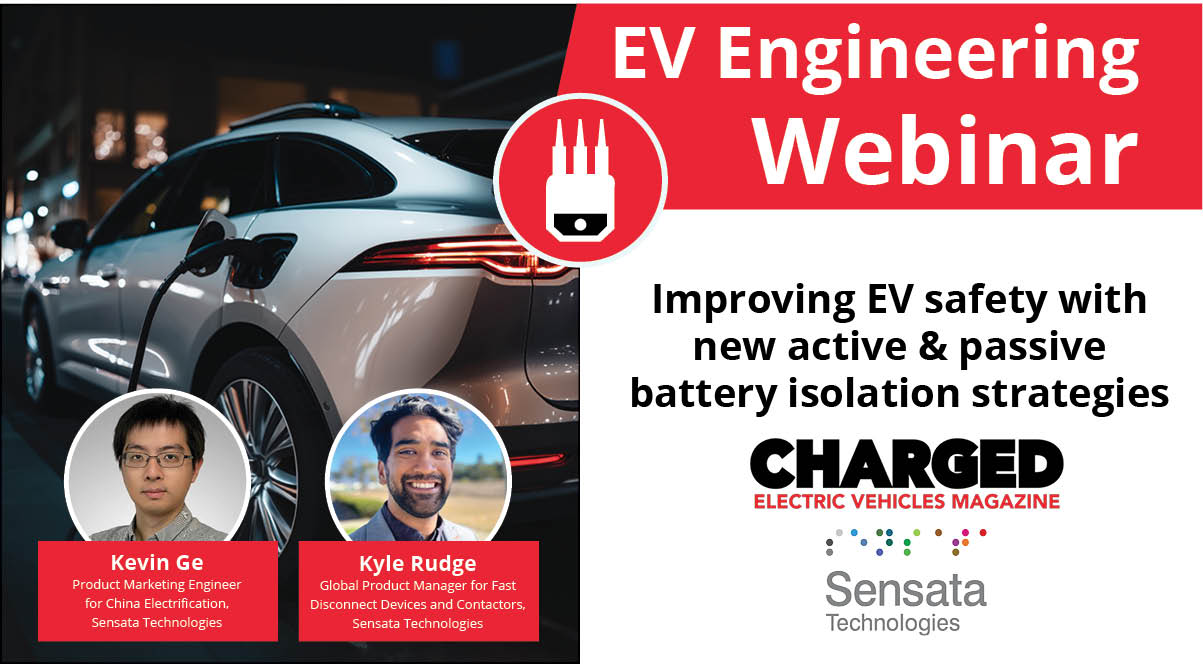
For those keen to delve deeper into these critical developments, a specialized webinar hosted by Sensata will explore how active and passive isolation strategies can be combined to create more robust battery protection architectures. The session will examine the trade-offs, impact on safety, redundancy, validation effort, and system resilience.
Attendees will gain practical insights into emerging EV battery safety design principles and learn how layered isolation strategies can strengthen protection across a broader range of real-world fault scenarios.
The session is scheduled for Tuesday, July 14th at 10:30 AM EDT. Registration is free for all interested participants.
Frequently Asked Questions (FAQ)
What are the primary challenges in EV battery safety?
The main challenges stem from the increasing energy density and higher voltages of modern EV batteries. These factors amplify risks during fault events like short circuits or crashes, requiring extremely rapid and reliable protection mechanisms that traditional approaches may struggle to provide effectively.
What is active battery isolation?
Active battery isolation involves electronic components and control systems that dynamically open or close circuits to disconnect the battery. These systems typically use sensors and algorithms to detect faults rapidly and initiate quick responses, providing flexible and adaptable protection against various hazards.
What is passive battery isolation?
Passive battery isolation relies on inherent physical properties or components to ensure electrical insulation or interrupt current flow. Examples include robust dielectric materials, mechanical contactors, or fuses that activate automatically under specific fault conditions, offering a reliable and independent layer of safety.
Why are hybrid isolation approaches necessary for EVs?
Hybrid approaches combine the strengths of both active and passive isolation. This creates a multi-layered protection architecture, where active systems provide rapid, dynamic response and passive systems offer failsafe redundancy, collectively enhancing safety, robustness, and resilience against a wider range of severe fault scenarios.
What are ‘safety gaps’ in EV battery protection?
Safety gaps refer to vulnerabilities that can arise when protection systems depend on a single isolation method. In complex or severe fault conditions, a solitary system might fail or be insufficient, leaving the battery susceptible to escalating risks. Layered and redundant strategies are designed to close these gaps.
How do layered isolation strategies enhance protection?
Layered isolation strategies involve implementing multiple, independent protection mechanisms across the battery system. This ensures that if one layer fails or is bypassed during a fault event, another layer can step in to maintain safety, providing comprehensive and robust protection against diverse real-world hazards and improving overall system resilience.
What role does redundancy play in EV battery safety?
Redundancy is critical for EV battery safety as it ensures that essential safety functions, like isolation, can still be performed even if a primary component or system fails. By incorporating multiple, independent protective measures, the likelihood of catastrophic failure is significantly reduced, enhancing reliability and trust in EV technology.