
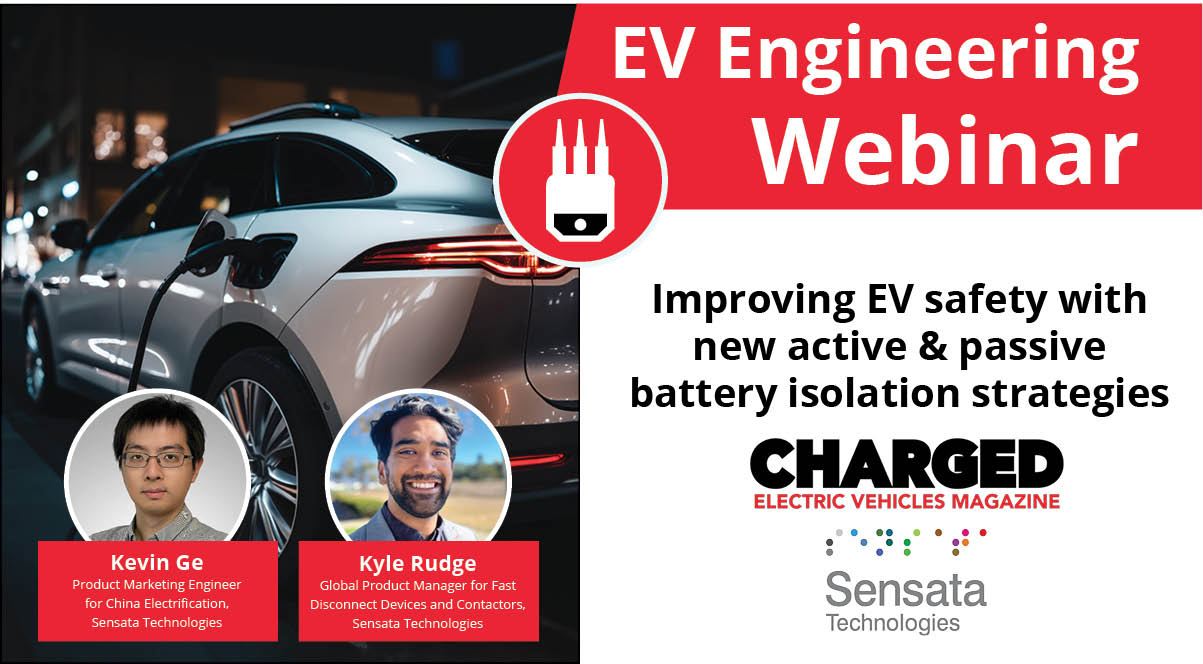
Key Takeaways:
- Next-generation electric vehicle (EV) architectures demand faster, more autonomous battery isolation strategies to manage escalating risks from higher voltages and greater energy density.
- Evaluating the strengths and limitations of active, passive, and hybrid isolation approaches is essential for understanding their performance under severe fault conditions.
- Relying on a single isolation method can create significant safety gaps, underscoring the necessity for diversified protection systems.
- Emerging design principles are focusing on improving battery safety, redundancy, and overall system robustness through innovative engineering.
- A system-level perspective on layered isolation strategies is vital for enhancing protection across a broad spectrum of real-world fault scenarios, ensuring comprehensive safety.
The Evolving Landscape of EV Battery Safety
The electric vehicle industry is experiencing unprecedented growth, driven by advancements in battery technology that promise higher voltages and greater energy density. While these developments are crucial for extending range and improving performance, they concurrently introduce more demanding safety requirements. Traditional battery isolation approaches, once sufficient, are now increasingly challenged when confronted with severe fault events. The inherent risks associated with powerful lithium-ion battery systems, particularly during catastrophic incidents, necessitate a re-evaluation of current protection mechanisms.

As EV battery systems evolve, the potential for rapid energy discharge during a fault event becomes a critical concern. Higher voltages mean greater electrical energy, and increased energy density implies more stored power within a smaller volume. When events such as internal or external short circuits, severe crashes, or critical control system failures occur, protection systems face an imperative to respond in mere milliseconds. This instantaneous reaction is paramount to prevent cascading failures and mitigate the escalating risks of thermal runaway, fire, or even explosion, which could endanger occupants and surrounding environments.
Understanding Battery Isolation Strategies
To address these complex challenges, automotive engineers and industry experts are increasingly turning to advanced battery isolation strategies. These strategies aim to safely and rapidly disconnect the high-voltage battery from the rest of the vehicle’s electrical system when a fault is detected. Generally, these methods can be categorized into active, passive, and hybrid approaches, each with distinct mechanisms and operational characteristics.
Active isolation strategies typically involve electronically controlled components that can rapidly interrupt the electrical circuit. These often include high-voltage contactors, sophisticated fuses, and intelligent circuit breakers integrated with the battery management system (BMS). The effectiveness of active systems lies in their ability to detect a fault and trigger an immediate, controlled shutdown, relying on complex sensor arrays and processing units. Their response time is critical, often requiring decision-making and actuation within a few milliseconds to prevent significant damage or injury.

Conversely, passive isolation strategies rely on inherent design characteristics and material properties to provide electrical insulation and physical separation. This can include the use of robust dielectric materials, physically separated battery cell modules, specialized insulation coatings, and robust enclosure designs that prevent short circuits even under mechanical stress. While passive measures do not actively ‘respond’ in the same way as active systems, they form a fundamental layer of protection, preventing initial contact or containing localized faults. Their strength lies in their inherent reliability and lack of reliance on electronic control for basic protection.
Evaluating Active, Passive, and Hybrid Approaches
The choice between active, passive, or a combination of both involves a careful evaluation of several critical factors, including overall EV battery safety, redundancy, validation effort, and system resilience. Each approach presents a unique set of trade-offs that engineers must consider during the design phase of modern EV architectures.
Active systems offer unparalleled speed and adaptability, capable of dynamically reacting to a wide range of fault conditions. However, their complexity introduces potential points of failure, requiring rigorous validation and robust software logic to ensure reliability. The reliance on electronic controls means that a failure in the control system itself could compromise the isolation mechanism, highlighting the need for built-in redundancies within the active components.
Passive systems, while inherently reliable due to their physical nature, may not offer the same rapid response or adaptability to unforeseen fault types. Their effectiveness can also be diminished under extreme mechanical deformation, such as in severe crash scenarios where physical barriers might be compromised. The validation of passive systems often focuses on material testing, structural integrity, and long-term durability under various environmental conditions.
Recognizing the limitations of relying solely on one method, hybrid approaches are emerging as the preferred solution for maximizing EV battery safety. These strategies combine the rapid, intelligent response of active systems with the fundamental, robust protection offered by passive designs. For instance, a vehicle might employ active contactors for immediate high-voltage disconnect, backed by passive, high-strength insulation and structurally isolated battery packs that prevent electrical arcing even if active components are damaged. This layered approach creates a formidable defense against a wider array of fault scenarios, enhancing the overall system robustness.
Addressing Potential Safety Gaps with Layered Strategies
A significant concern in modern EV design is the identification and mitigation of potential safety gaps that can arise when protection systems depend on a single isolation method. A singular point of failure, whether in an active control unit or a passive physical barrier, can render the entire system vulnerable. For example, relying solely on a set of contactors for isolation might leave the system exposed if those contactors weld shut during an overcurrent event or if their control circuit fails.
Similarly, an EV battery pack designed with robust physical insulation might still be susceptible to internal shorts caused by manufacturing defects or dendrite growth that bypasses the insulation. Industry experts, such as those at Sensata, emphasize that robust EV battery safety necessitates a multifaceted approach, where diverse protection mechanisms complement each other. This ensures that if one layer of protection is compromised, subsequent layers can still engage to prevent catastrophic outcomes.
Layered isolation strategies are designed precisely to close these safety gaps. By integrating multiple independent methods, engineers build redundancy and resilience into the system. This could involve, for example, primary active isolation via contactors, secondary active protection through fuses and circuit breakers, and tertiary passive safety mechanisms like physically separated cell modules and fire-retardant encapsulation. This holistic system-level perspective provides a much higher degree of assurance against various fault conditions, including thermal events, electrical overloads, mechanical impacts, and environmental stressors.
Emerging Design Principles for Enhanced Robustness
The push for improved EV battery safety is driving the adoption of several emerging design principles aimed at bolstering redundancy and system robustness. These principles often leverage advancements in materials science, power electronics, and artificial intelligence to create more intelligent and resilient battery systems.
One such principle is the implementation of highly autonomous battery isolation strategies. This involves integrating more sophisticated sensing and diagnostic capabilities directly within the battery pack, allowing it to detect critical fault conditions and initiate isolation procedures without sole reliance on the main vehicle control unit. This ‘self-preservation’ capability is vital for scenarios where external control might be compromised, such as during a severe crash.
Another key area of development is the focus on cell-level and module-level isolation. Instead of treating the entire battery pack as a single entity, designers are increasingly isolating individual cells or small groups of cells. This modular approach ensures that a fault in one cell or module does not propagate throughout the entire pack, thereby containing the damage and preventing larger-scale thermal runaway events. This also simplifies maintenance and repair, as individual faulty modules can be replaced.
Furthermore, advancements in materials, such as fire-retardant encapsulants and phase-change materials for thermal management, contribute significantly to passive safety. Predictive diagnostics, using machine learning to analyze battery data and anticipate potential failures before they occur, are also becoming integral. These systems can alert drivers or service centers to anomalies, allowing proactive intervention and preventing critical fault events from escalating.
Strengthening Protection Across Real-World Scenarios
Ultimately, the goal of modern EV battery safety design is to create systems that offer robust protection across a broad range of real-world fault scenarios. These scenarios extend beyond simple short circuits to include complex interactions such as high-speed frontal impacts, side-impact collisions, external penetrations, water ingress, manufacturing defects, and even prolonged exposure to extreme temperatures.
A system-level perspective, which considers how each component and subsystem contributes to overall safety, is indispensable. For instance, in a severe crash, passive structural integrity and cell isolation might be the primary defense against immediate fire, while active high-voltage disconnectors ensure the system is de-energized to prevent secondary electrical hazards during rescue operations. The interplay between these layers dictates the overall resilience of the EV battery system.
Through the strategic integration of layered isolation strategies, including a meticulous balance of active, passive, and hybrid approaches, manufacturers can significantly enhance the protection offered by EV battery systems. This comprehensive strategy not only meets stringent regulatory requirements but also builds consumer confidence, ensuring that electric vehicles are not only efficient and powerful but also exceptionally safe for widespread adoption.
FAQ Section
What makes next-generation EV battery systems more challenging for safety?
Next-generation EV battery systems operate at higher voltages and boast greater energy density, meaning more stored power in a smaller space. These advancements, while boosting performance, increase the potential for rapid energy discharge during fault events, demanding faster and more robust safety protocols to prevent severe incidents.
What is the difference between active and passive battery isolation?
Active isolation involves electronically controlled components like contactors and fuses that actively disconnect the battery upon fault detection. Passive isolation relies on inherent design features, such as physical barriers, insulation, and robust enclosures, to prevent electrical contact or contain faults without active electronic intervention.
Why are hybrid isolation approaches considered superior for EV battery safety?
Hybrid isolation approaches combine the strengths of both active and passive methods. They offer the rapid, intelligent response of active systems to detected faults, complemented by the fundamental, resilient protection of passive designs, creating a more comprehensive and robust defense against a wider array of fault scenarios.
What are some potential safety gaps if only one isolation method is used?
Relying on a single isolation method creates a single point of failure. For example, an active system could fail due to control unit malfunction, or a passive barrier could be compromised in an extreme impact. Layered strategies are crucial to ensure that if one defense fails, others can still secure the system.
How do layered isolation strategies enhance protection in real-world fault scenarios?
Layered isolation strategies provide multiple independent lines of defense. In real-world scenarios like crashes or internal short circuits, if one layer (e.g., active contactors) is overwhelmed, other layers (e.g., passive cell-level isolation, fire-retardant materials) can still contain the damage, significantly reducing the risk of fire or explosion.
What are ’emerging design principles’ for improving battery safety?
Emerging design principles include autonomous battery isolation, modular cell/module-level isolation to prevent propagation, advanced sensing and predictive diagnostics, and the use of enhanced materials like fire-retardant encapsulants. These innovations aim to make battery systems more intelligent, resilient, and proactive in preventing failures.