
Key Takeaways / Summary Box (TL;DR)
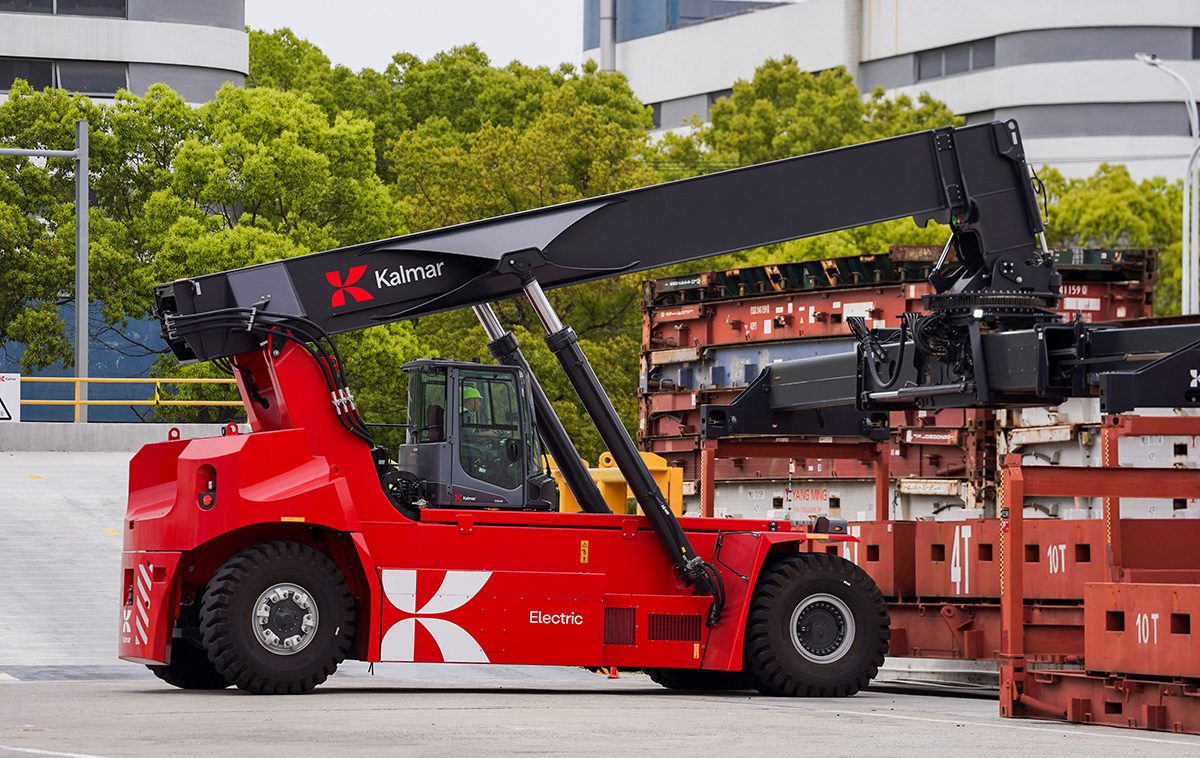
- Kalmar has finalized agreements to supply four advanced electric reach stackers to diverse customers across Inner Mongolia, Tianjin, Shanghai, and Hong Kong.
- These orders underscore the increasing demand for electrified heavy machinery in China’s robust logistics sector.
- The machines feature Kalmar’s new generation lithium-ion battery technology, offering enhanced energy capacity and thermal stability.
- Equipped with native GB/T fast charging, the reach stackers allow direct grid connection for efficient power replenishment.
- Manufactured at Kalmar’s recently expanded Shanghai plant, these deliveries highlight the strategic importance of localized production to meet growing regional demand.
- The move aligns with China’s broader push towards sustainable and efficient cargo-handling operations.
Kalmar Secures Significant Orders for Advanced Electric Reach Stackers
In a significant development for the heavy cargo-handling industry, Kalmar, a leading manufacturer of cargo-handling machinery, has announced the conclusion of agreements for the supply of four advanced electric reach stackers. These pivotal orders originate from key customers located across Inner Mongolia, Tianjin, Shanghai, and Hong Kong, signaling a strong market shift towards sustainable logistics solutions in one of the world’s largest and most dynamic economies.

The successful agreements underscore Kalmar’s growing influence and technological leadership in the rapidly electrifying heavy machinery sector. The deployment of these electric reach stackers is anticipated to enhance operational efficiency and significantly reduce the carbon footprint of critical logistics hubs in various regions of China.
Strategic Manufacturing and Timely Deliveries
All four electric reach stackers are being manufactured at Kalmar’s state-of-the-art facility in Shanghai. This plant recently underwent a substantial expansion, a strategic move designed to significantly bolster its production capacity and capability to serve the burgeoning Chinese market. The investment in local manufacturing highlights Kalmar’s commitment to regional responsiveness and efficient supply chains.
The delivery of these cutting-edge machines is slated to be completed by the end of 2026. This timely rollout ensures that customers can swiftly integrate these sustainable solutions into their existing operations, capitalizing on the immediate benefits of electrified equipment.

Pioneering Next-Generation Battery Technology
A defining feature of these newly ordered electric reach stackers is the integration of Kalmar’s next-generation lithium-ion battery technology. This advanced power solution represents a significant leap forward in energy storage for heavy industrial applications, offering enhanced performance metrics critical for demanding operational environments.
The new battery technology is engineered to provide increased energy capacity, allowing for longer operational cycles and reduced downtime for recharging. Furthermore, it boasts improved thermal stability, crucial for maintaining consistent performance across a wide spectrum of operating temperatures and conditions prevalent in varied Chinese geographies, from the colder north to the warmer south.
This innovative battery system ensures a more predictable performance curve, which is vital for operational planning and efficiency in busy logistics environments. Such reliability is a key factor for operators seeking to optimize their workflow and minimize unexpected disruptions.
Integrated GB/T Fast Charging Capabilities
Complementing the advanced battery system, these electric reach stackers come equipped with native GB/T fast charging capabilities. GB/T stands as the most common electric vehicle (EV) charging standard in China, making this integration particularly strategic for seamless adoption within the country’s existing and developing charging infrastructure.
The inclusion of native GB/T fast charging means that customers can directly connect the machines to the local power grid for rapid and efficient recharging. This direct connection simplifies the charging process, eliminates the need for additional adapters or complex integration, and ensures maximum operational uptime by minimizing charging intervals. For terminals and ports operating around the clock, fast charging is an indispensable feature that supports continuous workflow and high throughput.
Accelerating Electrification Across China’s Industrial Landscape
The orders for these four electric reach stackers serve as a clear indicator of a broader, accelerating trend towards the adoption of electrified heavy machinery throughout China. This transition is not merely an incremental change but a fundamental shift driven by both economic and environmental imperatives across diverse industries, particularly in the logistics and cargo-handling sectors.
John Zhang, Managing Director of Kalmar Shanghai Plant, underscored this paradigm shift, stating, “These orders reflect the accelerating adoption of electrified heavy machinery across China. They also highlight the strategic importance of our recently expanded Shanghai plant, which strengthens our local manufacturing capabilities and our ability to respond to growing demand in the Chinese market for fully electric cargo-handling equipment.” His comments emphasize the dual impact of market demand and strategic local investment.
Echoing this sentiment, Alex Tang, Vice President, Kalmar Greater China, highlighted the widespread enthusiasm for electrification. “We have witnessed a surge in demand across China for electrified cargo-handling equipment as companies across a wide range of industries seek to achieve higher operational efficiency alongside reduced carbon emissions,” Tang remarked. This surge is propelled by corporate sustainability goals and national mandates to reduce environmental impact.
Kalmar’s Strategic Position and Market Responsiveness
Kalmar’s proactive expansion of its Shanghai plant positions the company strategically to capitalize on China’s robust demand for sustainable heavy machinery. By strengthening its local manufacturing capabilities, Kalmar ensures quicker delivery times, enhanced service support, and a deeper understanding of regional market nuances. This localized approach is crucial for building trust and responsiveness in a competitive landscape.
The ability to manufacture these advanced electric reach stackers within China itself also contributes to local economic development and reduces the logistical complexities often associated with importing heavy equipment. This not only benefits Kalmar but also its customers by fostering a more reliable and efficient supply chain for critical machinery.
The Broader Impact on Sustainable Logistics
The transition to electric reach stackers holds significant implications for the future of sustainable logistics. Reach stackers are indispensable in port terminals, intermodal yards, and various logistics centers for handling intermodal cargo containers. By electrifying these workhorses, operators can drastically cut their reliance on fossil fuels, leading to substantial reductions in greenhouse gas emissions and local air pollutants.
Beyond environmental benefits, electric machinery often boasts lower operational costs due to reduced fuel consumption and potentially lower maintenance requirements for electric powertrains compared to their diesel counterparts. This combination of ecological responsibility and economic advantage makes electric reach stackers an increasingly attractive investment for forward-thinking logistics providers in China and globally.
Outlook for Electrified Heavy Equipment
As global environmental regulations tighten and corporate sustainability initiatives gain momentum, the market for electrified heavy equipment, including electric reach stackers, is poised for continued growth. China, with its vast industrial base and ambitious climate targets, remains a critical driver for this transformation.
Kalmar’s latest orders not only reflect its technological prowess but also its acute understanding of market dynamics and its commitment to supporting customers in their journey towards more sustainable and efficient operations. The successful deployment of these four units by the end of 2026 will undoubtedly serve as a benchmark for future electrification projects in the region and beyond.
Conclusion
The agreements for four electric reach stackers with customers across Inner Mongolia, Tianjin, Shanghai, and Hong Kong signify a pivotal moment for Kalmar and the broader cargo-handling industry in China. These orders underscore the accelerating demand for sustainable, efficient, and technologically advanced heavy machinery. With the introduction of next-generation lithium-ion battery technology and native GB/T fast charging, coupled with expanded local manufacturing capabilities, Kalmar is well-positioned to lead the charge in electrifying China’s vital logistics sector, contributing significantly to both operational excellence and environmental stewardship.
FAQ Section
Q1: What is the significance of these orders for Kalmar?
A1: These orders highlight Kalmar’s leadership in electrified heavy machinery and demonstrate the growing market acceptance of its advanced solutions in China. They also validate the strategic expansion of Kalmar’s Shanghai plant, reinforcing its capacity to meet rising local demand for sustainable cargo-handling equipment.
Q2: Where will the electric reach stackers be deployed?
A2: The four electric reach stackers will be deployed across diverse locations in China, specifically with customers in Inner Mongolia, Tianjin, Shanghai, and Hong Kong. These regions represent critical logistics and industrial hubs, showcasing the widespread applicability of the new technology.
Q3: What are the key technological advancements in these electric reach stackers?
A3: A primary advancement is Kalmar’s next-generation lithium-ion battery technology, offering increased energy capacity, improved thermal stability, and predictable performance. Additionally, they feature native GB/T fast charging, allowing direct and efficient connection to China’s common EV charging standard.
Q4: Why is GB/T fast charging important for the Chinese market?
A4: GB/T is the predominant EV charging standard in China, making native integration crucial for seamless operation and compatibility with existing infrastructure. Fast charging capabilities are vital for heavy machinery to minimize downtime and maintain high operational efficiency in busy logistics environments.
Q5: How do these electric reach stackers contribute to sustainability?
A5: By electrifying heavy cargo-handling operations, these reach stackers significantly reduce reliance on fossil fuels, leading to lower carbon emissions and improved air quality. This aligns with global and national efforts to achieve higher operational efficiency alongside reduced environmental impact in industrial sectors.
Q6: What role does Kalmar’s Shanghai plant play in these orders?
A6: The Shanghai plant is crucial as it manufactures all four electric reach stackers. Its recent expansion was a strategic move to boost production capacity, enabling Kalmar to better respond to the increasing demand for fully electric cargo-handling equipment within the Chinese market through localized production.