
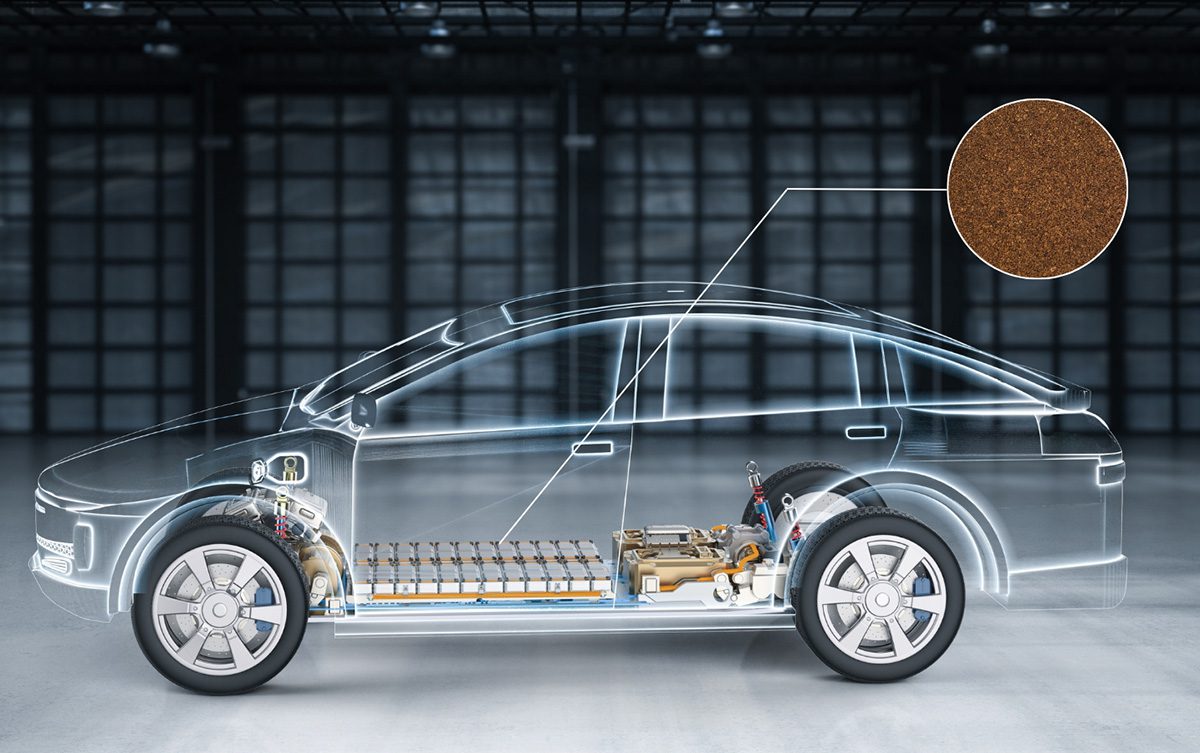
In a significant stride towards enhancing electric vehicle (EV) battery safety, Amorim Cork Solutions, a global leader in cork-based products, has unveiled ETP058. This innovative engineered composite, derived from cork, is specifically designed to be positioned between and around battery cells within EV and stationary energy storage systems. ETP058 consolidates critical functionalities—thermal insulation, flame resistance, and mechanical compressibility—into a single, robust material, addressing one of the most pressing safety challenges in advanced battery technology: thermal runaway.
The development marks a crucial advancement for the rapidly evolving EV sector, where managing extreme heat generated during potential thermal events is paramount. ETP058’s multifaceted properties aim to provide a more secure environment for battery modules, thereby bolstering overall system safety and reliability.

Understanding the Challenge of Battery Thermal Runaway
Thermal runaway is a critical safety concern in lithium-ion battery packs, characteristic of both electric vehicles and large-scale energy storage systems. It occurs when an internal or external factor causes a cell to overheat, leading to a chain reaction where heat generation exceeds heat dissipation. This can rapidly propagate to adjacent cells, potentially resulting in smoke, fire, or even explosion. Effective thermal management and containment strategies are therefore indispensable for preventing catastrophic failures and ensuring occupant safety.
The industry has long sought materials that can not only insulate against extreme temperatures but also maintain structural integrity under duress. Amorim Cork Solutions’ ETP058 emerges as a promising contender, leveraging natural material properties enhanced with advanced engineering to meet these stringent demands.
ETP058: A Multi-Functional Safety Solution
ETP058 stands out due to its unique combination of properties, meticulously engineered for high-performance applications. The composite boasts a thermal conductivity of 0.054 W/m·K. This remarkably low thermal conductivity is a key factor in its ability to act as an effective barrier, significantly slowing the transfer of heat between individual battery cells. In a thermal runaway scenario, delaying this heat propagation can provide precious time for safety systems to intervene or for evacuation, mitigating widespread damage.
Beyond its insulating capabilities, ETP058 has achieved a UL94 V-0 flammability rating for samples thicker than 2 mm. This classification signifies that the material is self-extinguishing within a short period, with no flaming drips, thereby enhancing its flame-retardant characteristics crucial for battery safety applications. During rigorous flame exposure tests, where temperatures neared an intense 1,000 °C, the material demonstrated a gradual and controlled increase in backside temperature. This controlled response, as highlighted by Amorim, is a clear indicator of its proficiency in impeding inter-cell heat transfer during the onset of a thermal runaway event.
Mechanical Integrity Under Extreme Conditions
An often-overlooked aspect of thermal runaway management is the mechanical behavior of separator materials under high-temperature stress. As battery cells heat up, they can expand, and internal module pressures can change. ETP058 addresses this by offering inherent compressibility under mechanical load. This vital property allows the material to maintain intimate contact and structural stability within a battery module, even when subjected to the expansion and pressures associated with high-temperature events.
This maintained contact ensures that the thermal and flame-retardant properties remain effective, preventing gaps or dislodgements that could compromise the containment strategy. The ability to compress and adapt to dynamic module conditions underscores ETP058’s comprehensive approach to battery safety.
The Intrinsic Value of Cork in Advanced Engineering
The core of ETP058’s efficacy lies in its primary component: cork granules, integrated with a specialized fire-retardant formulation. Cork is a naturally occurring material renowned for its unique microcellular structure. This structure is the biological secret behind cork’s inherently low thermal conductivity, making it an excellent natural insulator. Furthermore, cork’s natural resilience and exceptionally low weight are highly advantageous for battery cell-separator and module-enclosure applications, where every gram and millimeter counts for overall vehicle performance and design efficiency.
From an environmental perspective, cork is an exceptionally sustainable raw material. It is harvested from the bark of the cork oak tree without requiring the felling of the tree itself, allowing the tree to continue growing and regenerating its bark. This renewability positions ETP058 as an environmentally conscious choice in the rapidly expanding green technology sector.
Targeting Critical Applications
While the immediate focus for ETP058 is on thermal runaway containment in electric vehicle battery modules, its applications extend beyond personal transport. The material is also explicitly designed for use in large-scale stationary energy storage systems (ESS). These systems, crucial for grid stability, renewable energy integration, and industrial applications, face similar thermal management challenges to EVs, albeit often on a larger scale. The adaptability of ETP058 to both mobile and fixed energy storage solutions highlights its versatility and the broad potential impact of this cork-based technology.
Outlook and Commercial Availability
As of the announcement by Amorim Cork Solutions, specific customer programs for ETP058 have not been disclosed, nor has a definitive commercial availability date been provided. However, the introduction of such a multi-functional, renewable, and high-performance material signifies a positive trajectory for advancements in battery safety engineering. The ongoing research and development in materials science, particularly in leveraging natural resources like cork, are pivotal for addressing the evolving safety and performance requirements of the global electric mobility and energy storage industries.
Key Takeaways
- Amorim Cork Solutions has launched ETP058, an engineered cork-based composite for EV and energy storage system batteries.
- It combines thermal insulation, flame resistance, and mechanical compressibility in a single material.
- ETP058 is designed to manage thermal runaway by slowing inter-cell heat transfer during high-temperature events.
- Key specifications include a thermal conductivity of 0.054 W/m·K and a UL94 V-0 flammability rating for samples over 2 mm thick.
- The material maintains structural stability within modules due to its compressibility under mechanical load.
- Cork’s natural microcellular structure provides low thermal conductivity, resilience, and low weight.
- It is a renewable raw material, as cork is harvested without felling the cork oak tree.
- ETP058 targets both EV battery modules and stationary energy storage systems.
- Amorim has not yet announced specific customer programs or a commercial availability date.
Frequently Asked Questions (FAQ)
What is ETP058?
ETP058 is a newly developed cork-based engineered composite by Amorim Cork Solutions, specifically designed to enhance safety in electric vehicle (EV) batteries and energy storage systems by managing thermal runaway events.
How does ETP058 address EV battery thermal runaway?
ETP058 combines thermal insulation (low thermal conductivity of 0.054 W/m·K), flame resistance (UL94 V-0 rating), and mechanical compressibility. These properties collectively work to slow down inter-cell heat transfer and maintain structural integrity during extreme temperature incidents, preventing rapid propagation of thermal runaway.
What are the key technical specifications of ETP058?
Key specifications include a thermal conductivity of 0.054 W/m·K, which signifies its insulating capability, and a UL94 V-0 flammability rating for samples thicker than 2 mm, indicating high flame resistance and self-extinguishing properties.
Why is cork used in this composite?
Cork’s natural microcellular structure provides excellent thermal insulation, resilience, and a lightweight profile—qualities crucial for battery applications. Furthermore, cork is a renewable raw material, harvested sustainably without damaging the cork oak tree, making ETP058 an environmentally conscious choice.
What are the potential applications for ETP058?
ETP058 is primarily designed for use in both electric vehicle (EV) battery modules and large-scale stationary energy storage systems. Its properties make it suitable for placement between and around battery cells to enhance overall system safety.
Is ETP058 commercially available?
Amorim Cork Solutions has not yet announced specific customer programs or a firm commercial availability date for ETP058. The company continues to develop and introduce this innovative solution to the market.