
Key Takeaways:
- Pacific Power Source has launched SmartTS-PV, an integrated system for automated IEEE 1547.1 compliance testing.
- The system targets solar inverters, EVSE with Vehicle-to-Grid (V2G) capabilities, and other distributed energy resources.
- Developed in collaboration with QualityLogic and Tektronix Elektro-Automatik, SmartTS-PV significantly reduces certification time.
- It automates complex grid support function tests, which are critical for grid stability and regulatory adherence.
- SmartTS-PV can cut testing time from an estimated 8-12 weeks of manual effort down to approximately 32 hours.
In a significant development for the renewable energy and electric vehicle sectors, Pacific Power Source has unveiled its SmartTS-PV Inverter Test System. This innovative, pre-integrated compliance testing platform is engineered to automate the rigorous certification processes for a range of grid-tied devices, including solar inverters, Electric Vehicle Supply Equipment (EVSE) with Vehicle-to-Grid (V2G) functionality, and other distributed energy resources (DERs).

The system, now commercially available, was developed through a strategic collaboration with QualityLogic and Tektronix Elektro-Automatik. Its primary objective is to streamline adherence to critical industry standards such as IEEE 1547.1, UL 1741 SB, and EN50549, which are essential for market entry and seamless grid integration.
Addressing the Grid Integration Imperative
The global transition towards cleaner energy sources and electrified transport necessitates sophisticated grid infrastructure. As more solar arrays and electric vehicles capable of bidirectional charging connect to the electrical grid, ensuring their safe, reliable, and compliant operation becomes paramount. Non-compliant devices can introduce instability, disrupt power quality, and compromise grid integrity.
Compliance testing, therefore, is not merely a regulatory hurdle but a critical safeguard for grid stability. It verifies that DERs can effectively interact with the utility grid, providing essential services and responding appropriately to various grid conditions, such as voltage fluctuations or frequency deviations.
Navigating Complex Compliance Standards
The regulatory landscape for grid-tied devices is intricate, defined by a suite of technical standards designed to ensure interoperability and safety. IEEE 1547.1, for instance, is the cornerstone standard in North America for interconnecting DERs with the electric power system. It mandates specific grid-support functions, ensuring that inverters can ride through disturbances without disconnecting unnecessarily and contribute to grid stability.
Similarly, UL 1741 SB builds upon these requirements, focusing on the supplemental requirements for grid support utility-interactive inverters. This standard is increasingly vital for V2G-capable chargers, which enable EVs to not only draw power from the grid but also feed electricity back into it. Such bidirectional capabilities demand rigorous validation to prevent adverse impacts on the utility infrastructure.
Across Europe, the EN50549 series of standards serves a similar purpose, setting requirements for the connection of generating plants in parallel with public low-voltage distribution networks. All these standards cover a range of complex tests, including voltage and frequency ride-through capabilities, reactive power control, and anti-islanding protection—a crucial safety feature that prevents an inverter from feeding power into a de-energized grid section.
Overcoming the Bottleneck of Manual Testing
Historically, achieving certification against these stringent standards has been a protracted and resource-intensive endeavor. The validation process, particularly for grid-support functions, involves highly complex, sequenced testing protocols. Each test requires precise coordination of grid events, monitoring of inverter responses, accurate measurement capture, and the execution of specific protocol commands.
Manual NRTL (Nationally Recognized Testing Laboratory) testing, while thorough, can take an estimated 8-12 weeks, as per IREC (Interstate Renewable Energy Council) estimates. This extensive timeline has frequently created a significant bottleneck for manufacturers of solar inverters and other DERs, delaying product launches and stifling innovation. The inherent need for a synchronized test environment—where all elements align precisely—has made manual execution prone to errors and inefficiencies.
SmartTS-PV: An Integrated Automation Solution
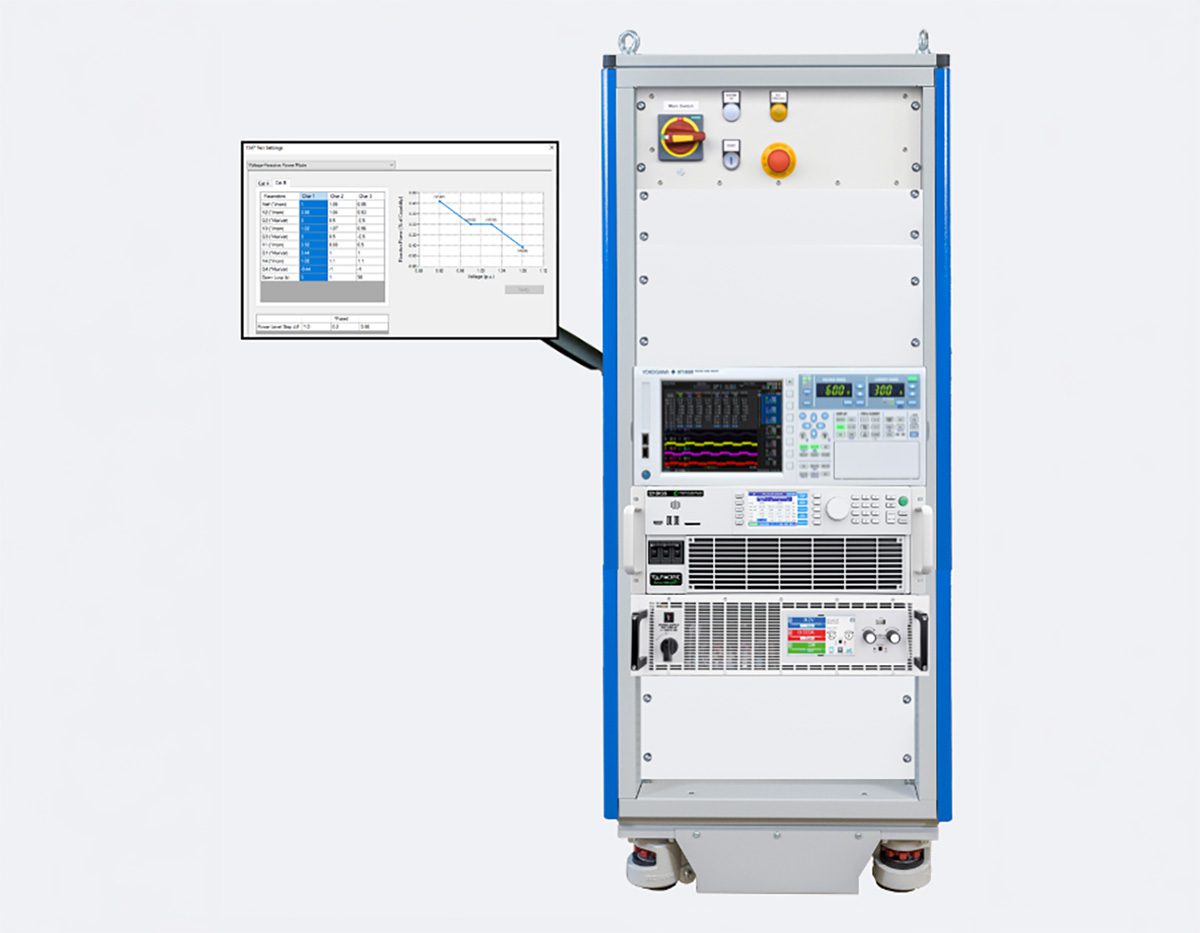
The SmartTS-PV Inverter Test System directly addresses these challenges by offering a fully integrated and automated platform. It meticulously combines several critical components into a single, cohesive unit designed to handle the complex coordination automatically. The system comprises an advanced AC grid simulator, a versatile DC power supply and load, precision measurement and data acquisition hardware.
Central to its automation capabilities is QualityLogic’s sophisticated software, which manages the entire testing sequence. This software not only orchestrates grid events and captures data but also performs automatic pass/fail analysis against the demanding accuracy requirements of standards like IEEE 1547.1. This holistic approach removes the significant integration burden that previously fell upon inverter manufacturers and test labs.
Revolutionizing Test Time and Market Entry
The most compelling advantage of the SmartTS-PV system lies in its ability to dramatically accelerate the compliance testing process. Pacific Power Source and QualityLogic highlight a staggering reduction in actual test time, estimating approximately 32 hours of automated testing compared to the weeks typically required for manual procedures.
Steve Kang, General Manager of Smart Energy at QualityLogic, underscored this transformative impact: “QualityLogic’s test automation reduces what traditionally takes weeks of manual NRTL testing to approximately 32 hours of actual test time, with automatic pass/fail analysis against IEEE 1547 accuracy requirements. Combining that software with Pacific Power Source’s grid simulation hardware in one integrated platform removes the integration burden from inverter manufacturers and test labs and gets them to certification faster.”
This efficiency gain is not just about speed; it translates into faster market access for new products, reduced development costs, and enhanced competitive advantage for manufacturers in a rapidly evolving energy landscape.
Broadening the Scope: Beyond Solar to V2G and Energy Storage
While solar inverters are a primary target, the relevance of SmartTS-PV extends significantly to the burgeoning field of bidirectional charging and Vehicle-to-Grid (V2G) systems. As UL 1741 SB becomes increasingly mandated for V2G-capable chargers connecting to the utility grid, the system’s ability to perform the same complex, sequenced grid support function testing becomes invaluable.
The platform is designed to serve a broad spectrum of industry stakeholders. This includes manufacturers of string, central, and hybrid inverters, developers of energy storage systems, independent test laboratories, utility companies keen on integrating new DERs efficiently, and various certification bodies responsible for validating product compliance. Its versatility makes it a critical tool for advancing the adoption of diverse grid-tied technologies.
Paving the Way for a Modernized Grid
The introduction of the SmartTS-PV Inverter Test System represents a crucial step forward in ensuring the reliability and stability of modern electrical grids. By automating and expediting IEEE 1547.1 compliance testing and other key standards, it removes a significant barrier to the deployment of innovative distributed energy resources, including the critical infrastructure for V2G systems. This not only accelerates time-to-market for cutting-edge technologies but also reinforces grid resilience and supports the broader objectives of energy transition and decarbonization.
Frequently Asked Questions (FAQs)
What is the SmartTS-PV Inverter Test System?
The SmartTS-PV Inverter Test System is a pre-integrated platform launched by Pacific Power Source. It automates compliance testing for grid-tied devices like solar inverters, EVSE with V2G capabilities, and other distributed energy resources, ensuring adherence to standards like IEEE 1547.1, UL 1741 SB, and EN50549.
Which industry standards does SmartTS-PV address?
The system is specifically designed to meet the compliance testing requirements of IEEE 1547.1, UL 1741 SB, and EN50549. These standards govern the interconnection and operation of distributed energy resources with the utility grid, ensuring safety and functionality.
How does SmartTS-PV reduce compliance testing time?
SmartTS-PV significantly reduces test time by automating complex, sequenced grid support function testing. It combines an AC grid simulator, DC power supply, measurement hardware, and QualityLogic’s software to perform tests and automatic pass/fail analysis, cutting weeks of manual effort down to approximately 32 hours.
What are V2G systems and why is their testing important?
V2G (Vehicle-to-Grid) systems allow electric vehicles to feed electricity back into the grid, offering energy storage and grid support. Testing these systems, particularly against standards like UL 1741 SB, is crucial to ensure they interact safely and reliably with the grid without causing instability.
Who can benefit from using the SmartTS-PV system?
The system targets a wide range of stakeholders, including manufacturers of string, central, and hybrid inverters, energy storage developers, independent test laboratories, utility companies, and certification bodies. It helps these entities achieve faster certification and deployment of compliant grid-tied products.
What components make up the SmartTS-PV system?
The SmartTS-PV system integrates an AC grid simulator, a DC power supply and load, and specialized measurement and data acquisition hardware. These components are seamlessly coordinated by QualityLogic’s automated pass/fail software, providing a unified testing environment.