
Key Takeaways / Summary Box (TL;DR)
The global drive towards decarbonization across diverse sectors—including on-highway, off-highway, marine, and industrial equipment—is ushering in a new era of hybrid powertrain solutions. These systems are proving to be durable and scalable, offering a practical pathway amidst varied operational demands, infrastructure limitations, and regulatory landscapes. At the heart of this transformation lies axial flux motor technology, lauded by experts for its compact design, high power density, and superior efficiency. These attributes position axial flux motors as a critical ‘X-factor’ for developing smart, highly efficient hybrid systems, addressing the complex real-world challenges of sustainable mobility and work machines. Industry leaders like Turntide Technologies are championing this shift, offering insights into how these advanced motors are pivotal for the future of electrification.

The Imperative for Decarbonization Across Industries
The global mandate to significantly reduce carbon emissions is reshaping industries worldwide, compelling sectors from automotive and heavy machinery to marine transport and industrial applications to re-evaluate their fundamental power architectures. This profound transformation is far from a simple, one-size-fits-all solution, presenting a complex interplay of engineering challenges, economic realities, and diverse operational requirements.
Unlike a straightforward transition, the path to decarbonization is often intricate and multifaceted. Each sector contends with unique duty cycles, ranging from continuous high-power demands in heavy industry to variable loads in urban transport. Infrastructure limitations, particularly in emerging markets or remote operational zones, further complicate the adoption of purely electric solutions. Moreover, stringent cost pressures and an evolving tapestry of international and regional regulations necessitate highly adaptable and economically viable alternatives.
Hybrid Systems Emerge as a Core Strategy
In this challenging environment, hybrid systems have unequivocally moved beyond being a transitional compromise. They are now recognized as a durable, scalable, and strategically vital architecture for the future of mobility and sophisticated work machines. By combining traditional power sources with electric propulsion, hybrids offer the flexibility to optimize performance, extend range, reduce emissions, and enhance fuel efficiency without requiring a complete overhaul of existing infrastructure or operational paradigms.

This strategic pivot towards hybridization acknowledges the practical constraints faced by industries. It provides a robust framework that can be tailored to specific applications, offering a pragmatic balance between immediate environmental benefits and long-term sustainability goals. The ability of hybrid systems to adapt to varying operational needs—be it managing peak loads, facilitating regenerative braking, or operating in zero-emission zones—underscores their growing importance in the decarbonization roadmap.
Axial Flux Motors: The Engineering ‘X-Factor’ for Hybrid Powertrains
Central to the effectiveness and escalating adoption of these advanced hybrid systems is a revolutionary component: the axial flux motor. This innovative electric motor technology is rapidly gaining prominence as the "X-factor" that unlocks higher levels of efficiency and intelligence within hybrid architectures across all sectors.
Unlike conventional radial flux motors, where the magnetic flux travels perpendicularly to the axis of rotation, axial flux motors—also known as pancake motors or disc motors—feature magnetic flux running parallel to the motor’s axis. This fundamental difference in design confers several significant advantages, making them particularly well-suited for demanding hybrid applications.
Superior Efficiency and Compact Design
One of the primary benefits of axial flux motors is their remarkably compact form factor and high power density. Their ‘pancake’ design allows for a significantly shorter axial length compared to radial flux motors of equivalent power output. This compact footprint is crucial for integration into space-constrained environments prevalent in modern vehicle chassis, heavy equipment, and marine propulsion systems, where every cubic centimeter matters.
Beyond spatial advantages, axial flux motors boast superior efficiency, especially at varying speeds and loads—a common characteristic of hybrid duty cycles. This enhanced efficiency is largely due to their unique coil winding configurations and reduced copper losses, leading to less energy waste and lower heat generation. For hybrid systems, higher motor efficiency translates directly into better fuel economy, extended battery range, and ultimately, lower operational costs and a reduced carbon footprint.
Furthermore, their inherent design allows for excellent torque density, meaning they can deliver substantial rotational force from a smaller, lighter package. This attribute is invaluable in applications requiring immediate and robust power delivery, such as heavy-duty trucks, construction equipment, and marine vessels, where quick acceleration and high torque are critical for performance and safety.
Transformative Impact Across Diverse Sectors
The deployment of axial flux motors is not confined to a single industry but is catalyzing transformation across a broad spectrum of applications:
- On-Highway Vehicles: In electric trucks and buses, the compact size and high efficiency of axial flux motors enable more flexible chassis designs, increased payload capacity, and greater operational range, addressing key concerns for fleet operators moving towards electrification.
- Off-Highway Equipment: For construction machinery, agricultural vehicles, and mining equipment, these motors offer the robust power and torque needed for demanding tasks, while their efficiency contributes to significant fuel savings and emission reductions in typically high-polluting sectors.
- Marine Propulsion: In the marine industry, where space and weight are at a premium, axial flux motors are facilitating more efficient and compact hybrid and electric propulsion systems, crucial for sustainable shipping and waterway transport.
- Industrial Equipment: From robotics to material handling, industrial applications benefit from the precision, power density, and energy efficiency of axial flux motors, contributing to more sustainable and cost-effective manufacturing processes.
Turntide Technologies: Pioneering the Hybrid Powertrain Future
Leading the charge in this engineering paradigm shift are companies like Turntide Technologies, which are at the forefront of developing and integrating advanced motor technologies. Turntide Technologies specializes in intelligent motor systems designed to optimize energy efficiency and performance across a wide array of applications. Their expertise in axial flux technology positions them as a key innovator in the hybrid transformation.
The company’s commitment to sustainable electrification is underscored by its focus on creating solutions that directly address the complex challenges of decarbonization, providing practical and highly efficient pathways for industries to transition away from fossil fuel dependency. Their work exemplifies how innovative motor design is not just an incremental improvement but a fundamental enabler for a greener future.
Upcoming Expert Insights: Decoding the X-Factor in Hybridization
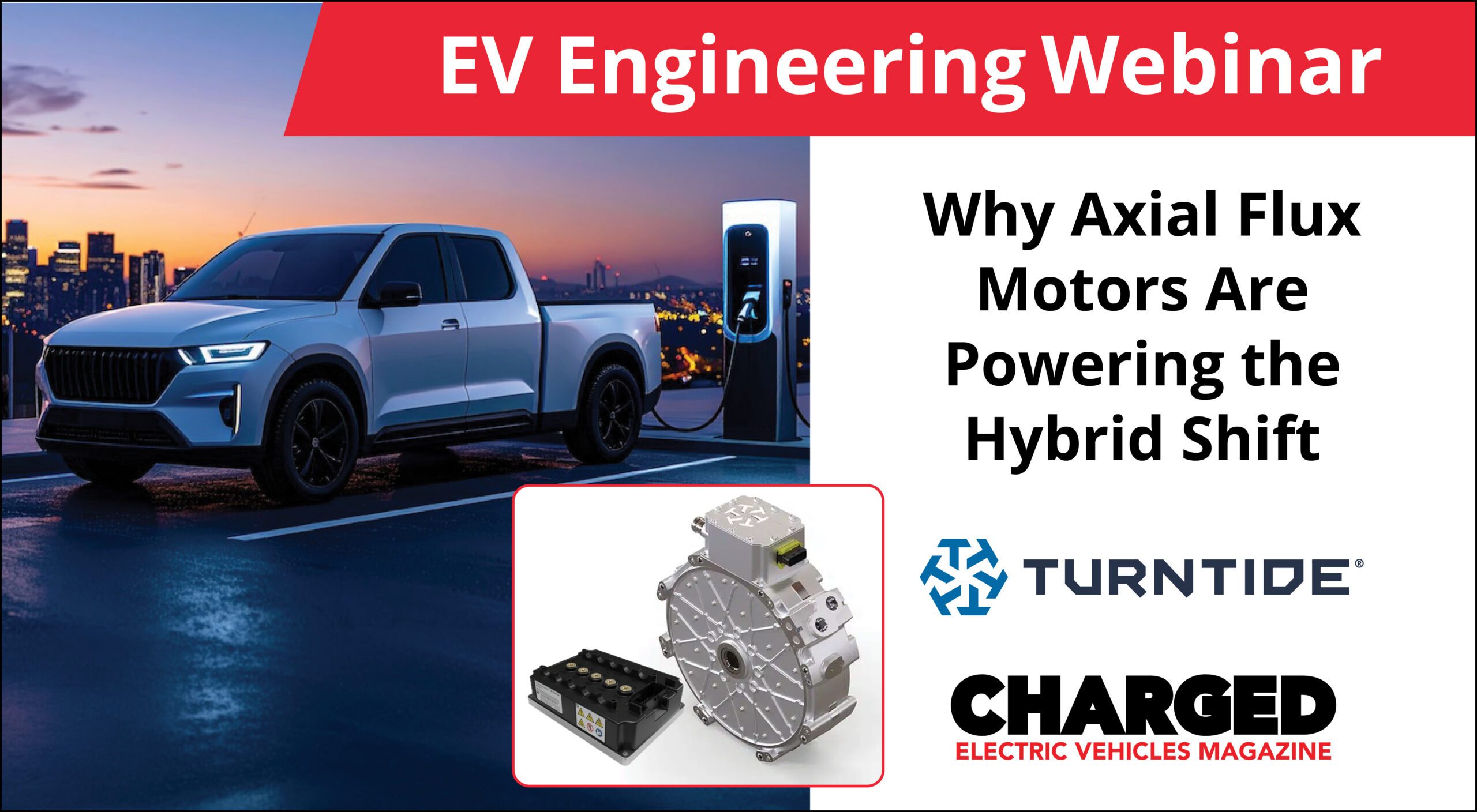
To shed light on these critical advancements and their profound implications, Turntide Technologies is hosting an exclusive webinar. This session is designed for industry professionals, engineers, researchers, and decision-makers eager to understand the evolving landscape of hybrid powertrains and the pivotal role of axial flux motors.
During this comprehensive webinar, experts from Turntide Technologies will delve into the intricacies of the hybrid transformation. They will provide in-depth analysis on how axial flux motors serve as the undeniable "X-factor" for developing smart and highly efficient systems across diverse applications, from heavy-duty vehicles to specialized industrial machinery. Attendees can expect to gain valuable insights into the design principles, performance characteristics, and practical integration strategies that make axial flux technology indispensable for next-generation electrification efforts.
This complimentary session is scheduled for May 19, 2026, at 11:00 AM ET. Interested participants are encouraged to register promptly to secure their virtual attendance for this insightful discussion on the future of electric propulsion and hybrid systems.
Embracing a Sustainable and Efficient Future
The journey towards full decarbonization is a monumental undertaking, fraught with technical, economic, and logistical hurdles. However, the continuous evolution of technologies such as axial flux motors, coupled with the strategic adoption of robust hybrid systems, offers a compelling and achievable pathway forward. These innovations not only promise significant environmental benefits but also deliver tangible operational advantages, including enhanced efficiency, reduced maintenance, and superior performance.
As industries globally navigate this transformative period, the natural integration of advanced motor designs into adaptable hybrid architectures will be instrumental. This proactive approach ensures that the pursuit of sustainability aligns seamlessly with the imperatives of real-world operational demands, fostering a future that is both environmentally responsible and economically viable.
Further Learning Opportunities
Beyond this focused discussion, the broader landscape of EV engineering is rich with opportunities for continuous learning. Various other free webinar sessions, often from virtual conferences, are frequently made available on-demand, covering a spectrum of topics from advanced materials and battery safety to power conversion and testing methodologies. These resources provide invaluable insights into the rapidly evolving field of electric vehicle technology and related engineering disciplines.
FAQ Section
What are axial flux motors?
Axial flux motors are a type of electric motor where the magnetic flux runs parallel to the axis of rotation, unlike traditional radial flux motors. Their design results in a ‘pancake’ shape, offering high power density and efficiency in a compact form factor, making them ideal for space-constrained applications.
Why are hybrid systems crucial for decarbonization?
Hybrid systems are crucial because they offer a flexible, scalable solution for reducing emissions across diverse sectors. They balance infrastructure limitations, cost pressures, and varied duty cycles, providing a pragmatic step towards electrification without requiring an immediate, complete shift from traditional powertrains.
What are the main advantages of axial flux motors in hybrid applications?
Their main advantages include superior efficiency, high power and torque density, and a significantly more compact design compared to radial flux motors. These characteristics lead to better fuel economy, extended battery range, and easier integration into complex vehicle and equipment architectures.
Which industries are benefiting most from axial flux motor technology?
Axial flux motor technology is profoundly impacting on-highway vehicles (electric trucks, buses), off-highway equipment (construction, agriculture), marine propulsion, and various industrial machinery. Its versatility and efficiency make it suitable for a wide range of demanding applications requiring robust and compact power solutions.
Who is Turntide Technologies, and what is their role?
Turntide Technologies is a company specializing in intelligent motor systems, particularly axial flux technology. They are recognized for their innovation in developing energy-efficient and high-performance electric powertrains that support the global transition towards sustainable electrification across multiple industries.
When and where can one learn more about this topic?
Industry experts from Turntide Technologies will discuss these advancements in a free webinar scheduled for May 19, 2026, at 11:00 AM ET. This session will provide in-depth insights into how axial flux motors are enabling the hybrid shift for smarter and more efficient systems.