
Key Takeaways:
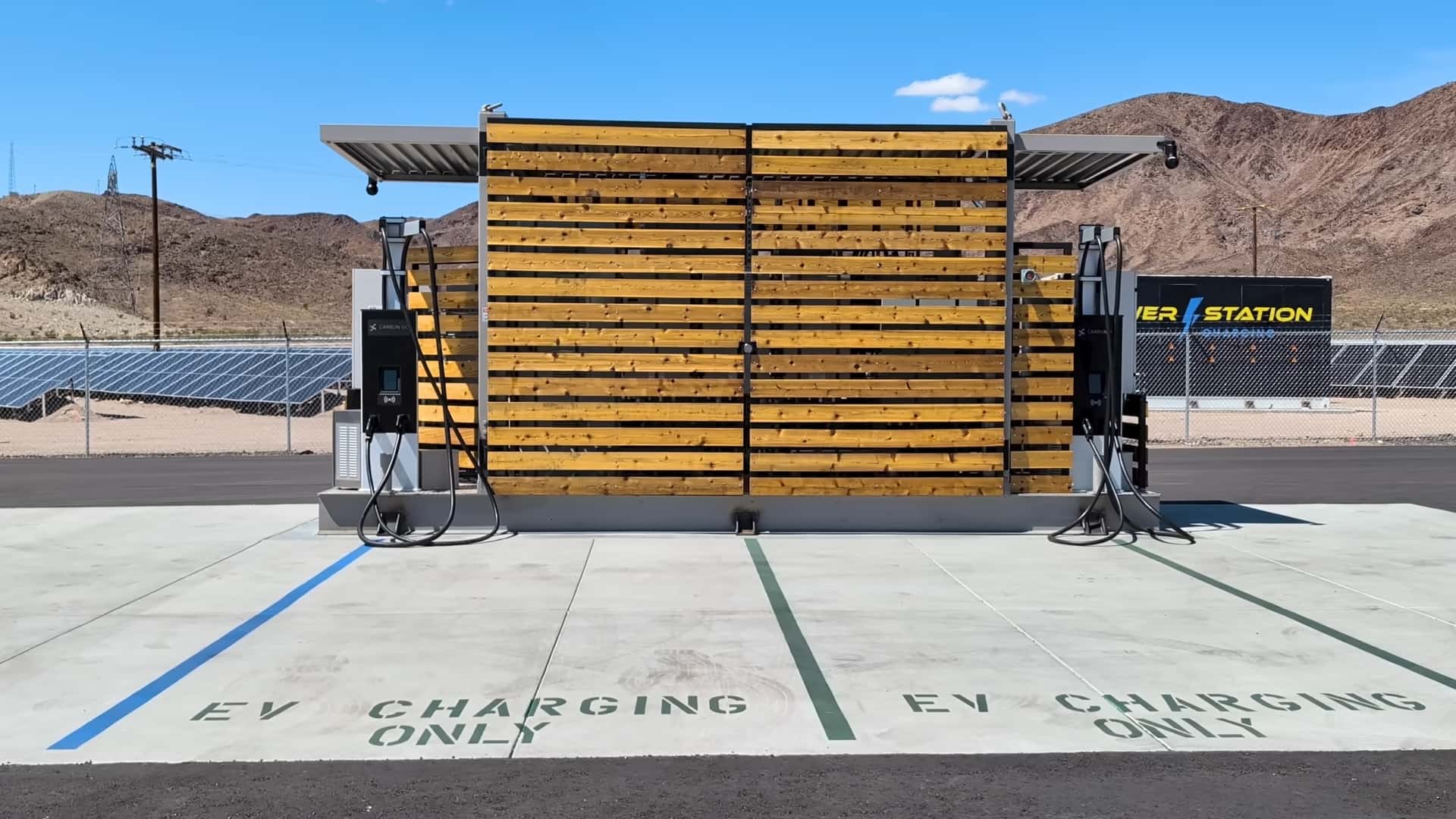
- PowerStation Charging has launched California’s first fully off-grid electric vehicle (EV) fast charging station, powered exclusively by solar energy.
- Located off I-15 in Baker, the station features 1,080 solar panels delivering up to 640 kilowatts and a substantial 3.4-megawatt-hour battery pack for round-the-clock operation.
- Initially, the facility provides four CCS1 ports with a shared 360 kW output, with plans to add six NACS ports and increase total output to 600 kW by summer.
- Charging at this pioneering station is entirely free until May 31, 2026, after which dynamic pricing will be introduced.
- This initiative is part of a broader trend towards sustainable, grid-independent EV infrastructure, with three more solar-powered stations planned across California’s key interstates by 2027.
BAKER, California – A groundbreaking development in electric vehicle infrastructure has emerged in California with the launch of a completely off-grid EV fast charging station. Operated by the startup PowerStation Charging, this innovative facility harnesses the power of the sun to provide charging services, currently offered free of charge to all users.
Situated strategically at the Rasor Road exit off Interstate 15 in Baker, California, the station represents a significant leap towards energy independence in the rapidly expanding EV sector. Its design entirely bypasses conventional grid connections, relying instead on a robust, self-sustaining renewable energy system.
Pioneering Grid-Independent Charging Technology
The core of this advanced facility is its impressive solar energy capture and storage system. A vast array of 1,080 solar panels is capable of generating up to 640 kilowatts (kW) of electricity. This substantial power output is critical for fueling the station’s operations and charging connected vehicles.
Crucially, the station integrates a massive 3.4-megawatt-hour (MWh) battery pack. This substantial energy storage capacity ensures that the facility can operate continuously, even during periods of no sunshine or peak demand, guaranteeing reliable access to off-grid EV charging around the clock. The integration of such a large battery system mitigates concerns about intermittent renewable energy sources, a common challenge for fully solar-powered installations.
Current Capabilities and Future Enhancements
As of its launch, the PowerStation Charging site is equipped with four CCS1 (Combined Charging System 1) ports. These ports collectively share a 360 kW power output. This means that if only one electric vehicle is plugged in, it can utilize the full 360 kW. When multiple vehicles are charging simultaneously, the total output is intelligently distributed among them, optimizing charging speeds for all users.
Looking ahead, PowerStation Charging has announced ambitious expansion plans for this flagship location. Later this summer, the company intends to add six NACS (North American Charging Standard) ports, broadening compatibility for a wider range of EV models, including Tesla vehicles. This expansion will also see the shared power output increase significantly to 600 kW, enhancing the station’s capacity to serve more drivers efficiently.
Enhanced Driver Experience On The Horizon
Beyond increasing charging capacity, PowerStation Charging is investing in the overall driver experience. Plans are underway to construct an 8,000-square-foot underground bunker. This facility is slated to include a comfortable lounge area and modern restrooms, providing a much-needed respite for travelers on long journeys along I-15.
This thoughtful addition aims to transform the charging stop from a mere necessity into a convenient and pleasant break, enhancing the appeal of this off-grid EV charging destination for long-distance drivers and daily commuters alike.
Unprecedented Free Charging Initiative
In a move set to attract considerable attention from electric vehicle owners, PowerStation Charging is offering completely free access to its fast charging services. This promotional period will extend until May 31, 2026, requiring no special app or membership for use.
Following this initial free phase, a dynamic pricing structure will be implemented. Charging costs will range between $0.30/kWh and $0.45/kWh. The precise rate will fluctuate based on real-time factors such as demand at the station and the brightness of the sun, reflecting the station’s reliance on solar energy and market conditions.
Strategic Expansion of Off-Grid EV Charging Network
The Baker station is just the first step in PowerStation Charging’s vision for a robust off-grid EV charging network across California. The company has publicly stated its intentions to develop three additional solar-powered DC fast charging stations.
A second location is scheduled to open later this year along I-15 near Barstow, further enhancing charging options along this critical corridor. By 2027, two more stations are slated to become operational on major interstate routes, I-10 and I-8. This strategic deployment aims to address range anxiety and improve accessibility to fast charging in key areas of the state, demonstrating a commitment to scalable, sustainable infrastructure.
The Growing Trend Towards Sustainable EV Infrastructure
PowerStation Charging’s initiative is indicative of a broader industry trend towards developing renewable-fed and battery-backed charging solutions in the United States. This movement emphasizes grid resilience, environmental sustainability, and the ability to deploy charging infrastructure in locations where grid connections might be challenging or costly.
Notably, Tesla itself has made significant strides in this domain. Its largest Supercharger station, which became operational late last year in Lost Hills, California, is also entirely powered by solar energy and extensive battery storage. That colossal facility can energize up to 164 electric vehicles simultaneously, featuring 11 megawatts (MW) of solar panels — which also double as canopies providing shade — coupled with 10 Megapack batteries offering a staggering 39 MWh of energy storage.
These developments underscore a pivotal shift in how EV charging infrastructure is conceived and implemented, moving towards more self-sufficient, environmentally friendly, and strategically located solutions that support the accelerating adoption of electric vehicles.
The Promise of Off-Grid EV Charging
The emergence of stations like PowerStation Charging’s facility holds immense promise for the future of electric mobility. By decoupling from the traditional power grid, these stations offer enhanced reliability, particularly in areas prone to power outages or where grid expansion is complex. They also contribute significantly to reducing the carbon footprint associated with transportation by utilizing clean, renewable energy sources.
The economic benefits, once the free period concludes, also highlight a sustainable business model where operational costs can be managed more independently from fluctuating utility prices. As the demand for electric vehicles continues to surge, the expansion of such innovative off-grid EV charging solutions will be crucial in building a resilient, accessible, and truly sustainable charging ecosystem for all.
FAQ Section
What is an off-grid EV charging station?
An off-grid EV charging station operates independently of the traditional electrical grid. It generates its own power, typically from renewable sources like solar panels, and stores it in large battery packs to provide electricity for charging electric vehicles around the clock, enhancing resilience and sustainability.
Where is PowerStation Charging’s first off-grid station located?
PowerStation Charging’s inaugural off-grid EV fast charging station is strategically located at the Rasor Road exit off Interstate 15 in Baker, California. This location serves a key interstate corridor, providing convenient access for travelers and long-haul electric vehicle drivers.
How is the California off-grid EV charger powered?
The station is powered entirely by solar energy. It features 1,080 solar panels that generate up to 640 kilowatts of electricity. This energy is then stored in a massive 3.4-megawatt-hour battery pack, allowing the station to operate continuously even without sunlight, ensuring reliable service.
Is charging at this PowerStation Charging facility free?
Yes, charging at PowerStation Charging’s first location is completely free of charge for all users until May 31, 2026. After this promotional period, a dynamic pricing model will be introduced, with rates ranging from $0.30/kWh to $0.45/kWh based on demand and solar availability.
What types of charging ports are available, and what are the future plans?
Currently, the station offers four CCS1 ports sharing a 360 kW output. By summer, PowerStation Charging plans to expand its offerings by adding six NACS (North American Charging Standard) ports and increasing the total shared power output to 600 kW, accommodating more electric vehicle models and faster charging speeds.
Are there plans for more off-grid charging stations from PowerStation Charging?
Yes, PowerStation Charging intends to expand its network significantly. The company has plans for three additional solar-powered DC fast charging stations: a second location on I-15 near Barstow opening this year, and two more scheduled to become operational on I-10 and I-8 in 2027.
How does this initiative compare to other sustainable charging efforts?
PowerStation Charging’s efforts align with a growing trend in sustainable EV infrastructure. For example, Tesla’s largest Supercharger station in Lost Hills, California, also operates entirely on solar power and extensive battery storage, demonstrating the industry’s shift towards self-sufficient and environmentally friendly charging solutions.