
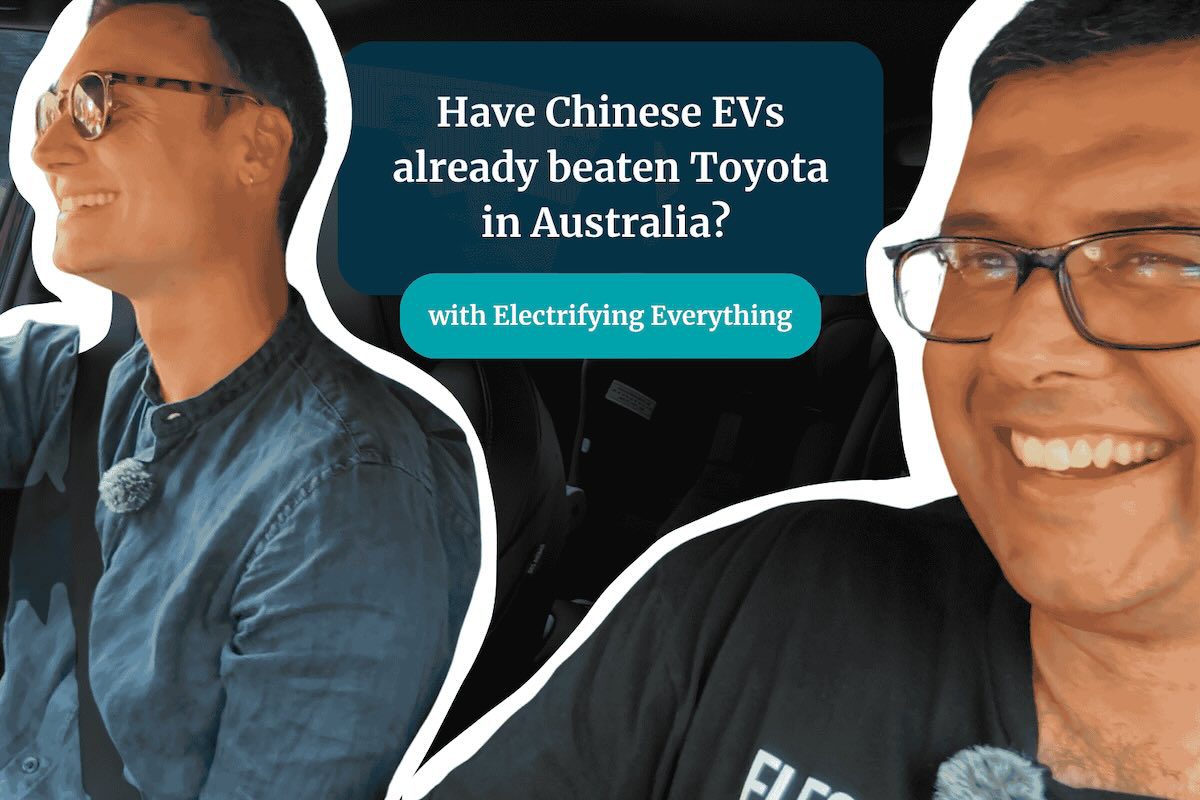
A significant shift is underway in the Australian automotive landscape, particularly within the burgeoning electric vehicle (EV) segment. Recent discussions among prominent industry figures highlight a remarkable trend: Chinese carmakers are now outselling their well-established Japanese counterparts in Australia. This development signals a potential reordering of market dominance and underscores the rapid evolution of global automotive competition.
The implications of this market pivot extend beyond sales figures, touching upon technological innovation, consumer preferences, and strategic positioning for both incumbent and emerging players. The trend suggests a deeper narrative of disruption and adaptation within one of the world’s most dynamic automotive markets.

The Shifting Automotive Landscape in Australia
Australia has historically been a stronghold for Japanese automotive brands, with names like Toyota, Mazda, and Nissan enjoying decades of unparalleled market leadership. Their reputation for reliability, fuel efficiency, and a diverse range of models has cemented their place in the Australian consumer’s mind.
However, the global transition towards electric vehicles has introduced new variables into this long-standing equation. The market for EVs in Australia, while still smaller than internal combustion engine (ICE) vehicles, is expanding rapidly, driven by increasing environmental awareness, policy support, and a growing array of competitive models.
Against this backdrop, the rise of Chinese automotive manufacturers, particularly in the EV sector, has been nothing short of meteoric. These companies have rapidly scaled their operations, invested heavily in research and development, and brought a wave of new models to international markets, including Australia.

Chinese EVs Emerge Victorious: A Deep Dive into the Australian Market
The conversation between Neerav from Electrifying Everything and Sam, who operates as Chief Operating Officer for Renew Economy and EV Media and hosts The Driven Podcast, recently underscored this pivotal moment. Their discussion, notably held within an updated Toyota BZ4X, revolved around the compelling reasons why Chinese carmakers are now achieving higher sales volumes than Japanese brands in Australia.
This dialogue points to a complex interplay of factors that have contributed to the success of Chinese EVs in the Australian market. It signals a departure from traditional market hierarchies and demands a closer examination of the strategies employed by these newer entrants.
Examining the Factors Behind the Surge
Several key elements are believed to be driving the ascendance of Chinese EVs in Australia. Experts and market analysts often point to a combination of aggressive pricing strategies, rapid technological advancements, and a swift response to evolving consumer demands as primary contributors.
The ability of Chinese manufacturers to bring a diverse range of electric vehicles to market, often at more accessible price points, has resonated strongly with Australian buyers looking to transition to electric mobility without a significant premium.
Strategic Pricing and Accessibility
One of the most frequently cited reasons for the increased market share of Chinese EVs in Australia is their competitive pricing. Many Chinese manufacturers have positioned their electric models to offer excellent value, making EV ownership more attainable for a broader segment of the population.
This strategic pricing often comes without significant compromise on features or quality, a factor that has increasingly challenged the perception that lower cost equates to lower standards. The focus on affordability has become a critical differentiator in a market where price remains a significant barrier for many potential EV buyers.
Technological Prowess and Rapid Innovation
Beyond price, Chinese EV brands have demonstrated a remarkable capacity for rapid technological innovation. This includes advancements in battery technology, which translate to longer ranges and faster charging times, as well as sophisticated in-car technology, infotainment systems, and advanced driver-assistance systems (ADAS).
Their agility in adopting and integrating the latest technologies, often faster than some legacy automakers, has allowed them to offer cutting-edge features that appeal to tech-savvy consumers. This commitment to continuous improvement fosters a perception of modernity and future-readiness.
Diverse Model Offerings and Market Penetration
The sheer breadth of models offered by Chinese carmakers in the EV segment has also played a crucial role. From compact city cars to family-friendly SUVs and even commercial vehicles, these brands are quickly filling various market niches, catering to a wide spectrum of consumer needs and preferences.
This rapid expansion of choice, combined with efficient supply chain management, has ensured that these vehicles are not only innovative and competitively priced but also readily available to consumers, thereby accelerating their market penetration across Australia.
The Japanese Response and Market Dynamics
The traditional Japanese automotive giants, while globally dominant, have faced challenges in their transition to electric vehicles. Historically known for their hybrid technology and robust ICE lineups, some have been perceived as slower to fully embrace battery-electric vehicles (BEVs) as their primary future.
Toyota, for instance, a long-time leader in hybrid technology and a benchmark for quality and reliability, has only recently begun to scale its dedicated BEV offerings globally. The setting of the discussion between Neerav and Sam in an updated Toyota BZ4X itself highlights this ongoing transition, showcasing Toyota’s efforts to catch up in the pure-electric space.
Traditional Strengths and Emerging Challenges
Japanese brands have built their legacy on uncompromising quality, engineering excellence, and strong dealer networks. These strengths continue to hold significant value for consumers. However, in the rapidly evolving EV market, the pace of innovation and the ability to pivot swiftly to new electric architectures and software-defined vehicles are proving to be equally, if not more, critical.
The challenge for Japanese manufacturers lies in leveraging their historical strengths while simultaneously accelerating their EV development and market strategies to compete effectively with agile newcomers from China.
Global Implications of the Australian Trend
The market shift observed in Australia could serve as an important bellwether for other developed automotive markets globally. If Chinese EVs can successfully challenge established brands in a market as mature and brand-loyal as Australia, it suggests a broader trend that could reshape the global automotive industry in the coming years.
This scenario prompts a re-evaluation of national automotive strategies, trade policies, and manufacturing investments worldwide, as countries grapple with the implications of new players and rapidly evolving technological paradigms.
Looking Ahead: The Future of the Australian EV Market
The ascendancy of Chinese EVs in Australia signifies a dynamic and competitive future for the country’s automotive sector. This shift is likely to benefit Australian consumers through increased choice, competitive pricing, and accelerated innovation.
As the market continues to mature, it will be crucial to observe how traditional players respond to this heightened competition and what strategies they employ to reclaim or maintain their market share in the electric era.
Consumer Choices and Policy Landscape
The expansion of the EV market, driven partly by Chinese brands, is providing Australian consumers with unprecedented choice. This competition is expected to drive down prices further and accelerate the adoption of electric vehicles, contributing to national emissions reduction targets.
Government policies around EV incentives, charging infrastructure development, and emissions standards will also play a critical role in shaping how quickly and extensively this market shift unfolds, influencing both consumer behaviour and manufacturer strategies.
The Road Ahead for Incumbents and Challengers
For Japanese automakers, the challenge is clear: accelerate EV development, innovate rapidly, and potentially re-evaluate pricing strategies to compete with aggressive Chinese entrants. Their long-standing reputation for quality and reliability remains a powerful asset, but it must be effectively translated into the electric vehicle context.
For Chinese manufacturers, the focus will likely remain on sustaining their innovative edge, expanding their model lineups, and building brand trust and after-sales service networks to cement their newfound market position in Australia and beyond.
Conclusion
The observation that Chinese carmakers are now outselling Japanese brands in Australia’s EV market marks a pivotal moment in the nation’s automotive history. It reflects a global industry in rapid flux, where agility, innovation, and strategic pricing are becoming paramount.
As discussed by experts like Neerav and Sam, this development not only highlights the growing influence of Chinese automotive powerhouses but also challenges established norms, paving the way for a more diverse, competitive, and electrified future for Australian roads.