
Key Takeaways
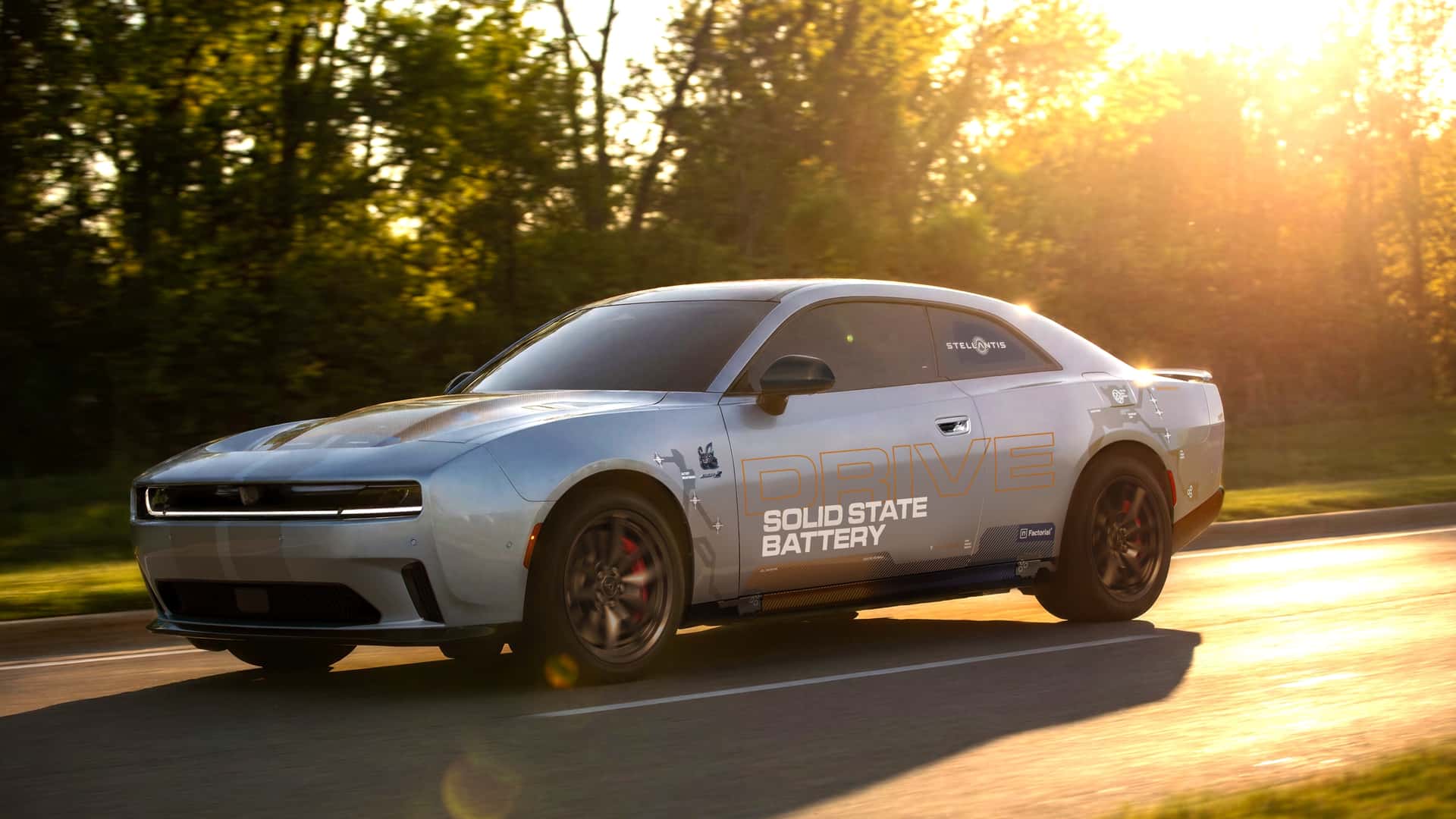
- Stellantis has initiated real-world testing of semi-solid-state batteries in a Dodge Charger EV prototype, a significant step in advanced EV technology development.
- The program is a collaborative effort with Massachusetts-based battery startup Factorial Energy, aiming to validate battery safety, performance, and reliability.
- The Factorial FEST cell, integrated into the Dodge Charger EV, boasts an impressive energy density of 375 Wh/kg and can charge from 15-90% in just 18 minutes.
- This technology promises potential for longer range, faster charging, and reduced costs for future electric vehicles, surpassing current lithium-ion capabilities.
- The initiative underscores a global race among automakers like Mercedes-Benz, BMW, Toyota, and various Chinese brands to commercialize next-generation solid-state battery solutions.
In a significant stride towards advancing electric vehicle (EV) technology, Stellantis, the multinational automotive giant behind iconic brands like Jeep, Ram, and Dodge, has commenced real-world testing of semi-solid-state batteries. This groundbreaking initiative sees a prototype of the upcoming Dodge Charger EV outfitted with this cutting-edge battery technology, undergoing rigorous evaluations under authentic driving and charging conditions.
The move represents a pivotal moment in the ongoing quest for more efficient, longer-lasting, and faster-charging EV power solutions. As the automotive industry transitions rapidly towards electrification, innovations in battery chemistry are critical to overcoming existing limitations and accelerating mainstream adoption of electric vehicles.

Pioneering Battery Technology in the Dodge Charger EV
The core of this ambitious testing program lies in a strategic collaboration between Stellantis and Factorial Energy, a Massachusetts-based startup specializing in advanced battery solutions. Together, they are exploring the viability and practical application of semi-solid-state battery cells, positioning the Dodge Charger EV at the forefront of this technological exploration.
While solid-state batteries have long been lauded as the ‘holy grail’ of EV power, their development and large-scale production have proven exceptionally challenging. Conventional lithium-ion technology, despite continuous improvements, still faces constraints regarding energy density, charging speed, and long-term cost implications. This makes the exploration of semi-solid-state alternatives, such as those from Factorial, particularly pertinent.
The partnership aims to fine-tune and validate the battery pack’s essential attributes: safety, overall performance, and long-term reliability. By deploying this experimental technology within a production-oriented vehicle like the Dodge Charger EV, Stellantis is gathering invaluable data that will inform future design and engineering decisions for its entire electric vehicle portfolio.
Real-World Testing: A Crucial Validation Phase
The decision to subject the Dodge Charger EV prototype to real-world road tests underscores the automotive industry’s commitment to thorough validation beyond laboratory settings. These tests are designed to expose the semi-solid-state battery pack to a diverse range of environmental conditions and usage patterns, mimicking actual customer experiences.
Factors such as varying temperatures, diverse driving styles, and different charging infrastructures will be meticulously assessed. This comprehensive approach is vital for ensuring that the battery technology can withstand the rigors of everyday use and deliver consistent performance across varied scenarios, ultimately enhancing trust in the next generation of the Dodge Charger EV.
Unpacking the Advantages: Range, Charging, and Cost
Stellantis executives have articulated clear aspirations for this advanced battery technology. Ned Curic, the automaker’s chief engineering and technology officer, highlighted the transformative potential. He stated, “This milestone shows we are bringing solid-state batteries closer to our customers with the potential for longer range, faster charging, and lower costs.”
The Factorial FEST cell, central to the Dodge Charger EV prototype, showcases impressive specifications. It boasts a semi-solid-state chemistry with an energy density of 375 watt-hours per kilogram (Wh/kg). This figure represents a meaningful leap over conventional lithium-ion batteries, which typically offer an energy density in the range of 200-300 Wh/kg.
Beyond density, charging performance is another critical differentiator. Stellantis indicates that the Factorial pack can charge from 15% to 90% in a mere 18 minutes. For context, the current lithium-ion pack in the Dodge Charger Daytona typically takes approximately 30 minutes to charge from 10% to 80%. This substantial reduction in charging time would dramatically improve the convenience and usability of the Dodge Charger EV for consumers.
Furthermore, the battery demonstrates robust thermal resilience, capable of operating effectively across a wide temperature spectrum, from -22 degrees Fahrenheit (-30 degrees Celsius) to 113 degrees Fahrenheit (45 degrees Celsius). This broad operational range is crucial for global markets, ensuring reliable performance regardless of climatic conditions.
Engineering for Optimal Performance
The integration of Factorial’s battery into the existing Dodge Charger EV pack design was not a trivial task. Stellantis developed a new, patented mechanical architecture specifically engineered to extract maximum performance from these advanced cells. This bespoke design ensures seamless compatibility and optimizes energy transfer within the vehicle’s electrical system.
Factorial Energy has previously explained that its semi-solid-state cells leverage a gel-like electrolyte, a key distinction from fully solid-state designs. This particular chemistry offers significant advantages over purely liquid electrolytes found in traditional lithium-ion batteries, contributing to improved safety and energy characteristics.
The knowledge and insights gained from these real-world tests are not solely for the immediate benefit of the Dodge Charger EV. Factorial CEO Siyu Huang emphasized the collaborative nature of the effort, stating, “Real-world road testing is exactly the kind of deep full-stack collaboration that solid-state has always required.” These learnings are critical and will directly inform the development of Factorial’s future all-solid-state Solstice battery, positioning this research as a foundational step for future battery generations.
Global Race for Solid-State Dominance
Stellantis’s venture into semi-solid-state battery testing with the Dodge Charger EV is part of a broader, intensely competitive global race among automakers to commercialize next-generation battery technologies. The potential benefits—longer range, faster charging, and enhanced safety—are driving massive investments and partnerships across the industry.
Factorial’s innovative cells have already demonstrated their potential in other high-profile tests. Last year, semi-solid-state cells from Factorial were installed in a Mercedes-Benz EQS prototype. During an extensive cross-country road trip in Europe, this EQS reportedly covered an impressive 749 miles on a single charge, with 85 miles of range still remaining at the journey’s conclusion. This remarkable feat underscores the transformative potential of such battery advancements.
Other major players are also heavily invested in similar research. BMW, for instance, commenced testing of all-solid-state cells from Colorado startup Solid Power in a prototype i7 last year, collaborating with Samsung SDI for further development and validation. Toyota, a pioneer in hybrid technology, maintains its own active solid-state program, continuously pushing the boundaries of battery science.
The push for advanced battery solutions extends significantly to Chinese automakers as well. Industry giants like BYD, Nio, and MG Motor are actively engaged in their own solid-state battery development initiatives, indicating a universal understanding of the critical role this technology will play in the future of electric mobility.
The Future Outlook for Electric Mobility
The successful integration and validation of semi-solid-state batteries in vehicles like the Dodge Charger EV could usher in a new era for electric mobility. Overcoming current battery limitations will not only enhance the appeal of EVs to a wider consumer base but also accelerate the global transition towards sustainable transportation.
While challenges remain, particularly in manufacturing scalability and cost reduction, the progress demonstrated by Stellantis and Factorial offers a promising glimpse into the future. The data collected from the Dodge Charger EV prototype will be instrumental in refining this technology, potentially paving the way for mass production and widespread adoption of more advanced, efficient, and user-friendly electric vehicles in the coming years.
FAQ Section
What is a semi-solid-state battery?
A semi-solid-state battery utilizes a gel-like electrolyte instead of the purely liquid electrolyte found in conventional lithium-ion batteries or the entirely solid electrolyte of true solid-state batteries. This hybrid design aims to combine the benefits of both, offering improved energy density, faster charging, and enhanced safety while being more manufacturable than full solid-state solutions.
Why is Stellantis testing this technology in a Dodge Charger EV?
Stellantis is testing semi-solid-state batteries in a Dodge Charger EV prototype to validate their safety, performance, and reliability under real-world driving conditions. The Charger EV, being a new and high-profile electric model, serves as an ideal testbed to showcase and refine next-generation battery technology for potential future production vehicles across the Stellantis portfolio.
What are the key benefits of this new battery technology?
The primary benefits of Factorial’s semi-solid-state battery include higher energy density (375 Wh/kg compared to 200-300 Wh/kg for conventional lithium-ion), significantly faster charging times (15-90% in 18 minutes), and a wider operational temperature range. These improvements promise longer range, quicker refueling, and potentially lower costs for future electric vehicles like the Dodge Charger EV.
How does the charging speed compare to current EV batteries?
The Factorial semi-solid-state battery in the Dodge Charger EV prototype can charge from 15% to 90% in approximately 18 minutes. This is a substantial improvement over the current Dodge Charger Daytona’s lithium-ion pack, which typically takes around 30 minutes to charge from 10% to 80%, offering a much more convenient and time-efficient charging experience.
Are other automakers developing similar battery technologies?
Yes, many major automakers are actively developing advanced battery technologies. BMW is testing solid-state cells with Solid Power in an i7 prototype, while Toyota has its own solid-state program. Additionally, Chinese manufacturers such as BYD, Nio, and MG Motor are also investing heavily in solid-state battery research and development, highlighting an industry-wide push towards next-generation EV power sources.
What is Factorial Energy’s role in this project?
Factorial Energy, a Massachusetts-based startup, is providing its FEST cell, a semi-solid-state battery, for the Dodge Charger EV prototype testing. Their expertise in advanced battery chemistry is central to this collaboration. The learnings from these real-world tests will also contribute to the development of Factorial’s future all-solid-state Solstice battery, demonstrating a deep, full-stack partnership.