
Key Takeaways
- Dukosi, A123 Systems, and Nuvation Energy have launched a joint proof of concept (PoC) for an end-to-end battery energy storage system (BESS).
- The innovative system integrates A123’s 587 Ah LFP prismatic cells with Dukosi’s contactless cell monitoring technology and Nuvation’s utility-grade Battery Management System (BMS).
- The core innovation lies in Dukosi’s C-SynQ contactless protocol, which eliminates traditional wiring harnesses, enhancing reliability and scalability within the BESS module.
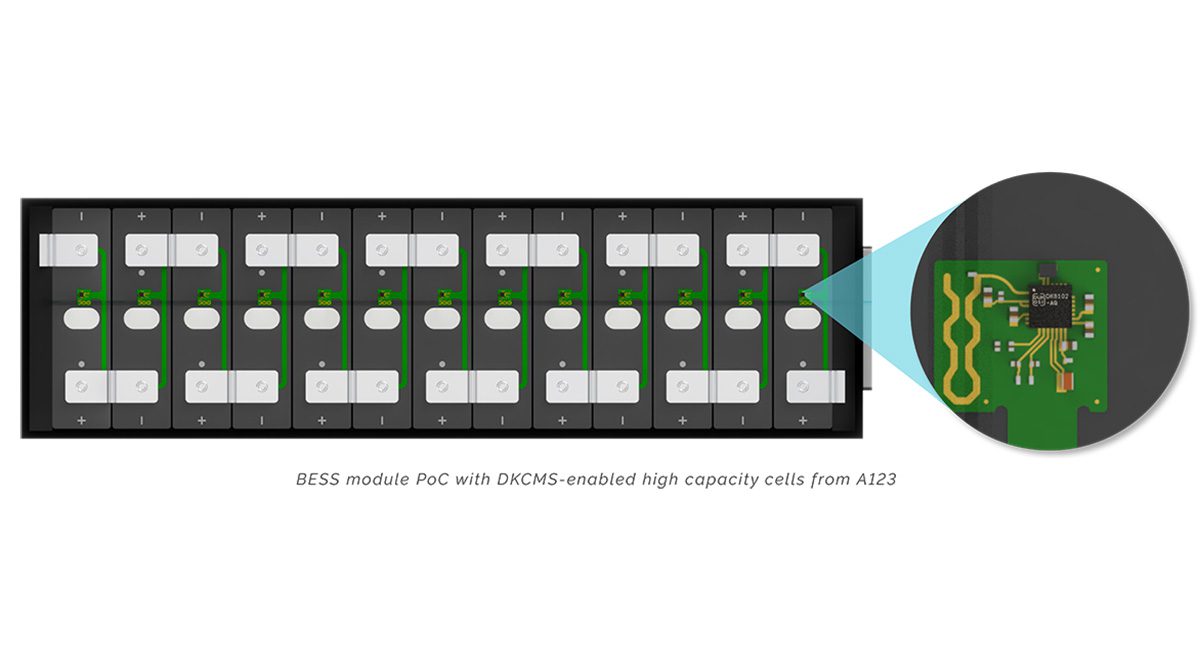
- Designed as a 1P13S, 41.6 V configuration, the PoC serves as a pre-validated, regulatory-compliant building block for North American utility BESS rack architectures.
- Nuvation’s L2 BMS features UL 1973 functional safety recognition, a critical aspect for securing warranties in large-scale commercial and utility installations.
- This integrated solution aims to simplify deployment, reduce potential failure points, and accelerate the adoption of advanced energy storage in the North American market.
In a significant advancement for grid-scale energy storage, industry leaders Dukosi, A123 Systems, and Nuvation Energy have collaboratively unveiled a pioneering proof of concept (PoC) for an end-to-end battery energy storage system (BESS). This joint design brief introduces a robust, pre-validated platform that combines cutting-edge cell technology with an innovative contactless monitoring system and a high-performance battery management solution.
The integrated BESS is specifically engineered to meet the rigorous demands of North American BESS project developers and system integrators. It offers a standardized, regulatory-compliant module stack designed to streamline deployment and enhance the reliability of large-scale energy storage deployments.

Revolutionising Battery Monitoring with Contactless Technology
At the heart of this integrated system is Dukosi’s advanced contactless cell monitoring technology. Each A123 cell within the module is equipped with a Dukosi DK8102 chip-on-cell monitor. This innovative chip communicates seamlessly via the company’s proprietary C-SynQ contactless protocol to a central DK8202 system hub.
The primary advantage of this contactless architecture is the complete elimination of the traditional wiring harness. Conventionally, a complex network of wires connects individual cells to the Battery Management System (BMS), introducing numerous potential failure points and increasing the complexity of assembly and maintenance. By removing these physical connections, Dukosi’s system significantly enhances overall module reliability.
Furthermore, the contactless design offers unprecedented flexibility. The monitoring layer can be retrofitted or scaled within the module without requiring extensive rewiring. This adaptability is crucial for the long-term maintenance and potential upgrades of sophisticated battery energy storage systems, reducing operational complexities and associated costs over the system’s lifespan.

The C-SynQ Protocol: Enhancing Data Integrity and System Simplicity
Dukosi’s C-SynQ protocol not only simplifies the physical architecture but also ensures robust and secure data transmission from each cell. This wireless communication method reduces electromagnetic interference, which can sometimes plague wired systems, leading to more accurate and consistent cell data for the BMS.
Accurate cell-level data is paramount for optimising battery performance, extending cycle life, and ensuring safe operation of any battery energy storage system. The ability to retrieve this critical information contactlessly represents a leap forward in battery diagnostics and management, offering system integrators a more resilient and scalable solution.
A123 Systems: Powering Storage with Advanced LFP Cells
The proof of concept module leverages A123 Systems’ high-performance 587 Ah large-format LFP (Lithium Iron Phosphate) prismatic cells. These cells are developed with a proprietary US-developed LFP chemistry, a testament to A123’s commitment to domestic innovation in battery technology.
LFP chemistry has emerged as a preferred choice for battery energy storage system applications due to its inherent safety, long cycle life, and thermal stability. Unlike some other lithium-ion chemistries, LFP is known for its reduced risk of thermal runaway, making it particularly suitable for large-scale utility and commercial deployments where safety is a paramount concern.
Designed for Longevity and Robustness
A123’s 587 Ah cells are specifically engineered for an extended cycle life, a critical characteristic for grid energy storage which undergoes frequent charge and discharge cycles over many years. This focus on durability translates into lower total cost of ownership for BESS operators and greater predictability in system performance.
The prismatic form factor also contributes to the module’s robustness and efficiency. Prismatic cells offer excellent volumetric efficiency, allowing for a higher energy density within a given space, which is beneficial for compact BESS designs. Their sturdy construction enhances mechanical stability, further bolstering the overall reliability of the battery module.
Nuvation Energy: Intelligent BMS for Utility-Grade Reliability
Completing the trifecta of innovation, Nuvation Energy’s L2 Battery Management System (BMS) provides sophisticated cell- and stack-level control for the integrated battery energy storage system. The L2 BMS is capable of managing stacks up to an impressive 1,500 V DC, making it suitable for a wide range of utility and large-scale industrial applications.
A critical feature of Nuvation’s platform is its UL 1973 recognition for functional safety. This certification is not merely a technical specification; it is a fundamental prerequisite for securing warranties on utility and commercial installations. For project developers, UL 1973 recognition provides assurance of the system’s safety and compliance with stringent industry standards, mitigating risks and facilitating project financing and insurance.
Proven Track Record in Energy Storage
Nuvation’s expertise in BMS solutions is well-established, drawing on extensive deployments across hundreds of commercial, industrial, and utility-scale sites since 2015. This proven track record instils confidence in the reliability and performance of their L2 BMS, demonstrating its capability to manage complex battery systems effectively and safely in diverse operational environments.
The Integrated PoC: A Standardised Building Block
The collaborative proof of concept module adopts a 1P13S configuration, delivering an output of 41.6 V. This specific arrangement is intentionally chosen as a standard building block for utility BESS rack architectures, ensuring compatibility and ease of integration into existing or new large-scale energy storage infrastructure.
By offering a pre-validated and integrated solution, the consortium aims to significantly reduce the development time and technical risks for BESS project developers. Instead of sourcing and integrating disparate components, developers can deploy a cohesive, tested module stack, accelerating market entry and project execution, particularly within the competitive North American energy landscape.
Addressing the North American BESS Market
The North American market for battery energy storage systems is experiencing rapid growth, driven by increasing renewable energy integration, grid modernization efforts, and the need for enhanced grid resilience. However, challenges related to system integration, safety certifications, and long-term reliability persist.
This joint design brief directly addresses these market needs by providing a high-confidence solution. The combination of safe LFP cells, reliable contactless monitoring, and a UL 1973-certified BMS, all within a pre-validated module, offers a compelling proposition for developers seeking robust, compliant, and cost-effective energy storage solutions.
The collaboration underscores a strategic alignment to deliver comprehensive, end-to-end solutions that simplify the complex process of deploying utility-scale battery energy storage systems. By focusing on module-level integration and regulatory compliance from the outset, the partners are setting a new standard for BESS development.
Conclusion: A New Era for Battery Energy Storage System Integration
The joint proof of concept from Dukosi, A123 Systems, and Nuvation Energy represents a significant milestone in battery energy storage system technology. By synergising their respective strengths in contactless monitoring, advanced LFP cell chemistry, and utility-grade BMS, the three companies have delivered a comprehensive and highly integrated solution.
This pre-validated module stack, designed with the specific requirements of the North American market in mind, promises enhanced reliability, simplified integration, and improved functional safety. As the demand for robust and scalable energy storage continues to grow, such collaborative innovations will be instrumental in accelerating the global transition towards a more resilient and sustainable energy infrastructure.
Source: Dukosi
Frequently Asked Questions (FAQ)
What is the primary innovation in this BESS proof of concept?
The core innovation is Dukosi’s contactless cell monitoring system, which eliminates the traditional wiring harness between individual battery cells and the Battery Management System (BMS). This reduces failure points, enhances reliability, and allows for easier scalability and retrofitting within the module.
Which companies are involved in this joint design brief?
The joint design brief is a collaboration between Dukosi (contactless cell monitoring), A123 Systems (LFP prismatic battery cells), and Nuvation Energy (utility-grade Battery Management System or BMS). They have combined their expertise to create an integrated solution.
What type of battery cells are used, and why are they significant?
The system uses A123’s 587 Ah large-format Lithium Iron Phosphate (LFP) prismatic cells. LFP chemistry is highly valued in BESS applications for its inherent safety, exceptional thermal stability, and long cycle life, making it ideal for demanding utility and commercial energy storage projects.
What role does Nuvation Energy’s BMS play in the system?
Nuvation Energy’s L2 BMS manages cell- and stack-level control for the battery system, supporting stacks up to 1,500 V DC. Crucially, it is UL 1973 recognized for functional safety, which is a key requirement for securing warranties and ensuring regulatory compliance in large-scale installations.
Who is the target audience for this integrated BESS solution?
This pre-validated, regulatory-compliant module stack is primarily targeted at North American Battery Energy Storage System (BESS) project developers and system integrators. It aims to simplify the process of deploying utility and commercial energy storage projects by offering a robust and integrated building block.
What are the benefits of a pre-validated module stack?
A pre-validated module stack significantly reduces development time and technical risks for developers. It ensures that all components are integrated and tested for compatibility and performance, streamlining the process of bringing BESS projects online and meeting stringent regulatory requirements, particularly in North America.
How does the contactless monitoring system improve scalability?
By removing physical wiring, Dukosi’s contactless monitoring system allows for the monitoring layer to be easily retrofitted or scaled up without complex rewiring. This flexibility supports module upgrades or configuration changes, adapting to evolving energy storage demands without significant system downtime or cost.