
Key Takeaways:
- Nordic Marine Power (NMP) has secured DNV type approval for its PowerStack battery system, enabling its installation on all DNV-classed vessels.
- This significant certification was achieved through the integration of Dukosi’s innovative Cell Monitoring System (DKCMS).
- The DKCMS utilizes a chip-on-cell approach, providing simultaneous, per-cell temperature and voltage monitoring, a critical advancement over legacy systems.
- DNV type approval underscores compliance with stringent maritime, offshore, and industrial safety and environmental standards, particularly vital for confined vessel environments.
- Dukosi’s C-SynQ contactless protocol facilitates seamless communication between cell monitors and the battery management system (BMS), simplifying integration and enhancing design flexibility.
Revolutionising Marine Battery Safety: PowerStack Achieves DNV Certification with Dukosi Technology
In a significant development for the electric vessel sector, Nordic Marine Power (NMP) has officially announced that its PowerStack battery system has received DNV type approval. This prestigious certification, a global benchmark for maritime and industrial safety, was made possible by integrating Dukosi’s advanced Cell Monitoring System (DKCMS).

The DNV type approval is a crucial endorsement, confirming that the PowerStack system meets the rigorous safety and environmental standards required for installation on all vessels classified by DNV. This achievement marks a pivotal moment for both companies and sets a new precedent for marine battery systems.
The Critical Role of DNV Type Approval in Marine Applications
DNV type approval stands as a globally recognised third-party certification. It serves as an unequivocal confirmation of compliance with the most demanding maritime, offshore, and industrial safety and environmental standards. For battery systems intended for marine use, this certification is not merely a formality but a fundamental necessity.
The operational environment for marine battery systems presents unique and elevated safety requirements compared to those found in typical electric vehicle (EV) or stationary energy storage applications. Vessels operate in confined spaces, often far from immediate assistance, necessitating exceptional fire suppression capabilities and robust reliability under remote operating conditions.

Achieving DNV certification demonstrates that a marine battery system has undergone exhaustive testing and evaluation, proving its resilience and safety against potential hazards like thermal runaway, structural integrity issues, and environmental stressors inherent in maritime operations. This stringent vetting process assures vessel operators, regulators, and insurance providers of the system’s trustworthiness.
Dukosi’s Innovative Cell Monitoring System (DKCMS)
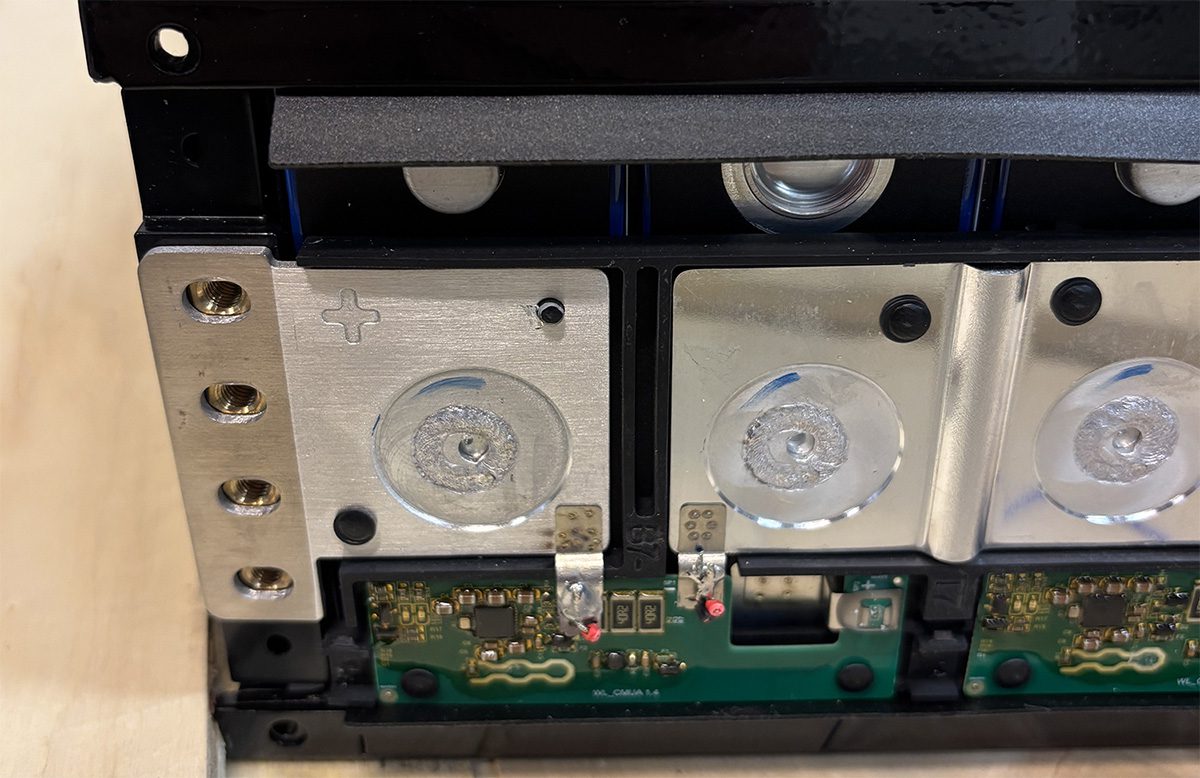
At the heart of Nordic Marine Power’s certified PowerStack lies the Dukosi Cell Monitoring System (DKCMS), a technological breakthrough in battery management. Unlike traditional battery architectures that typically employ only a few temperature sensors per module, the DKCMS adopts a sophisticated chip-on-cell approach.
This innovative design places a dedicated cell monitor chip directly onto each individual battery cell. This allows for the simultaneous measurement of both temperature and voltage on every single cell within the battery system. This granular level of data acquisition offers unparalleled insights into the real-time health and performance of the battery pack.
The data collected synchronously from each cell is then relayed to the battery management system (BMS) with deterministic latency, ensuring timely and accurate information flow. This capability is vital for proactive safety management and optimising battery performance over its lifespan.
Advanced Thermal and Voltage Monitoring
One of the most significant advantages of the DKCMS is its enhanced ability to detect overtemperature events much earlier than legacy systems. With a sensor on every cell, localised hotspots or potential thermal issues can be identified almost instantaneously. This early detection mechanism is critical in preventing cascading failures or thermal runaway events, which can have catastrophic consequences, especially in marine environments.
Furthermore, the system is designed to alert the BMS processor even when it is operating in a deep sleep mode, ensuring that critical safety warnings are never missed. This persistent monitoring capability significantly bolsters the overall safety profile of the battery system.
Contactless Communication with C-SynQ Protocol
Communication between the individual cell monitors and the central BMS is facilitated by Dukosi’s proprietary C-SynQ contactless protocol. This advanced communication method simplifies integration into complex battery systems, reducing wiring complexity and potential points of failure. The contactless nature also contributes to improved design flexibility, allowing manufacturers like Nordic Marine Power to streamline their production processes and meet challenging project deadlines with greater confidence.
Nordic Marine Power’s Strategic Advantage with PowerStack
For Nordic Marine Power, the integration of Dukosi’s novel contactless battery architecture into their PowerStack system has provided a distinct competitive edge. Jonas Roald Nordstrand, CEO of NMP, highlighted the direct impact of this technology on their certification journey.
“Dukosi’s novel contactless battery architecture uniquely provides per-cell temperature sensing that improves safety compared to legacy systems,” stated Mr. Nordstrand. He further elaborated, “Having a Dukosi Cell Monitor chip on each cell gives us greater real-time insights into every cell’s behavior, which has allowed us to accelerate achieving DNV certification. Their chip-on-cell technology with C-SynQ simplifies integration into our battery systems, while also providing valuable design flexibility, allowing us to streamline production to meet tight deadlines with confidence.”
This strategic collaboration has not only accelerated NMP’s path to DNV approval but also enhanced the inherent safety and reliability of their PowerStack battery solutions, making them a preferred choice for the burgeoning electric marine industry.
Industry Implications and Future Outlook for Electric Vessels
The achievement of DNV type approval for the PowerStack system, powered by Dukosi’s advanced cell monitoring, holds significant implications for the broader marine industry. As global efforts intensify to decarbonise shipping and transition towards electric propulsion, the demand for certified, safe, and reliable marine battery systems is escalating.
This certification provides a robust foundation for the widespread adoption of battery-electric and hybrid-electric vessels. It instills confidence among shipbuilders, operators, and regulatory bodies regarding the safety and performance of these innovative energy solutions, thereby accelerating the maritime sector’s journey towards sustainability.
Joseph Notaro, chief revenue officer at Dukosi, underscored the paramount importance of this collaboration. “Battery safety, quality, and reliability are of paramount concern” in marine applications, Mr. Notaro noted. He added, “We’re extremely proud that NMP’s PowerStack with DKCMS has achieved type approval for installation on all vessels classed by DNV.”
Expert Perspectives on Battery Safety and Innovation
The marine sector’s stringent safety requirements necessitate continuous innovation in battery technology. The confined and often harsh operational environments of vessels elevate the risks associated with battery failures, making advanced monitoring and control systems indispensable. Dukosi’s chip-on-cell technology represents a significant leap forward in addressing these challenges.
By providing granular, real-time data from every cell, the DKCMS enables sophisticated predictive analytics and immediate fault detection, moving beyond reactive safety measures to a proactive safety paradigm. This capability is instrumental in preventing critical incidents and ensuring the longevity and efficient operation of marine battery systems.
The partnership between Dukosi and Nordic Marine Power exemplifies how collaboration between technology innovators and system integrators can drive the development of robust, compliant, and market-ready solutions for electric vessels. Such advancements are crucial for fostering trust and accelerating the adoption of sustainable marine propulsion technologies globally.
Frequently Asked Questions (FAQ)
What is DNV type approval?
DNV type approval is a globally recognized third-party certification that confirms a product or system complies with international maritime, offshore, and industrial safety and environmental standards. It is crucial for marine equipment to ensure reliability and safety at sea.
Why is DNV type approval particularly important for marine battery systems?
Marine battery systems face heightened safety requirements due to confined spaces on vessels, specific fire suppression constraints, and remote operating conditions. DNV approval verifies that these systems can withstand the unique challenges of the marine environment safely.
What is Dukosi’s Cell Monitoring System (DKCMS)?
The DKCMS is an advanced battery monitoring technology that places a dedicated chip directly on each battery cell. It simultaneously measures temperature and voltage for every cell, providing real-time, granular data to the battery management system (BMS).
How does Dukosi’s chip-on-cell technology enhance safety compared to legacy systems?
Legacy systems typically use fewer temperature sensors per module. Dukosi’s chip-on-cell approach allows for earlier detection of overtemperature events on individual cells, enabling the BMS to be alerted promptly, even in deep sleep mode, thereby preventing potential thermal issues more effectively.
What is the C-SynQ contactless protocol?
C-SynQ is Dukosi’s proprietary contactless communication protocol used for relaying data between the individual cell monitors and the battery management system. This protocol simplifies integration, reduces wiring complexity, and offers valuable design flexibility for battery system manufacturers.
What benefits does Nordic Marine Power gain from this DNV approval?
Nordic Marine Power’s PowerStack system can now be installed on all DNV-classed vessels, significantly expanding its market reach. The integration of DKCMS accelerated their certification process, streamlined production, and enhanced the overall safety and reliability of their marine battery offerings.
How does this achievement contribute to the future of electric vessels?
This DNV type approval for a high-performance marine battery system instills greater confidence in electric propulsion technologies. It helps accelerate the decarbonisation of the shipping industry by providing a verified, safe, and reliable energy storage solution for a wider range of DNV-classed electric and hybrid vessels.
Conclusion
The successful DNV type approval for Nordic Marine Power’s PowerStack battery system, powered by Dukosi’s pioneering chip-on-cell monitoring technology, marks a significant milestone in marine electrification. This achievement not only validates the superior safety and performance of NMP’s solutions but also underscores the critical role of advanced cell monitoring in meeting the stringent demands of the maritime sector.
By enhancing real-time insights into battery health and bolstering proactive safety measures, the Dukosi Cell Monitoring System sets a new benchmark for battery reliability in confined and challenging marine environments. This collaboration exemplifies a powerful synergy that is poised to accelerate the global transition towards safer, more sustainable electric vessels.