
Key Takeaways
- JTEKT Corporation, a crucial Toyota component supplier, has commissioned a 2-megawatt (MW) solar carport facility in Kagawa Prefecture, Japan.
- The innovative project is projected to cut the company’s annual electricity costs by nearly 40 percent.
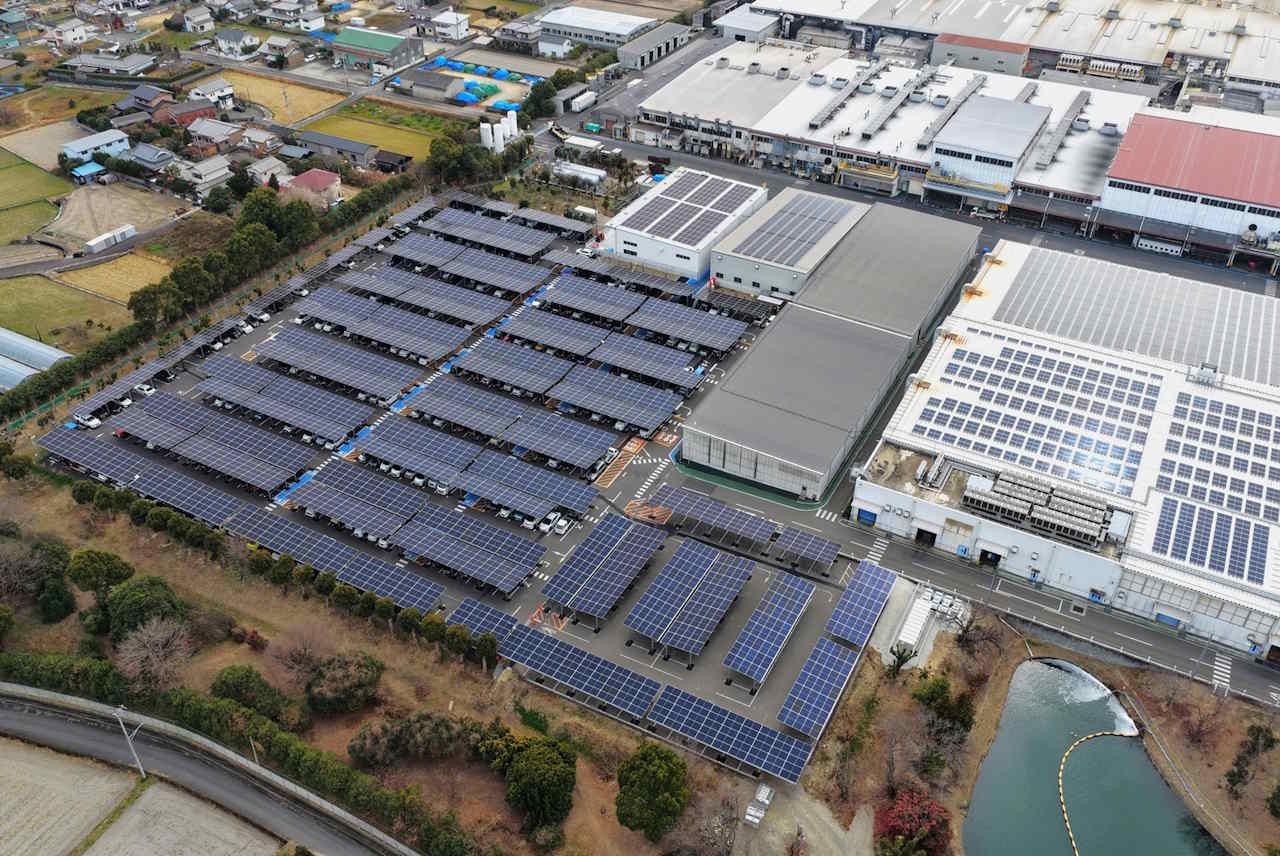
- Generating approximately 2,500 megawatt-hours (MWh) of clean electricity annually, the solar carport covers 640 parking spaces.
- The installation was completed in just five months under a 20-year Power Purchase Agreement (PPA) with Singapore-based clean energy developer Peak Energy.
- This initiative is a strategic move to mitigate the impact of soaring fossil fuel costs and Japan’s reliance on imported energy, while contributing to JTEKT’s goal of reducing CO₂ emissions by 60% by fiscal year 2030 (compared to FY2013).
JTEKT Powers Ahead with Sustainable Energy in Japan
JTEKT Corporation, a pivotal global manufacturer of automotive and industrial components and a key supplier to Japanese automotive giant Toyota, has marked a significant milestone in its sustainability journey. The company recently announced the commissioning of a 2-megawatt (MW) solar carport facility at its operations in Kagawa Prefecture, Japan. This strategic investment in renewable energy is poised to deliver substantial economic and environmental benefits.
The newly operational solar carport is expected to generate approximately 2,500 megawatt-hours (MWh) of clean electricity annually. This impressive output is anticipated to slash JTEKT’s electricity costs by nearly 40 percent, offering a robust shield against volatile energy markets and bolstering the company’s financial resilience.

Strategic Shift Amidst Global Energy Volatility
The timing of this renewable energy integration is particularly pertinent. Global energy markets have experienced significant disruptions, with fossil fuel costs escalating sharply due to geopolitical tensions, notably the Middle East crisis. Japan, a nation heavily reliant on imported fossil fuels, faces pronounced economic vulnerabilities from such market fluctuations.
In this context, JTEKT’s move towards self-sufficient renewable energy generation underscores a proactive approach to operational stability and risk mitigation. By harnessing solar power, the company effectively reduces its exposure to the unpredictability of international energy prices and enhances its energy independence.
Innovative Design Addresses Land Constraints
One of the most notable aspects of JTEKT’s new installation is its ingenious design. The solar carport facility spans 640 existing parking spaces, demonstrating a practical and efficient use of available land. This approach is particularly valuable in a country like Japan, where industrial land for large-scale ground-mounted solar farms can be limited.

The project’s rapid completion, achieved in just five months, highlights the efficiency and planning involved. Such a model presents a highly replicable blueprint for other Japanese manufacturers seeking to reduce their electricity costs and carbon footprint without requiring extensive new land acquisition or causing significant disruption to ongoing plant operations.
Power Purchase Agreement Drives Clean Energy Transition
The development and operation of JTEKT’s solar carport were facilitated through a 20-year Power Purchase Agreement (PPA) with Peak Energy. Based in Singapore, Peak Energy is a prominent clean energy developer with an extensive portfolio of over 300 MW of operating assets and an additional 1-gigawatt (GW) capacity under development across Asia and Australia.
A PPA model is a popular mechanism for businesses to adopt renewable energy without the need for significant upfront capital investment. Under this arrangement, Peak Energy owns, operates, and maintains the solar installation, while JTEKT purchases the generated electricity at a predetermined, often lower and more stable, rate. This financial model democratizes access to green energy, enabling companies to focus on their core business while benefiting from sustainable power.
Driving Corporate Sustainability and Carbon Reduction Goals
The electricity generated by the solar carport will be consumed entirely on-site, directly supporting JTEKT’s manufacturing processes. This direct consumption of self-generated clean power is a critical component of the company’s ambitious environmental targets.
JTEKT has committed to cutting its CO₂ emissions by 60% by fiscal year 2030, benchmarked against its fiscal year 2013 levels. The new solar installation is a substantial stride towards achieving this goal, projected to help avoid 1,090 tonnes of CO₂ emissions each year. To put this into perspective, this reduction is equivalent to removing approximately 230 cars from the road annually, underscoring the tangible impact of corporate sustainability initiatives.
The Broader Impact on Japanese Manufacturing
JTEKT’s investment in this advanced solar carport facility sends a strong signal across the Japanese manufacturing sector. As industries worldwide face increasing pressure to decarbonize their operations and enhance environmental stewardship, such projects offer practical, economically viable solutions.
This initiative not only solidifies JTEKT’s position as a leader in corporate sustainability but also illustrates a pathway for other industrial players to transition towards cleaner energy sources. The successful deployment of this large-scale solar project, particularly under the PPA model and leveraging existing infrastructure, highlights a robust strategy for fostering resilience and achieving climate goals within Japan’s industrial landscape. It exemplifies how thoughtful integration of renewable power can lead to significant operational savings while contributing positively to global climate action.
FAQs on JTEKT’s Solar Carport Project
What is the capacity of JTEKT’s new solar carport?
JTEKT Corporation’s recently commissioned solar carport has a capacity of 2 megawatts (MW). This substantial installation is designed to meet a significant portion of the facility’s electricity demands with clean, renewable energy. It represents a key step in the company’s broader corporate sustainability strategy.
How much electricity will the solar carport generate annually?
The solar carport is projected to generate approximately 2,500 megawatt-hours (MWh) of electricity each year. This consistent supply of clean power will be consumed directly on-site, contributing to both operational efficiency and environmental objectives for the Kagawa Prefecture facility.
What financial benefits does JTEKT expect from this project?
JTEKT anticipates nearly 40 percent savings on its annual electricity costs due to the solar carport. This significant reduction in operational expenses provides a strong economic incentive for the project, offering protection against volatile energy prices and ensuring long-term financial stability for the manufacturing plant.
Who is the clean energy partner for this project?
The solar carport was delivered under a 20-year Power Purchase Agreement (PPA) with Peak Energy. This Singapore-based clean energy developer is responsible for the design, installation, operation, and maintenance of the solar facility, enabling JTEKT to benefit from renewable energy without upfront capital expenditure.
What are the environmental impacts of JTEKT’s solar carport?
The solar carport is expected to help JTEKT avoid 1,090 tonnes of CO₂ emissions annually. This reduction is equivalent to removing about 230 cars from the road each year, aligning with JTEKT’s target of cutting overall CO₂ emissions by 60% by fiscal year 2030 compared to 2013 levels, demonstrating strong environmental stewardship.
Why is this project significant for Japanese manufacturing?
This project is highly significant as it demonstrates a replicable model for Japanese manufacturers to adopt renewable energy despite limited available land. By utilizing existing parking spaces and minimizing operational disruption, JTEKT sets an example for industrial players looking to reduce costs and carbon footprints in a land-constrained environment, fostering greater energy independence.