
Key Takeaways
Einride, a leader in electric and autonomous freight, is set to test its SAE Level 4 autonomous electric trucks on public roads in Marysville, Ohio, in collaboration with EASE Logistics.
This initiative, part of the Ohio Department of Transportation and DriveOhio’s Truck Automation Corridor Project, aims to gather critical data on the impact of autonomous technology on logistics operations, safety protocols, and overall freight efficiency.

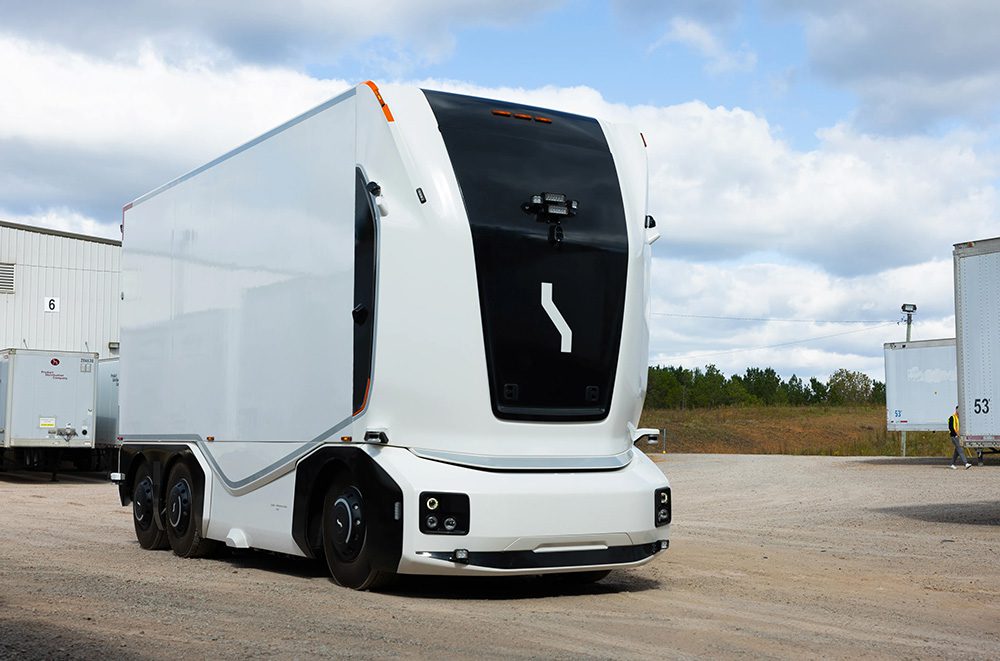
The deployment will utilize Einride’s unique cab-less electric trucks, monitored remotely by operators, to transport goods between EASE warehouses, marking a significant step towards integrating self-driving solutions into daily freight activities.
The project underscores a growing industry focus on sustainable and efficient logistics through advanced autonomous electric vehicle technology.
Revolutionising Freight: Autonomous Electric Trucks Hit Ohio Roads
In a significant stride towards the future of logistics, Einride, a Swedish pioneer in electric and autonomous freight solutions, is commencing trials of its cutting-edge SAE Level 4 autonomous electric trucks on public roads in Ohio. This ambitious deployment, undertaken in collaboration with Ohio-based logistics provider EASE Logistics, represents a pivotal moment in evaluating the practical application of self-driving heavy-duty transport within an active supply chain.
The initiative is a key component of the Ohio Department of Transportation (ODOT) and DriveOhio’s comprehensive Truck Automation Corridor Project. Its primary objective is to meticulously assess how advanced autonomous technology influences daily operations, enhances safety standards, and boosts freight efficiency in real-world scenarios, moving beyond controlled environments into mainstream logistics.
The Partnership Driving Innovation in Logistics
Einride has established itself as a frontrunner in developing and operating comprehensive freight solutions that integrate electric heavy-duty trucks with sophisticated charging infrastructure. With a robust presence across North America, Europe, and the Middle East, the company is at the forefront of the global transition to sustainable and intelligent transport systems.
EASE Logistics, a prominent Ohio-based provider, brings its operational expertise and extensive logistical network to this groundbreaking collaboration. The synergy between Einride’s technological prowess and EASE’s practical freight demands creates an ideal ecosystem for rigorous testing and data collection, ensuring that the insights gained are directly applicable to commercial logistics.
Inside the Ohio Truck Automation Corridor Project
The trials will take place between EASE Logistics warehouses located in Marysville, Ohio, utilising both private EASE property and designated local public roads. This dual operational environment allows for a comprehensive evaluation of the autonomous electric trucks under varying conditions, mirroring the complexities of typical freight routes.
Central to this project is the collection of extensive data. Starting this summer, the autonomous electric trucks will consistently transport goods, generating invaluable insights into their impact on warehousing, distribution, and overall transportation operations. This data will be crucial for refining the technology and understanding its broader economic and operational implications.
Einride’s Autonomous Technology: A Closer Look
The vehicles deployed are Einride’s distinctive L4 autonomous electric trucks. A defining characteristic of these heavy-duty vehicles is their cab-less design, signifying their capability to operate without a human driver on board under specific conditions. This design choice underscores the advanced state of their self-driving capabilities.
While the trucks operate autonomously, human oversight remains integral. A remote operator continuously monitors the trucks from an off-site location, ready to intervene if any unforeseen circumstances arise. This remote supervision model highlights a hybrid approach to vehicle autonomy, balancing advanced technology with crucial human judgment and control.
SAE Level 4 Autonomy: What it Means for Freight
SAE Level 4 autonomy, as implemented in Einride’s autonomous electric trucks, denotes a high degree of automation. At this level, the vehicle can perform all driving tasks and monitor the driving environment under specific conditions, without requiring human intervention. The critical distinction from Level 5 is that Level 4 vehicles are designed to operate only within a defined operational design domain (ODD).
For freight transport, Level 4 autonomy offers transformative potential. It promises to enable more consistent and efficient long-haul operations, potentially alleviating driver shortages and reducing operational costs. The cab-less design further optimises cargo capacity and re-imagines vehicle architecture for purely autonomous functions.
Evaluating Operational Impact, Safety, and Efficiency
The core of the Ohio deployment is to rigorously evaluate the multifaceted impact of autonomous electric trucks. Operational efficiency gains are anticipated through optimized routing, consistent speed management, and the potential for 24/7 operation, free from traditional driver hour restrictions.
Safety is paramount in autonomous vehicle development. The trials will meticulously assess how the self-driving systems enhance road safety, reduce human error, and interact with existing traffic infrastructure. Furthermore, the electric nature of these trucks contributes to significant environmental benefits, aligning with global sustainability goals by reducing emissions and reliance on fossil fuels.
Industry Voices on the Autonomous Future
The leaders of the partnering organisations have articulated the profound significance of this project.
Peter Coratola Jr., President and CEO of EASE, underscored the broader implications of these trials, stating, “Deployments like this help move autonomous trucking from controlled pilots into daily freight operations, where safety, reliability and efficiency can be evaluated at scale.” His statement highlights the transition from theoretical testing to practical, scalable application.
Roozbeh Charli, CEO of Einride, reiterated the company’s unwavering commitment to safety as a foundational principle. “Deploying these autonomous trucks in daily logistics operations with EASE is a milestone that reflects years of rigorous development and real-world validation,” Charli commented. He further emphasised, “Safety is not a feature we add to our technology—it is the foundation everything is built on.” These remarks reinforce the thoroughness and responsibility guiding Einride’s advancements.
The Broader Vision for Automated Freight
This deployment in Ohio is not an isolated event but rather a crucial step within a much larger global movement towards automating and electrifying the freight industry. Governments and private sector companies worldwide are investing heavily in technologies that promise to revolutionise supply chains, making them more resilient, cost-effective, and environmentally friendly.
The insights derived from the Ohio trials will contribute significantly to the broader understanding of how autonomous electric trucks can be integrated seamlessly into complex logistics networks. This data will inform regulatory frameworks, infrastructure development, and future technological enhancements, paving the way for widespread adoption.
Challenges and Opportunities Ahead
While the promise of autonomous electric trucks is immense, their widespread adoption will undoubtedly face challenges. These include public acceptance, the development of robust regulatory frameworks, the establishment of comprehensive charging infrastructure, and the continuous refinement of the autonomous driving technology to handle all weather and road conditions.
However, the opportunities presented by this technology are equally compelling. Enhanced road safety, significant reductions in carbon emissions, improved efficiency in goods movement, and the potential to address driver shortages are just some of the benefits that such advancements promise to deliver. Projects like the one in Ohio are vital for navigating these complexities and unlocking the full potential of autonomous freight.
Frequently Asked Questions (FAQs)
What is the primary goal of Einride’s autonomous truck deployment in Ohio?
The main objective is to evaluate the real-world impact of SAE Level 4 autonomous electric trucks on logistics operations, overall safety, and freight efficiency. It aims to collect practical data on how these vehicles perform when transporting goods between warehouses on both private and public roads, moving beyond controlled testing into daily freight activities.
Which companies and organisations are involved in this project?
The key players include Einride, the Swedish company developing and operating the autonomous electric trucks; EASE Logistics, an Ohio-based logistics provider; the Ohio Department of Transportation (ODOT); and DriveOhio, an initiative focused on advancing smart mobility in the state. This collaboration combines technological expertise with operational logistics experience and governmental oversight.
What type of vehicles are being used in the trials?
The trials feature Einride’s L4 autonomous electric trucks. These are self-driving, heavy-duty vehicles characterised by their cab-less design, meaning they operate without a driver onboard. They are powered by electricity and are remotely monitored by human operators who can intervene if necessary, ensuring safety and operational control during the deployment.
What does SAE Level 4 autonomy mean for these trucks?
SAE Level 4 autonomy indicates a high degree of automation where the vehicle can perform all driving tasks and monitor the driving environment under specific conditions within a defined operational design domain (ODD) without human intervention. While highly capable, a human remote operator is still part of the safety protocol, overseeing the operations from afar.
How will the data from these trials be used?
The data generated from the transportation of goods between EASE warehouses will be critical for understanding the practical impacts of autonomous technology. This information will inform further development of Einride’s technology, help refine operational models, assist in establishing new safety protocols, and contribute to shaping future regulatory frameworks for autonomous freight in the logistics industry.