
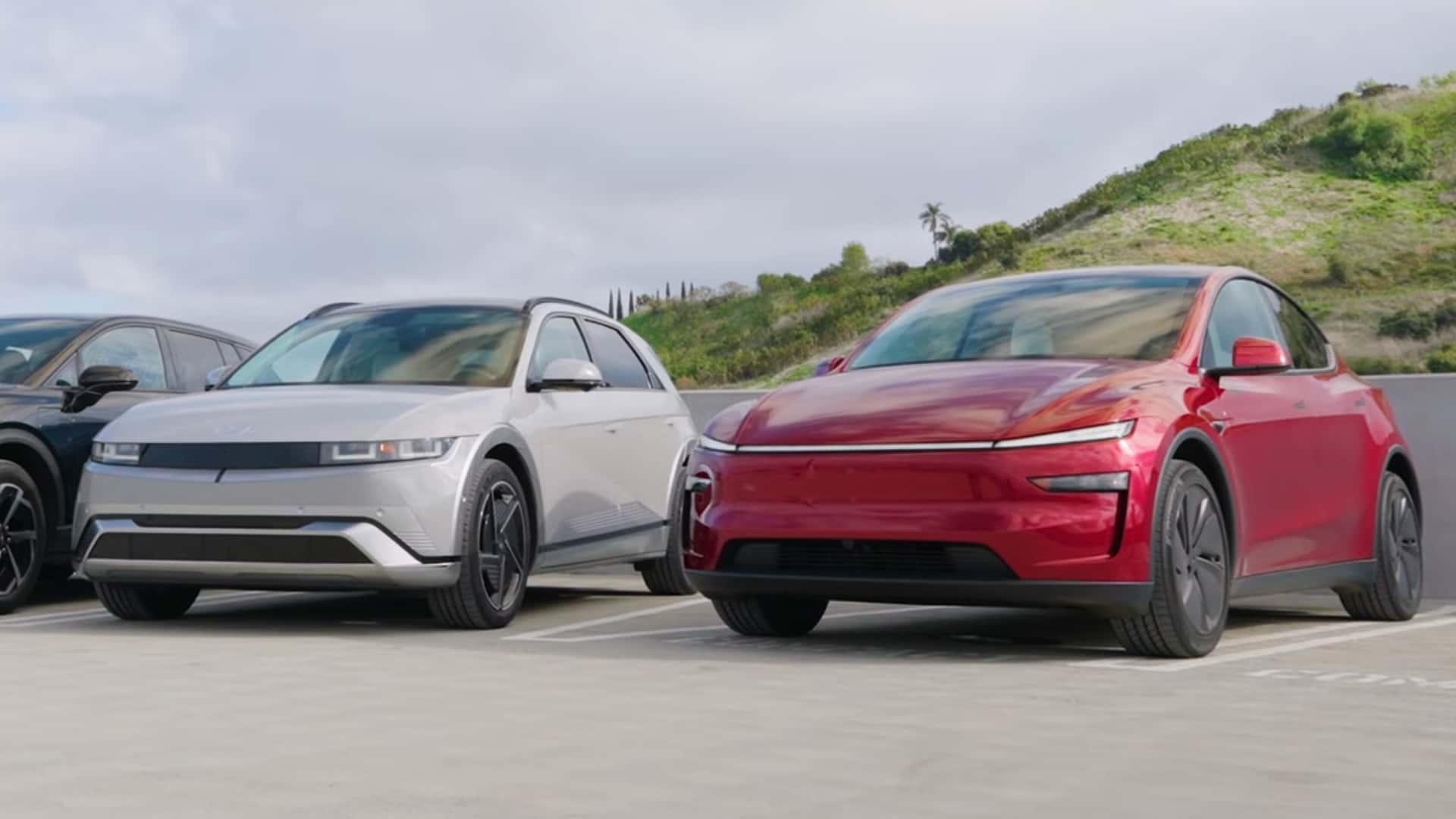
In the rapidly evolving landscape of electric vehicles, the Tesla Model Y has long stood as an icon, often dubbed the “iPhone of cars.” Its formidable blend of range, power, advanced technology features, competitive pricing, and practicality has consistently positioned it as the world’s best-selling electric vehicle, and indeed, the best-selling single model of car overall.
However, the automotive market is witnessing a significant shift. As an updated Model Y, code-named “Juniper,” makes its debut, a new generation of highly competitive electric family SUVs is challenging Tesla’s long-held dominance. These new entrants, from established automakers, are not just catching up but are, in some aspects, beginning to surpass the benchmark set by Tesla.
Key Takeaways: A New Era for Electric SUVs
- The updated Tesla Model Y “Juniper” faces stiff competition from a new wave of electric family SUVs, signalling a maturing EV market.
- An Edmunds comparison test pitted the Model Y against the Honda Prologue, Chevrolet Equinox EV, and updated Hyundai Ioniq 5.
- The Hyundai Ioniq 5 emerged as an equal contender, tying with the Model Y for the top spot, highlighting its user-friendly features and performance.
- The Chevrolet Equinox EV was recognized for its exceptional value proposition, offering impressive range at an accessible price point.
- The Honda Prologue, built on a General Motors EV platform, presented a spacious and practical option for families.
- The competition signifies that the Model Y is no longer the automatic top choice in the electric SUV segment, offering consumers diverse and compelling alternatives.
A Shifting Paradigm: The Rise of Formidable EV Crossovers
For years, the Tesla Model Y has been the aspirational choice for many seeking an electric crossover, thanks to its pioneering design and performance. Yet, as the industry matures, consumers are increasingly exploring alternatives, driven by a desire for diverse features, established brand reliability, and improved ride quality. This growing interest coincides with a surge of innovative electric vehicle offerings from rival brands that are now truly competitive.
Leading automotive publication Edmunds recently highlighted this evolving market dynamic through a comprehensive video comparison test. The evaluation focused on highly-rated electric family crossovers, pitting the new Tesla Model Y “Juniper” against three significant rivals: the Honda Prologue, the Chevrolet Equinox EV, and the updated Hyundai Ioniq 5. Each of these contenders, when evaluated independently, presents a compelling choice for consumers, but the comparison sought to identify which model truly stands on par with, or even surpasses, the Tesla benchmark.
The Contenders: Performance and Value on Display
Honda Prologue: A Spacious Newcomer
Securing the fourth position in the rigorous comparison was the 2024 Honda Prologue, an electric SUV that has garnered attention since its release. Beneath its Honda badging, the Prologue incorporates a General Motors EV platform, a strategic partnership that leverages established electric vehicle technology. This collaboration has allowed Honda to infuse its distinct brand elements, including the retention of popular features like Apple CarPlay, which is notably absent in some of GM’s proprietary electric vehicles.
The Prologue particularly excelled in practicality, offering an exceptionally roomy interior designed for comfort and ample luggage space. Its generously sized cupholders, a nod to American consumer preferences, further underscore Honda’s focus on user convenience. The tested Prologue Elite variant was priced at $59,295 and delivered a commendable range of up to 283 miles, positioning it as a strong option for families prioritizing interior volume and established brand experience.
Chevrolet Equinox EV: The Value Proposition
Following closely, the Chevrolet Equinox EV earned the third spot in the comparison, having previously been recognised as InsideEVs‘ 2024 Breakthrough Award winner. This electric SUV is lauded as one of the most compelling electric bargains available in the American market. The Edmunds test model, priced at an accessible $34,995, demonstrated remarkable efficiency in range tests, achieving an impressive 356 miles on a full charge.
It is worth noting that while Edmunds‘ Southern California testing conditions likely contributed to this stellar result, the Equinox EV consistently proves its efficiency. As the sole single-motor, front-wheel-drive contender in the test, it benefits from reduced complexity and weight. Test driver Brian Wong commented that it “almost gets to the top spot on its value proposition,” highlighting its strong appeal for budget-conscious electric vehicle buyers who do not want to compromise on range or features.
The Head-to-Head: Tesla Model Y Juniper vs. Hyundai Ioniq 5
The Updated Tesla Model Y: A Refined Experience
The highly anticipated Tesla Model Y “Juniper” showcased significant enhancements over its predecessor. The Edmunds test focused on the Model Y Launch Series, which was priced at $61,635 and offered an impressive 327 miles of range. Key improvements include a noticeably quieter and more premium cabin, alongside a much-improved ride quality – a common critique of earlier Model Y iterations.
Brian Wong described the updated Model Y as “one of the most comfortable EVs you can buy today—definitely not something you’d say about the last car.” While Tesla’s renowned technological prowess remains a strong selling point, particularly its advanced infotainment, the Full Self-Driving system, according to the testers, “makes some questionable decisions.” Wong lauded the Juniper as a “big improvement” for the Model Y, stating that the previous generation “would have only gotten third place in this test. But now, it is on equal footing with the Ioniq 5.” This assertion underscores the heightened competition in the electric SUV segment.
Hyundai Ioniq 5: Futuristic Familiarity and User-Centric Design
In a surprising turn for many, the updated Hyundai Ioniq 5 achieved a dead heat with the Tesla Model Y, signifying its robust capabilities and refined user experience. The tested Ioniq 5, fully loaded at $60,285, offered a range of 282 miles. A significant enhancement for the Ioniq 5 is the inclusion of a standard Tesla-style North American Charging Standard (NACS) plug, granting native access to Tesla Superchargers without the need for an adapter.
The Ioniq 5 distinguishes itself through its user-friendly approach, contrasting with Tesla’s minimalist, all-screen interface. It features traditional buttons, physical knobs, and conventional air vents, making daily operations more intuitive for many drivers. The electric family vehicle also boasts wireless Apple CarPlay and Android Auto integration, a clever sliding center console that enhances cabin versatility, a comfortable interior, and spirited performance. The combination of these thoughtful design elements and practical features makes the Ioniq 5 a truly formidable competitor.
Implications for the Electric Vehicle Market
The conclusion of the Edmunds comparison test, resulting in a tie between the updated Tesla Model Y and the Hyundai Ioniq 5, sends a clear message to the broader electric vehicle market. The Model Y, once the undisputed benchmark in the electric crossover world, now shares its pedestal with a strong rival. This development indicates a maturation of the EV segment, where consumers now have more diverse and equally compelling choices.
As Brian Wong articulated, the final decision between these top electric SUVs boils down to consumer preference: whether one leans towards the Tesla’s “uncompromising minimalism” or the Ioniq 5’s “futuristic familiarity.” The very existence of such a tight contest represents a monumental advancement for the entire field of electric family vehicles. It underscores that innovation and competition are thriving, promising an even more exciting future for electric mobility.
Frequently Asked Questions (FAQ)
What is the key takeaway from the Edmunds electric SUV comparison?
The primary takeaway is that while the updated Tesla Model Y “Juniper” is a strong contender, it now faces equal competition, particularly from the Hyundai Ioniq 5. This signifies a maturing EV market with more high-quality, diverse options for consumers looking for electric family SUVs.
Which electric SUV offered the best value in the comparison?
The Chevrolet Equinox EV was highlighted for its exceptional value proposition. Priced at $34,995, it delivered a stunning 356 miles of range in Edmunds’ tests, making it one of the best electric bargains for those seeking an affordable yet capable EV crossover.
What are the notable improvements in the Tesla Model Y “Juniper”?
The updated Tesla Model Y “Juniper” features a nicer, quieter cabin, increased range (327 miles in the tested model), different aesthetic looks, and significantly improved ride quality compared to its previous generation. It is now considered one of the most comfortable EVs available.
Why did the Hyundai Ioniq 5 tie with the Tesla Model Y?
The Hyundai Ioniq 5 tied due to its user-friendly design, incorporating physical buttons and knobs, standard NACS plug for Tesla Supercharger access, wireless Apple CarPlay/Android Auto, a clever sliding center console, comfortable cabin, and punchy performance. These features collectively offer a highly competitive and intuitive driving experience.
How does the Honda Prologue differentiate itself from the other electric SUVs?
The Honda Prologue, built on a GM EV platform, stands out for its spacious interior, ample luggage room, and the largest cupholders in the test, catering to family needs. It also retains Apple CarPlay, a feature not always present in other GM-based electric vehicles, offering a familiar user experience.
What does the term “uncompromising minimalism” refer to regarding Tesla?
“Uncompromising minimalism” refers to Tesla’s design philosophy, particularly its interior, which heavily relies on a central touchscreen for almost all controls and features, eliminating most physical buttons and knobs. This creates a clean, uncluttered cabin aesthetic that appeals to certain buyers.
What does “futuristic familiarity” mean in the context of the Ioniq 5?
“Futuristic familiarity” describes the Hyundai Ioniq 5’s approach, combining a modern, distinctive design with traditional, user-friendly controls like physical buttons and knobs. It offers an advanced electric vehicle experience without fully abandoning the tactile interface many drivers prefer.