
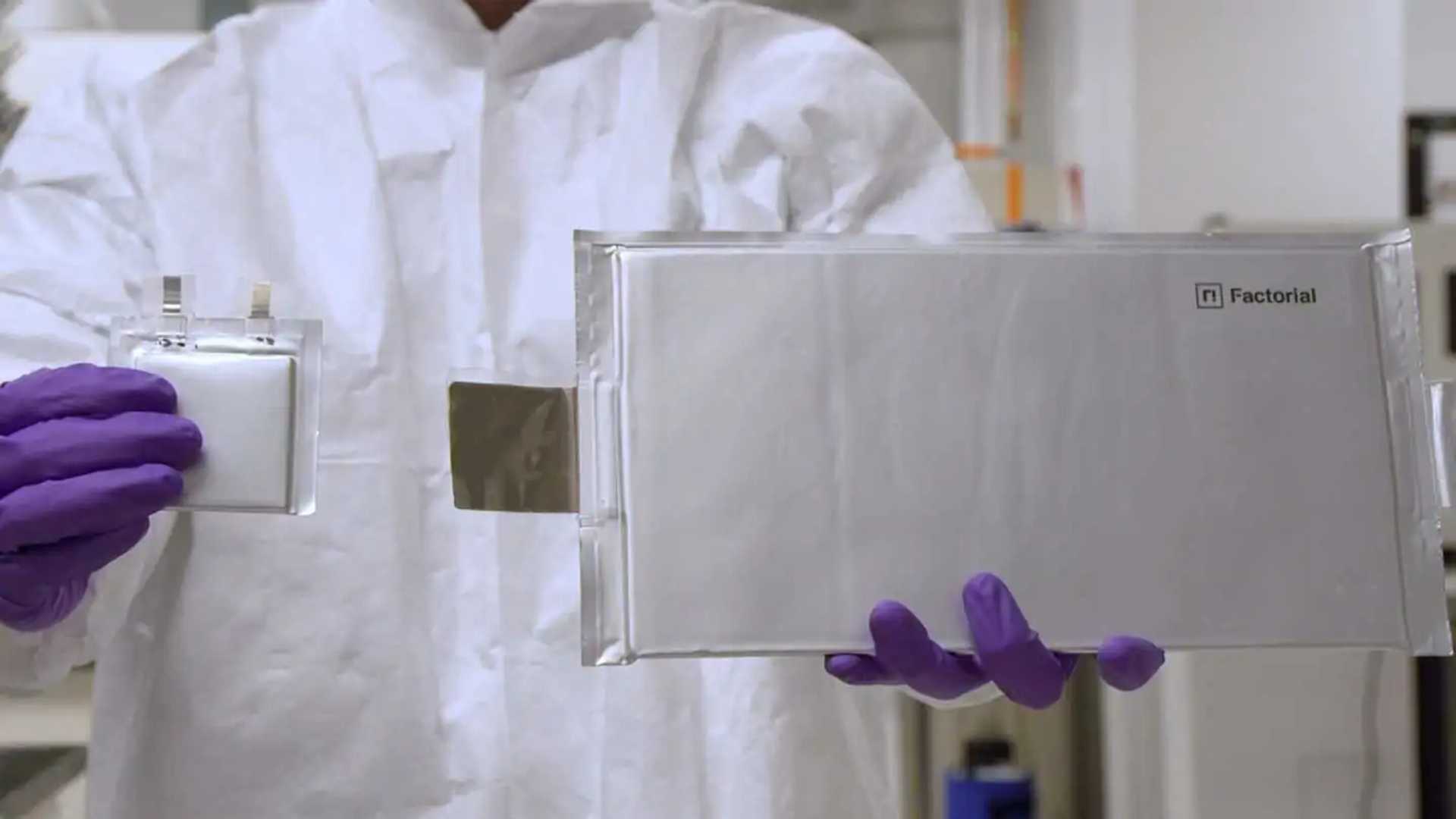
Key Takeaways (TL;DR)
- Factorial Energy, a frontrunner in advanced battery technology, is partnering with South Korean battery giant SK On to address the critical challenge of mass-producing solid-state batteries.
- The collaboration aims to assess the feasibility of integrating Factorial’s solid-state battery cells into SK On’s existing lithium-ion manufacturing infrastructure.
- Factorial’s semi-solid-state batteries are already undergoing real-world testing in prototype electric vehicles from major automakers like Mercedes-Benz and Stellantis.
- This strategic alliance is crucial for transitioning high-potential solid-state battery technology from laboratories to large-scale commercial deployment in the automotive sector.
- The agreement, while non-binding, signals a significant step towards overcoming manufacturing hurdles that have historically impeded the widespread adoption of next-generation battery solutions.
Massachusetts-based battery innovator Factorial Energy has formalized a critical partnership with South Korean battery giant SK On, a prominent supplier to Hyundai, to explore the industrial-scale manufacturing of solid-state batteries. This memorandum of understanding represents a pivotal step in assessing how these advanced battery cells can be mass-produced utilizing existing lithium-ion production lines.
The quest for commercially viable solid-state batteries has long been a holy grail within the electric vehicle (EV) industry. Factorial Energy stands at the forefront of this race, having already secured collaborations with global automotive powerhouses such as Mercedes-Benz, Stellantis, and Hyundai for real-world prototype testing of its proprietary cells.
The Promise and Peril of Solid-State Batteries
Solid-state batteries are heralded as a transformative technology, offering the potential for significantly higher energy density, enabling longer driving ranges for electric vehicles. Their design replaces the flammable liquid electrolytes found in conventional lithium-ion batteries with solid materials, promising enhanced safety and potentially faster charging capabilities.
Despite these compelling advantages, the transition of solid-state batteries from laboratory breakthroughs to widespread commercial application has been fraught with challenges. A primary hurdle revolves around the intricate manufacturing processes required to produce these sophisticated cells at scale, often encountering issues related to defects and inconsistencies.
This is precisely where the strategic alliance with SK On becomes instrumental. The South Korean battery major brings extensive experience and a vast global manufacturing footprint to the table, making it an ideal partner to help Factorial navigate the complexities of mass production for solid-state batteries.
Real-World Testing and Performance Milestones
Factorial’s semi-solid-state battery technology has already demonstrated impressive results in demanding automotive environments. Earlier this year, Mercedes-Benz reported a significant achievement: an EQS prototype equipped with Factorial’s semi-solid-state battery achieved an astonishing 749 miles on a single charge.
Remarkably, the vehicle still retained an estimated 84 miles of range upon reaching its destination, underscoring the potential for extended travel distances. This performance highlights the significant advancements Factorial has made in developing high-capacity battery solutions.
In a further testament to its progress, Stellantis has also integrated Factorial’s advanced battery cells into a prototype Dodge Charger Daytona. This inclusion is part of Stellantis’s rigorous on-road testing program, aimed at evaluating the durability and performance of next-generation solid-state batteries under diverse operating conditions.
SK On’s Manufacturing Prowess and Strategic Market Shifts
SK On operates an expansive global battery manufacturing network, with an approximate annual production capacity of 200 gigawatt-hours (GWh). A substantial portion of this capacity, roughly 100 GWh, is strategically located within the United States, positioning the company as a key player in the global EV supply chain.
The company is a major supplier to leading automakers worldwide, including Hyundai, Kia, Ford, Volkswagen, and Ferrari. Its profound expertise in high-volume battery production and established supply chains are invaluable assets in the endeavor to commercialize solid-state batteries.
While SK On continues its significant investment in battery technology, the company has recently recalibrated some aspects of its U.S. operations. Following adjustments in federal EV incentives and a subsequent reset in electric vehicle demand, SK On and Ford concluded their joint venture, opting to redirect their focus towards the burgeoning stationary energy storage market. This strategic pivot reflects the dynamic nature of the energy sector and the increasing importance of grid-scale battery solutions.
Navigating the Path to Mass Production
The collaboration between Factorial Energy and SK On aims to determine whether SK On’s vast manufacturing capabilities can indeed be adapted to efficiently produce Factorial’s innovative solid-state battery technology without compromising quality or cost-effectiveness. The integration of novel battery chemistries into existing, optimized production lines presents a complex engineering and logistical challenge.
Siyu Huang, the CEO of Factorial, emphasized the critical importance of scalability in battery innovation. She stated, “A battery breakthrough only matters if it can be manufactured at scale. [SK On’s] manufacturing footprint spans some of the world’s most advanced battery facilities, and their expertise will be critical in shaping how solid-state battery technology integrates into global production ecosystems.” This statement underscores the shared vision of bringing advanced solid-state batteries to a broader market.
Broader Collaborative Efforts in Battery Innovation
This agreement with SK On is not an isolated initiative for Factorial Energy. The company has forged similar non-binding agreements with other key players in the battery ecosystem, including LG Chem and South Korean battery materials suppliers Philenergy and Posco Future M. These partnerships collectively highlight Factorial’s multi-pronged strategy to de-risk and accelerate the commercialization of its advanced battery technology.
Like these preceding collaborations, the memorandum of understanding with SK On is non-binding. This structure provides both companies with the flexibility to evaluate the technical and economic viability of the partnership. It allows for a thorough assessment of whether the collaboration can yield the necessary manufacturing breakthroughs to make solid-state batteries a widespread reality in the automotive and energy storage sectors.
The Future of Solid-State Batteries
The alliance between Factorial Energy and SK On marks a crucial juncture in the development of solid-state batteries. Successfully scaling the production of these advanced cells would unlock a new era for electric vehicles, offering consumers improved range, safety, and charging efficiency. It would also have significant implications for grid stability and renewable energy integration through enhanced stationary energy storage solutions.
As the automotive industry rapidly electrifies, the ability to efficiently mass-produce next-generation battery technologies like solid-state batteries will be a defining factor in determining market leadership and accelerating the global transition to sustainable transportation.
Frequently Asked Questions (FAQ)
What is a solid-state battery?
A solid-state battery is an advanced battery technology that uses solid electrodes and a solid electrolyte, unlike traditional lithium-ion batteries which use liquid or gel electrolytes. This design promises higher energy density, improved safety by reducing fire risks, and potentially faster charging speeds for electric vehicles and other applications.
What is Factorial Energy’s role in this partnership?
Factorial Energy is a battery startup specializing in developing solid- and semi-solid-state battery technology. In this partnership, Factorial provides its innovative battery cell designs and expertise, aiming to leverage SK On’s extensive manufacturing capabilities to achieve mass production.
What is SK On’s contribution to the collaboration?
SK On is a major South Korean battery manufacturer with a vast global production footprint. Its contribution involves evaluating whether its existing lithium-ion battery manufacturing lines can be adapted and optimized to produce Factorial’s solid-state battery cells at a commercial scale, addressing a key challenge for new battery technologies.
Why is mass production a significant challenge for solid-state batteries?
Mass production for solid-state batteries is challenging due to complex material requirements and manufacturing processes that are prone to defects. Achieving consistent quality, cost-effectiveness, and scalability at high volumes has historically been a major barrier to their widespread adoption compared to established lithium-ion technology.
Which automakers are currently testing Factorial’s batteries?
Major global automakers like Mercedes-Benz, Stellantis, and Hyundai are currently testing Factorial Energy’s solid-state and semi-solid-state batteries in prototype electric vehicles. These real-world evaluations are crucial for validating the performance, durability, and safety of the advanced battery technology before commercial launch.
Is this agreement legally binding?
The agreement between Factorial Energy and SK On is structured as a memorandum of understanding (MOU), which is non-binding. This allows both companies to thoroughly explore the technical, operational, and financial feasibility of the collaboration without immediate legal obligations, providing flexibility to proceed or withdraw based on their findings.
How could this partnership impact the electric vehicle market?
A successful partnership could significantly accelerate the commercialization of solid-state batteries, leading to electric vehicles with longer ranges, quicker charging times, and enhanced safety. This would make EVs more appealing to a broader consumer base, potentially driving faster adoption and transforming the automotive industry.